Two calls happen at the same bank. At 11 pm, a customer phones to block a lost card. On Saturday morning, a collections executive rings another customer about a pending EMI. Both calls go through a call center, but nobody would hire, train or measure those two teams in the same way. That gap is what inbound vs outbound call centers is all about, and you feel it most when you are setting up a team or choosing an agency.

Looking for Call Center Software?
Check out Techimply's List of best Call Center Software in India for your business.
This guide explains what each model does, how they differ, which Indian businesses use which one, and what the rules say before you start dialling.
Key Takeaways
- Inbound vs outbound call centers differ in one basic way: who starts the call.
- An inbound call center answers customers. An outbound call center calls customers and leads.
- Inbound teams are judged on how fast and how well they solve problems. Outbound teams are judged on how many calls connect and convert.
- In India, promotional outbound calls must follow TRAI rules, including 140-series numbers and DND scrubbing.
What Is Inbound and Outbound? The Meaning in Simple Words
If you are new to the terms, the inbound and outbound meaning fits in one line. Inbound is when the customer reaches out to you. Outbound is when you reach out to the customer.
The inbound and outbound calls meaning follows the same idea. An inbound call is any call your business receives, such as a customer asking where their order is. An outbound call is any call your business makes, such as a reminder about a loan instalment or a follow-up after a demo request.
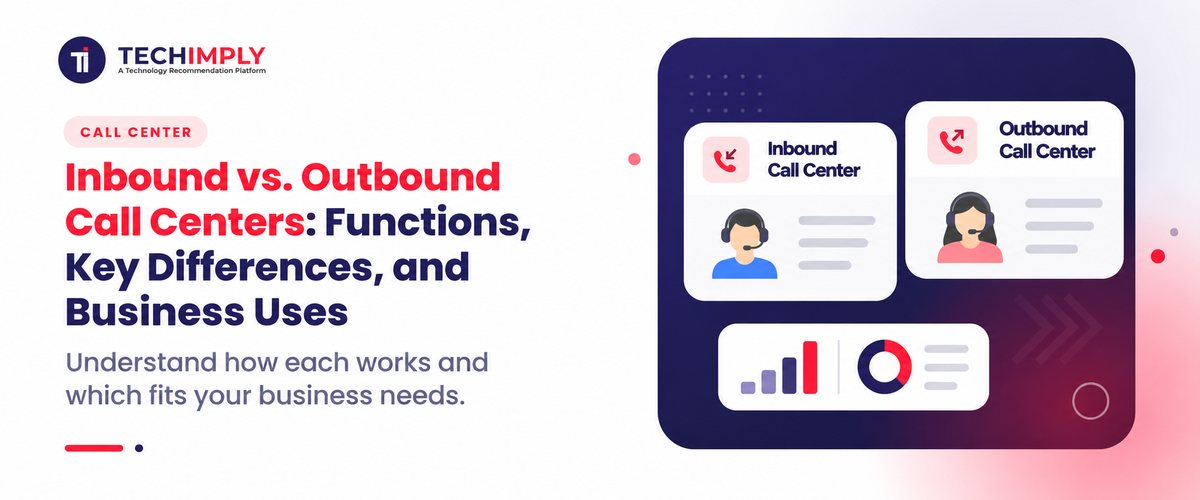
So when someone asks what is inbound and outbound in a call center, the answer is about direction. A team built to receive calls is an inbound call center. A team built to place them is an outbound call center.
This guide is about calls. In marketing, inbound means attracting people to you and outbound means reaching out to them. In logistics, the words describe goods coming in and going out.
What Is an Inbound Call Center?
An inbound call center handles calls that customers or prospects make to your business. People call because they need something: help with a problem, an order status, a refund, a booking or details about a product.
Most inbound work is customer support, order and delivery queries, billing questions, technical helpdesk work and appointment booking. A telecom operator’s helpline and a hospital’s appointment desk are good examples.
The technology is built around queues. IVR menus ask the caller what they need, an automatic call distributor lines them up, and skills-based routing sends them to the right agent. Managers then track first call resolution (was the problem fixed in one call?), average handle time, and the share of callers who hang up before anyone answers.
Inbound agents need patience more than anything. Many callers are already irritated, and a calm, clear answer helps more than a sales pitch.
What Is an Outbound Call Center?
An outbound call center works the other way round. Agents, usually called telecallers in India, phone customers or prospects, and the company decides who gets called and when.
Common outbound jobs are sales follow-ups, appointment setting, renewals, payment reminders and feedback surveys. A builder calling people who enquired about a flat, or an EdTech firm’s counsellors calling course leads, are typical cases.
Dialers do much of the heavy lifting here. A preview dialer shows the agent the customer’s record before the call goes out. A progressive dialer dials the next number once an agent is free. A predictive dialer places several calls per agent and guesses how many will be answered. It saves time, but if the guess is wrong, customers pick up to silence, so it needs careful tuning.
Outbound is measured by contact rate, conversions, revenue and calls per hour. Agents need persuasion skills and a thick skin, since plenty of calls go unanswered or end in a polite no.
Inbound vs Outbound Call Centers: Key Differences
|
Factor |
Inbound call center |
Outbound call center |
|
Who starts the call |
Customer |
Business |
|
Main goal |
Solve problems, keep customers |
Sell, collect, remind, survey |
|
Agent skills |
Listening, empathy, product knowledge |
Persuasion, confidence, handling objections |
|
Key metrics |
First call resolution, handle time, abandonment |
Contact rate, conversion rate, calls per hour |
|
Core technology |
IVR, call routing, CRM |
Auto dialer, scripts, lead lists, DND scrubbing |
|
Call volume |
Unpredictable |
Planned campaigns |
|
Compliance |
Privacy, data handling and call recording requirements |
Promotional calling, consent, DND and applicable TRAI requirements |
The line is not always clean, since an inbound call can end in a sale. Pay differs too. Inbound roles usually carry a fixed or hourly salary with small quality bonuses, while outbound sales and collections often add commission, so plan incentives separately for each team.
What Is a Blended Call Center?
A blended call center uses the same agents and system for both kinds of calls. When inbound is quiet, agents move to outbound lists. When inbound picks up, the system pulls them back. For businesses stuck on inbound vs outbound call centers, blending is a middle path.
A D2C brand might answer support calls through the day and call abandoned-cart customers in the evening. The catch is people. Someone who is great at calming an upset customer may hate cold calling, so many companies keep specialist teams and blend only part of the workforce.
Inbound vs Outbound Call Centers in Practice: Which Model Fits Your Business?
|
Business |
Inbound use |
Outbound use |
|
E-commerce and D2C |
Order, return and refund queries |
COD confirmation, cart recovery |
|
Banks and NBFCs |
Card, loan and account support |
EMI reminders, collections, offers |
|
Real estate |
Enquiry calls from property portals |
Lead follow-up, site visit scheduling |
|
Hospitals and clinics |
Appointment booking |
Appointment and follow-up reminders |
|
SaaS and IT firms |
Technical support, demo requests |
Lead qualification, renewals |
|
EdTech |
Student queries |
Counselling calls to course leads |
If most contact starts with the customer, begin with inbound. If your growth depends on reaching people who have not called you, begin with outbound. If you have both, plan for a blended setup from day one.

Interesting to Read : How To Check Call History Of Any Number Online? - Try For Free!
Indian Rules You Must Know Before Making Outbound Calls
In the inbound vs outbound call centers comparison, outbound calling in India is far more regulated, so read this part before you scale.
Under TRAI’s Telecom Commercial Communications Customer Preference Regulations (TCCCPR), promotional calls must come from 140-series numbers. TRAI issued a direction on August 10, 2026, introducing the 1601 numbering series for service and transactional calls by entities outside the BFSI and government sectors.
Do You Know?
TRAI’s 2025 amendment stopped businesses from using ordinary 10-digit numbers for telemarketing. A sales team that calls leads from regular mobile numbers is no longer compliant. Timelines and details keep changing, so check TRAI’s website or ask your telecom provider before you launch a campaign. If you store customer data, India’s Digital Personal Data Protection Act applies as well.
Choosing Call Center Software for Your Model
Once you have settled inbound vs outbound call centers for your business, the right call center software depends on the model you chose. For inbound, look for IVR, call routing, call recording and a CRM screen that pops up with the caller’s history. For outbound, look for an auto dialer (preview, progressive or predictive dialer), campaign and lead management, scripts and DND scrubbing. Both sides benefit from reports, agent monitoring and WhatsApp or SMS follow-up.
Some businesses now use AI voice agents for routine inbound queries and simple outbound reminders, and keep human agents for complex or sensitive calls. If you try this, check how TRAI's number-series and DLT rules apply to your campaigns.
Ask each vendor three things: do you support TRAI number series, do you integrate with DLT, and can the system play Hindi or regional-language prompts? A cloud call center suits most small and mid-sized teams in India, since agents can work from home or from several cities.
When you are ready to compare options, exploring cloud call center software on Techimply can help you see what is available before you shortlist vendors.
Pro-tip
Before you buy anything, list every call your team makes or receives and tag each one as support, transactional or promotional. That one page tells you which number series you need, who should handle each call and which software features are worth paying for.
In-House or Outsourced?
An in-house team knows your product better and gives you greater control, but you also need to manage agent salaries, training and software costs. An outsourced BPO provides access to external agents and operational support, but you must consider service quality, communication and data security risks. Some businesses keep sensitive customer interactions in-house while outsourcing specific outbound campaigns.
Inbound vs Outbound Call Centers: Which Model Should You Choose?
The inbound vs outbound call centers choice usually settles with three questions. Who usually starts your customer conversations? Is your main goal solving problems or earning revenue? And how many of your calls are promotional, since those carry the heaviest rules? Your answers point to inbound, outbound or blended, and they also tell you whether an in-house team or an outsourced agency makes more sense.
How to Choose Between Inbound and Outbound Call Center Models
The right call center model depends on how your business communicates with customers and what you want each call to achieve. Here are three practical situations to help you decide:
- Choose inbound if customer support is your priority: If your business receives hundreds of calls about orders, billing, complaints or technical issues, an inbound-focused setup helps agents handle customer queries and resolve problems efficiently.
- Choose outbound if you need to reach potential customers: A real estate company following up with property enquiries, scheduling site visits and contacting interested buyers will benefit from an outbound-focused team.
- Choose blended if your business handles both: An eCommerce company that answers customer complaints and also makes calls for COD confirmations, delivery updates or abandoned-cart follow-ups may need a blended setup.
Conclusion
In the inbound vs outbound call centers question, inbound call centers look after the customers you already have, and outbound call centers go after the ones you want. Pick the one that matches how your business actually gets and keeps customers, set its goals first, and only then choose the software. In India, tag your outbound calls correctly before the first campaign goes out.
Also Read-
- How to Find a Phone Number Owner? [6 Free & 3 Paid Methods]
- 5 Best AI Note Takers for Phone Calls in 2026
- Why Cloud Call Centers Matter for Modern Businesses
- UAE Phone Number Format & Dialing Code Guide
- Call Analytics Feature for Cloud Call Center Software
- Key Tools For Running Effective Call Center Operations