In today’s digital era, IT Service Management (ITSM) is the engine room of enterprise productivity. Selecting the right platform is about ensuring technology accelerates business growth. While ServiceNow remains a legacy option for massive, resource-heavy enterprises, Freshservice has emerged as the definitive choice for modern, agile businesses.
Freshservice strikes a perfect harmony between enterprise power and consumer-grade simplicity, providing a platform that is faster to deploy and significantly more cost-effective. Below, we explore why modern businesses are choosing agility and value.
Overview of Freshservice
Freshservice is a cloud-based ITSM solution built to help businesses streamline operations and deliver elite employee support. Its intuitive interface and ITIL-aligned processes make it the ideal modern platform for growing enterprises that need power without the burden of traditional, clunky enterprise tools.
Overview of ServiceNow
ServiceNow is an established platform often used by massive organizations with extensive internal development teams. However, its sheer scale introduces "complexity debt," often demanding a heavy toll in specialized developers and prolonged implementation cycles.
Ease of Use: Freshservice Offers a Better User Experience
A system that is powerful but unusable is a failed investment. Freshservice excels with a clean, modern interface that drives high adoption. While ServiceNow can feel dense and overwhelming, Freshservice prioritizes the human element, ensuring both agents and employees are productive from day one.
Implementation: Freshservice Delivers Faster Time-to-Value
Freshservice is engineered for rapid deployment. Its "out-of-the-box" readiness means businesses can move from signing to resolving tickets in days, not months. In contrast, ServiceNow often requires long-term development projects and expensive implementation partners to achieve basic operational stability.
Feature Comparison: Freshservice Covers What Businesses Actually Need
Both Freshservice and ServiceNow offer strong ITSM capabilities, but the difference lies in accessibility and practicality.
Freshservice includes essential ITSM features such as:
- Incident management
- Service request management
- Problem management
- Change management
- Asset management
- Knowledge base
- SLA management
- Workflow automation
- Employee self-service portal
- Project management
- Reporting and analytics
- AI-powered support features
- Multi-channel ticket intake
- Integrations with business applications
ServiceNow also provides these capabilities and more, especially for large-scale enterprise workflows. However, many organizations do not need the full depth of ServiceNow’s customization or extended platform ecosystem. In some cases, paying for that level of complexity may not make business sense.
Freshservice succeeds because it focuses on delivering the features most IT teams need in a more manageable package. It gives businesses the tools to standardize service delivery, automate repetitive work, track performance, and improve employee experience without overwhelming administrators or end users.
For most small to mid-market businesses and growing enterprises, Freshservice provides the ideal feature set: robust enough to support ITIL-based operations, but simple enough to use effectively.
Automation: Freshservice Makes Workflow Automation Easier
Automation scales IT without increasing headcount, and Freshservice democratizes it. With a no-code Graphical Workflow Automator, IT managers build sophisticated logic via drag-and-drop. While ServiceNow automation may require scripting experts, Freshservice empowers teams to move faster and reduce manual workloads independently.
Pricing and Total Cost of Ownership: Freshservice Provides Stronger Value
Freshservice consistently outperforms ServiceNow by eliminating the "hidden costs" of enterprise software. Because it requires zero specialized developers and fewer administrators, the saved budget can be reinvested into strategic IT initiatives that drive the business forward.
Scalability: Freshservice Grows Without Becoming Overly Complex
Freshservice scales seamlessly with your organization without becoming excessively difficult to manage. It provides the sophisticated ITSM capabilities required by modern enterprises—like asset and project management—while keeping the experience simple, agile, and relentlessly focused on value.
Employee Experience: Freshservice Makes IT Support More Accessible
A successful ITSM platform should not only help IT teams. It should also improve the employee experience. Employees need a simple way to request help, find answers, track issues, and access services.
Freshservice offers a user-friendly employee portal where staff can submit requests, browse service catalog items, access knowledge base articles, and view ticket status. This encourages self-service and reduces unnecessary back-and-forth communication.
The knowledge base is especially valuable because it allows IT teams to document common fixes, troubleshooting steps, policies, and internal processes. Employees can find answers independently, which reduces ticket volume and improves satisfaction.
ServiceNow can also deliver strong employee experiences, but it typically requires more configuration to create a polished and intuitive front-end experience. Without careful setup, users may find it less straightforward.
Freshservice is easier to roll out to employees because its design is naturally simple and modern. That makes it more likely that employees will adopt the system and use it consistently.
Asset Management: Freshservice Simplifies IT Visibility
IT asset management is another area where Freshservice performs well. Businesses need to know what devices, software, licenses, and assets they own, who uses them, and how they relate to incidents or service requests.
Freshservice includes asset management capabilities that help IT teams track hardware, software, contracts, and lifecycle information. By connecting assets with tickets and users, teams can resolve issues faster and make better decisions about procurement, renewals, and compliance.
ServiceNow offers more advanced IT asset and configuration management capabilities, especially for large enterprise environments. However, these capabilities can require significant setup and ongoing maintenance.
Freshservice offers a practical approach. It gives organizations the asset visibility they need without forcing them into a complex configuration management strategy before they are ready.
For many businesses, this is exactly the right level of functionality.
Reporting and Analytics: Freshservice Keeps Insights Clear
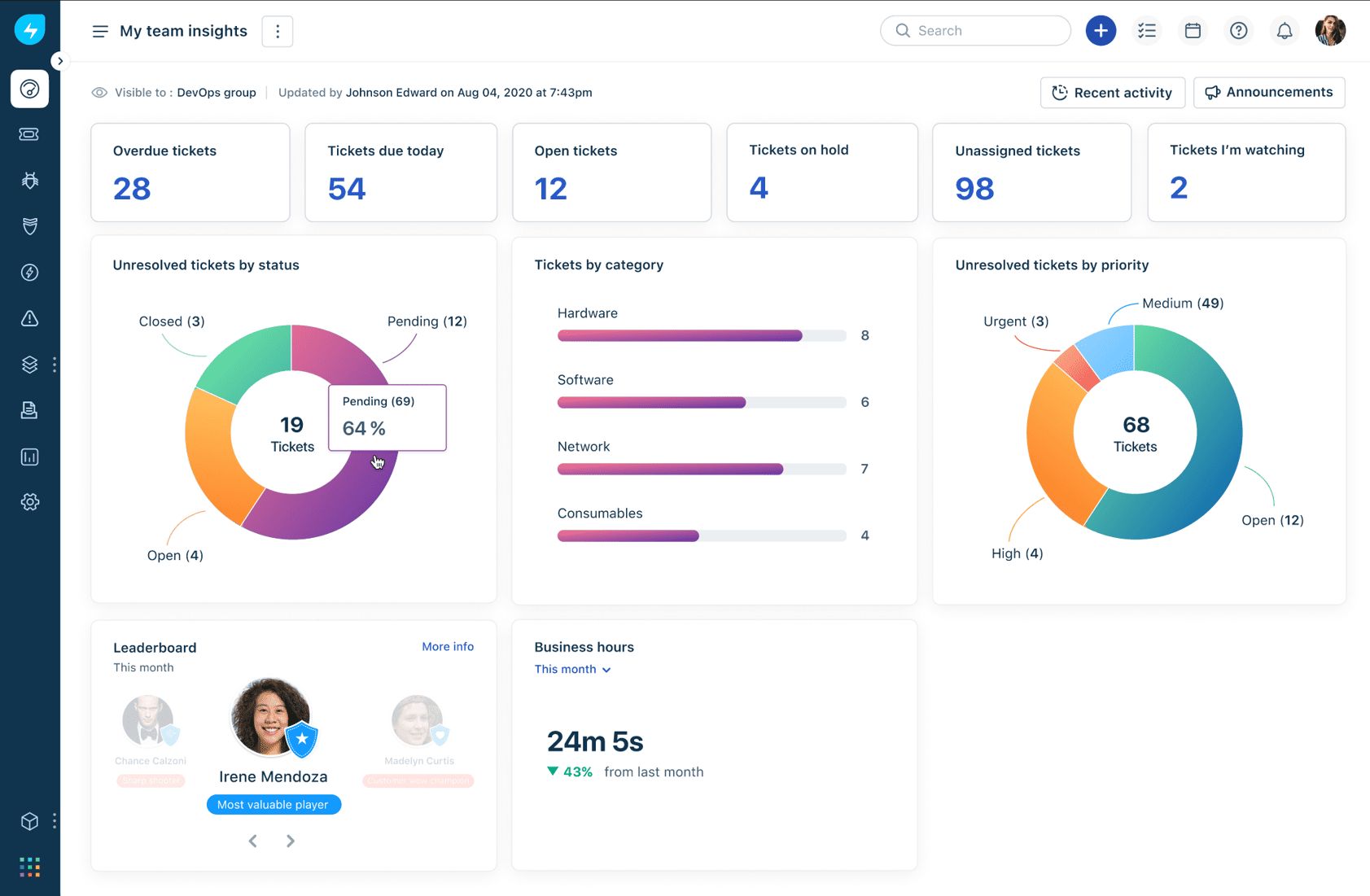
IT leaders need reporting tools to understand ticket volume, resolution times, SLA performance, agent productivity, recurring issues, and service trends. Freshservice provides dashboards and analytics that help teams monitor performance and identify areas for improvement.
The reporting experience in Freshservice is clear and accessible. Teams can track key metrics without needing advanced reporting specialists. This helps managers make informed decisions quickly.
ServiceNow offers powerful analytics, but advanced reporting may require more configuration or specialized knowledge. For organizations with complex data requirements, this may be useful. However, for teams that want straightforward visibility into service performance, Freshservice is easier to work with.
Freshservice gives IT teams actionable insights without overcomplicating the reporting process.
Integrations: Freshservice Connects Easily With Business Tools
Modern IT teams rely on many applications, including communication tools, identity providers, productivity suites, monitoring platforms, collaboration software, and HR systems. A good ITSM platform should integrate easily with the tools a business already uses.
Freshservice offers integrations with many popular business applications, making it easier to connect IT service workflows with everyday operations. These integrations help automate ticket creation, notifications, approvals, user provisioning, and cross-functional workflows.
ServiceNow also has a large integration ecosystem, but integrations may require more technical configuration depending on the use case.
Freshservice is often the better choice for organizations that want practical integrations without a heavy development project. It allows businesses to connect systems efficiently and improve workflow continuity across departments.
Best Fit: Who Should Choose Freshservice?
Freshservice is an excellent fit for:
- Small and mid-sized businesses
- Growing enterprises
- IT teams moving beyond email-based support
- Companies that need fast implementation
- Organizations seeking ITIL-aligned workflows without heavy complexity
- Teams that value usability and employee adoption
- Businesses looking for strong automation at a reasonable cost
- Companies that want ITSM, asset management, and service management in one platform
- Organizations with limited admin or developer resources
- Businesses that want better value and faster ROI
Freshservice is especially strong for companies that want a modern ITSM platform that works out of the box but can still scale as needs evolve.
Best Fit: Who Should Choose ServiceNow?
ServiceNow may be a better fit for:
- Very large global enterprises
- Organizations with highly complex IT environments
- Companies with dedicated ServiceNow administrators and developers
- Businesses requiring extensive custom workflows
- Enterprises with large transformation budgets
- Organizations already invested in the ServiceNow ecosystem
ServiceNow is undeniably powerful. However, it is often more platform than many companies need. For organizations without the budget, timeline, or technical resources to support a complex implementation, ServiceNow may create more burden than benefit.
Freshservice vs. ServiceNow: Final Verdict
The choice is clear: ServiceNow represents rigid, legacy complexity, while Freshservice represents the agile future. If the goal is to implement a modern platform quickly, achieve a strong ROI, and delight employees, Freshservice is the smarter ITSM investment.