Managing HR across scattered tools? You’re not alone, and it’s costing more than just time. From mismatched data to missed deadlines, disconnected systems quietly drain your team’s productivity. That’s where HRMS integration changes the game.
By connecting your HR tools with integration-ready systems, businesses can simplify everything — payroll, hiring, attendance, performance — into one smooth flow. And it’s not just about convenience. It’s about clarity, accuracy, and growth.

Looking for HRMS Software?
Check out Techimply's List of HRMS Software for your business.
In today’s blog, we’re going to cover the real meaning of HR software integration, how companies pull it off, the types of integrations that exist, and typical challenges you will need to gear up for. If your aim is a more intelligent, connected HR approach, well, you are in the right place.
What is HRMS Software Integration?
HRMS Integration refers to linking your Best HR Software with other systems your company uses such as payroll, attendance, accounting or performance systems, so they all function well together.
Rather than leaping between applications and updating data manually, HRMS integration allows information to flow automatically. Thus, when one feeds in a new employee through your HRMS, his or her details can instantly surface in the payroll system as well – no extra work is required. It saves time, reduces errors, and gives your HR team clarity in real time of what’s happening.
Some popular HRMS software examples known for integration prowess are Keka, Zoho People, and Darwinbox. They easily integrate with the applications your company already uses, hence enhancing the speed and efficiency of your HR operations.

Do You Know?
Most Indian companies still use 3–5 disconnected tools to manage HR functions, leading to over 30% productivity loss due to repetitive data entry and communication gaps. HRMS integration can cut that waste drastically.
Decoding HRMS Software Integration
HRMS software integration might sound technical, but it’s really about making all your HR tools work together smoothly. Think of it like connecting the dots—your payroll, attendance, recruitment, and performance systems all talk to each other without you having to enter the same data again and again.
When your HRMS software is integrated with other tools, everything becomes faster and more accurate. For example, if someone joins your company, their information flows from the recruitment module in HRMS to payroll and onboarding automatically. No back-and-forth, no copy-pasting, no confusion. Organizations looking to streamline employee onboarding and eliminate repetitive manual tasks often implement an HR to IT automation platform to connect HR systems with downstream IT and business applications, enabling seamless workflows, faster provisioning, and improved operational efficiency.
That’s the real value of HRMS integration: less manual work, fewer errors, and a much smoother experience for both HR teams and employees.
How Do Companies Typically Integrate HRMS with Other Systems?
Companies use in-built connectors, APIs, or third-party tools to put HRMS together with other systems—their payroll, attendance, and accounting and recruitment platforms, etc., so that the software automatically shares data. For example, if a person is hired through the recruitment module of HRMS, then the same person’s details will automatically get updated in payroll and onboarding systems without manual work. Easy integration options are offered in most examples of modern hrms software, which reduces the need for businesses to create connections from the very beginning. Such HRMS integration augments work, avoids errors, and time is lost in the process of creating a flow of HR work all over the company.
What are the Types of HR System Integration?
It’s necessary to understand the way HRMS systems are connected and interact with each other. You can view HR integration as related to functions, integration merhods, and types of HR systems. Let’s take a look at the parts separately.
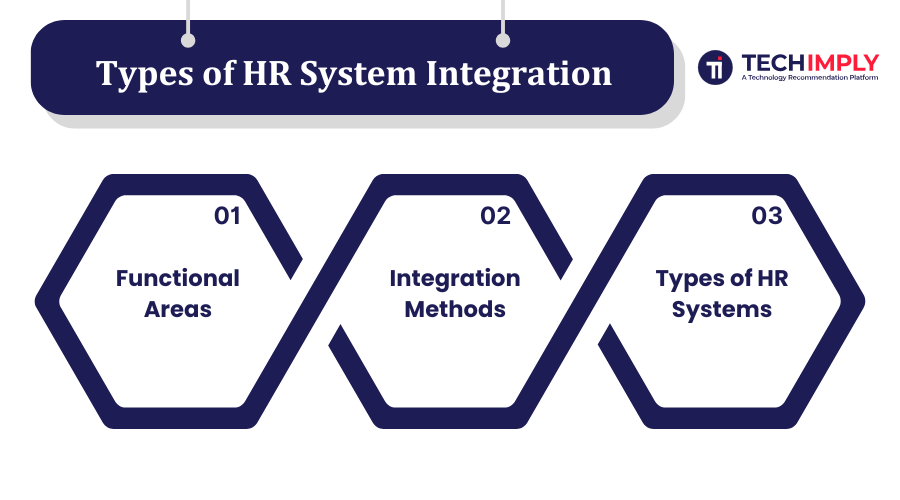
1. Functional Areas
These are the key HR functions where integration makes a big difference.
- Payroll Integration: This links your HR system to payroll software so that data on salary, tax, and attendance all flows automatically, saving time and reducing errors.
- Recruitment and Applicant Tracking System (ATS) Integration: When the recruitment module in the HRMS links with an ATS, the data for new hires comes smoothly into the system— no manual entry needed.
- Talent Management and Learning Management System (LMS) Integration: This helps track employee growth by syncing training programs plus certifications and career development tools with your HR platform.
- Performance Management Integration: This will automatically update performance data, such as goals, feedback, and appraisals in the HR system for easier review and tracking.
- Cloud Storage and Document Management Integration: HR documents, like resumes, contracts, and ID proofs, can be securely stored in the cloud and directly linked to individual profiles of each employee.
2. Integration Methods
These are the different ways systems connect on a technical level.
- API Integration: APIs are the convenient and easy way for two software applications to talk with each other and share data, and it happens in real-time.
- Custom Integrations: Sometimes, companies need tailor-made solutions to link their unique tools. This method is more personalized but may take longer to build.
- Integration Services Components (ISC): These are ready-made connectors provided by software vendors to help link HRMS with other tools like finance, CRM, or project management platforms.
- Webhooks: Webhooks send real-time data from one app to another when something changes—like notifying payroll software the moment a new employee joins.
3. Types of HR Systems
Knowing the type of HR system helps you understand what kind of integration is possible.
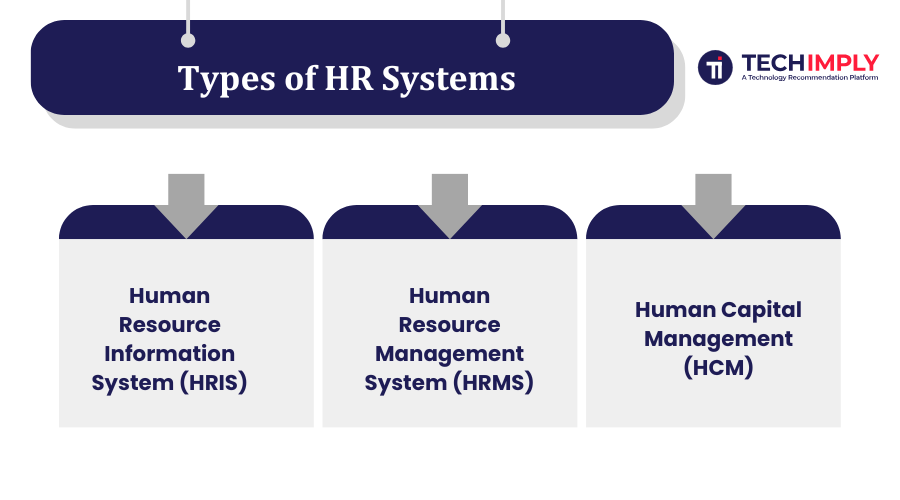
- Human Resource Information System (HRIS): Focuses mostly on employee data, payroll, and compliance tasks. Integration usually supports basic HR operations.
- Human Resource Management System (HRMS): A step ahead of HRIS, this includes broader features like performance tracking, time management, and the hrms software examples you see in many companies today.
- Human Capital Management (HCM): Covers everything from hiring to retirement. It includes all HRMS features along with strategic planning, workforce analytics, and succession planning.
What Challenges Might Arise During HRMS Integration?
Integrating HRMS software can bring great results—but it’s not always smooth sailing. Here are some common challenges companies face during HRMS integration, and what they actually mean for your team:
1. Resistance to Change
People have a habit of working in a particular way. When new software is brought to the organization, it may be quite intimidating for the employees and even for the managers to learn a new one. This slowdown resistance against an attempt to integrate the system, thus affecting the success of the rollout.
2. Data Migration Issues
Moving data from old systems to the new HRMS can be tricky. There’s a risk of losing important records, duplicating data, or transferring outdated info. Clean, organized migration is key—but it takes time and care.
3. Lack of Clear Objectives and Goals
Integration might just be confusing if you do not have any idea about what you would like the HRMS to solve or enhance. Without clear goals, teams may end up wasting time configuring features they do not need— or miss out on ones they actually do need.
4. Poor Vendor Support and Communication
Not every software vendor provides strong support in the course of integration. If they are slow to respond, unclear in their instructions, or do not understand your business needs, this might well lead to an annoying delay.
5. Stakeholder Management
Integrating HRMS affects many departments—HR, IT, payroll, leadership. If all stakeholders aren’t on the same page, decisions may clash, timelines stretch, and confusion grows. Clear communication between teams is essential for smooth integration.
Insight:
In a 2024 survey, 41% of companies said the biggest hurdle in HRMS integration wasn’t technology—it was people. Gaining early buy-in from employees and managers can make or break your integration project.
Why are Businesses Integrating HRMS?
Many organizations are adopting HRMS integration, not because it is a new dimension, but because it presents an intelligent approach toward efficiently running HR saving time, and making better decisions. This summarizes reasons why companies are embracing HR system integration:
1. Improved Efficiency and Time Savings
When all your HR tools work together, your team doesn’t have to waste time doing the same task in multiple places. From payroll to attendance to the recruitment module in HRMS, everything runs faster and smoother. That’s the power of HR software integration—less manual work, more productivity. 94% of business leaders say AI is critical to success, highlighting why integrated, intelligent HRMS systems are the future.
2. Enhanced Employee Experience
With integrated systems, employees can easily access their data, apply for leaves, check payslips, or update details—all in one place. A better user experience keeps employees happy and engaged. Many HRMS software examples like Zoho People or Keka offer such user-friendly dashboards through HR tools with integration.
3. Data Management and Analytics
When you bring all your HR information together, you can easily see what’s happening with hiring, employee performance or staff turnover. With integrated HR software, reporting and analytics are simple which means decisions are made using real data instead of guesses.
4. Compliance and Risk Mitigation
Manual errors in HR can result in expensive compliance problems. Using an integrated system ensures your records are correct and current which reduces your risks in tax, labor law and audit matters. With HRMS integration, you ensure your processes stay aligned with rules and regulations.
Key Takeaways:
- HRMS integration connects all your HR tools—payroll, recruitment, performance—into one smart system.
- It helps people work more accurately, faster and with better satisfaction.
- You can integrate systems in a functional, technical or HR system way, depending on whether you use HRIS, HRMS or HCM.
- Challenges like data migration or lack of vendor support are real—but solvable with proper planning.
- The future of HR is integrated, intelligent, and insight-driven.
Conclusion
We have seen that an HRMS integration allows businesses to automate tasks, combine their data and make better, quicker decisions. The right HR software integration will help remove challenges at every stage of the employee experience, whether you lead a small or large team.
And yes, setup takes thought — but the long-term payoff is undeniable. With more HR tools offering integration capabilities than ever before, now’s the time to move from scattered to streamlined. Because when everything connects, everything just works better.
- HR Software Statistics Trends
- Best SaaS HR Software: Features, Benefits
- From Hiring To Retirement: How HR Software Can Manage The Employee Lifecycle
- Best Cloud HR Software Improve the Workplace
- Why Do Small Businesses/Agencies Need HR Software?
- 5 Reasons to Update Your HR Software
- Things Should Be Considered While Evaluating HR Software
- 5 Steps To Choosing The Right HR Software For Your Startup
- Data-Driven Recruitment: Using HR Software to Make Informed Hiring Decisions
- Best HR software to Manage Your Remote Workforce
- HR Software: What It Is and How to Choose the Best Solution
- Finding the Right Enterprise HR Software for your Business