A Simple Guide for First-Time Buyers
Think about how your HR team handles a typical Monday morning. One person is updating the attendance register manually, another is responding to leave approval requests over WhatsApp, and a third is chasing department heads for appraisal forms that were due last week. Meanwhile, the payroll run is three days away and half the inputs are still missing.
→ Explore HRIS Software on Techimply
This is not an unusual picture for growing Indian businesses. As teams expand across locations and departments, the administrative weight on HR grows faster than the team itself. What worked for a 20-person company starts breaking down at 80 people and becomes genuinely costly at 200.
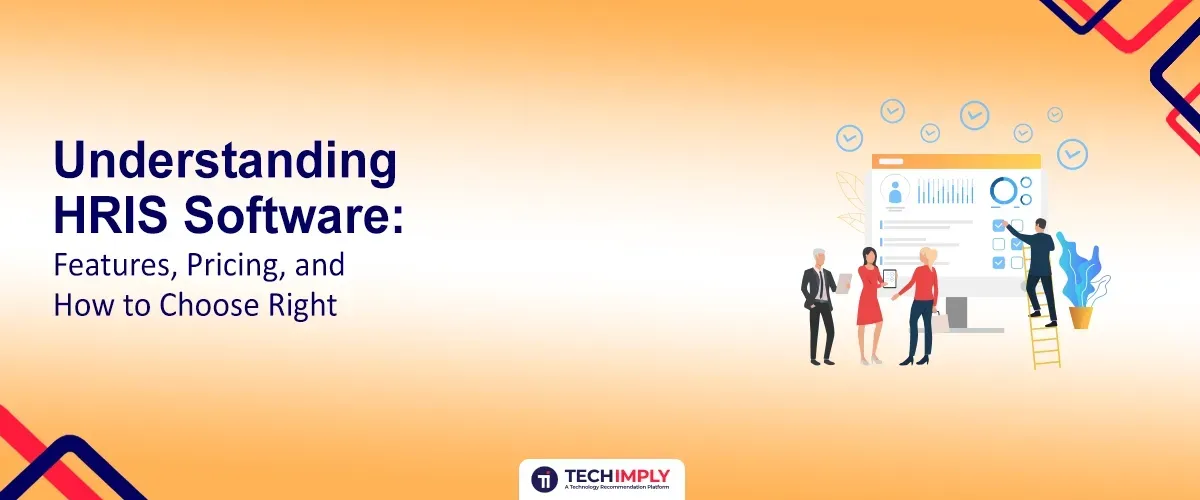
A Human Resource Information System, commonly called HRIS software, is built to solve exactly this problem. It brings your employee records, attendance, leave management, payroll software , compliance, and HR workflows into one connected platform so your team stops spending most of its time on administration and starts spending more of it on the work that actually builds the organization.
If you have been considering an HRIS but are not sure what it covers, what it costs, or how to evaluate your options, this guide walks you through everything you need to know before making a decision.
What is HRIS Software?
HRIS software is a centralized platform that stores, manages, and processes all employee-related information and HR workflows across your organization. Think of it as the single source of truth for everything related to your people, from the moment someone joins to the day they exit.
Where most growing businesses manage HR software through a combination of spreadsheets, email threads, and disconnected tools, an HRIS connects all of that into one system. Employee records, documents, attendance data, leave balances, payroll inputs, performance records, and compliance filings all live in the same place and update automatically when something changes.
For Indian businesses, this also means built-in support for statutory compliance. Provident Fund, Employee State Insurance, professional tax, gratuity calculations, and labour law reporting are all part of what a well-built HRIS handles, saving your HR team from one of its most time-consuming and error-prone responsibilities.
Did You Know?
India's workforce management software market is expanding steadily, with HRIS platforms seeing strong adoption across sectors including manufacturing, retail, IT services, and healthcare. Businesses that centralize their HR operations through a single platform consistently report lower administrative overhead, fewer compliance errors, and faster onboarding timelines compared to those still relying on manual systems.
Signs Your Business Needs HRIS Software
The decision to invest in an HRIS rarely comes from a single moment. It builds gradually through small frustrations that eventually start costing the business real time and money. Here are the signs that are worth taking seriously:
- Your HR team spends more time on data entry and follow-ups than on actual people management
- Payroll errors happen regularly because inputs come in late or from inconsistent sources
- Leave balances and attendance management records do not match because they are tracked separately
- Onboarding a new employee involves paperwork, emails, and reminders across multiple people
- Statutory compliance filings are always a scramble because the data is not organized in advance
- Employees frequently contact HR for basic information like payslips, leave balances, or holiday lists
- You have no centralized record of employee documents, contracts, or appraisal histories
- Reporting on headcount, attrition, or workforce costs takes days of manual effort
If several of these reflect your current situation, your organization has reached the point where manual HR management is actively limiting your ability to grow. Modern HRIS platforms are available for businesses of all sizes, and many are priced specifically for the Indian mid-market.
Key Modules to Understand Before You Buy
HRIS software is not a single feature. It is a suite of connected capabilities. Understanding what each module covers helps you focus your evaluation on what your organization actually needs right now.
Employee Database and Records Management Stores all employee information in one place, including personal details, employment history, documents, contracts, and role changes. Eliminates the need for physical files and scattered digital folders.
Attendance and Time Tracking Captures daily attendance through integration with biometric devices, mobile apps, or web portals. Calculates working hours, overtime, and shift patterns automatically.
Leave Management Allows employees to apply for leave through a self-service portal, routes approvals to the right manager, and updates balances in real time. Removes the manual back-and-forth from the leave managed process entirely.
Payroll Processing Calculates salaries based on attendance, leave, advances, and deductions. Handles TDS, PF, ESI, and professional tax automatically and generates payslips that employees can access directly through the system.
Onboarding and Offboarding Workflows Guides new hires through document submission, policy acknowledgements, and induction tasks through a structured digital workflow. Handles the exit process with equal structure, including full and final settlement calculations.
Performance Management Manages appraisal cycles, goal setting, and feedback collection through the platform. Connects performance-managed data with compensation and promotion decisions.
Compliance and Statutory Reporting Generates PF challans, ESI returns, Form 16, and other statutory documents aligned with Indian labour law requirements. Reduces the manual effort involved in audits and regulatory filings.
Employee Self-Service Portal Gives employees direct access to their payslips, leave balances, attendance records, and HR policies without needing to contact HR for every query. Reduces the administrative burden on the HR team significantly.
HR Reports and Dashboards Provides leadership with real-time visibility into headcount, attrition, cost per employee, and workforce distribution without waiting for manual reports to be compiled.
Not every organization needs every module from day one. A company whose primary pain point is payroll accuracy will prioritize differently than one focused on onboarding efficiency or compliance automation.
Questions to Ask Every Vendor Before You Commit
Walking into a vendor conversation without a prepared question list puts you at a disadvantage. These are the questions that give you the clearest picture of whether a platform is right for your organization.
About the Product
- Is this platform built specifically for Indian businesses, and does it cover all relevant statutory compliance requirements?
- Which modules are included in the base plan, and which ones require additional licensing?
- Does the system integrate with our existing payroll tool, accounting software, or biometric attendance devices?
- Is this a cloud-based platform, or does it require on-premise installation?
- How does the employee self-service portal work, and is it accessible on mobile?
About Implementation and Support
- What does the onboarding process look like, and how long does a standard deployment take for a team of our size?
- Is training for our HR team included in the subscription, or billed separately?
- What is your support response time during Indian business hours?
- Do you have a dedicated implementation team based in India?
About Pricing and Contracts
- What is the total cost for the first year, including setup, data migration, and training?
- Is pricing based on the number of employees, the number of users, or a flat monthly fee?
- What is the minimum contract period, and what are the terms if we need to exit early?
- Can we start with core modules and add more capabilities as our requirements grow?
What Will the Vendor Ask You?
Experienced vendors will ask structured questions to understand whether their platform fits your situation. Knowing what to expect helps you prepare thoughtful answers and positions you as an informed buyer.
About Your Organization
- What industry does your company operate in, and how many employees do you currently have?
- Do you manage employees across multiple locations, states, or legal entities?
- How many HR team members will use the platform day to day?
About Your Current Setup
- What tools are you currently using for attendance, payroll, and employee records?
- Are you replacing your existing system entirely, or looking to add capabilities on top of it?
- Have you used an HRIS before? If yes, what prompted you to look for something different?
About Your Requirements
- Which HR challenge is most urgent for you right now, whether that is payroll accuracy, compliance, onboarding efficiency, or something else?
- Do you need integration with specific third-party tools like your ERP, accounting software, or biometric devices?
- Are there statutory reports you need the system to generate automatically?
About Timeline and Budget
- When are you hoping to have the platform live and running?
- Do you have a defined monthly or annual budget for this investment?
- Who will make the final purchase decision in your organization?

Pro-tip
Vendors ask about your employee count and current tools to recommend the right pricing plan and integration approach. Being specific about your existing setup saves time during the technical scoping conversation and helps avoid unexpected costs or delays during implementation.
Three Things That Separate Strong Vendors from Weak Ones
When you attend product demos, look beyond the surface features. Here are three markers that indicate a platform is genuinely built to deliver value.
Indian Compliance Coverage
A strong HRIS for the Indian market handles PF, ESI, TDS, professional tax, gratuity, and labour law reporting out of the box, without requiring custom configuration for each requirement. Ask the vendor specifically which statutory filings the platform supports and when those features were last updated to reflect regulatory changes. Compliance requirements in India change regularly, and your vendor needs to keep pace.
Ease of Use for Non-Technical Teams
Your HR team is not made up of software engineers. A strong platform is intuitive enough that a first-time user can navigate the core functions, apply for leave, run a payroll, or pull a report, without needing a training session every time. If the demo requires the vendor to guide you through every step, that complexity will surface as a daily frustration once the platform is live.
Reliability of Integration
Most businesses already have tools in place, whether that is a Tally setup for accounting software , a biometric device for attendance, or a third-party payroll processor. A well-built HRIS connects with these cleanly and without significant custom development. Ask the vendor for a specific list of native integrations and request a live demonstration of the connection, not just a slide that says it is possible.
How to Request a Demo and Why Techimply Makes It Simpler
A live product demo is the single most useful step in your HRIS evaluation. Seeing the platform handle your actual scenarios, whether that is running a payroll cycle, managing a leave approval workflow, or generating a PF challan, tells you far more than any feature list or brochure.
But finding the right vendors, coordinating demo schedules, and managing multiple follow-up conversations takes time that most HR managers and business owners cannot spare.
Techimply simplifies this process by connecting Indian businesses directly with verified HRIS software vendors based on their specific requirements.
Step 1: Visit Techimply and browse the HRIS software category. Each listing includes detailed feature information, transparent pricing, supported industries, and verified reviews from actual users across Indian organizations.
Step 2: Shortlist two or three vendors whose platforms align with your employee count, industry, and the specific modules you identified as priorities.
Step 3: Submit a demo request through Techimply. You fill in a brief form with your organization details, the features you want to evaluate, and your preferred time for the session.
Step 4: Techimply connects you with the right contact at the vendor and arranges the demo on your behalf. No cold outreach, no chasing unresponsive inquiry forms.
Step 5: Come to the demo prepared with your question list. Ask the vendor to walk through your specific scenarios rather than a scripted generic tour.
Step 6: After attending your demos, reach back out to Techimply if you need help comparing your options or deciding which platform makes the most practical sense for your organization.
Ready to Find the Right HRIS Software for Your Organization?
Selecting an HRIS platform is one of the most practical investments a growing Indian business can make in its people operations. The right system reduces administrative overhead, improves payroll accuracy, simplifies compliance, and gives your HR team the time and data to contribute to the business at a higher level.
The key is to start with clarity about the problems you are solving, identify which modules matter most at this stage, and ask the right questions before you sign anything.
Techimply makes the search process straightforward. The software directory lists verified HRIS vendors with detailed product information, transparent pricing, and genuine user reviews from Indian businesses, all in one place. You can compare your options side by side and connect with vendors who are genuinely built for organizations like yours.