For any growing company, the payroll processing is more than a back-office assignment, it is an important task that ensures that employees are paid properly and remain in accordance with the business, and gives confidence in your team. Choosing the right payroll processing system can directly affect efficiency, legal status, and employee satisfaction.
In this blog, what is payroll processing, will be covered the step by step payroll process, its importance in HR operations, compliance needs, and the best tools for payroll service processing in India.
What Is the Payroll Processing and Why It Matters
Payroll Processing involves handling employee compensation including salaries, deductions and net salary. A reliable payroll process in India ensures timely payment and legal compliance. Errors in the process of payroll can cause fines and dissatisfaction with employees. Therefore, it's important to have an accurate processing payroll for any business.
These tools increase tracking, save time, cut papers, and offer better reporting and analysis. As part of the efficient step by step payroll processing, automation ensures the payroll is processed accurately, consistently, and on schedule. Indian payroll software should support statutory requirements such as TDS, PF, and ESI for steady operations.

Looking for Payroll Software?
Check out Techimply's Payroll Software in India for your business.
1) Understanding Payroll in Business Operations
In order to ensure the payroll processed accurately, several main components must be considered. These include basic salary, allowances, EPFS, ESIS, and TDS, as well as bonuses, overtime, refund, and performance incentives. Proper processing payroll also involves managing income tax and professional tax contributions.
2) Key Components of an Effective Payroll Process
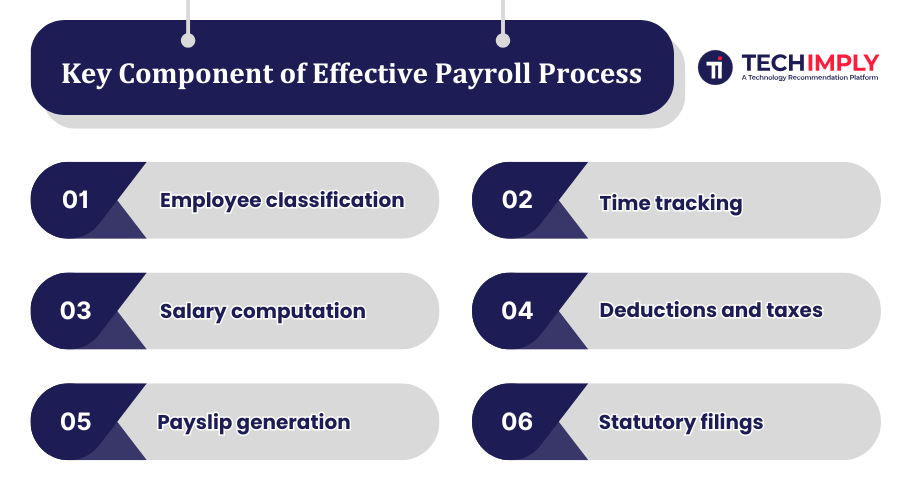
1. Employee classification
Accurate employment classification is important on a full-time, part-time, or contractor payroll processing cycle. This affects tax deductions, profits, and compliance in the wage process in HR. Proper classification ensures that your company has a payroll processing error-free and legally compliant.
2. Time tracking
Accurate time tracking is essential in the payroll processing process to ensure fair wage calculation. It directly impacts how you process the payroll by providing reliable data on employee hours worked. Proper tracking supports smooth company payroll processing and helps avoid payment errors or disputes.
3. Salary computation
This is an important step by step payroll processing, including calculation of gross salaries, net salary, bonus and overtime. This ensures that the payroll process takes place evenly and the employees receive considerable compensation. The exact calculation helps to maintain compliance and improve the overall company's payroll processing experience.
4. Deductions and taxes
TDS, PF, ESI, and other statutory requirements are covered; cuts and taxes are important in the payroll process. Proper handling ensures payroll is processed in compliance with laws. This step safeguards your company payroll processing from legal issues and ensures accurate employee payouts. The best payroll software for small businesses in India is user-friendly and helps avoid expensive compliance errors.
5. Payslip generation
It is an important part of the steps in payroll process, ensuring employees receive clear breakdowns of their earnings and deductions. Timely delivery supports transparency and trust in your company payroll processing. Payroll management software for small businesses simplifies salary calculation and payslip generation. It also completes the final step in how payroll is processed each cycle.
6. Statutory filings
These are a vital part of the payroll processing process, ensuring all government-mandated returns like TDS, PF, and ESI are filed on time. Timely compliance keeps your company payroll processing legally sound and avoids penalties. It also reinforces accuracy in how payroll is processed each month.

Fun Fact:
The term "payroll" appeared in the 1750s, was used to describe a list of employees, including "wages" and "roll".
Types of Payroll Processing Systems for Growing Businesses
Choosing the right payroll processing system depends on your business’s scale, goals, and internal capabilities.
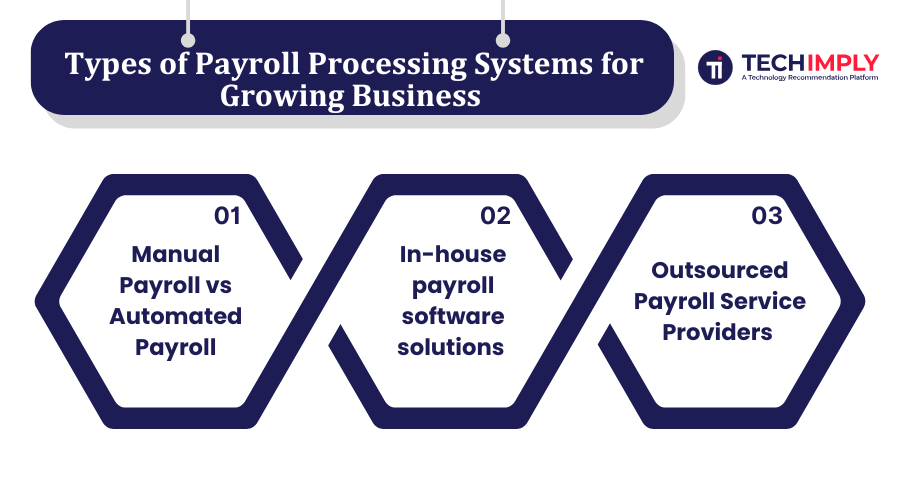
1) Manual Payroll vs. Automated Payroll
When you compare manual and automated methods, it is clear that automation increases each stage of the payroll processing steps. Manual payroll is often incorrect, slow, and risky in the event of compliance, while automated systems provide high accuracy, speed, and real-time regulatory updates. Although automation can have a higher advanced cost, it provides better long-term value.
2) In-House Payroll Software Solutions
This payroll process system provides complete control and adaptation to companies, making them ideal for companies with the dedicated HR team. These tools integrate time tracking and accounting systems to power the payroll process in HR. They also help treat payroll internally with more accuracy and flexibility.
3) Outsourced Payroll Service Providers
This payroll service processing helps reduce the HR workload by entrusting payroll tasks to external experts. It is especially useful for companies with limited HR employees or requires special support for the India payroll process.
Expert Advice
:The use of automated payroll software increases accuracy and ensures compliance with the tax laws, and streamlines the entire payroll process.
How to Choose the Right Payroll Process for Your Company
Choosing the correct system is a strategic decision. Consider the following factors:
1) Business size and number of employees
The size of your business and your workforce affects payroll processing system required for you. Larger companies usually require advanced equipment to manage complex payroll processes, while start-ups can begin with basic solutions to effectively process the payroll without more resources.
2) Compliance needs based on region
This impact the payroll processing process, as each state or country may have its own tax laws, labor rules, and deductions. A reliable payroll processing system should adapt to these differences to accurately process the payroll and maintain compliance across locations.Choosing the right payroll software ensures seamless synchronization between HR operations, employee records, and statutory compliance synchronization between HR operations, employee records, and statutory compliance
3) Budget and resources
Choosing the right payroll system depends on the balanced costs of functionality. Consider both the first setup and ongoing expenses to ensure that the solution fits the budget. Whether you're scaling or just starting, make sure it meets your payroll processing needs without compromising on essential features to process the payroll efficiently.
4)In-house HR capabilities
If your HR team is small or lacking specialized expertise, the user-friendly payroll processing system or outsourced payroll service processing may be more effective. This ensures that the payroll process in HR remains accurate and efficient without overwhelming the internal staff, which helps you treat the payroll well.
Common Mistake:
Incorrect labeling of employees as independent contractors can lead to legal complications and financial consequences.
Matching Payroll Features to Business Size and Needs
Small companies often focus on the steps of payroll processing stages, such as Payslip generation, compliance, and tax submission. In contrast, large companies require advanced facilities such as audit trails, detailed reporting, and ERP integration to manage complex processed payroll. Using the best payroll management software in India ensures accurately and timely salaries.
Cost vs. Efficiency in Payroll Software
Top payroll software in India increases the investment efficiency and reduces administrative stress. This balance between cost and efficiency leads to long-term savings and smoother payroll processing steps, making it a smart choice to optimize how you process the payroll.
Key Features to Look for in Payroll Processing Tools
Not all payroll tools are created equal. Here are must-have features:
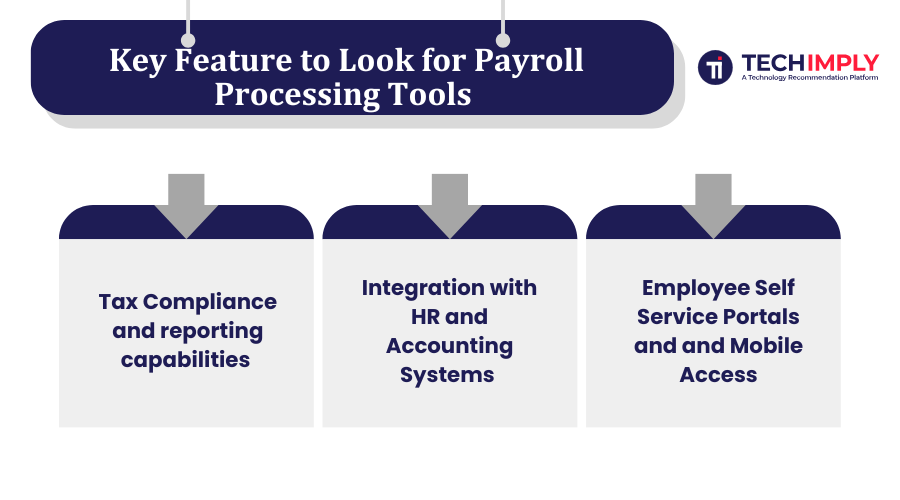
1) Tax Compliance and Reporting Capabilities
In order to ensure the payroll processed accurately, several main components must be considered. These include basic salary, allowances, EPFS, ESIS, and TDS, as well as bonuses, overtime, refund, and performance incentives.
2) Integration With HR and Accounting Systems
An effective payroll system is initially integrated with HR modules such as leave and holiday processing, as well as accounting software. Payroll & benefits software helps manage compensation, bonuses, and employees' allowances on the same platform.
3) Employee Self-Service Portals and Mobile Access
Offering employee self-service portals and mobile access lets staff view their payslips, tax documents, and leave balances anytime. This feature enhances transparency, empowers employees, and lightens the payroll process in HR by reducing routine queries, making company payroll processing more efficient.
Made it till here?
Then might want to give this a read: What is Payroll Management System and how does it work for HR?
Benefits of a Streamlined Payroll Process
Implementing a structured payroll solution brings multiple advantages:
1) Time and Cost Savings
Automation of the payroll processing process reduces manual tasks, reduces resource needs, and eliminates repetitive work. This important time and cost lead to savings, while your payroll process goes smoothly and efficiently.
2) Enhanced Accuracy and Reduced Errors
Digital payroll process systems improve the accuracy of each step of the payroll process, so that employees can be paid properly and on time. This reduces costly errors and boosts trust in your company payroll processing.
3) Legal Compliance and Risk Reduction
A compliant payroll processing system protects your company from fines and legal disputes, by ensuring that payroll is processed exactly in each cycle. It also helps maintain trust and consistency across your entire payroll process in HR. The best payroll software in India supports local tax rules and is integrated with HR systems.
You might also like to read: The Benefits of Real-Time Payroll Processing with Advanced Software
Top 10 Payroll Processing in India for 2025: Choosing the Right Payroll Process
Selecting the right payroll service processing platform can revolutionize your operations. Here are the top 10 payroll software in India:
1. Keka HR Payroll Platform
It is a comprehensive HR and payroll release for Indian companies, offering modules for appearance, results management, and compliance.
Key Features
-
Employee self-service portal
-
Automated payroll with Indian statutory compliance
-
Performance management tools
Pros
-
User-friendly interface
-
Customizable to fit various business needs
Cons
Pricing: Custom pricing based on company size and requirements.
2. Spine HR and Payroll
Spine HR and Payroll is an Indian HRMS solution offering payroll processing, employee management, and statutory compliance.
Key Features
-
Comprehensive payroll management
-
Employee self-service portal.
-
Statutory compliance with Indian laws
Pros
-
Tailored for Indian businesses
-
Robust compliance features
Cons
-
User interface may be outdated
-
Limited third-party integrations
Pricing: Custom pricing based on organizational needs.
3. factoHR
It is a cloud-based HR and payroll release designed for Indian small and medium-sized businesses, and offers modules for attendance, vacation, and performance management.
Key Features
-
Automated payroll processing
-
Mobile app for employees
-
Compliance with Indian labor laws
Pros
-
Mobile accessibility
-
Comprehensive HR modules
Cons
-
May have a learning curve for new users
-
Limited customization options
Pricing: Custom pricing based on company size and selected modules.
4. Rippling
It is a global HR and IT platform that integrates payroll, benefits, and device management into a single system.
Key Features
-
Unified HR and IT management
-
Automated compliance alerts
-
Customizable workflows
Pros
-
Comprehensive all-in-one platform
-
User-friendly interface
Cons
Pricing: Starts at $8 per user per month; additional modules may incur extra costs.
5. Paychex Flex
It is a payroll and HR solution designed for all sizes, which offers scalable features and compliance support.
Key Features
-
Customizable payroll processing
-
Employee self-service portal
-
Integration with accounting software
Pros
-
Scalable for growing businesses
-
Robust compliance and security features
Cons
Pricing: Check the website for pricing.
6. OnPay
It is a cloud-based payroll service, suited to small businesses, which offers HR tools and tax submission services.
Key Features
-
Automated tax filings
-
Employee onboarding tools
-
Integration with accounting software
Pros
-
Transparent pricing
-
Excellent customer support
Cons
-
Limited customization options
-
No dedicated mobile app
Pricing: For accurate result check the official website.
7. AgileHRO
It offers global payroll and HR services, focusing on compliance and employee experience for remote teams.
Key Features
-
Global payroll processing
-
Compliance management
-
Employee self-service portal
Pros
-
Supports remote and distributed teams
-
Comprehensive compliance support
Cons
-
Limited information on pricing
-
May be more suitable for larger organizations
Pricing: Custom pricing based on organizational needs.
8. Paycor
This talent management provides HR software and payroll software with a focus on workforce analysis.
Key Features
-
Talent acquisition tools
-
Payroll and tax compliance
-
Workforce analytics
Pros
-
Strong talent management features
-
User-friendly interface
Cons
-
May have a learning curve for new users
-
Limited international payroll capabilities
Pricing: Custom pricing based on company size and selected modules.
9. Papaya Global
It provides a cloud-based platform for global payroll, profits, and compliance control.
Key Features
-
Payroll processing in over 160 countries
-
Employer of Record (EOR) services
-
Global benefits and immigration support
Pros
-
Extensive global coverage
-
Comprehensive compliance management
Cons
Pricing: Custom pricing based on organizational needs.
10. BambooHR
It provides solution that focuses on small and medium-sized companies, which provides equipment for employee data management and performance tracking.
Key Features
-
Employee self-service portal
-
Performance management tools
-
Integration with third-party applications
Pros
-
User-friendly interface
-
Comprehensive HR suite
Cons
Pricing: Czech the official website for more accurate pricing.
The size of the HR salary software market has increased rapidly in recent years. This will increase from $ 35.27 billion in 2025 to $ 40.03 billion with a mixed annual growth rate (Cagr) of 13.5%in 2025.
Conclusion
Choosing the right payroll system can strengthen your business, save time, and reduce expensive errors. Comprehensive payroll management software in India supports businesses in automatic and scalable payroll operations. Whether you handle payroll processes under your own supervision or use a supplier, you must ensure compliance, openness, and employee confidence according to structured payroll. Invest wisely in your payroll processes to promote future growth.
Suggested Read:
1) Global Payroll Outsourcing – When is it Right for You?
2) Best Payroll Outsourcing Companies in India to Look out in 2025
3) How to Choose the Right Payroll Software for Your Industry?
4) Compliance Made Easy: How Payroll Software Helps Avoid Penalties
5) Why Every Business Needs Payroll Software: Key Advantages for 2025
6) Comparing Payroll Software Options for Different Business Sizes and Needs
7) The Ultimate Guide to Choosing the Best Payroll Software for Your Business
8) The Role of Artificial Intelligence in Modern Payroll Software
9) 8 Must-Have Features in Sustainable Enterprise Payroll Software
10) Upgrade Your Payroll System with the Best Software Solutions