


 0.0
0.0


Azuga Fleet is a cloud-based fleet management and GPS tracking software designed to help businesses improve vehicle tracking, driver safety, and operational efficiency. It offers real-time GPS tracking, AI-powered driver...
View ProfileField Service Management Software in India streamlines operations by means of dealing with subject body of workers activities like scheduling, dispatching, and monitoring. It complements productivity, ensures well timed mission finishing touch, and improves consumer satisfaction. With features like actual-time updates and path optimization, it enables groups lessen costs and enhance performance. Ideal for industries like logistics, utilities, and upkeep services.

Azuga Fleet is a cloud-based fleet management and GPS tracking software designed to help businesses improve vehicle tracking, driver safety, and operational efficiency. It offers real-time GPS tracking, AI-powered driver...
View ProfileQuoteIQ is a comprehensive CRM designed to streamline operations for home service businesses. Our software empowers businesses to manage clients, create estimates, send invoices, and drive growth efficiently through tracking...
View Profile

What is Zendesk AI? Zendesk AI is an AI-powered customer service solution built into the Zendesk platform to automate and enhance support operations. It uses machine learning and conversational AI ...
View Profile

What is Salesforce? Salesforce is the world's main Customer Relationship Management (CRM) platform added entirely at the cloud. It presents a unified suite of powerful cloud-based totally software program products—called Customer...
View Profile

What is ServiceTitan? ServiceTitan is a cloud-based field service management platform designed to help commercial and residential service businesses streamline operations, manage scheduling, automate invoicing, and optimize field workforce performance. It...
View Profile
Leading Field Service Management Software from ServiceMax. Enterprise field service solutions that transform service organizations globally. ServiceMax provides the first IoT-enabled Cloud platform for smart, proactive field service.
View Profile

The SAP Field Service Management solution enables technicians to improve customer satisfaction by using mobile tools, artificial intelligence (AI), and machine learning. With a thorough grasp of client needs, the...
View ProfileWhat is Samsara? Samsara is a cloud-based IoT (Internet of Things) platform designed to help organizations improve the efficiency, safety, and sustainability of their operations. It provides end-to-end solutions for fleet...
View Profile
Oracle Field Service Cloud is a cloud-based field service management software that helps you deliver better service experiences and improve the efficiency and effectiveness of your field organization. The software...
View ProfileWhat is Zuper? Zuper is a comprehensive, cloud-based Field Service Management (FSM) software solution. It is designed to automate and streamline the entire lifecycle of field service operations—from initial scheduling and...
View Profile
What is Jobber? Jobber is an award-triumphing, give up-to-quit discipline service control (FSM) software platform designed to assist small and mid-sized home carrier corporations organize, operate, and grow. It streamlines your...
View Profile

An a Read More...
View Profile

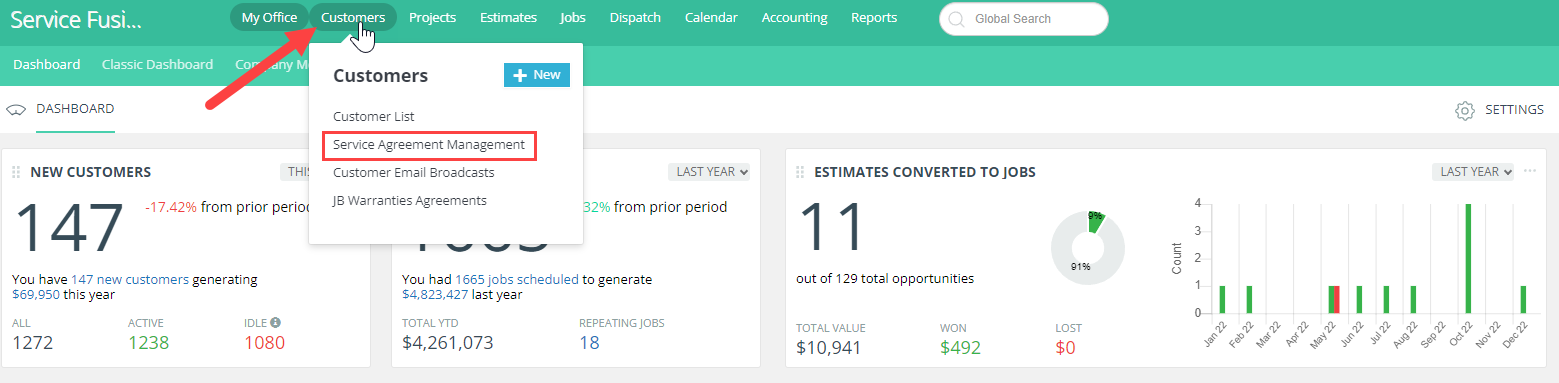
Service Fusion is a cloud-based field service management software designed to streamline operations for service businesses, particularly in industries like HVAC, electrical, plumbing, and contracting. It helps businesses automate job...
View Profile
Check How simPRO can help to automate Indian Business. Techimply provide their list of features, pricing, Free demo and Comparison with the best alternative
View Profile
Housecall Pro is a cloud-based field service management software that helps streamline operations for home service businesses such as plumbing, HVAC, electrical, and cleaning services. Launched in 2013, it is...
View Profile
FieldEZ has Over 45,000 Field staff use FieldEZ for instant job scheduling, attendance and leave, routing and location tracking, customer billing, CRM, Invoice and Quote and more.
View Profile
The origins of Workiz may be traced back to a pair of locksmith specialists who, by day, surfed the waves in San Diego, California, and, at night, rescued individuals who...
View Profile
IFS field service management is the most experienced and successful service-optimization software company in the world, and it put it's sole focus on helping companies like yours automate and streamline...
View Profile

What is Connecteam? Connecteam is an all-in-one employee management software designed to help businesses streamline operations, improve internal communication, and enhance workforce productivity. Built primarily for non-desk employees, Connecteam centralizes tools...
View Profile

Check How Synchroteam can help to automate Indian Business. Techimply provide their list of features, pricing, Free demo and Comparison with the best alternative
View Profile

Field Service Management is essential for businesses that send their employees in the field or outside as a part of their services like maintenance, installation, repair, or other. For companies offering services like electrician, plumbing, electronics device repairs/maintenance, cable operator, fleet organizer, and many others, the field service management software is the most beneficial system that automates the process of deploying and tracking your employees during their field duties. The best field service management software makes everything easy and efficient, from assigning any work to the field worker to its successful completion. Thus, it makes effective and fast coordination with your field workers and quickly responds to your customers about the real-time status of their complaints/services.
Software for Field Service Management offers several advantages to your business as below.

This software helps you streamline your operations like assigning field services, tracking, coordinating with field employees, and getting real-time updates about their work status. This helps enhance your business productivity by properly assigning employees based on their skills and work requirements.
Using field management software, you can keep up-to-date information about your field workers like their present location, the time required/taken to complete the job, and more. Thus, with real-time data availability, the field manager can quickly decide to assign duties to employees and best utilize the time of the field employees.
Using Field Service Management, it becomes easy for field managers to assign work accurately based on the demand of work and the efficiency of workers. This makes quick completion of work and enhances work efficiency and productivity of the employees. Efficient work assignments reduce the stress level of employees, increase their job satisfaction and better work experience.
Field Service Management Software India reduces unwanted cost burden by eliminating manual work with the possibility of errors. The software helps provide accurate information about the problem, location, and other important information like sharing exact details of the customer’s location, you can reduce unnecessary wastage of time and petrol of your field employee for finding location.
The other rich features of the software make it easy for work employees to troubleshoot issues, reduce the cost of the business and increase revenue.
Field Management Software eases the work of the managers to assign field tasks to the workers and replace or change the task in case any field worker has any issue in reaching the place or solving the problem. With the real-time availability of all employees, he can easily assign a nearby employee to attend to the customer. Thus, it offers superior flexibility in making decisions, managing large workforces, and attending to all customers’ inquiries efficiently.
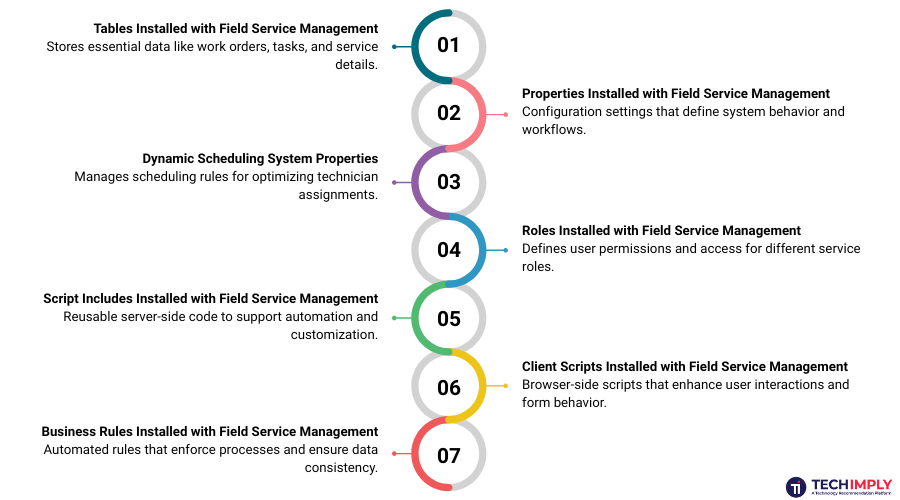
It includes Work Order, Work Order Flow, Work Order Management, Work Order Task, Work Task Flow, Work Task Model, Questionnaire, Scheduling History, and many more tables to store the data necessary to get real-time reporting and analytics.
The best field service management software in India comprises advanced properties that enhance the functionalities of the software. The properties include calculating approximate time and distance for travel, dispatcher workspace, database view, and many others.
These properties enable controlling different aspects like scheduling frequencies, iteration optimization, travel time calculations, and automatic assignments and are useful in optimizing task assignments, enhancing efficiency, and lining up the dynamic scheduling process based on your requirements.
For different types of access, create or view a case, view additional customer service data, and several other tasks.
The script includes the resource chat of the field service, transfers relevant information, links to the newly created work order, creates questionnaires, and links them with work order tasks.
Client scripts comprise Calculate Window End, Populate Short Description, Update UI on load and model change, Hide End Date Fields, Part requirement activation, Show/Hide Task Map section, and Update Model and Quantity based on Asset.
The business rule includes accepting & assigning work order tasks, auto close Deliver and Receive Tasks, Cancel Work Tasks, Field Service Automation Group Types, Create First Work Order Tasks, Field Service Automation Qualification, Work order task query rules, and many others.
It assists businesses to efficiently manage all the resources that they have sent for field operations and processes. It helps field employees to visualize their daily goals and accomplish the given tasks and assist them. Service Management Software India helps field employees connect with customers and allows self-serve customers if required such as locating the field worker/arial time/appointment confirmation, and more. Thus, FSM software helps businesses increase their customer experience and loyalty, which boosts their growth.

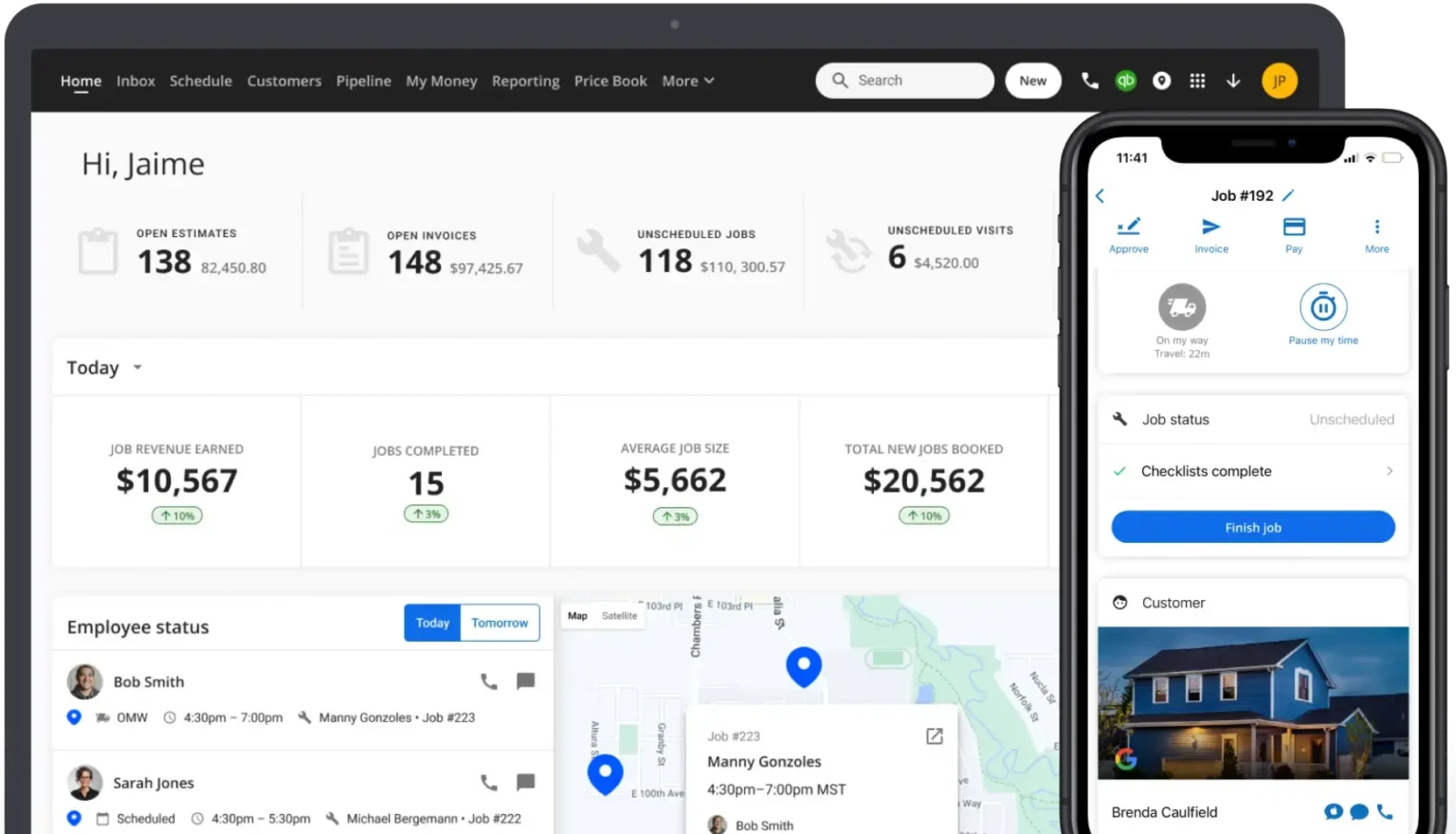
It is a field service management software that gives business workflow solutions to field employees from different industries such as electrical, construction, plumbing, technicians, and more. It offers the best solutions for scheduling work, assigning field employees, payment processing, invoicing, and more.
Features
Pros
Cons
Pricing
This cloud-based software for field service management is useful for all sizes of businesses from different industries. It offers efficient field service management, GPS tracking for the fleet, VoIP solutions, a mobile app, and more. Its rich features include scheduling, dispatching, customer management, invoicing, inventory management, online payments, and more.
Features
Pros
Cons
Pricing
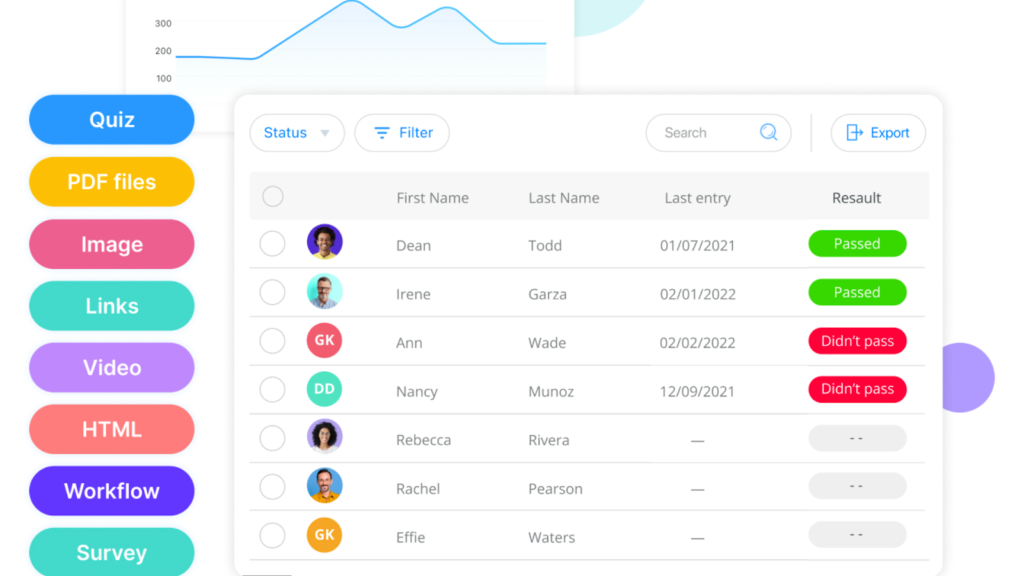
This robust and mobile-first platform is designed for non-desk teams to automate business processes such as tracking attendance, employee scheduling, task management, training, payroll administration, etc. This FSM software helps increase team engagement, improve communication, and make daily operations efficient and productive.
Features
Pros
Cons
Pricing
It is a popular service field management software that optimizes fieldwork, schedules appointments, and connects employees, customers, and products in a single platform for seamless on-site services. It automates manual business processes and efficiently manages and schedules field service teams to boost productivity.
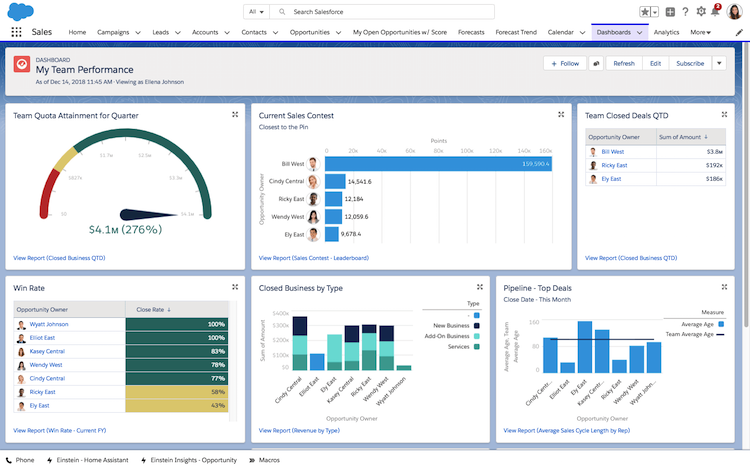
Features
Pros
Cons
Pricing
It is an efficient field service management platform, which is most beneficial for the fast-growing service businesses. With easy customizable features, it offers best-in-class integrations, combining configurable workflows and the best customer support. With its user-friendly mobile app, customer portal, and desktop app, it facilitates field service employees, field managers, and customers to communicate effectively.
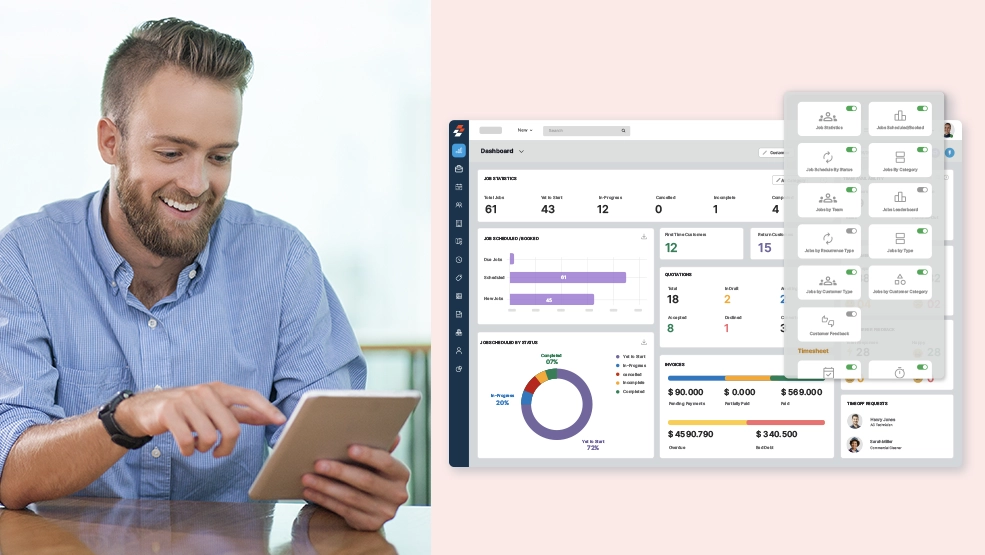
Feature
Pros
Cons
Pricing
Get a quote on request

AI offers a significant contribution to strengthening industries by giving them technological advantages. In FSM software, adopting AI can help in many ways, such as, AI-based scheduling calculates travel time, issue priority, customer preferences, chatbots and self-service options for customers, preventative maintenance schedules, and more.
Self-service keeps the details updated with the organization and customers, including their problems, and simplifies field employees' tasks about the issue and how to resolve it. Some important features like knowledge bases and self-scheduling help customers resolve their problems, schedule appointments, and release field workers for their other important tasks.
With the increasing use of digital payment systems, it has become easy for businesses and customers to make transactions. Cashless or payment using smartphones has reduced the costly investment of card readers and provided secure, efficient, and easy payment options to customers. It allows you to make payments through a secure portal on the business website using a third-party payment option such as PayPal, Stripe, or Square.
With appropriate information availability regarding the change in route of customer’s location, rescheduled or canceled appointments, issue resolved, or other help field employees’ unnecessary visits to the field save unwanted fuel consumption and reduce the emission of CO2.
Offering an employee-friendly environment using flexible or hybrid work options. This helps employees to balance their work and personal life and enhance work efficiency and productivity. Allowing employees to be dispatched from home rather than a central office, and other flexible options reduces unwanted burden on the employees and organization.
Cloud-based FSM software plays a vital role in enhancing business operations. Integration with existing software systems like CRM, ERP, HR, Payroll, and more can help in real-time watching and getting quick information about the status of customers’ issues, and field employees. This makes it easy for businesses to get actual information about their employees’ productivity, expenses, and other details, helps setting the required parameters to design the growing business strategy.
Arranging soft skills programs for employees is essential to enhance their technical, communication, responsiveness, and soft skills necessary to interact with customers. Thus, enhancing employees' skills helps them to serve customers efficiently and quickly.
Many organizations have started focusing on health administration regulations and occupational safety for accessing emergency procedures, safety checklists, and many other ways to help enhance the safety of field employees.
In field service management, the integration of advanced technologies such as ML, AI, and IoT simplifies various processes including intelligent scheduling, predictive maintenance, remote diagnostics, and many others. The field service management’s global market size is expected to rise from 4 billion USD to 7.3 billion USD by 2028 due to the unmatched advantages of FSM software.
Managing field services can be simplified using the best field service management software in India. Organizations that follow current and future field service management trends can strengthen relationships with their customers. The benefits of the best field service management software in India include increased customer loyalty, customer and employee retention, increased revenue, and many others. By adopting future trends, FSM software can enhance the overall efficiency of the field management system and give lucrative benefits to businesses, field employees, and customers in terms of better management, improved customer services, overhead cost reductions, work flexibility, and several others.
This software can be useful for field service workers such as electricians, construction workers, plumbers, technicians, security workers, and many others who work in shifts between office and field areas. The FSM software simplifies their work complexity by improving the communication gap between field service workers, field managers, and customers.
Understanding the key requirements of customers and scheduling the field workers in difficult situations like workforce shortages, location, and lack of integration with other systems that make unavailability of real-time data necessary for efficient management of field operations and processes.
FSM software stands for Field Service Management software. It is a tool used to manage and optimize all aspects of a business's operations that occur "in the field" or at a customer's location.
CRM (Customer Relationship Management) and FSM (Field Service Management) serve different purposes. CRM focuses on managing customer interactions, sales, and marketing to build relationships. FSM, on the other hand, is operationally focused on the logistical side of service delivery, such as scheduling, dispatching, and tracking field technicians.
While FSM is not a standard acronym for a specific HR function, the principles of Field Service Management can be applied to Human Resources. In this context, FSM relates to the management of "field" employees—those who work outside a traditional office, such as sales representatives, home health aides, or remote technicians. HR teams use FSM-like processes to manage scheduling, performance, and communication for this mobile workforce.




