In today's competitive job market, talent acquisition should be developed beyond the practice of hiring strategies for traditional work. HR leaders use fast, data-driven methods effectively to identify, engage, and maintain top talent. Leveraging analytics makes better decisions, hires faster, and ultimately, enables strong teams. This guide explains what really talent acquisition means, why data is important, and the strategic trends 2025 and future of how to form HR Talent acquisition.

Looking for Diversity Recruiting Software?
Check out Techimply's best Diversity Recruiting Software for your business.
What are Talent Acquisition Strategies?
The true talent acquisition meaning lies in creating a permanent pipeline of skilled professionals to support business development. Talent acquisition strategies are long-term plans that help organizations to find and appoint the right people. These strategies are just beyond filling open positions, including identifying the needs of the future, attracting top candidates, and building a strong employer brand.

Fun Fact:
The first online job posting was in 1994, kickstarting today’s digital talent acquisition!
Unlike traditional recruitment, which is usually reactive, talent acquisition takes a broad and more strategic approach. It is closely linked to business goals, work plan, and success management. A strong strategy for acquiring talent ensures that the organization can increase and adapt to the right roles at the right time. This ongoing process is important to create a successful talent collection team and shape the future of any company.
Need the best Talent Management Software? Discover top-rated talent management software
Why Should HR Leaders Use Data in Talent Acquisition?
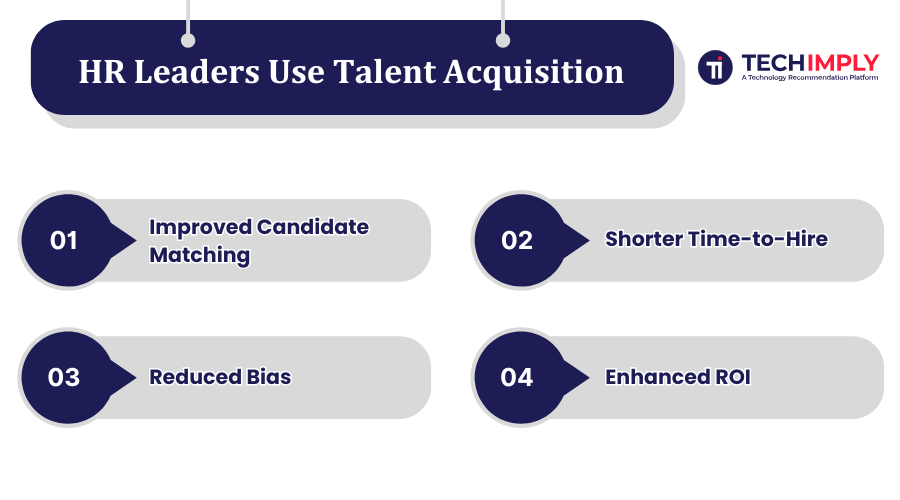
Why is it necessary here:
1) Improved Candidate Matching
Improved candidates are one of the biggest benefits of using data in strategies for talent acquisition. By analyzing historical data, such as hiring results, employee performance, and rates of retention, HR Management Software indiacan better understand what a successful hire is. This talent acquisition helps the team candidates find more accurate roles. Instead of relying only on CV or interviews, the data gives a deep insight and leading to smarter hiring decisions. Talent Acquisition Team plays an important role in coordinating the efforts to hire for long-term goals for the company.
2) Shorter Time-to-Hire
Shorter time to hire data-operated talent collection is a significant advantage of strategies from shorter time to time. When we look at data from each stage of the hiring process, the HR team for talent acquisitions can see delays or bottlenecks, such as slow interview planning or a low response rate. This allows them to make rapid improvements and speed up the overall process.
3) Reduced Bias
There is a great advantage in using data in talent acquisition strategies with reduced bias. When hiring decisions depend on data points - such as skills, experience, and performance metrics - rather than gut feelings or faith, the process becomes more fair and purposeful. This talent acquisition helps focus on experts that really mean something and reduce the risk of unconscious bias.
4) Enhanced ROI
Enhanced ROI is another strong reason to use data in your talent acquisition strategy. By tracking where the best candidates come from -for example, job boards, referrals, or social media -HR -Talent collection teams it can invest more in sources that produce results. This means less than dollars on less money and every task spent on low -low-performance channels. Data transforms how HR teams approach talent acquisition roles and responsibilities, helping them move from reactive hiring to strategic workforce planning.
Looking for top Talent Sourcing Software?
Check out Techimply's Talent Sourcing Software for your business.
What are the Strategic Trends in Talent Acquisition For 2025?
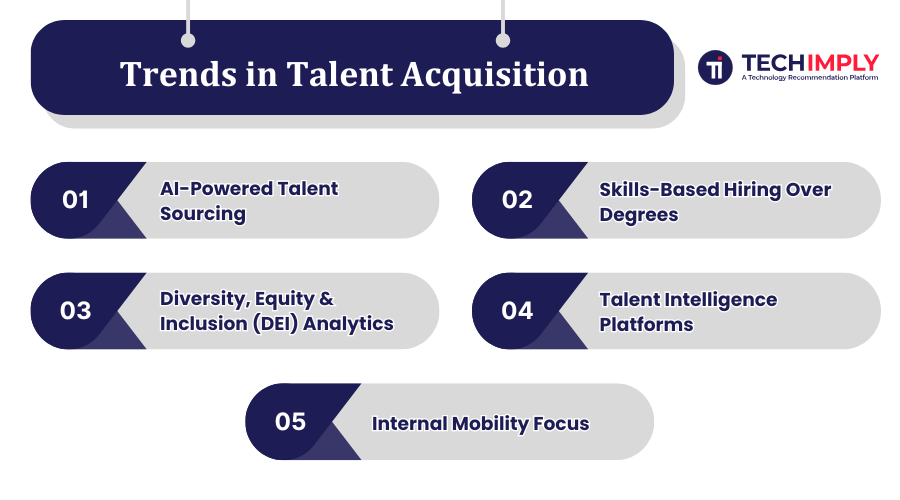
2025 is ushering in new strategic trends in talent acquisition that HR leaders must adapt to:
1. AI-Powered Talent Sourcing
AI-operated tools change talent acquisition strategies by automatically taking time tasks such as screening and candidate ranking. These devices analyze large amounts of data to guess how well a candidate fits a role based on skills, experience, and previous performance. This talent helps the talent acquisition team focus on the most qualified candidates in this process. By improving accuracy and saving time, recruiting software improves the overall efficiency of recruitment and talent acquisition, making HR talent acquisition easier for teams.
2. Skills-Based Hiring Over Degrees
A growing talent acquisition strategy for 2025 focuses on skill-based recruitment rather than relying on degrees or formal education. Companies assume that practical skills, hands experience and a candidate's ability can be more valuable than educational background. This shift allows talent acquisition specialists to use a broad and more diverse talent pool.
3. Diversity, Equity & Inclusion (DEI) Analytics
Using data to track DEI goals is becoming a key part of modern talent acquisition strategies. Companies can measure diversity in their hiring process and spot areas that need improvement. This helps HR talent acquisition teams make fairer, more inclusive decisions. With DEI analytics, the talent acquisition team can ensure equal opportunities and build a stronger, more diverse workforce.
4. Talent Intelligence Platforms
Talent Intelligence Platforms become important tools in modern talent acquisition strategies. They provide insight into real-time data and the global talent pool, industry trends, and competitive activity. This helps HR Talent Acquisition Team make more decisions on where and how to attract top candidates. By using this insight, the talent acquisition team can create a more agile and informed acquisition strategy, quickly adapting to the needs of talent. A modern talent acquisition system helps to streamline the processes of hiring through automation and centralized candidate management.
5. Internal Mobility Focus
Focusing on internal mobility is a growing trend in talent acquisition strategies. Instead of always looking outside, companies are now identifying existing employees who can fill open roles. This approach saves time and reduces the cost of hiring at work, and promotes employees' commitment and retention. For HR Talent Acquisition Teams, promoting from within ensures a better cultural fit. Effective strategies should focus on reaching all talents, including passive candidates and weak groups.
List of Best Talent Acquisition Applications for Talent Sourcing
Finding the right Application for Talent Sourcing is crucial. Below are five top platforms to consider in your talent acquisition strategy:
1. LinkedIn
LinkedIn is the world’s largest professional networking platform, ideal for both passive and active talent sourcing. It is a top choice in many talent acquisition strategies, especially for roles requiring experienced professionals.
Key Features
-
Advanced candidate search filters
-
InMail messaging
-
LinkedIn Recruiter & Talent Insights
-
Job posting and applicant tracking
-
Smart suggestions based on job descriptions
Pros
-
Access to a vast global talent pool
-
Strong employer branding and content sharing tools
Cons
-
High cost for premium features
-
Limited automation and ATS integration
Price: LinkedIn premium subscription starts at $59.99/month; enterprise pricing is custom.
2. Zoho Recruit
Zoho Recruit is a flexible applicant tracking system (ATS) and Candidate Relationship Management (CRM) tool designed to make the Human Resource Talent acquisition and effective. It is suitable for internal talent acquisition teams as well as staffing agencies.
Key Features
-
Resume parsing and keyword matching
-
Customizable hiring workflows
-
Automated job posting to multiple job boards
-
Interview scheduling and calendar sync
-
Candidate portal and status tracking
Pros
-
Affordable and scalable for small to medium teams
-
Highly customizable workflows and user roles
Cons
-
Reporting and analytics features are basic
-
User interface can be overwhelming for beginners
Price: Plans start at $30/user/month for the Standard edition; higher tiers are available with additional features.
3. SeekOut
Seekout is an AI-based recruitment platform designed to help companies find difficult candidates, with a strong focus on diversity recruitment. It is especially useful for technical and niche roles, which making it a valuable tool in advanced talent acquisition strategies.
Key Features:
-
AI-driven talent search with diversity filters
-
Talent analytics and market insights
-
GitHub and social profile integration
-
Boolean and natural language search support
-
Automated outreach and talent pipelines
Pros
-
Excellent for sourcing diverse and technical talent
-
Robust filters and talent insights
Cons
-
Higher learning curve for new users
-
Premium pricing may not suit small teams
Price: price starts at $499/month.
4. HireEZ
Hireez is a powerful AI-driven talent sourcing platform designed to streamline and scale recruitment and recruitment efforts. It is initially integrated with most talent acquisition systems, helps to automate teams and personalize the search.
Key Features
-
AI candidate sourcing from 750 M+ profiles
-
Email finding and sequencing tools
-
Integration with major ATS platforms
-
Real-time market insights and talent pool analytics
-
Diversity sourcing filters
Pros
-
Strong AI matching and sourcing capabilities
-
Excellent ATS and workflow integration
Cons
-
Requires onboarding to fully leverage features
-
Pricing may be high for small teams
Price: Pricing is quote-based, typically starting around $169/user/month for core features. Enterprise plans are custom.
5. Recruitee
Recruitee is a software for associated recruitment and talent acquisition designed for growing companies and agencies. It supports end-to-end hiring from solving to This makes the talent acquisition strategies ideal for streamlining.
Key Features
-
Drag-and-drop hiring pipelines
-
Team collaboration and task assignment
-
Employer branding and customizable careers pages
-
Automated job posting to multiple boards
-
Reporting and analytics dashboard
Pros
-
User-friendly interface for collaborative hiring
-
Great for small to mid-sized talent acquisition teams
Cons
-
Limited sourcing tools compared to AI-driven platforms
-
Fewer advanced features for enterprise-scale needs
Price: Starts at $216/month for the basic plan; custom pricing for larger teams and advanced features.
Conclusion
Data driven talent acquisition strategies are no longer optional- they are essential to be competitive. From AI-driven platforms to analyzed decisions, modern HR-Talent acquisition teams will have to benefit from each tool and insight available. Whether you're a talent acquisition specialist or leading a broader human resources talent acquisition function, success in 2025 and beyond depends on using smart data and the right tools.