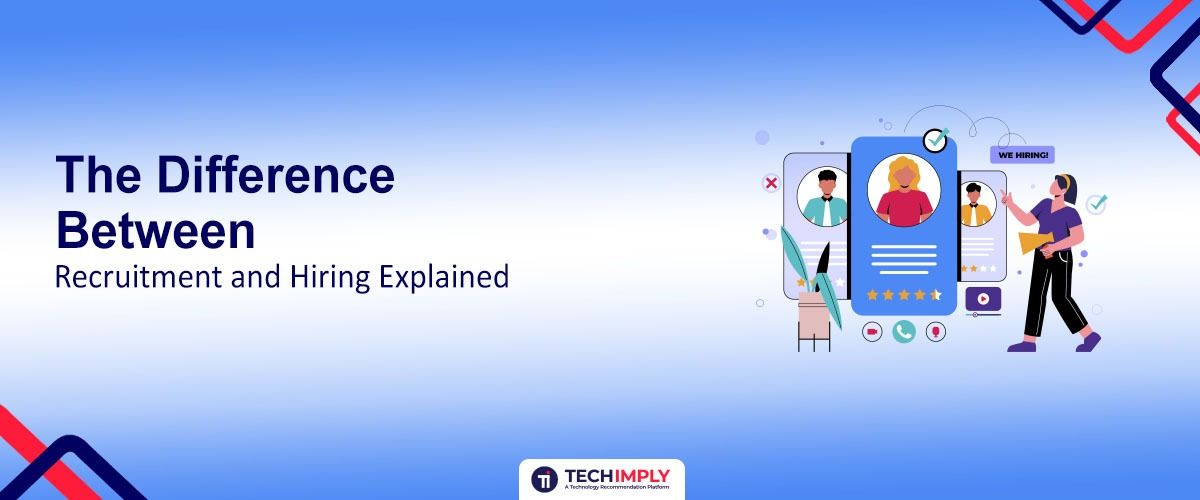
The difference between recruitment and hiring is that recruitment is the process of searching, attracting, and building a pool of suitable candidates for current or future roles, while hiring is the final step of selecting the right candidate, finalising the offer, and bringing them on board. In India’s dynamic job market, effective recruitment creates a strong talent pipeline, and smart hiring ensures the right fit for the role, culture, and long‑term business needs. Together, they form a seamless talent‑acquisition journey that reduces time‑to‑join and strengthens organisational performance.
What is Recruitment?
In the Indian market, recruitment is the complete process of finding, luring, screening, and hiring qualified applicants to fill open positions in an organization. It is at the center of human resource management's hiring process, encompassing everything from workforce planning and finalizing job descriptions to recruiting via portals, recommendations, and campus drives in places like Bengaluru, Mumbai, and Delhi-NCR. HR recruiting process optimization using job boards, applicant tracking system, and increasingly AI tools assists organizations in cutting down on hiring time and creating a robust talent pipeline in this fiercely competitive environment.
In the Indian context, an HR recruiter is a professional who creates sourcing strategies, reviews resumes, arranges interviews with hiring managers, and oversees correspondence with applicants along the recruiting cycle. Beyond simply filling jobs, an HR recruiter's responsibilities also include branding the company, making sure that all paperwork complies with regulations, and keeping records for potential future recruiting requirements. The distinction between HR and recruiters is further made clear by this functional emphasis; although HR considers the larger people ecosystem, a recruiter or HR recruiter concentrates only on attracting and integrating talent.
In order to accommodate changing corporate needs, recruiting in India really involves focused measures, including employing HR managers, fresh drives, and contractual or project-based employment. A disciplined recruitment vs. hiring method guarantees that, once the perfect applicant is found, the hiring phase provides negotiation and onboarding proceeds swiftly and seamlessly, whether it is for high-skilled IT jobs or mass recruitment in retail.
The key responsibilities of recruiters include:
-
Organizing and overseeing hiring and staffing to draw in, choose, and integrate the best people.
-
managing payroll, benefits, leave, and attendance in accordance with legal and corporate obligations.
-
creating and carrying out career-development, performance management, and training programs.
-
keeping personnel data, managing statutory filings, and making sure labor regulations are followed.
-
managing employee interactions, fostering a strong workplace culture, and settling disputes or complaints.
What is Hiring?
Hiring is the last, decision-driven stage in the process of bringing a selected applicant on board in India. This phase comes after the recruitment step has been completed. Formal onboarding, offer negotiation, evaluation, and final interviews are the primary emphasis of this phase, which begins after the HR recruitment process has concluded and created a shortlist of candidates. About the distinction between hiring and recruiting, hiring is the process of filling a job and transforming the most qualified candidate into an official employee of the organization, whereas recruitment is the process of developing a talent pipeline.
Human resource professionals and recruiters are often the ones in charge of the recruitment marketing process in the Indian market. For the purpose of ensuring that the selected candidate is compatible with the position, wage range, and cultural norms, they collaborate with recruiting managers. The method, which conforms with the norms of the corporation and the local labor standards, includes a number of different steps, including background checks, document verification, the issuance of offer letters, and joining formalities. As firms grow across regions, and in Delhi-National Capital Region (NCR), time-to-join and retention rates are reduced via the use of structured recruitment tactics. This is especially helpful in a labor market that is extremely competitive.
The primary responsibilities that are involved in hiring also highlight the differences between human resources and recruiters. Human resources considers hiring to be a component of the larger people strategy, whereas an HR recruiter focuses on carrying out the tactical stages of recruitment in human resource management. These stages include final shortlisting, interviews, and offer management. Due diligence and cultural compatibility are given even greater weight in the final recruitment choice for focused actions such as hiring HR managers or other leadership roles, which is why this methodical approach is so important.
The key responsibilities of HR professionals in hiring include:
-
On the basis of their talents, experience, and cultural compatibility, the applicants on the shortlist are being finalized.
-
carrying out the last rounds of interviews with recruiting managers and coordinating their performance.
-
While negotiating with the selected applicant, compensation, perks, and joining timelines are all being discussed.
-
Checking references and doing background checks in accordance with the company's policy in place.
-
Making sure that offer letters and job contracts are prepared and distributed in accordance with Indian labor standards.
-
The management of the joining formalities, including the documents, identification, and access to the system.
-
Making certain that the onboarding process is completed without any problems in order to boost early-stage productivity and engagement.
Major Differences Between Recruitment and Hiring
1. Purpose
Recruitment is a strategic activity that is conducted over a lengthy period of time with the objective of constructing a strong talent pipeline for both existing and future jobs within the organization. The analysis of personnel requirements, the definition of profiles, and the creation of visibility for opportunities are the primary foci of this. Hiring, on the other hand, is short‑term and transactional, triggered by a specific vacancy, and aims to close that position by selecting, finalising, and onboarding the most suitable candidate.
2. Approach
A strategy that is both proactive and ongoing is used in the recruitment process. Human resources and recruiters are continually marketing the employer brand, maintaining talent communities, and engaging potential applicants, even when there are no vacant positions at the moment. In the process of hiring, a need-based, reactive approach is taken, with the process beginning immediately when a position has been authorized and progressing rapidly through final interviews, offer negotiations, and paperwork.
3. Scope
When it comes to human resource management, recruitment encompasses a wide range of activities, including workforce planning, job analysis, sourcing over portals and campuses, and cultivating a diversified candidate pool across India. Partnerships with organizations, educational institutions, and online platforms are frequently involved. In the process of hiring, the vast scope is narrowed down to the last five to ten prospects, with the emphasis being placed on validation, selection, and formal onboarding rather than widespread outreach.
4. Focus
In addition to enhancing the applicant experience and the reputation of the business, recruitment is centered on the strategy of recruiting the appropriate people in terms of their abilities, experience, and cultural compatibility. Evaluation of those applicants who have been shortlisted, verification of references, negotiation of offers, and facilitating a seamless transition into the organization are the primary objectives of the hiring process. This is especially true for the recruitment of essential positions, such as the recruitment of an HR manager.
5. Metrics
The quality of applicants, the efficacy of the source, the amount of time it takes to screen candidates, and the strength of the pipeline are all factors that contribute to the optimization of the human resources recruiting process over time. Time-to-join, offer-acceptance rate, early-attrition (0–90 days), and role-fit clarity are the metrics that are used to evaluate the effectiveness of hiring. These metrics have a direct influence on the productivity of businesses and the stability of teams.
6. Skills
A strong communication and technological skill set is required for the function of HR recruiter and hr recruiter meaning, which focuses on sourcing, screening, relationship-building, and market-awareness. When it comes to hiring, it is necessary to possess abilities such as decision-making, negotiation, dispute resolution, and stakeholder management. These talents are frequently shared by the human resources recruiter and the recruiting manager, underscoring the distinction between HR and recruiters in practice.
7. Tools
The management of a huge number of candidates across the Indian market is accomplished through the utilization of application tracking systems (ATS), job boards, social media platforms, employee recommendations, campus campaigns, and other recruitment methods. The process of hiring relies on several tools and technologies, including interview scorecards, assessment tools, background-verification vendors, digital offer-letter systems, onboarding portals, and payroll linkages, in order to swiftly finalize and train the most suitable applicant.
Why Recruiting and HR Are Both Essential to Business Success
The processes of recruiting and human resources are both crucial to the success of businesses in India. This is because they guarantee that organizations are able to attract, select, and keep the proper individuals in a job market that is extremely competitive. A robust human resources recruiting process has a direct influence on productivity, customer experience, and profitability in industries such as information technology (IT), manufacturing, retail, and startups, which are experiencing significant development. Human resources (HR) integrates this talent into the larger people strategy, aligning recruiting decisions to organizational goals and compliance. While recruitment focuses on establishing a talented pipeline, HR software integrates this talent into a wider people strategy.
Within the Indian context, the job of human resource recruiter and the definition of the term "hr recruiter" extend beyond the simple act of filling vacancies. Recruiters serve as the initial point of contact for applicants, therefore influencing employer branding and market perception in places such as Bengaluru, Mumbai, Delhi-National Capital Region, and Hyderabad. When it comes to human resource management, having a well-structured recruiting framework may assist businesses in reducing the amount of time it takes for employees to join, managing peak hiring cycles, and efficiently managing both mass recruitment and specialty positions.
Due to the fact that cultural compatibility and strategy alignment are just as important as technical abilities, this becomes especially important during the recruiting process for human resource managers and other leadership positions. HR is responsible for overseeing the entire people ecosystem, which includes payroll, performance, rules, and compliance, whereas recruiters are primarily concerned with finding, screening, and employing candidates. The distinction between HR and recruiters resides in the scope of their responsibilities as opposed to their specialization.
However, when recruitment and human resources work together, companies see greater role-fit, fewer attrition, and faster onboarding, all of which are essential for growing as India's economy continues to experience rapid growth. In actuality, addressing recruiting and hiring as operations that are complementary to one another rather than functions that overlap increases the results of talent acquisition and supports the success of businesses over the long run.
Conclusion
One of the key distinctions between recruiting and hiring is the breadth and duration of the process, particularly for a technology and software services company such as ours in India. The process of recruitment is a proactive process that involves sourcing, screening, and creating a solid talent pipeline for the technology industry across campuses, portals, and recommendations. The third phase is hiring, which includes identifying the ideal applicant, putting the finishing touches on the offer, and integrating them into the project teams. While recruiting is primarily concerned with the creation of a healthy pipeline, hiring is concerned with ensuring that the responsibilities, timetables, and requirements of the client are met.