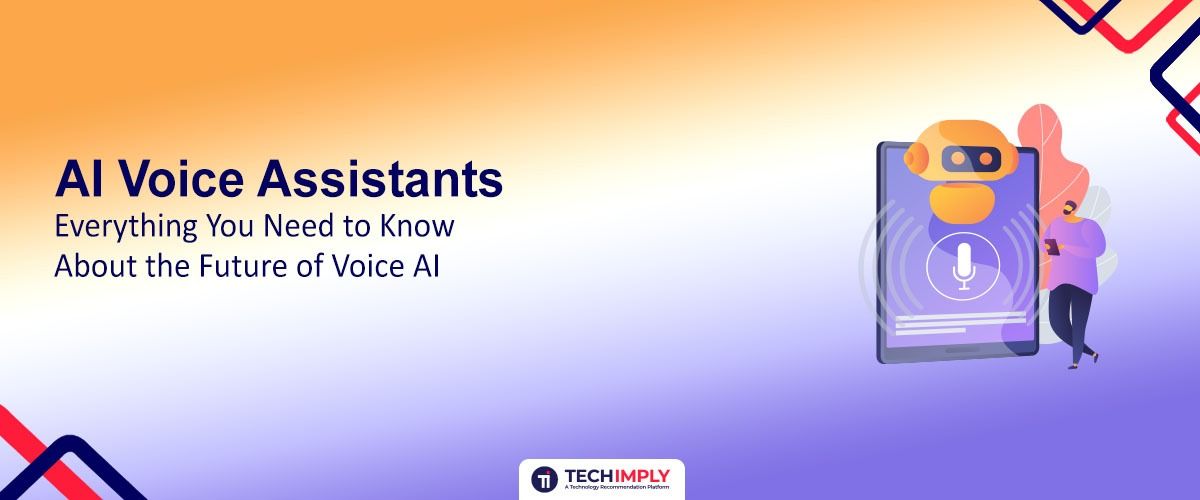
In 2026, AI voice assistants have evolved into the primary interface for India’s digital economy, bridging the gap between complex technology and diverse user needs. Beyond simple commands, these assistants now master regional dialects, enabling millions in Tier-2 and Tier-3 cities to access healthcare, banking, and e-commerce through natural conversation. With voice-based searches now exceeding 50% of all digital queries, the focus has shifted toward "agentic AI" systems that don't just answer questions but autonomously manage tasks like booking appointments or paying utility bills, making technology truly inclusive for every Indian.
What Are AI Voice Assistants?
An AI voice assistant is a sophisticated software program that uses natural language processing (NLP) and speech recognition to perform tasks or answer questions through spoken commands. In 2026, the voice assistant has evolved from a simple tool that sets timers into a proactive voice agent capable of handling complex "agentic" tasks. For many users, having a personal voice assistant is like having a digital companion that learns individual preferences, understands "Hinglish" dialects, and manages everything from scheduling meetings to secure UPI payments via voice.
Finding the best voice assistant depends on your lifestyle and ecosystem. For most users, the best voice assistant for Android remains Google Assistant due to its deep integration with local services like Swiggy and Zomato. However, for those looking for a specialized best AI voice assistant for work, newer platforms like WisprFlow and Sarvam AI are leading the charge in India by offering 95% accuracy in regional languages. Learning how to use voice assistant features effectively, such as enabling "Hey Google" or "Alexa," is the first step toward a hands-free life. While some tech enthusiasts explore how to make an AI marketing platform assistant using open-source models, the true advantage of a voice assistant of AI lies in its accessibility, allowing everyone from rural farmers to urban professionals to navigate the digital world without ever touching a screen.
How Do AI Voice Assistants Actually Work?
The magic behind a modern voice assistant AI happens in milliseconds through a four-step pipeline. First, your device uses Automatic Speech Recognition (ASR) to capture your voice, filtering out background noise like Indian traffic or ceiling fans to convert sound into text. The quality of this step largely depends on using the best speech to text engine, as higher transcription accuracy leads to better intent recognition and more reliable voice assistant performance. Next, the "brain" of the system AI voice assistants is powered by Large Language Models (LLMs) performs Natural Language Understanding (NLU)
This is where the voice agent decipher’s your intent, even if you’re "code-switching" between Hindi and English (Hinglish). It doesn't just look for keywords; it understands the context of your request, such as knowing that "recharge my phone" in an Indian context refers to a prepaid mobile plan via UPI. Once the intent is clear, the system generates a response or executes a task, like booking a movie on BookMyShow. The final step involves Text-to-Speech (TTS) technology, which transforms the digital response back into a human-like voice. In 2026, the advantage of voice assistants of AI is that these voices no longer sound robotic; they use neural synthesis to mimic the warmth and cadence of regional Indian accents.
For those curious about how to make an AI voice assistant, developers now use "Digital Public Goods" like Bhashini datasets to train models on local dialects. Whether you are using the best voice assistant for Android or a specialized personal voice assistant for business, the seamless flow from "speech-to-intent-to-action" is what makes it the best ai voice assistant experience for the modern user.
Different Types of AI Voice Assistants
-
Personal Voice Assistants (Mobile-Based)
For most Indians, the best voice assistant for Android is Google Gemini Live, which has replaced the legacy Google Assistant with deep "Hinglish" support. On the other hand, Apple’s Siri remains the best voice assistant for iOS users, offering high-level privacy and seamless integration with the Apple ecosystem. These mobile-based AI voice assistants act as a 24/7 personal voice assistant, handling everything from setting alarms to voice-matching for secure UPI transactions.
-
Smart Home Voice Assistants
A voice assistant like Amazon Alexa or Google Nest is now the heart of the Indian smart home, controlling everything from smart geysers to modular switches. By 2026, the advantage of voice assistant AI in IoT is its ability to create complex "Routines" like automatically dimming lights and locking doors when you say "Goodnight." These devices have become more localized, with many supporting regional dialects to help every family member manage home automation effortlessly.
-
Business & Enterprise Voice Agents
Modern businesses are deploying the voice agent to revolutionize customer service and internal workflows across India. Platforms like SquadStack and Yellow.ai use a voice assistant AI to handle outbound sales, appointment bookings, and lead qualification with human-like empathy. This level of automation allows enterprises to scale their operations 24/7, providing a significant advantage of a voice assistant of AI by reducing operational costs while maintaining a 90% lead connectivity rate. Tying these AI voice capabilities to live chat, video, and messaging in one workspace, a B2B sales communication platform keeps the same lead connectivity rate consistent across every channel a prospect picks.
-
AI-Powered Virtual Assistants vs. Chatbots
While a chatbot follows a rigid "if-then" script, the best AI voice assistant uses advanced NLP to understand intent, emotional tone, and context. Unlike basic bots, a sophisticated voice agent can manage multi-turn conversations and learn from past interactions to build long-term user relationships. For developers, the challenge of how to make an AI voice assistant lies in bridging this gap, ensuring the system doesn't just "reply" but actually "assists" with complex, real-world tasks.
Key Advantages of Using Voice Assistants
-
Hands-free Productivity and Accessibility
In the fast-paced Indian landscape of 2026, the greatest advantage of the voice assistant of AI is the ability to multitask without physical constraints. Whether you are a professional navigating Bengaluru traffic using the best voice assistant for Android to respond to emails or a homemaker in a rural village using a voice assistant to check mandi prices while working, these tools eliminate literacy and technical barriers. By converting complex digital tasks into simple "Hinglish" commands, AI voice assistants act as a bridge for the elderly and persons with disabilities, making essential services like healthcare and banking accessible to all through a natural voice agent.
-
Personalization through AI Learning
A modern personal voice assistant is no longer just a reactive tool; it is a proactive companion that learns from your daily habits and cultural context. The best AI voice assistant systems now use "agentic AI" to understand that when an Indian user says "Book a ride," they likely mean an auto-rickshaw during peak hours or a cab via a specific local app. This deep personalization allows a voice assistant AI to suggest reminders for electricity bills before the due date or curate news in your preferred regional dialect. For developers exploring how to make an AI voice assistant, the focus has shifted from mere speech recognition to creating a "context-aware" digital twin that anticipates a user's unique needs.
How to Use Your AI Assistant Like a Pro While Keeping Your Data Safe
To use your AI voice assistants like a pro in 2026, you must master the art of "Intent Stacking" while maintaining strict digital boundaries. In the Indian market, where we often mix work and personal life on a single device, start by setting up "Guest Mode" on your personal voice assistant to prevent visitors or kids from accidentally accessing your private emails or making unauthorized UPI purchases. For the best voice assistant for Android experience, dive into your settings to adjust "Wake Word Sensitivity"; this ensures your voice agent only triggers when you actually need it, reducing accidental recordings during family dinners or office meetings.
Data safety is now more critical than ever with India's DPDP (Digital Personal Data Protection) Act in full swing. To stay secure, regularly audit your voice assistant AI by saying, "Delete everything I said today," or by setting up "Auto-Delete" for your voice recordings every three months. Always verify that your best AI writing assistant uses end-to-end encryption for voice-based banking and requires a secondary PIN or biometric check for high-value tasks. While the advantage of the voice assistant of AI is unparalleled convenience, the "pro" approach is to treat your voice data as sensitive as your bank password, only share what is necessary, and always keep your "Mute" button handy when discussing private matters.
The Future of Voice AI: What’s Next?
1. Hyper-Local Language Mastery
The future of AI voice assistants in India lies in mastering Deep Dialects. We are moving beyond standard Hindi to a voice assistant AI that understands the nuances of Bhojpuri, Marwari, or Tulu with 99% accuracy. This ensures that the best AI voice assistant isn't just for metro cities but serves as a bridge for the next billion users in rural Bharat.
2. Proactive Agentic AI
The shift from a reactive tool to a proactive voice agent is already underway. Instead of you asking for a flight status, your personal voice assistant will notice a delay on the Delhi-Mumbai route and autonomously suggest a later cab pickup or reschedule your meeting via a voice-confirmed prompt.
3. Multimodal Emotional Intelligence
Future voice assistant systems will detect "vocal biomarkers" to sense your mood. If you sound stressed during a Bengaluru traffic jam, the best voice assistant for Android might suggest a calming A.R. Rahman playlist or offer to handle your food orders hands-free to save you time and mental energy.
4. Voice-First Commerce and Banking
The advantage of the voice assistant of AI will reach its peak with seamless "Voice-Pay" integration. In 2026 and beyond, authenticated voice biometrics will replace OTPs, allowing users to complete high-value transactions on apps like Amazon or Flipkart simply by speaking their confirmation to their voice agent.
5. Edge-AI for Offline Reliability
To tackle connectivity issues in remote parts of India, the next generation of AI voice assistants will process data "on-device." This means you won’t need an active internet connection to supervised learning how to use voice assistant features for local tasks like controlling your home or searching through your personal offline files.
6. Democratized Development
As tools become more accessible, the question of how to make an AI voice assistant will be answered by low-code platforms tailored for Indian SMEs. Local shopkeepers will be able to deploy their own custom voice agent to handle customer queries in their local tongue, leveling the playing field with global e-commerce giants.
How to Make Your Own AI Voice Assistant (A Beginner’s Glimpse)
Building a custom voice assistant AI has become surprisingly accessible in 2026, thanks to the explosion of open-source Indian language models and APIs. To start, beginners typically use Python combined with libraries like SpeechRecognition for input and "gTTS" (Google Text-to-Speech) for the output. However, the real secret of how to make an AI voice assistant that feels truly "Indian" lies in integrating local datasets from platforms like Bhashini.
By connecting your code to a language learning via an API, you can transform a basic script into a sophisticated voice agent that understands regional context, slang, and cultural nuances better than any generic global tool. The primary advantage of the voice assistant of AI development today is the "modular" approach. You don't need to build the brain from scratch; instead, you can focus on "fine-tuning" an existing model to act as a specialized personal voice assistant for your specific needs, whether that’s managing a local Kirana store’s inventory or helping elderly parents navigate smart home devices.
While the best voice assistant for Android offers great general features, creating your own allows for total data sovereignty and customization. As you learn how to use voice assistant frameworks like Rasa or OpenAI’s Whisper, you’ll find that the most rewarding part is seeing your custom best AI voice assistant respond accurately in your own mother tongue.
Conclusion
The future of technology in the country is undeniably voice-first, driven by a shift toward more natural, human-centric interactions. As AI voice assistants transition from simple tools to proactive agents, they are breaking down the digital divide, making high-end services accessible to everyone regardless of their technical literacy. By embracing regional nuances and prioritizing data security, these systems are becoming indispensable companions in daily life. Ultimately, the advantage of the voice assistant of AI lies in its ability to empower users through a hands-free, inclusive, and deeply personalized digital experience.