


In the quick-paced retail ecosystem, records is the most treasured foreign money. However, a raw information with out context is just noise. Modern retail enterprises depend heavily on a centralized POS dashboard to distill complicated records streams into actionable operational insights. From tracking actual-time transactions to monitoring inventory throughout a couple of channels, a properly-engineered point-of-sale interface can mean the distinction between operational bottlenecking and seamless commercial enterprise growth.
Whether you're configuring an corporation-grade retail suite, a specialised restaurant pos dashboard, or inspecting big-scale public region implementations like India's ahara pos dashboard, UI/UX architecture dictates machine performance

Looking for POS Software?
Check out Techimply's POS Software for your business.
What is POS Dashboard?
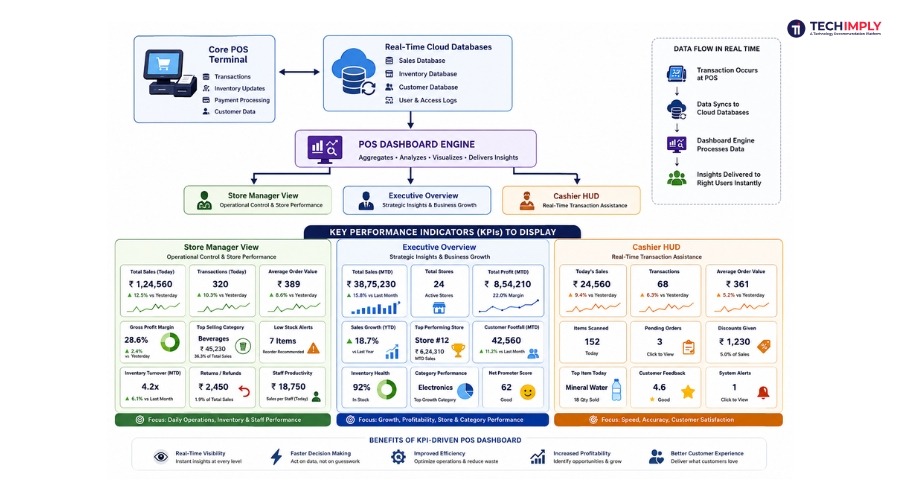
A POS (Point of Sale) dashboard is the central, visual management interface of modern retail software or restaurant software . It acts as a digital control panel, aggregating complex transaction data, inventory logs, and staff performance metrics into clean, real-time charts and summaries .
Rather than making users dig through database tables, the dashboard uses visual widgets such as line graphs, pie charts, and status indicators to help cashiers process payments quickly and help store managers make fast, data-driven decisions
Dual Roles of a POS Dashboard
- For Cashiers & Front-Line Staff (Operational View):
- Focuses on high-speed transaction checkout screens.
- Features large, high-contrast action buttons for payment processing.
- Keeps track of active shopping baskets, product scanning, and customer loyalty rewards.
- For Store Managers & Owners (Analytical View):
- Focuses on store health and long-term business performance.
- Tracks real-time sales trends, high-margin items, and peak business hours.
- Displays immediate alerts for low inventory stock, employee shift changes, and profit margins.
2. What Makes a Modern POS Dashboard Effective?
An effective pos dashboard functions as the operational command center of a enterprise. It must stability heavy records dense layouts with clean, intuitive visuals so that managers, cashiers, and company executives can extract intelligence immediately.
Core Architecture Components
- Real-Time Data Streams: Sales telemetry, stock monitoring, and transaction velocities updated with Zero latency.
- Role-Based Interfaces: Tailored viewing windows primarily based at the logged-in user (e.g., cashier view vs. Shop supervisor evaluation vs. Nearby govt analytics).
- Responsive Interoperability: Fluid optimization across desktop terminals, tablet monitors, and mobile handheld units.
Key Performance Indicators (KPIs) to Display
A high-converting pos dashboard template prioritizes standard functional data vectors to eliminate decision paralysis:
|
KPI Metric |
Target User |
Optimal Visualization Format |
|
Gross Revenue (Daily/Weekly) |
Store Manager / Executive |
Area Charts or Dynamic Trend Lines |
|
Average Transaction Value (ATV) |
Store Manager |
Single Stat Callout with Percentage Change |
|
Live Inventory Thresholds |
Stock Manager |
Progress Bars / Low Stock Alerts |
|
Payment Method Distribution |
Accounting / Finance |
Donut Charts |
|
Sales Velocity by Hour |
Operations |
Multi-bar Histograms |
3. Comparative Models in Contemporary POS Layouts
Different industries demand completely different operational priorities. Let's break down the design frameworks of market leaders alongside government infrastructure dashboards to see how data architecture changes based on user intent.
A. Commercial Retail:
The square pos dashboard represents the gold popular for commercial small-to-medium agencies (SMBs) and mid-marketplace retail. Its format emphasizes accessibility and clean aesthetics.
Design Philosophy: Minimalist UI, high whitespace ratios, and clear typographical hierarchies.
Data Density: Moderate. It agencies complicated analytics into tabbed widgets, allowing users to drill down deeper without cluttering the primary viewing quarter.
Key Feature: Modular widgets that may be drag-and-dropped by using users to build customized operational workflows.
B. Hospitality Sector: The Restaurant POS Dashboard Layout
Unlike general retail, a restaurant pos dashboard operates under intense time constraints. Every second saved on the floor impacts table turnover rates.
- Design Philosophy: High visual contrast, oversized tap targets, and color-coded statuses.
- Data Density: High-velocity operational tracking.
- Key Layout Elements:
- Live Table Maps: Visual representation of floor layouts with real-time indicators (Green = Vacant, Yellow = Ordered, Red = Check Requested).
- Kitchen Display System (KDS) Integrations: Ticket times monitored via countdown tickers to flag delayed orders.
- Menu Engineering Matrices: Live item-level tracking indicating which high-margin appetizers or beverages are trending.
C. Public Distribution Infrastructure: The Ahara POS Dashboard
When designing interfaces for public service programs handling millions of beneficiaries, the UI priorities shift from commercial conversions to absolute structural clarity and high accessibility. A prime example is the ahara pos dashboard managed through the ahara kar nic in pos dashboard portal by the Government of Karnataka, India.
Industrial Insight: The ahara pos dashboard coordinates the automated distribution of essential commodities via Fair Price Shops (FPS) under the Aadhaar-enabled Public Distribution System (AePDS).
- Design Philosophy: Data transparency, strict hierarchy, and highly structural data tables.
- Data Density: Extremely High. It must handle nationwide or statewide transactions, biometric authentications, and stock allocations simultaneously.
- Crucial Dashboard Widgets:
- Active vs. Inactive FPS Terminals: Map-based geographic status monitoring.
- Biometric Success Ratios: Real-time logging of authentication speeds to check infrastructure latency.
- Allocation vs. Offtake Trackers: Clear bar comparison graphs showing how much food grain has been allocated vs. actually claimed by citizens.
4. Principles of Superior UX/UI POS Dashboard Design
When crafting a custom pos dashboard design, UI/UX engineers must avoid the trap of prioritizing form over function. A beautiful screen is useless if a cashier cannot locate the payment button under a long queue line.
Color Theory and Visual Hierarchy
Color must serve an operational purpose rather than purely aesthetic ones:
- Red / Crimson: Exclusively reserved for critical system errors, failed card transactions, or severe inventory depletions.
- Amber / Orange: Indicates warnings, such as near-threshold stock statuses or delayed table tickets.
- Green / Emerald: Signifies valid operations, completed transactions, and stable connection statuses.
To prevent cognitive fatigue over long shifts, optimal system setups incorporate dark-mode alternatives that lower eye strain under harsh retail lighting conditions.
Reducing Click-Depth and Latency
The primary metric of success for point-of-sale systems is the Time-to-Task price. Common features like making use of object reductions, modifying open tickets, or converting fee modes should by no means require more than faucets from the primary home show.
5. Selecting and Implementing a POS Dashboard Template
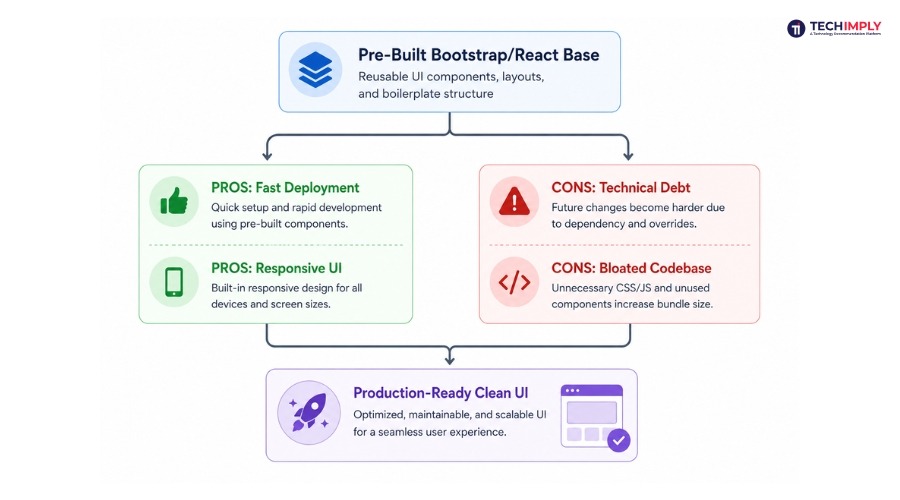
For software engineering teams building internal management platforms, choosing a pre-built pos dashboard template can significantly accelerate production timelines. However, careful feature evaluation remains essential.
Essential Checklist for Codebases and Frameworks
- When sourcing web components in your software program improvement kits (SDKs), verify the following structural parameters:
- Framework Flexibility: Ensure components leverage popular architectures like React, Vue.Js, or Tailwind CSS to permit easy integration together with your underlying backend APIs.
- Web-Socket Ready: Point-of-sale tracking can't rely on guide page refreshes.
- The system UI elements must naturally update via real-time data push streams (WebSocket/SSE).
- Local Storage Cache Layers: If internet connectivity drops, your dashboard components must continue functioning offline, syncing with the central database instantly once the terminal goes back online.
6. Future Trends in Retail Dashboards
As technology evolves, cloud-based analytics platforms are quickly moving from reactive displays toward predictive dashboards.
Embedded Machine Learning (ML) Insights
Modern dashboard architecture no longer merely reports past numbers. Predictive logic engines analyze historic sales data alongside seasonal variables to generate automatic ordering recommendations directly on the UI interface.
Voice-Activated Queries and NLP
Next-generation enterprise frameworks allow store supervisors to execute complicated lookups hands-free. Using integrated natural language processing (NLP), managers can query their platform using voice or text shortcuts directly from the console search window:
"Show me total seafood revenue variance between location A and B for the last two hours."
Summary: Designing for the End User
Building an elite pos dashboard requires a thorough understanding of the end user’s environment. A restaurant pos dashboard needs high-contrast speed, an enterprise platform like the square pos dashboard requires rich multi-channel synchronization, and public utilities like the ahara kar nic in pos dashboard require robust structural clarity to handle heavy data demands.
By prioritizing crisp visual hierarchies, keeping critical data parameters accessible at a glance, and choosing flexible pos dashboard design frameworks, you can create system interfaces that optimize business performance and reduce transaction friction every day



![Best Cloud ERP in 2025 [For Small Businesses and SMBs]](https://cdn.techimply.com/uploads/blog/2132/1847958718961001.jpg "Best Cloud ERP in 2025 [For Small Businesses and SMBs]")


