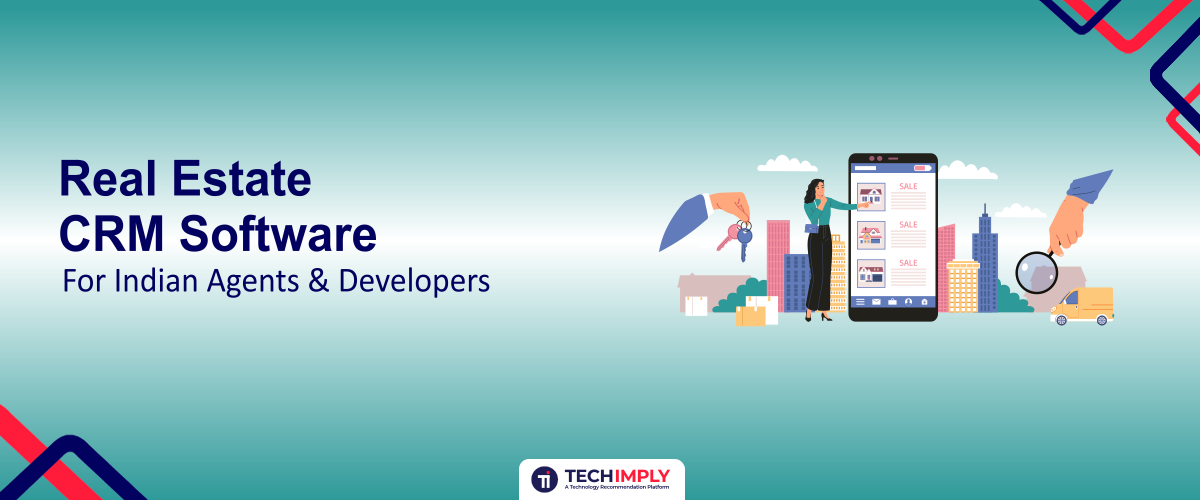
Walk into most mid-sized real estate brokerages in India and you'll still find leads split across three places a WhatsApp chat history, an Excel sheet someone updates when they remember to, notes a sales executive scribbled during a site visit somewhere. It works, more or less, right up until a hot lead slips through because nobody followed up within 24 hours, or a developer's sales team can't say for sure which unit in a project's already blocked. That's the exact gap real estate CRM software exists to close, and by 2026, it's turned from nice-to-have into something closer to a basic requirement for anyone selling property at scale in India.

Looking for Real Estate CRM Software?
Check out Techimply's List of the Best Real Estate CRM Software in India for your business.
The tricky part was never whether to use a CRM most agencies and developers already know they should. It's figuring out which one actually fits how Indian real estate sales work: long decision cycles, communication that runs mostly through WhatsApp and phone calls, RERA compliance needs, site visits that need scheduling and tracking across several projects at once. This guide works through what to look for, where different tools tend to land, and the mistakes that trip up teams switching to a CRM for the first time.
Why Generic CRMs Often Fall Short for Real Estate
Plenty of teams start with a general-purpose CRM software something built for SaaS sales or retail mostly because it's cheaper, or already familiar. The trouble shows up a few months in. Real estate sales just don't move like a typical B2B deal. A buyer might browse listings for six months before ever taking a call, vanish for weeks, then suddenly want to close within days. Generic CRMs aren't built around that rhythm, and usually don't carry native support for things specific to property sales unit-level inventory tracking, project-wise lead segmentation, RERA-related documentation.
That's really why real estate-specific CRMs exist as their own category instead of just being a vertical add-on. They're built around how property actually gets sold in India, not sales in general.
What a Real Estate CRM Actually Needs to Handle
Before comparing specific tools, it's worth being clear on what the software is actually solving for. That's what separates a good fit from a mismatched one.
- Lead capture and source tracking: Most Indian real estate lead managment arrive through a mix of channels property portals like 99acres, MagicBricks, and Housing.com, Meta and Google ads, walk-ins, referrals. A CRM worth using pulls all of this into one place automatically, instead of someone manually copying leads over from each portal by hand.
- WhatsApp and call integration: WhatsApp is where a large share of Indian real estate conversations actually happen not email. CRMs that skip WhatsApp Business API integration, or don't log and record calls automatically, tend to leave a visibility gap sales managers end up chasing manually.
- Site visit and inventory management: For developers especially, tracking which units are available, blocked, or sold tied to specific site visits and specific sales executives is core functionality. Not a nice extra.
- RERA and documentation support: Compliance documentation, brokerage agreements, project-related paperwork need somewhere to live that's tied to the actual lead or transaction, rather than scattered across email threads.
- Reporting that matches how sales teams actually work: Conversion rates by source, by project, by sales executive these numbers carry more weight in real estate than generic pipeline stages do, since the sales cycle itself runs longer and less predictably than most CRM templates assume.
Popular Real Estate CRM Options in India
- Sell. Do: is one of the more established real estate-focused CRMs in the Indian market built specifically around developer and broker workflows, with strong lead source tracking and marketing integration for property portals. Tends to suit mid-to-large developers running multiple projects at once.
- LeadSquared: started life as a broader marketing automation and CRM platform, but now runs a dedicated real estate offering with solid lead scoring and multi-channel campaign tracking. Fits teams wanting tighter integration between marketing spend and sales follow-up particularly larger brokerages running paid campaigns across several channels.
- Kylas: positions itself as a simpler, more affordable CRM aimed at small and mid-sized Indian businesses, real estate brokers included.It doesn't carry as many real-estate-specific features as Sell.Do, but the lower cost and easier setup make it a reasonable starting point for smaller agencies not quite ready for a heavier platform.
- Zoho CRM: while not built specifically for real estate, gets used widely by Indian brokers for its flexibility, affordability, and the ecosystem of Zoho products many small businesses already lean on for accounting and other operations. It needs more manual customization to fit real estate workflows than purpose-built tools do.
- REISimpli: and a handful of smaller regional platforms serve independent agents and small teams specifically, usually at a lower price point though with a narrower feature set than the larger platforms above.
No single tool here is universally "the best." What fits a five-person brokerage in a Tier 2 city rarely fits a developer running a dozen ongoing projects across metros, and the right pick depends heavily on team size, deal volume, and how much of the workflow needs automating versus how much still runs on relationships and phone calls.
Brokers vs. Developers: Different Needs, Different Priorities
Independent agents and small brokerages generally need something simple fast lead capture, WhatsApp integration, reminders that keep leads from going cold. A heavier platform stacked with configuration options often just adds friction for a two- or three-person team trying to move quickly between calls.
Developers, meanwhile, are usually managing inventory across multiple projects, coordinating larger sales teams, and need the CRM doubling as a reporting tool for leadership tracking which projects are converting well, which channels are producing quality leads, where the sales funnel's leaking. For developers, inventory management and multi-project reporting tend to matter more than how fast a lead gets logged from a phone call.
Common Mistakes When Choosing or Implementing a CRM
Teams usually find the first real problem after go-live, not before picking a CRM off the sales demo rather than actual daily workflow. A tool can look comprehensive during a presentation and still be a poor fit if the sales team finds it slow to use on a phone between site visits, which is where a lot of real estate follow-up genuinely happens.
Many businesses assume adoption just happens naturally once the CRM's purchased. In practice, sales executives especially ones used to running everything through WhatsApp and personal notes often resist a new system unless it's clearly faster than what they were already doing. A CRM adding steps instead of removing them usually gets quietly abandoned within a few months, with everyone drifting back to old habits.
Smaller agencies often skip data migration entirely. Moving years of lead history and contact data out of spreadsheets into a new CRM takes real planning, and skipping it means starting from zero losing the value of relationships and follow-up history built up over years.
One more pattern worth flagging: choosing a CRM purely on price without checking WhatsApp and call integration first. For Indian real estate specifically, a cheaper CRM lacking solid communication-channel integration usually ends up costing more over time, through leads that fall through gaps a pricier, better-integrated tool would've caught.
When a Simpler Tool Might Be Enough
If it's a solo agent or a very small team handling a handful of active leads at a time, a full-fledged CRM might be overkill. A well-organized spreadsheet paired with a shared WhatsApp Business number and calendar reminders can genuinely cover the basics until deal volume grows enough to justify switching.
Similarly, if a team's business runs almost entirely on relationship-based referrals rather than large inbound lead volume from portals and ads, the lead-capture and automation strengths of a heavier CRM may add cost without adding much real value. A lighter contact management tool might do the job just fine there. For agencies managing customer interactions across multiple channels, a multi-channel agency CRM can provide a more centralized way to organize conversations and follow-ups.
Thinking Through Pricing
CRM pricing in India generally scales with team size and feature depth, and it's worth going in with realistic expectations rather than assuming the cheapest option automatically saves money. Entry-level plans on platforms like Kylas or Zoho CRM tend to suit small teams mostly needing contact management, reminders, and basic reporting. Real estate-specific platforms like Sell.Do or LeadSquared typically sit at a higher price point, reflecting the added inventory management, multi-channel marketing integration, and reporting depth built for larger sales operations.
The mistake worth avoiding here is comparing sticker price alone without weighing what a missed or poorly tracked lead actually costs. A brokerage closing a handful of high-value deals a month loses far more from one lead slipping through a gap than it would spend upgrading to a plan with better WhatsApp integration or automated follow-up reminders. That said, overpaying for enterprise-level features a five-person team will never touch is just as common a mistake and just as costly across a year of subscription fees.
How to Evaluate a CRM Before Committing
A practical way to test a shortlist is running a real trial with actual leads, not demo data, since demo environments rarely surface the friction points that show up once a sales team's using the tool daily under pressure.
Check WhatsApp and calling integration first this tends to be the biggest daily-use factor for Indian real estate teams specifically. Confirm lead source tracking pulls automatically from the property portals the business actually uses, rather than needing manual entry. Ask about data export options upfront too. Being able to leave a platform cleanly matters nearly as much as being able to start using one.
Finally, bring the actual sales team into the evaluation, not just management. The people using the CRM daily will catch friction points a leadership demo never surfaces, and their buy-in early on tends to decide whether the rollout actually sticks.
Conclusion
There's no single best real estate CRM for every Indian agent or developer. The right one depends on team size, deal volume, and how much of the sales process runs through WhatsApp and calls versus formal pipelines. A five-person brokerage handling referrals doesn't need what a developer juggling a dozen projects needs, and paying for that mismatch shows up as wasted cost either way, whichever direction it runs.
Start by mapping the actual daily workflow before comparing feature lists. Test with real leads instead of demo data, since demos rarely reveal what breaks under daily pressure. Bring the sales team into the decision early they're the ones who'll decide whether the rollout sticks or quietly gets abandoned within a few months. Get that sequence right, and the specific platform chosen matters less than it seems to going in.