Reliable IT infrastructure is an essential part of modern business. This can be used to host critical applications, manage complex databases, and store sensitive data. As technologies become more demanding, organizations have to decide if they want to use on-premises systems or cloud-based platforms. Many companies also use hybrid infrastructures to get the best out of both options. Choosing the correct system will be a major decision for your organization. This will depend on many factors, such as company size, capital investment, security, type of workloads, and future growth.
Understanding On-Premises, Cloud, and Hybrid Infrastructure
1. What Is On-Premises Infrastructure?
An on-premises infrastructure refers to physical, dedicated servers and storage, networking, and virtualization infrastructure that are located in a physical location or a co-located data center. With this type of traditional infrastructure, the organization has full responsibility for the setup, security, maintenance, and upgrading of the infrastructure. By having full authority, organizations can have control over all aspects needed, including security and software, with the ability to configure performance to fit exactly what they need.
2. What Is Cloud Infrastructure?
Cloud infrastructure is an on-demand, utility-based delivery of computing, storage, and network resources via the internet. This means you will no longer have to install physical hardware at your business and instead can use resources that are hosted in huge data centers. This means you can avoid the headache of dealing with physical hardware maintenance, as this will all be taken care of by the cloud provider. You will still get enterprise-level computing resources, but at speed. All you need to worry about is the security of the physical infrastructure. Power backup and infrastructure updates will all be handled by the provider.
3. What Is Hybrid Infrastructure?
Hybrid infrastructure is when on-premises hardware is combined with either a public or private cloud. This provides organizations with the ability to store valuable databases or sensitive customer records on their own physical hardware. It also provides the ability to store data in the cloud to provide scalability for offsite automated backups, disaster recovery, or peak load times. Hybrid infrastructures provide the flexibility to store workloads where they will be at their most optimal.
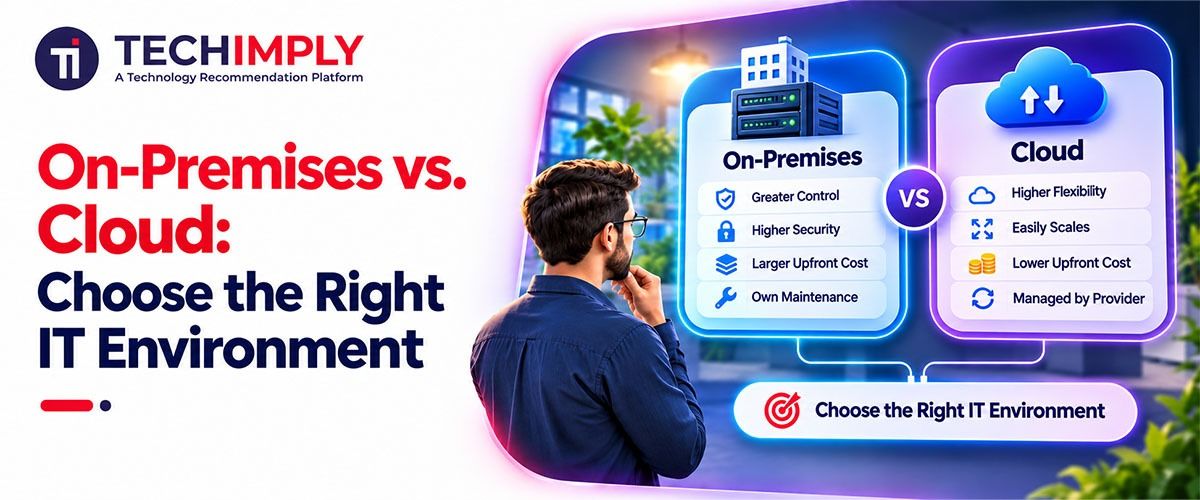
Key Differences Between On-Premises and Cloud Infrastructure
Understanding the core distinctions between on-premises and cloud setups helps decision-makers align technology choices with business goals:
|
Feature |
On-Premises Infrastructure |
Cloud Infrastructure |
|
Initial Costs |
Requires upfront capital expenditure (CapEx) for physical servers, storage, networking, and power infrastructure. |
Uses operational expenditure (OpEx) with recurring monthly subscription or pay-as-you-go pricing models. |
|
Maintenance |
Requires dedicated internal IT staff or managed service providers for physical repairs, updates, and monitoring. |
Cloud service providers handle hardware maintenance, physical facility security, and infrastructure patches. |
|
Control |
Offers complete, direct control over server configurations, physical access, system architecture, and local data routing. |
Operates within provider-managed environments with configuration limits defined by service agreements. |
|
Scalability |
Scaling requires purchasing, configuring, and installing additional physical server hardware and storage units. |
Resources scale up or down rapidly on demand through software management consoles. |
|
Security |
Full internal responsibility for both physical and logical security measures, access controls, and compliance. |
Shared responsibility model where the provider secures the infrastructure and the business secures its data and apps. |
Neither infrastructure option is inherently superior across all scenarios. The optimal model depends entirely on your specific operational requirements, regulatory framework, and internal IT capability.
When Should Businesses Choose On-Premises Infrastructure?
On-premises infrastructures are valuable for businesses wanting full control of their security, data, and servers. Companies that use resource-intensive applications, large database queries, or bespoke lines of business applications can also benefit from it due to the dedicated bandwidth and low latency. Additionally, businesses that have high regulatory standards, such as health, finance, and law, will often use local storage to keep hold of their data.
Because the workload is predictable and consistent, it can help reduce costs over a period of years. As you have dedicated server hardware, you won’t be competing for resources with other tenants. Businesses evaluating dedicated server hardware can explore options such as the Dell PowerEdge R7525 when comparing infrastructure solutions for their computing requirements.
Benefits and Limitations of Cloud-Based Infrastructure
Cloud infrastructure removes the need for organizations to purchase large amounts of equipment in one go, freeing up capital for investment in growing the core business. The infrastructure has excellent scalability, meaning computing resources and storage can be increased or reduced quickly. Lastly, access is available at any location, meaning staff can securely access everything they need stored centrally.
However, there are some disadvantages to using cloud platforms. There can be high costs due to monthly subscriptions. If resources aren’t monitored, they can cause unforeseen costs due to consumption and egress. There is a complete reliance on having high-speed internet connections. Finally, you have much less control over the physical infrastructure compared to an on-site IT manager. Careful consideration needs to be given to costs, bandwidth requirements, and service level agreements if you are going to fully commit to using public cloud services.
How Hybrid Infrastructure Combines Both Approaches?
Hybrid infrastructures enable organizations to take advantage of having control over physical hardware, while also providing them with the flexibility that comes with using a modern cloud platform. Hybrid infrastructures combine internal servers with either public or private clouds.
One typical hybrid infrastructure will use high-speed dedicated hardware to host key core applications and databases, while using the cloud to provide automatic off-site backup systems, long-term storage, and extra processing power during peak selling periods. A good hybrid infrastructure can provide a great balance between security, high availability, and scalability. To implement a successful hybrid infrastructure, there needs to be a strong network in place, strict data management, clear access policies, and strong security measures.
Factors to Consider Before Choosing an IT Infrastructure Model
Considerations when choosing an infrastructure model
- Business Budget: Look at how much you will need to spend upfront versus the recurring costs of an infrastructure-as-a-service provider. This includes hardware, rack space, power, and cooling.
- Workload Requirements: What are the performance requirements of your applications? Do they require high disk I/O, low network latency, and high compute?
- Security and Compliance: Are there any regulations or data protection laws that apply within your industry? This will determine where you can legally store customer and company data.
- Scalability: How is your business going to grow in the next 3-5 years? How quickly will you need to scale your technology?
- IT Expertise: How technically skilled is your IT team? Can they handle the deployment, management, updates, and physical maintenance of dedicated hardware as opposed to a virtual solution?
- Long-Term Requirements: Look at how long your hardware will last, what maintenance you will need, how reliable your systems will be, and your disaster recovery requirements.
Conclusion
The choice of infrastructure will depend on factors such as the scale of your business, financial resources available, performance requirements, security requirements, and whether you have IT resources to manage internally. On-premises infrastructure gives you a high degree of local control and performance; however, cloud infrastructure can be rapidly scaled and has a low initial investment. Hybrid infrastructure combines both options. By analyzing your current operational requirements and future strategic goals, you can decide which infrastructure will best support your reliable day-to-day operations while supporting future growth.