

Modern business operations often suffer from a hidden friction: scattered customer information, endless repetitive email chains, sluggish support resolution times, and disconnected communication channels. When sales teams work out of one spreadsheet, customer support uses an isolated ticketing inbox, and clients call or email just to check the status of a project or invoice, productivity breaks down.
A CRM portal solves this fragmentation by offering a centralized, secure online extension of your customer relationship management system. It bridges the gap between internal teams and external stakeholders, allowing clients, partners, or vendors to log in, find answers, upload files, and track requests without picking up the phone. Implementing a dedicated CRM customer portal transforms how organizations handle everyday interactions, replacing administrative chaos with streamlined digital efficiency.
What Is a CRM Portal?
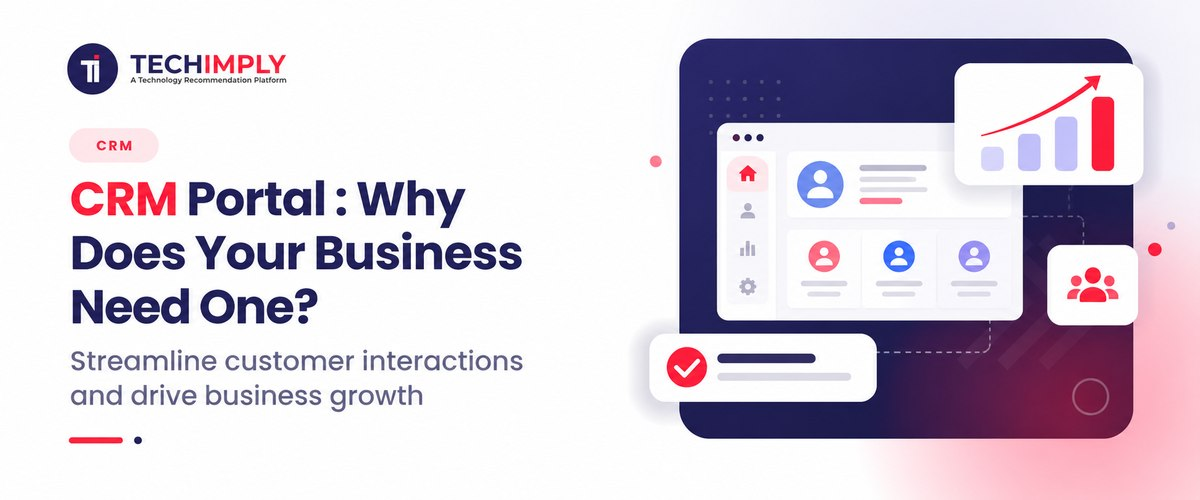
A CRM portal is a secure, web-based interface linked directly to a company's core Customer Relationship Management database. While a standard CRM is built strictly for internal employees, a portal creates a controlled window where external users such as clients, customers, patients, or B2B partnerscan view and update selected data tailored specifically to them.
Branded Platform for Secure File Sharing and Client Communication
- What it does: It acts as a digital self-service hub and communication bridge.
Branded Platform for Secure File Sharing and Client Communication - How it works: Authorized users sign in through a secure CRM login portal using credentials authenticated against active customer records in the database. Every action taken inside the portal whether submitting a support ticket or downloading a contract syncs in real time with the backend CRM.
- Practical Example: Instead of emailing your team to ask, Has my service request been processed yet? a client logs into their account dashboard, views the live status of their support ticket, downloads a newly updated project agreement, and messages the assigned account manager directly all within a single session.
CRM System vs. CRM Customer Portal: What's the Difference?
To understand why modern businesses need both tools, it helps to look at how internal operations differ from external collaboration.
|
Feature |
Core CRM System |
CRM Customer Portal |
|
Primary Users |
Internal teams (Sales, Marketing, Support, Executives) |
Authorized external users (Clients, B2B partners, Vendors) |
|
Primary Function |
Manages leads, sales pipelines, internal tasks, and deep customer records |
Provides controlled access to selected customer files, invoices, and self-service tools |
|
Workflow Support |
Drives internal sales forecasting, task automation, and team collaboration |
Supports customer self-service, instant ticketing, and transparent communication |
Why Does Your Business Need a CRM Portal? (8 Key Benefits)
Adopting a CRM portal yields measurable operational and strategic advantages that directly impact your bottom line.
1. Centralized Customer Information
When customer records, transaction histories, and communication logs are scattered across local drives and individual employee inboxes, mistakes happen. A CRM portals ecosystem consolidates all touchpoints into a single source of truth, ensuring that both your internal staff and your clients view consistent, up-to-date data.
Branded Platform for Secure File Sharing and Client Communication
- Business Scenario: A client calls to query a past invoice. Instead of putting them on hold to search multiple folders, any support agent can instantly pull up the account history.
- Tangible Outcome: Zero data silos and a 100% unified view of client interactions.
2. Improved Customer Experience
Today's buyers expect consumer-grade, frictionless digital interactions. Making them wait hours for a simple status update damages retention.
- Business Scenario: A client needs an onboarding guide at 11:00 PM on a Saturday. Instead of waiting until Monday morning, they log into the portal and download it instantly.
- Tangible Outcome: Higher Customer Satisfaction (CSAT) scores and stronger brand loyalty driven by instant availability.
3. 24/7 Self-Service Access
Routine administrative tasks such as updating billing profiles, pulling transaction history, or checking order delivery statuses consume countless hours of staff time. A customer self-service portal empowers users to handle these tasks independently whenever it suits them.
Branded Platform for Secure File Sharing and Client Communication
- Business Scenario: Clients edit their shipping addresses or billing preferences directly in their profile settings without submitting an email request.
- Tangible Outcome: A dramatic reduction in low-value administrative friction.
4. Faster Customer Support Resolution
Handling support inquiries via standard email threads often results in lost messages and sluggish response times. Integrated ticketing within a portal allows users to submit requests, attach supporting screenshots, and monitor troubleshooting progress transparently.
Branded Platform for Secure File Sharing and Client Communication
- Business Scenario: A bug report is logged directly into the portal queue, automatically routing to the right technician with priority tags attached.
- Tangible Outcome: Lower time-to-resolution metrics and decreased support ticket escalation rates.
5. Better Team Productivity
By automating routine follow-ups and deflecting repetitive inquiries away from phone lines and email inboxes, your staff reclaims valuable time.
- Business Scenario: Sales and support reps stop spending half their mornings answering "Where is my file?" emails and instead focus on high-value client strategy.
- Tangible Outcome: Measurable gains in team output and lower operational overhead.
6. Secure Document Sharing
Emailing confidential contracts, financial statements, or proprietary blueprints creates severe security and compliance liabilities. A secure portal ensures that file exchanges happen within an encrypted environment backed by strict access controls.
- Business Scenario: A financial consultant shares sensitive tax documents with a client through a password-protected, encrypted vault rather than open email attachments.
- Tangible Outcome: Full compliance with data privacy regulations and total peace of mind for security-conscious clients.
7. Stronger Customer Relationships
Transparency breeds trust. When clients have direct visibility into project milestones, shared deliverables, and open communication channels, relationships transform from transactional to collaborative partnerships.
- Business Scenario: A creative agency shares real-time design mockups in a client portal, allowing stakeholders to review drafts and leave inline comments in one clean location.
Branded Platform for Secure File Sharing and Client Communication - Tangible Outcome: Enhanced client retention and long-term contract renewals.
8. Business Scalability
Manual client management processes work fine when you have ten clients, but they break down completely when you have five hundred. A portal scales effortlessly alongside your growth.
- Business Scenario: A consulting firm doubles its customer base over six months without needing to hire a secondary layer of administrative coordinators.
- Tangible Outcome: Structured business scaling without a linear increase in overhead costs.
Essential Features Every CRM Portal Should Have
When evaluating CRM portal software, look for these core structural pillars to guarantee high adoption and security:
- Secure CRM Login Portal & Authentication: Robust password policies, multi-factor authentication (MFA), and automated session timeouts.
- Customer Dashboards & Profile Management: Personalized spaces displaying key metrics, recent activity, and editable user details.
- Document Upload & Download Vaults: Centralized, encrypted file exchange capabilities with version control.
Branded Platform for Secure File Sharing and Client Communication - Support Ticketing & Messaging: Integrated communication tools that link client notes directly to backend CRM profiles.
- Notifications & Status Tracking: Automated email or in-app alerts updating users on order fulfillment, ticket progress, or project milestones.
- Role-Based Access and Permissions (RBAC): Granular controls ensuring users only view data they are explicitly authorized to see.
- Mobile Responsiveness: Optimized layouts or native mobile access ensuring seamless performance across smartphones and tablets.
- CRM & Third-Party Integrations: Flawless synchronization with your core CRM, accounting software , and payment gateways.
- Reporting and Analytics: Dashboards tracking user login frequency, self-service resolution rates, and support efficiency.
How Different Industries Use CRM Portals
The utility of CRM portals extends across diverse business models, tailoring their functionality to sector-specific demands:
- B2B Companies: Use portals to manage complex distributor networks, provide real-time order tracking, and share wholesale pricing sheets.
- Professional Services: Agencies and consultants use them for milestone tracking, project sign-offs, and secure deliverable hand-offs.
Branded Platform for Secure File Sharing and Client Communication - Real Estate & Property Management: Property firms deploy tenant portals to handle maintenance requests, lease document sharing, and community announcements.
- Financial & Accounting Services: Firms rely on high-security vaults for compliant document exchange, tax form submissions, and direct client communications.
- Customer Support Teams: Organizations use self-service knowledge bases and integrated ticket trackers to drastically deflect routine inbound call volumes.
How to Choose and Implement the Right CRM Portal
Deploying a portal successfully requires a structured, step-by-step strategy:
- Identify Customer Needs & Repetitive Tasks: Audit your current support logs to find the most frequent questions and bottlenecks.
- Define Information Architecture: Map out exactly what data users need to access and what actions they should be allowed to perform independently.
- Evaluate Integration & Customization Options: Ensure the software connects seamlessly with your existing tech stack and supports white-label branding matching your corporate identity.
- Assess Security & Compliance Requirements: Verify data encryption standards, backup protocols, and role-based permission controls.
- Test the User Experience: Rigorously test desktop and mobile usability to guarantee a frictionless interface.
- Launch with a Pilot Group: Roll out the portal to a small segment of friendly clients or internal power users first to collect constructive feedback.
- Measure Adoption & Performance: Track key metrics such as active user logins, self-service completion rates, and drops in email support volume.
Common CRM Portal Implementation Challenges
Even the best CRM portal implementation projects can hit roadblocks if potential hurdles aren't managed proactively:
- Low User Adoption: If the portal is difficult to navigate, clients will revert to old habits like calling or emailing directly. Solution: Keep interfaces clean, intuitive, and mobile-friendly, accompanied by short onboarding walkthroughs.
- Legacy System Integration: Connecting older databases to modern cloud portals can introduce synchronization errors.
- Solution: Opt for modern solutions with robust APIs and pre-built connectors.
- Data Migration Gaps: Transferring messy records from old spreadsheets into your new CRM structure leads to reporting errors. Solution: Clean and scrub your data thoroughly before launching migration scripts.
- Overly Complex Permissions: Over-complicating user roles can block clients from viewing files they genuinely need. Solution: Establish clear, least-privilege role matrices early in the planning phase.
Conclusion: Make Customer Relationships Easier to Manage
Scattered spreadsheets, clogged inboxes, and slow support loops are no longer sustainable in a fast-moving market. Investing in a robust CRM portal eliminates operational friction, empowers your clients with 24/7 self-service capabilities, and gives your team the structure needed to scale efficiently.
Ready to transform your client workflows and elevate your customer experience? Audit your current customer communication bottlenecks today, or book a consultation with our integration specialists to explore the right CRM portal solution for your business.
Would you like to explore specific technical requirements, or should we map out a customized feature checklist tailored to your exact industry?