I still remember those days when waiting for pay day at the end of the month would seem like forever. That wait in today’s fast-moving times seems even more so outdated now. That’s why I find On-Demand Payroll (or simply pay on demand) so interesting—it gives employees access to their earnings whenever they need it, without waiting for the salary cycle.

Looking for best Payroll Software? Check Out Techimply’s List of best Payroll Software for Small Business in india.
In this guide, I’ll walk you through what is on demand pay, the different types of payroll on demand, and the on demand pay pros and cons that every business should consider. I’ll also share the best on-demand payroll providers in 2025 and highlight the latest market trends, so you can see why this model is gaining so much attention right now.
What is On Demand Payroll?
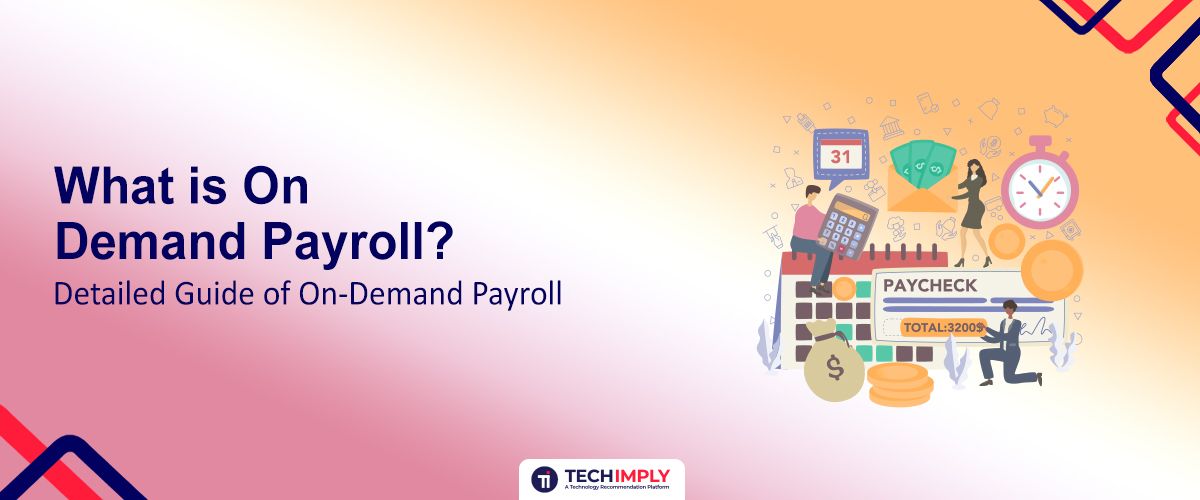
On-demand payroll is the innovative approach to earning that allows employees to receive the money they have earned immediately instead of having to wait until payday. On-demand pay simply translates to allowing you to select a time in which you would like to receive your pay based on the hours you have already worked.
Suppose that somebody has worked 15 days in one month, he/she does not have to wait till the payday to receive what he/she has earned. On-demand payroll allows them to access what they have already earned anytime they need to do so, using a mobile application or a payroll system. This will make it easier to worry about money and gives employees a sense that their company has their backs.
If we see it from a company’s perspective, implementing on demand payroll services is a smart choice. It doesn’t disrupt cash flow since providers fund early payouts, and it positions the business as employee-first—boosting retention, attracting talent, and improving workplace satisfaction.
Struggling with low engagement? Discover Techimply’s curated list of Best Employee Engagement Software India
Types of On Demand Payroll
When it comes to flexible pay options, there are different ways companies can offer an On-Demand Solution. Let’s look at the most common types of on-demand payroll that businesses use today:
1. Earned Wage Access [EWA]
With Earned Wage Access, employees can withdraw a portion of the salary they’ve already earned before payday. For example, if someone has worked 10 days, they can instantly access pay for those 10 days. Many companies rely on on demand payroll services to provide this feature smoothly.
2. Instant Pay
Payroll on Demand enables quick payment to be made to an employee immediately after they complete a shift or daily work. This type of payroll on-demand is common in the retail industry, food delivery, or even ride-sharing apps where workers want to cash out instantly.
3. Same-Day Pay
As the name suggests, Same-Day Pay lets employees receive their wages on the same day they worked, but usually processed at the end of the day. It’s an on-demand payroll option that gives financial flexibility without waiting weeks for payday.
4. Salary-on-Demand
The model allows an employee to get his salary when he wants it, whether it is on the pay cycle or not. Offering salary-on-demand will allow companies to offer a contemporary on-demand solution that elevates employee satisfaction while using credible on demand payroll services for compliance and transactions.
Pros of On-Demand Payroll
Embracing an on-demand payroll system does not only benefit employees but also the employer. Here are some of the key advantages of using this modern on-demand solution:
1. Managing Unexpected Expenses
Life is full of surprises, I mean, medical bills, repairs, or home emergencies can all come at any time. Instant access to earned money on demand helps employees get to their hard-earned cash when needed most and is a better way to handle unexpected expenses without borrowing.
2. Reducing Financial Stress
Waiting for monthly salary creates constraint over financing most of the time. On-demand payroll would allow employees to avail their wages as and when required, reducing the constraint and enhancing the overall financing situation.
3. Competitive Advantage
Firms that provide an on-demand solution differentiate themselves in the labor market. It is easier to get top talent when there is a provision for flexible pay, hence better employee retention as compared to firms that stick to using the old pay cycles as the main practice.
4. Potential Cost Savings
Where there is reduced employee turnover and no absenteeism problem about on-demand payroll, it becomes a source of saving costs for a company. Where employees are happy, in the long run, hiring and training costs are minimized.
5. Enhanced Productivity
When financial worries go down, focus goes up. Employees using payroll on demand feel more secure, which boosts morale, engagement, and day-to-day productivity at work.
6. Positive Employer Branding
Offering modern benefits like on-demand payroll services strengthens a company’s brand. It shows that the organization values its workforce and invests in employee well-being, which builds a strong employer image.

Pro Tip:
If you’re considering on demand payroll services, start with a pilot program for one department. This way, you can measure adoption and impact before rolling it out company-wide.
Cons of On Demand Payroll
On demand payment offers flexibility, but it also comes with certain drawbacks that both employees and employers should carefully think about.
1. Fees for Accessing Funds
Some providers charge a small fee on every withdrawal before payday. In the long run, these fees may reduce the total earnings and seem like an unnecessary expenditure to employees who frequently use the service.
2. Impact on Employer Cash Flow
If companies handle payroll on demand themselves, it can put pressure on their cash reserves. Smaller businesses especially may find it difficult to balance early payouts with regular financial commitments.
3. Increased Spending
This can be tempting and can lead you to spend more because you can get your pay immediately. Individuals may spend their money on what they desire in the present without saving toward larger expenses later, thus leading to financial issues in the future.
4. Regulatory Uncertainty
Since on-demand pay is quite new, the regulations and legislation regarding it are somewhat ambiguous. Employers are advised to monitor any changes on regulations so that they can be informed and avoid any predicaments.
5. Long-Term Financial Planning
When workers often take their pay, it can hurt their saving and planning efforts for the future. In the long run, depending on ondemand pay might weaken the practice of keeping a budget or making investments.
6. Higher Administrative Costs
Setting up and running payroll on demand systems may increase administrative work for HR and finance teams. Without proper automation or external support, it could also add to operational costs.
Looking for Compensation Management Software? Check Out Techimply’s List of Compensation Management Software
List of Best On Demand Pay Providers in 2025
1. DailyPay
DailyPay is one of the most popular on-demand payroll services in the US. It allows employees to access their earned wages instantly and transfer them to their bank account or pay cards. It is widely trusted by enterprises across industries.
Features:
-
Real-time access to earned wages
-
Seamless integration with payroll systems
-
Mobile app for easy access
-
Direct deposit or pay card options
-
Detailed analytics for employers
Pros:
-
Reliable and widely used across large enterprises
-
Strong integration with payroll systems
Cons:
-
Not available globally
-
Transaction fees may apply for instant transfers
Pricing: Custom pricing based on company size and needs.
2. Earnin
Earnin is a flexible on-demand pay app that helps employees access their paycheck instantly without hidden fees. Instead of charging, it runs on a voluntary “tip” model, making it unique compared to other providers.
Features:
-
Instant cash-out of earned wages
-
No mandatory fees—tip-based model
-
Balance Shield alerts to avoid overdrafts
-
Integrated financial wellness tools
-
Works directly through a mobile app
Pros:
-
No fixed transaction fees
-
Simple and user-friendly app
Cons:
-
Tips can feel like indirect charges
-
Limited to employees with direct deposit setup
Pricing: Free to use; voluntary tipping (usually $0–$14 per transaction).
3. PayActiv
PayActiv is a leading payroll on demand solution that offers employees access to earned wages, financial counseling, and budgeting tools. It’s a holistic platform that focuses on both access to pay and long-term financial wellness.
Features:
-
Access to earned wages anytime
-
Integrated savings and budgeting tools
-
Bill payment and discounts within the app
-
Employer dashboard for tracking
-
Integration with payroll and time systems
Pros:
-
Focuses on financial wellness, not just wages
-
Offers extra perks like bill payment
Cons:
-
Some features require subscription fees
-
May feel complex for smaller businesses
Pricing: Starts at around $5 per employee/month; employer-paid or shared cost options available.
4. FlexWage
FlexWage is an on-demand payroll provider designed to help employees avoid payday loans by offering earned wage access and reloadable pay cards. It’s well-suited for industries with hourly workers.
Features:
-
Earned Wage Access (EWA)
-
Reloadable pay cards
-
Employer-controlled access limits
-
Real-time wage tracking
-
Works well for hourly workforce management
Pros:
-
Helps reduce reliance on payday loans
-
Good option for hourly and shift workers
Cons:
-
Limited financial wellness tools
-
Less flexible compared to newer apps
Pricing: Custom pricing depending on workforce size and setup.
5. Instant Financial
Instant Financial is a global on demand pay provider that allows employees to access wages after every shift. It focuses on industries like retail, hospitality, and healthcare, where employees often prefer immediate payments.
Features:
-
Instant pay after every shift
-
Mobile app with user-friendly dashboard
-
Prepaid debit cards for payouts
-
Works for hourly and part-time workers
-
Global availability in multiple regions
Pros:
-
Immediate access after each shift
-
Strong global reach for businesses with distributed teams
Cons:
-
Card-based system may not suit everyone
-
Some transaction limits apply
Pricing: Free for employees; employers pay setup and subscription fees (custom pricing).
Looking for HR Software? Check Out Techimply’s list of Best HR Software in India
Latest Market Trends in Pay on Demand
1. Increased Adoption
The pay on demand market is growing swiftly. The global On-Demand Pay Platforms market has grown to be worth 3.5 billion in the year 2024, and it is projected to surge to 10.2 billion by the year 2033 at a rapid rate of increase of 14.2 percent per year. This huge growth indicates that a larger number of companies desire versatile and expeditious payroll.
2. Employee Wellbeing Tool
More companies now view payroll on demand as a tool for financial wellness—not just pay. By offering instant wage access, employers help reduce employee stress and improve overall wellbeing. Employers who update pay systems stay ahead in talent competition.
Did You Know?
Nearly 78% of employees say they would prefer a job offering payroll on demand over one that doesn’t. It’s becoming a key factor in choosing employers.
3. Competitive Advantage
Offering on demand payroll services gives organizations a clear edge in recruiting and retention. A 2025 survey across Australian workers found that 38% want faster access to earnings, with over 50% especially keen under financial strain
4. Digital Payments Growth
Digital and mobile-first payroll solutions are booming. The broader cloud-based payroll software market is expanding rapidly, with projections from ~USD 12.85 billion in 2024 to USD 14.37 billion in 2025, and a forecast of USD 22.16 billion by 2029, supported by automation, AI, and remote workforce trends
5. Real-Time Payments
There's a growing expectation for real-time pay or on-demand wage access. The rise of pay on demand platforms reflects this shift: employees want payroll on their own clock, not the traditional cycle.
6. Impact of AI
AI is becoming integral to on demand payroll services. Payroll systems are increasingly relying on AI to perform functions such as identifying errors, generating intelligent reports and automation. The overall payroll services market is expected to reach USD 32.6 billion in 2025, expanding to USD 51.4 billion by 2030 at a 9.5% CAGR, driven by AI, cloud, and real-time pay capabilities. Paycom has enabled it to grow its revenue projection to over $2.05 billion by 2025, which displays how businesses desire smarter HR and payroll systems.
Editor’s Note:
On-Demand Payroll is evolving fast. This guide has been updated for 2025 to include the latest providers, features, and market trends so you have the most accurate insights.
Conclusion
After digging into the details, you can see why payroll on demand is becoming more than just a trend—it’s a necessity. For employees, it means financial freedom and less stress. For employers, it’s a way to improve retention and engagement without hurting cash flow. And of course, there are on demand pay pros and cons, and every business should evaluate what works best for them. But with more companies moving toward on-demand payroll in 2025, I believe it’s worth considering. Personally, I think the real question isn’t what is on demand pay anymore—it’s how soon can you make it a part of your payroll strategy?