Effective supply chains require effective coordination, real-time information and proper planning. In current businesses, ERP in Supply Chain Management assists in linking the processes such as Inventory tracking, procurement, logistics and demand forecasting together under a single facet. It enhances interdepartmental communication and decreases time wastage through manual labor. Companies will be able to maintain the availability of products, manage costs, and react more quickly to changes in the market with the assistance of the ERP supply chain tools. With the growth of industries, the ERP in Supply Chain Management keeps assisting decision-making that is more intelligent.

Looking for ERP Software?
Check out Techimply's List of the Best ERP Software for your business.
What Is ERP and Supply Chain Management?
ERP and supply chain management are collaborative to manage the entire process of planning and delivery of the product. ERP has maintained critical business units within a single platform, and it assists departments in handling stock and orders, information about suppliers, and the movement of materials without any confusion. It enhances the coordination as well as the real-time information on the stock level, purchase schedule and customer demand. ERP in the Supply Chain management helps the operations to run smoothly with quicker response to the market requirements when used properly.
On the other hand, Supply chain management in ERP adds shipment tracking tools, supplier management, and decreases delays. It also assists businesses in eliminating shortages, managing cost management, and enhancing the movement of the product through various phases.

Fun Fact:
Most companies do not understand that a slight delay in inventory revision could impact thousands of orders. ERP solves this by updating the stock levels as soon as something moves.
What Are The Roles Of ERP in Supply Chain Management?
Enterprise Resource Planning is significant in supply chains as it links the various departments, enhances improved flow of processes, and lessens errors. It assists businesses in running their business without any huddles and making decisions that are better with a centralized system.
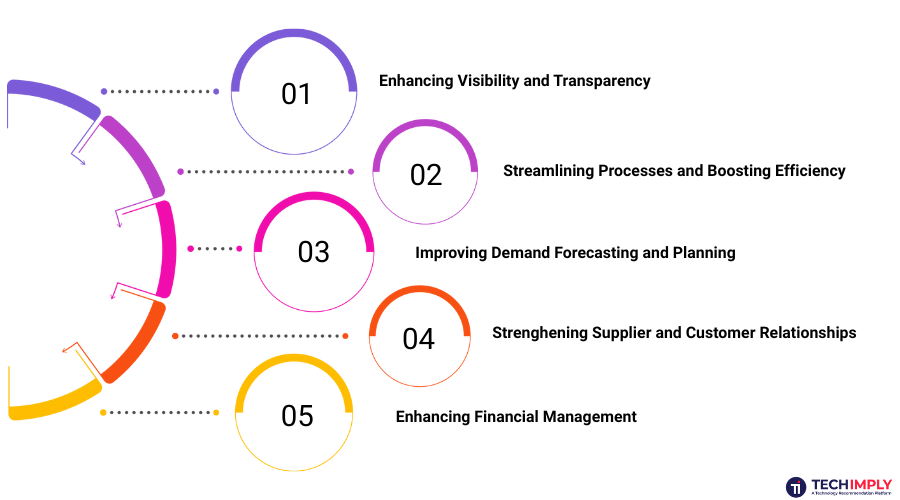
1. Enhancing Visibility And Transparency
Enhanced visibility enables firms to track all the activities of the supply chain promptly. It also gives a free flow of information among the departments. With all being transparent, it becomes easier to identify delays and correct them at an earlier stage.
- Real-Time Data Access: Using real-time information, businesses can monitor the inventory, orders, and production updates immediately. This assists the managers in avoiding making time-consuming decisions and making wise decisions using the correct information. Real-time data also eliminates confusion among teams as well as eliminates guesswork.
- End-To-End Tracking: End-to-end tracking gives a full history of the movement of products from the suppliers to the customers. It minimizes the possibility of product misplacement and enhances trust in the whole ERP supply chain. This also aids in the smooth management of the back orders and enhances the level of accuracy in the delivery.
2. Streamlining Processes And Boosting Efficiency
This is because when various activities are linked, the operations are quicker and fewer errors are made. ERP curbs manual labor and removes repetitive processes in favor of increased productivity. It assists in a seamless operation of the whole ERP network. This is better as it reduces the employee workload and enables work to be carried out with fewer resources.
3. Improving Demand Forecasting And Planning
Proper demand forecasting minimizes additional inventories and eliminates stockouts. ERP is based on past sales experience and current market trends to plan future needs. This assists the companies in balancing the supply and demand. Through proper planning, companies are able to manufacture the appropriate volume at the appropriate moment.
4. Strengthening Supplier And Customer Relationships
Improved communication and clear order details create sound business relationships. ERP broadcasts on shipment status, terms of payment, and order modifications. This results in quicker reaction and easier collaboration on both ends. Transparency makes the supplier and the customer trustworthy, and the service quality evolves by default.
Data Insight:
Miscommunication between departments contributes to 6070 percent of delays in the supply chain. ERP reduces this by ensuring that all people are on the same level with the same information.
5. Enhancing Financial Management
Financial control assists the firms in controlling expenses and remaining profitable. ERP allows tracking of money flow, minimizing unnecessary expenditures, and facilitating the payment of bills. It also reduces the risk of calculation errors and simplifies the audit.
- Accurate Cost Tracking: Tracking of costs aids in the identification of expenditures of money used in production and delivery. Businesses are able to minimize wastage and learn the actual cost of each order. It also assists in comparing prices of the suppliers in order to select superior ones.
- Invoice Automation: Computerized invoices minimize mistakes and accelerate the payment processes. This enhances the cash flow and assists the finance team in being more organized in achieving the purpose of ERP. Better customer satisfaction is brought about by faster billing.
What Are The Benefits Of Integrating ERP in Supply Chain Management?
The integration of ERP makes the companies relate various supply chain operations within one system. It limits mistakes, enhances data circulation, and promotes effective communication among departments. Through centralized information, businesses can control operations more precisely and achieve improved results. The global ERP software market was estimated at $81.15 billion in 2024 and will be estimated at 92.6 billion by 2025, emphasizing its increased significance to manufacturers around the globe. The main benefits are discussed below.
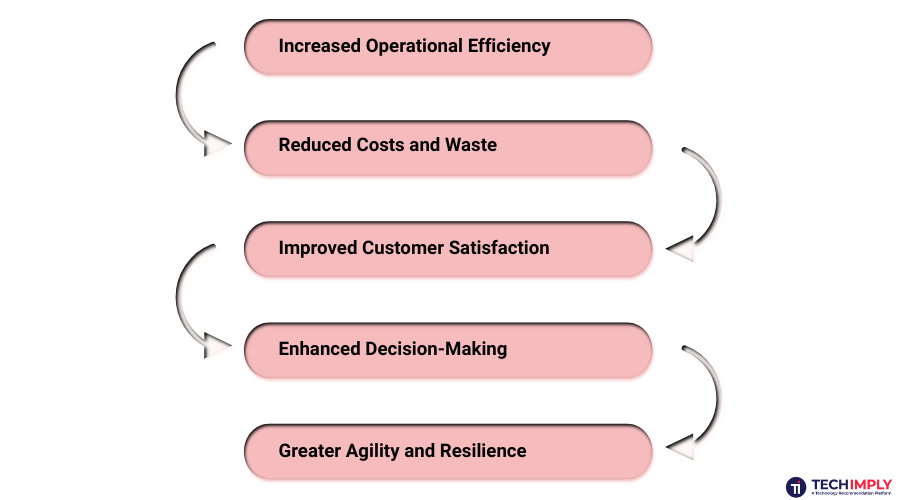
1. Increased Operational Efficiency
Once supply chain operations are computerized and linked, work will be quicker and simpler. ERP decreases paperwork and repetition, which contributes to saving time on the part of the employees. Companies can receive more orders with the improvement of coordination without having to put in more workloads. This is the role of enterprise resource planning to the overall performance.
Example: An example is manufacturing company that can automatically update the stock levels once the production is done, and it does not have to wait long before the material requests are met.
2. Reduced Costs And Waste
ERP reduces wastage by monitoring the use of materials and production requirements. It avoids excessive ordering and minimizes store costs. The ability to plan resources by demand ensures that companies do not waste additional resources. This makes the process cost-effective and more structured.
Example: A company will be able to monitor real-time raw material information and prevent the purchase of items that are already in stock, which will save warehouse space.
3. Improved Customer Satisfaction
Customers develop confidence when companies deliver their products on time and update them about the orders correctly. ERP assists in monitoring deliveries, taking returns, and processing customer enquiries without any problems. Service speed and accuracy reduce errors that create a good image in the market.
Example: Automatic shipping updates help the customers in being informed about the shipping process, which assists in less confusion and enhancing trust.
4. Enhanced Decision-Making
ERP offers real-time information, which is useful in assisting managers in a quick analysis of the supply chain performance. By having proper insights, companies are able to correct them before they become larger. The improved decisions also cut the risks and enhance future profitability. Wisdom in data application will result in intelligent plans.
Example: Sales reports can be seen in real-time, and managers can determine which products should be manufactured more in the peak seasons.
5. Greater Agility And Resilience
The demand in the market may shift in a short period and hence companies should act promptly. ERP enables organizations to adapt production, deal with the suppliers and resolve delays with fewer challenges. It assists companies in regaining their normalcy once they are hit by problems and they move on. This flexibility safeguards the long-term development of the ERP process in Supply Chain Management.
Example: When there is a delay on the side of a supplier, the system immediately recommends a different supplier to prevent the manufacturing process.
Industry-Backed ERP Case Study:
Toyota incorporated an ERP system to enhance its global operations in the supply chain. Prior to ERP, the company had a problem of inventory delays in updating and non-existent communication between the various factories. Real-time visibility on the stock levels, production status and supplier deliveries was achieved after the implementation in Toyota. This assisted them in minimizing wastage, over-stocking and made them deliver cars to the consumers in a shorter time. The ERP system also enabled improved decision-making in case of sudden changes in the market, enabling the company to have a stable production even during the busy seasons.
Conclusion
ERP in Supply Chain Management is important to improve coordination, visibility, and efficiency within the business process. ERP allows real-time data sharing and interdepartmental communication through the integration of processes like inventory tracking, procurement, logistics, and forecasting, among others. It saves on time and money and improves supplier and customer relationships. Using precise forecasting and financial control, businesses will be able to keep stock levels, make better decisions, and react to any changes in the market swiftly. ERP systems have been used to simplify international business, minimize wastage, and improve productivity, as seen in such examples as Toyota. In general, ERP makes the supply chain smart, flexible and durable to achieve long-term success.
Suggested Read:
- How ERP Software Can Improve Financial Management and Reporting
- How ERP Software Improves Data Security and Compliance
- Things To Know Before Choosing The Best Education ERP Software
- Accounting Software vs. ERP Software: What's the distinction?
- What Are the Top Factors to Consider When Choosing an ERP Software?
- How Can ERP Software Help Small Companies?
- AI and ML features in modern ERP Software
- Best Cloud ERP Software for Small Business and SMBs