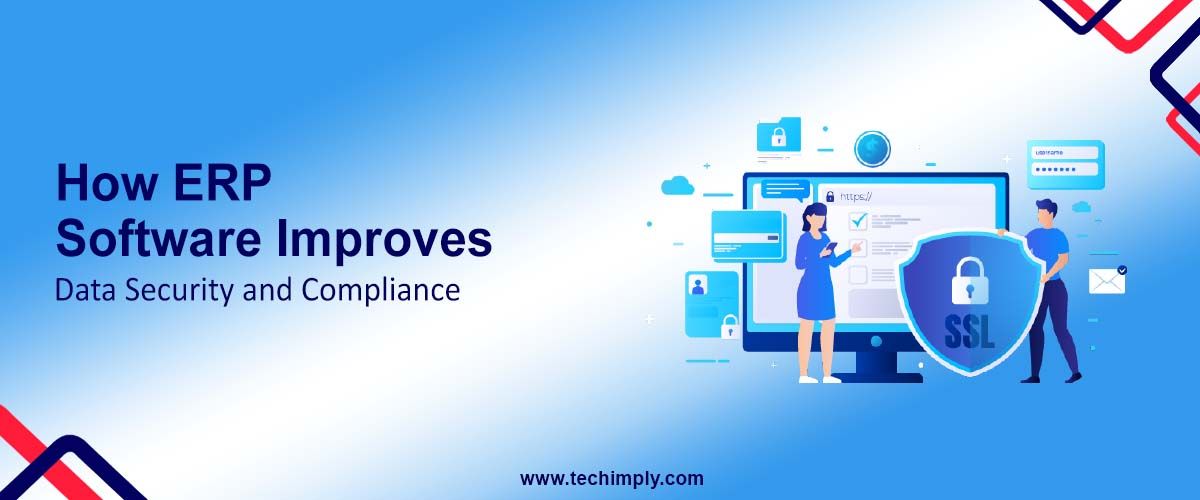
Suppose you have reviewed the majority of our publications. In that case, it's far more obtrusive that we continually emphasize the advantages of Enterprise Resource Planning (ERP) Software and their enormous impact on companies across numerous industries. ERP software is designed to streamline and combine centre enterprise features, which include Inventory Management, monetary accounting, human resources, Customer Relationship Management(CRM), and procurement. Despite their comprehensive abilities, ERP software are susceptible to safety vulnerabilities that should be proactively recognized and mitigated to ensure machine integrity and commercial enterprise continuity.
Data Breach Prevention and Cybersecurity Mitigation Strategies
Given the centralization of assignment-essential business information and middle operational features inside Enterprise Resource Planning structures, businesses ought to treat ERP safety as a paramount felony and monetary risk management precedence.
Ensuring the safety of an ERP necessitates the implementation of superior strategies, get admission to controls, and countermeasures to mitigate unauthorized get right of entry to and defend against cyber threats. These processes embody the protection of information integrity, the assurance of device availability, and the enforcement of confidentiality across all modules inside the ERP architecture.
Avoiding ERP System Data Breaches
Due to the complicated and interdependent architecture of ERP system, an unmarried fact breach can precipitate vast operational disruptions and result in huge economic repercussions for the corporation.
Case Study: The 2017 Equifax Data Breach and Its Implications for ERP Security
The 2017 Equifax information breach, which compromised the non-public data of approximately 147 million individuals, serves as a stark instance of the vulnerabilities within ERP-integrated systems. Equifax's failure to put in force good enough security measures caused a breach that no longer only incurred significant economic losses but also exposed millions of people to identification robbery risks.
Cyberattackers make the most of a vulnerability in Equifax's database, leading to the unauthorized disclosure of sensitive information, which include names, Social Security numbers, dates of start, addresses, and other in my opinion identifiable facts (PII).
The breach ultimately led to an agreement exceeding $575 million, underscoring the crucial necessity for complete ERP security protocols to shield sensitive records and keep organizational integrity and public confidence.
Cloud ERP and Data Security
Over the years, there has been a developing emphasis on cybersecurity worries from corporations utilizing and assessing ERP software. Our general recommendation is to transition to a cloud-based totally ERP answer.
Here’s why:
Many businesses continue to perform on legacy ERP Software that now does not get hold of supplier guides or crucial updates, leaving them exposed to evolving safety vulnerabilities. Initially, when cloud ERP software emerged, concerns about records safety were well-known, especially regarding the perceived lack of manipulation over server environments and the ability to expose statistics in a multi-tenant cloud infrastructure.
However, this notion is now old. Advancements in the cloud era, on the side of more suitable safety frameworks and compliance certifications, have substantially strengthened the safety posture of cloud-primarily based ERP Software, addressing earlier concerns and providing an extra steady, scalable alternative to on-premises answers.
Cloud ERP Application Can Significantly Improve Database Security For Businesses in Several Ways:
-
Implement superior encryption protocols for statistics-at-rest and facts-in-transit.
-
Ensure the deployment of everyday protection patches and software updates to mitigate vulnerabilities.
-
Enable continuous actual-time tracking for anomaly detection and chance mitigation. Provide incorporated security features, inclusive of however no longer confined to:
-
Multi-aspect authentication (MFA) for access control.
-
Role-based totally access manipulate (RBAC) to put in force least-privilege get admission to regulations.
-
Automated, periodic backups to ensure records redundancy and recovery.
These measures together shield sensitive information from unauthorized access and capacity breaches. Additionally, cloud ERP vendors leverage the robust safety infrastructure and advanced safety protocols supplied by their cloud carrier platforms, ensuring a better stage of safety than traditional on-premises systems.
Cloud ERP carriers deploy specialised protection groups to proactively perceive, assess, and remediate vulnerabilities, ensuring continuous resilience towards rising cyber threats. The centralized architecture of cloud ERP application also helps the uniform utility of safety guidelines and updates throughout the business enterprise, mitigating risks related to inconsistencies or gaps in protection controls.
As a result, businesses can cognizance of their central commercial enterprise functions with the guarantee that their facts are safeguarded through contemporary, up to date security features constructed into their cloud ERP platform.
For similar perception, we provide a complete white paper from CETEC, a leading ERP provider, to support corporations in information and implementing powerful ERP protection practices.
Cloud ERP: A Word on Security by CETEC
This white paper gives in-depth guidance on addressing emerging cyber threats and information on the safety competencies of cloud-based ERP.
Understanding ERP Security
ERP software integrates middle business approaches and are essential to organizational functions.
Due to their complexity and the sensitive information they handle, ERPs are appealing goals for cyber threats and call for strong security measures.
Core Concepts and Security Vulnerabilities
ERP safety encompasses measures designed to guard the machine from unauthorized access to, facts breaches, misuse, disclosure, disruption, amendment, or destruction of facts.
Vulnerabilities inside ERP software can emerge from misconfigurations, insufficient right of entry to controls, or the usage of previous or unsupported software additives. These safety gaps expose ERP to capability information breaches, economic losses, and operational disruptions, underscoring the necessity of non-stop safety tests and proactive danger mitigation techniques.
The inherent complexity of ERP software will increase the assault floor, making them high objectives for numerous cybersecurity threats. Common vulnerabilities, together with gadget misconfigurations, susceptible authentication mechanisms (e.G., without difficulty guessing passwords), and unpatched protection flaws, give massive access points for attackers.
Furthermore, compliance with regulatory frameworks—which include the General Data Protection Regulation (GDPR) for statistics protection—is critical. ERP software should be configured to satisfy prison and industry standards for information safety management, ensuring the stable processing, garage, and transfer of touchy records.
Threat Landscape
The risk landscape for ERP software is continuously evolving, fashioned with the aid of external and internal factors.
External threats, such as third-celebration attacks, often contain hazard actors exploiting vulnerabilities within community infrastructure or application layers to benefit unauthorized access. Internal threats, then again, stem from insider dangers, where legal users (e.G., personnel or contractors) misuse their entry privileges to compromise gadget integrity.
To mitigate these dangers, cybersecurity measures ought to be dynamic, continuously adapting to emerging threats at the same time as ensuring alignment with organizational desires and compliance necessities, together with regulatory requirements for facts protection and machine protection.
External Threats: Adversaries, including cybercriminals, countryside actors, and competitor businesses, may target ERP software through advanced persistent threats (APTs), leveraging assault vectors inclusive of malware, ransomware, or phishing campaigns to make the most gadget vulnerabilities.
Internal Threats: Authorized customers, consisting of employees or contractors, might also deliberately or by accident compromise the ERP utility, both via malicious sports or inadvertent movements, consisting of mishandling credentials or bypassing security protocols.
Compliance and Regulatory Risks: Non-compliance with enterprise policies and felony frameworks, inclusive of GDPR, HIPAA, or SOX, exposes agencies to prison liabilities, statistics breaches, and ability monetary penalties, emphasizing the want for sturdy governance and adherence to security standards within ERP software.
Strategic Security Measures
Strategic security measures necessitate complete making plans and the established order of definitely defined guidelines, frameworks, and safety protocols. These measures encompass the systematic enforcement of sturdy access controls, identification control, and authentication mechanisms to guard ERP software integrity.
Each section of this process is vital in architecting a stable, resilient IT atmosphere that protects a business enterprise’s project-critical statistics, commercial enterprise tactics, and operational continuity from evolving cyber threats and vulnerabilities.
Technical Aspects of ERP Security
Comprehensive protection needs specific interest to technical specifics, consisting of the steady utility of software patches, system updates, and the deployment of superior tracking software for non-stop danger detection and anomaly analysis.
Security Patch Management
Patch control is a critical issue of maintaining the safety posture of Enterprise Resource Planning (ERP) systems. Organizations ought to put in force a constant patching approach to address acknowledged vulnerabilities and mitigate protection risks. Failure to use safety updates in a well timed way can disclose the machine to capability threats, inclusive of SQL injection assaults.
Effective patch management not only involves applying security updates but also requires organizations to assess the risk and impact of each patch. Prioritizing patches based on the severity of vulnerabilities is essential for maintaining system security without disrupting business operations. A comprehensive approach should also include continuous monitoring of the ERP system for emerging threats, regular audits to ensure compliance, and the training of IT staff to recognize the importance of timely patch application. In addition, organizations should consider employing automated patch management software to streamline the process, reduce human error, and improve efficiency in addressing vulnerabilities.
A strong and properly-documented patch management framework, encompassing patch identity, trying out, validation, approval, and deployment techniques, is crucial to ensure safety and operational integrity. While this is in particular pertinent for on-premises ERP answers—in which patch control is the responsibility of the corporation—cloud-primarily based ERP software frequently gets automated updates from the seller.
System Configurations and Updates
ERP configurations should be designed with a protection-first method, adhering to standards along with least privilege access management and granular facts get admission to regulations. Continuous machine updates are imperative to ensure the ERP platform stays resilient towards evolving security threats and vulnerabilities. All configuration adjustments should be meticulously logged and tracked within a proper exchange management device to put in force accountability, prevent unauthorized adjustments, and make sure machine integrity isn't compromised via inadvertent or malicious changes.
Monitoring and Response
ERP configurations should be designed with a protection-first method, adhering to standards along with least privileged access management and granular facts get admission to regulations. Continuous machine updates are imperative to ensure the ERP platform stays resilient towards evolving security threats and vulnerabilities. All configuration adjustments should be meticulously logged and tracked within a proper exchange management device to put in force accountability, prevent unauthorized adjustments, and make sure machine integrity isn't compromised via inadvertent or malicious changes.
Preventive ERP Security Actions
Preventive safety features are vital for safeguarding a company's digital infrastructure. These measures establish the foundation for a resilient safety posture by means of proactively mitigating vulnerabilities and employing controls designed to prevent unauthorized get admission to, data breaches, and different cyber threats earlier than they materialize.
Training and Awareness
Organizations must prioritize consumer consciousness training, recognizing that human error is often a big vector for safety vulnerabilities. In evaluating security awareness training vendors that specialize in culturally embedded and compliance-aligned programs, businesses can ensure their workforce receives structured, up-to-date instruction tailored to modern threats and regulatory requirements, helping reduce risky behaviors and This education ought to be included into the onboarding process for brand new structures or supplied as separate periods for existing structures. Effective schooling programs need cognizance of vital regions including steady password practices, phishing detection, and chance reputation. These packages have to be frequently updated to make sure personnel remain informed about rising threats and evolving attack methodologies.
-
Annual Security Awareness Training: Comprehensive periods on password control, secure authentication practices, and procedures for figuring out and reporting anomalous hobbies.
-
Monthly Security Bulletins: Regular updates outlining the latest threat intelligence, including emerging vulnerabilities, attack trends, and a reinforcement of key security practices.
Data Protection and Backup Procedures
Protecting touchy ERP information is a vital priority and calls for the enforcement of sturdy statistics protection policies. These policies ought to encompass well-defined facts backup strategies to make certain statistics integrity and availability inside the occasion of system screw ups, cyber-attacks, or records corruption.
Backup Procedures
-
Backup Frequency: Daily incremental backups to seize modifications in facts, complemented through complete weekly backups to make sure comprehensive recuperation points.
-
Backup Verification: Monthly integrity checks to affirm backup validity, alongside semi-annual restoration trying out to make certain recoverability and accuracy of sponsored-up information.
Data Protection Mechanisms
Implementing advanced firewall configurations and sturdy encryption protocols is important for defending sensitive facts against unauthorized access. This includes encryption of information each in transit (through TLS/SSL) and at relaxation (through AES or equivalent encryption standards). Regular updates to firewall regulations, informed by using the cutting-edge chance intelligence, are vital to adapt to evolving assault vectors and ensure non-stop protection of ERP.
Evaluating the Right ERP Vendor
When deciding on an ERP seller, corporations must carefully examine the vendor’s history and abilities in managing safety dangers. A reliable ERP vendor needs to show a robust, documented security framework and a validated tune record of directly addressing vulnerabilities. It is likewise vital to assess the vendor's aid infrastructure and replace guidelines, as everyday, proactive software updates are quintessential in mitigating rising protection threats.
-
Experience: Vendors with huge area know-how and mounted ERP deployments are usually better placed to provide steady, resilient solutions.
-
Expense Management: Prioritize providers that observe across the world identified protection requirements (e.G., ISO 27001, GDPR) to make certain adherence to enterprise quality practices.
-
Client Testimonials & Case Studies: Assessing client remarks and actual-global case studies can offer valuable insights into the seller's protection effectiveness and reliability through the years.
Integrating Third-Party Solutions
Integrating third-party solutions with an ERP application can enhance functionality but may also introduce additional security challenges. It is vital to evaluate the security and interoperability of these external solutions before integration.
-
Compatibility Assessment: Ensure that third-party software are technically compatible with the ERP software and will not compromise its performance or security posture.
-
Vendor Synergy: Evaluate the history of collaboration between the ERP vendor and third-party providers, as prior partnerships may indicate smoother integrations and enhanced security practices.
-
Security Audits: Conduct thorough security assessments of each third-party solution, with particular attention to data protection mechanisms (e.g., encryption protocols, access controls) and compliance with data privacy regulations.
Cloud ERP Security Considerations
For cloud-based ERP solutions, it is essential to scrutinize the vendor’s infrastructure and security policies to ensure they provide robust defenses against prevalent security threats, such as data breaches and unauthorized access.
-
Infrastructure Resilience: Evaluate the cloud vendor's infrastructure, including their physical and network security measures, disaster recovery capabilities, and data redundancy strategies.
-
Risk Mitigation: Assess the vendor’s approach to mitigating common cyber risks, such as identity and access management (IAM), intrusion detection systems (IDS), and data encryption both in transit and at rest.
Conclusion
ERP software enhances data security and compliance by offering robust features such as data encryption, access controls, and automated compliance reporting. With real-time monitoring and seamless integration of security protocols, ERP software help protect sensitive information, reduce the risk of breaches, and ensure adherence to industry regulations. By centralizing data management, ERP software provides organizations with the tools to safeguard their operations and maintain regulatory compliance efficiently.