
In 2025, a doctor’s reputation is shaped long before the first appointment. It’s built in the background—through online reviews, Google searches, social media, and the accuracy of your practice’s digital footprint. For today’s healthcare providers, a well-managed online presence isn’t a nice-to-have. It’s a necessity.
Patients are behaving more like consumers. According to recent surveys, most people research a provider online before ever calling the office. If your Google profile is incomplete, your reviews are mixed, or your listings are outdated, you could be losing potential patients without ever knowing they looked.
That’s why reputation management has become one of the most critical strategies in modern practice growth. It’s not just about putting out fires or responding to the occasional negative review—it’s about building credibility, trust, and visibility from the ground up. And with the right tools in place, it doesn’t have to be complicated or time-consuming.
In this blog, we’ll explore why online reputation management for doctors is vital in 2025, what features matter most in a solution, and how to take control of your digital brand before it controls you.
Why Online Reputation Matters for Doctors?
Today’s patients don’t just search for nearby doctors—they evaluate, compare, and often make decisions based on what they find online. Your digital reputation now plays a direct role in patient acquisition, retention, and even referral patterns. For healthcare professionals, working with trusted online reputation consultants can make a real difference in maintaining a strong and credible digital presence that attracts new patients and builds long-term trust.
In fact, a recent survey by Software Advice found that over 90% of patients read online reviews before choosing a healthcare provider. Even more revealing—nearly 70% say they won’t consider a doctor with less than a 4-star average.
That means your online presence is no longer secondary to your in-office experience. It’s the front door to your practice.
And it’s not just about star ratings. Patients evaluate multiple signals before deciding to book:
- Google Business Profiles: These show up first in search results. An incomplete or outdated listing creates doubt, while a well-optimized one builds instant credibility.
- Practice Websites: Patients often visit your website after reading reviews. A dated or hard-to-navigate site can create a disconnect—even if your care is excellent.
- Directory Listings (Healthgrades, Zocdoc, Vitals): Patients often cross-reference providers across multiple platforms. Inconsistencies in your contact info, hours, or accepted insurances can confuse—and lose—potential new patients.
- Social Media Presence: While not a primary decision-maker, platforms like Facebook add depth to your brand. Active profiles can reinforce trust and make your practice feel more approachable.
If any of these touchpoints are incomplete, outdated, or skewed by negative feedback, your digital reputation can take a hit—quietly costing you appointments, word-of-mouth referrals, and long-term patient relationships.
In a competitive market, managing your reputation isn’t just about defense. It’s a proactive strategy to grow your practice and stay relevant in a digitally-driven healthcare environment.
What Makes a Great Reputation Management Solution?
Not all reputation management tools are built with healthcare in mind. While many platforms offer review monitoring or response automation, doctors need more than just alerts and star ratings—they need a solution that aligns with the realities of running a medical practice.
Here are the core features that set apart a truly effective reputation management platform for healthcare providers:
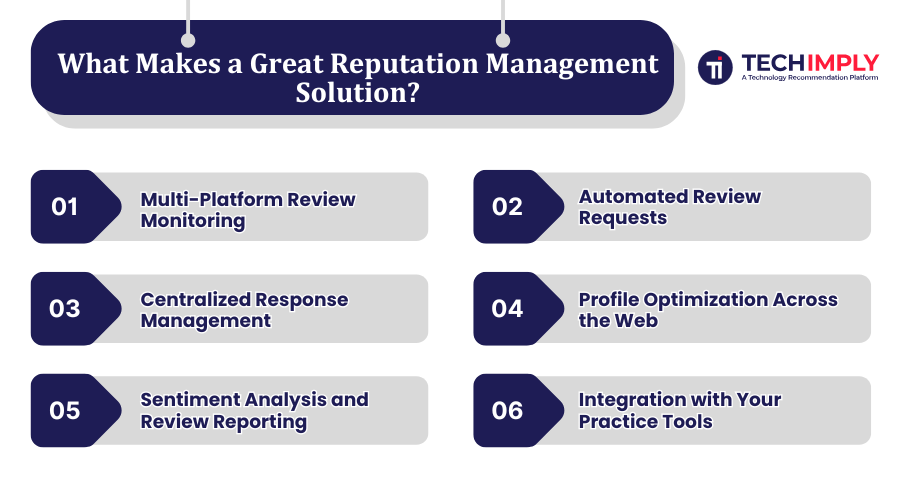
1. Multi-Platform Review Monitoring
Today’s providers are reviewed across more than just Google. Effective solutions must track reviews across platforms like Yelp, Facebook, Healthgrades, Zocdoc, Vitals, and RateMDs. More importantly, they should offer real-time notifications so you’re aware of reviews as soon as they go live—giving your team time to respond, address concerns, and engage with patients while the feedback is still fresh.
2. Automated Review Requests
The best way to drown out the occasional negative review is by generating a steady stream of positive ones. Top-tier tools automatically request reviews from patients after appointments—using email, SMS, or even QR codes at checkout. This increases volume, improves your average rating, and creates a consistent reputation-building system that runs in the background.
3. Centralized Response Management
Replying to reviews—especially negative ones—shows potential patients that you listen, care, and are willing to engage. Strong platforms allow you to respond directly from a single dashboard, eliminating the need to log into multiple websites. Bonus points for tools that offer pre-written, HIPAA-compliant response templates to save time while keeping your replies professional.
4. Profile Optimization Across the Web
Your online profiles are often the first impression a patient has of your practice. A good platform should help you identify and fix outdated or inconsistent listings. From verifying your business hours on Google to syncing your phone number across Zocdoc, Vitals, and Healthgrades, keeping your profiles accurate is a foundational part of online trust.
5. Sentiment Analysis and Review Reporting
Numbers tell part of the story—but understanding trends in patient feedback is where real improvement begins. Reputation tools with sentiment analysis can identify common themes, like complaints about long wait times or praise for friendly staff, helping you pinpoint what’s working and what needs attention.
6. Integration with Your Practice Tools
The more integrated your software stack, the smoother your workflows. The best reputation management software integrate with your HIPAA Compliant EHR Software, practice management system, or CRM, making it easier to trigger review requests and manage communication without extra manual effort.
An effective platform isn’t just about boosting ratings. It’s about building a scalable, data-informed strategy to improve how your practice is perceived—and experienced—both online and in person.
Why This Is One of the Best Reputation Management Solutions for Doctors
There are plenty of reputation management tools available today, but very few are designed with the specific needs of modern medical practices in mind. That’s what makes a healthcare-focused solution stand out—not just as a review management tool, but as a strategic partner that helps providers take full control of their online presence.
-
Designed Exclusively for Medical Professionals
Unlike generic platforms used by restaurants, salons, or retailers, a healthcare-specific solution is built from the ground up for doctors and clinics. The features, language, and workflows are tailored to meet medical standards and ensure full HIPAA compliance. It’s not just another review tool—it’s a platform made for healthcare.
-
Smart Review Generation Based on Patient Encounters
Rather than sending out random review requests, these platforms intelligently trigger messages based on real patient interactions—whether it’s after a telehealth visit, a follow-up checkup, or a new consultation. Requests are sent via SMS or email using carefully crafted messages that significantly boost response rates.
-
One Dashboard for All Your Reviews
Managing reviews on Google, Healthgrades, Zocdoc, and Facebook doesn’t have to mean juggling multiple logins. A unified dashboard brings everything together in one place, making it easier for providers to monitor feedback, respond quickly, and track overall reputation trends—all without switching platforms.
-
Real-Time Alerts with Thoughtful Responses
Not every review needs the same type of reply. With smart alerts and built-in templates, staff can be notified of urgent or negative feedback right away. The system also offers professional, HIPAA-safe responses to help your team reply confidently and appropriately—even when time is limited.
-
Real Results That Help Grow Your Practice
Reputation management isn’t just about optics—it leads to real business outcomes. Practices using this type of solution often see better visibility on Google, stronger search rankings, and a noticeable increase in patient inquiries from search traffic.
One internal medicine group, for example, saw new patient bookings from organic search jump by nearly 40% after improving their online profiles and gaining more 5-star reviews.
-
Support That Understands Medical Workflows
The implementation process matters—and so does ongoing support. With a team trained to understand how medical practices operate, everything from onboarding to troubleshooting runs smoothly. That means less downtime and more confidence that your platform aligns with your day-to-day operations.
If your goal is to improve patient trust, protect your brand, and shape how your practice is perceived online, a healthcare-focused solution provides more than just tools—it offers the right support to help you succeed.
Best Practices to Manage and Improve Your Online Reputation (Even Without Software)
Not ready to invest in a platform yet? That’s okay—there are still meaningful ways to take control of your online presence starting today. Reputation management doesn’t have to be complicated or expensive. With some intentional steps, you can make a big impact.
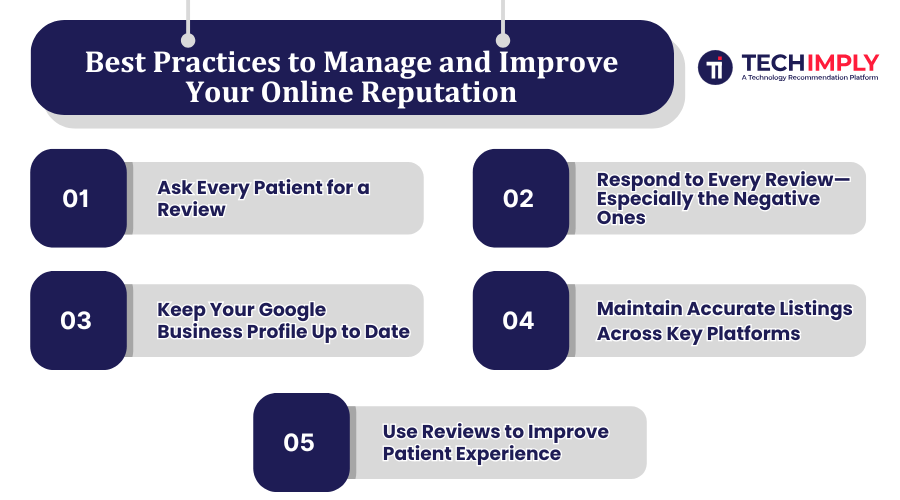
1. Ask Every Patient for a Review
One of the easiest and most effective ways to grow your online presence is simply to ask. Most patients are happy to share a good experience—they just need a prompt.
Encourage your front desk staff to ask for feedback at checkout. You can also place QR codes or small review request cards near the exit or include a short message on post-visit paperwork.
2. Respond to Every Review—Especially the Negative Ones
Patients appreciate feeling heard. When you reply to reviews—positive or negative—it shows that your practice values feedback and is committed to improving.
A kind and professional response to a 1-star review can actually build more trust than a dozen 5-star ones. Just make sure all replies are HIPAA-compliant and never reveal private medical details.
3. Keep Your Google Business Profile Up to Date
Your Google listing is often the first thing new patients see. Make sure it’s complete and current—including hours, services offered, and accepted insurance plans. Upload photos of your practice and staff to give patients a warm, welcoming first impression.
4. Maintain Accurate Listings Across Key Platforms
Patients often check multiple sites before making an appointment. Make sure your information is consistent across platforms like Healthgrades, Zocdoc, Vitals, and Facebook. Outdated or conflicting details can lead to confusion—or lost trust.
A simple quarterly check-in can keep your profiles accurate and up to date.
5. Use Reviews to Improve Patient Experience
Online reviews aren’t just about reputation—they’re a great source of feedback. Look for recurring comments about long wait times, rushed appointments, or poor communication. Use this insight to improve scheduling, staff training, or front-office operations.
Building a solid online reputation doesn’t require fancy software—it starts with genuine communication, consistency, and a willingness to listen. But when your practice is ready to scale those efforts, investing in a purpose-built reputation management platform for doctors can help take your results to the next level.
If you're looking to attract more patients, strengthen referrals, and build long-term trust in your community, the right solution will do more than monitor reviews—it will help your practice grow.
Final Thoughts
In 2025, your digital reputation is often the first—and most influential—impression patients have of your practice. It’s not just about preventing damage; it’s about creating a compelling, trustworthy presence that reflects the quality of care you provide every day.
Patients are searching. They’re reading reviews. They’re comparing providers across platforms before they ever pick up the phone. And if your online presence is weak, inconsistent, or outdated, you could be losing out on dozens of new patients each month without even realizing it.
The doctors who will stand out in this next era of healthcare aren’t just excellent clinicians. They’re also visible, accessible, and trusted online.
So whether you're just getting started or ready to scale your efforts, now is the time to invest in your online reputation. Your future patients are already looking—you just need to make sure they like what they find.

.jpg "5 Reasons Why Plagiarized Content Cannot Rank in SERPs")