
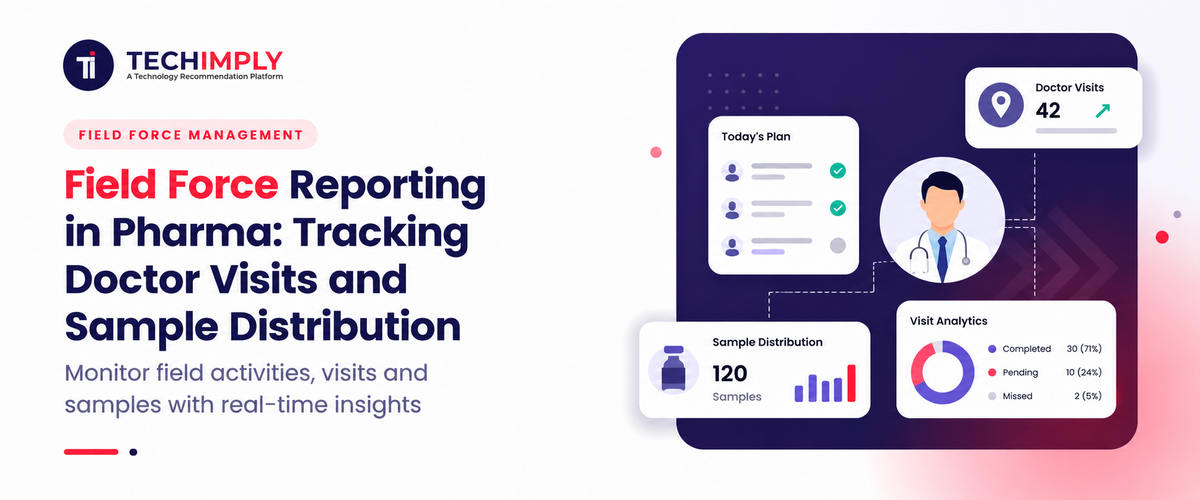
The pharmaceutical business in India follows the field force system wherein the medical reps travel to doctors, hospitals, and clinics to market and promote the products, give information, and dispense product samples. This leads to a distinct challenge for managing the pharmaceutical reps since it raises the question of how to make sure that the representatives visit the correct practitioners, manage their time well, and handle sample management effectively.

Looking for MR Reporting Software?
Check out Techimply's List of the Best MR Reporting Software in India for your business.
The solution to this problem can be found through field force reporting systems, which provide visibility as to what the representatives are doing, where they are going, and what kind of results they are producing. Without such a system in place, the organisation will not have accurate information about whether its representatives are really visiting the targeted physicians or going somewhere else, whether the samples being distributed are in line with their physician-based promotion strategies, or whether the territory is adequately covered.
What Is Field Force Reporting in Pharma?
In pharmaceutical organizations, field force reporting is the recording and monitoring of field representative actions, especially visitations to doctors and the distribution of samples. The system records the whereabouts of the representatives, the practitioners that they visit, the messages that they convey, and the number of samples distributed.
The core component of field force reporting is location tracking technology. A vehicle tracking system enables organisations to map representative routes and verify that field staff reach intended call locations. GPS vehicle tracking capabilities provide real-time or near-real-time visibility of representative positions, creating accountability for time allocation across territories. Where the representative states that he or she visited a doctor at 10:00, the information can be used to confirm whether the representative really visited the doctor at the said time using the information from the GPS tracking system.
Besides the information regarding the locations, field force reporting also entails collecting information about the activities of the representatives. The representatives indicate the doctors visited, time spent with the doctors, issues discussed, amount of samples given out, and feedback obtained. An organisation learns not just that a representative spent time in a specific area, but that they visited three doctors, distributed 50 samples, discussed two specific products, and collected competitive intelligence from one practitioner.
The integration of vehicle tracking system technology with activity reporting creates accountability structures that would be impossible through manual reporting alone. Representatives cannot simply report visits without supporting location data. Discrepancies between claimed visit locations and GPS vehicle tracking records become apparent. Sample distribution records must align with actual visit data, preventing inventory losses through unreported or fraudulent distribution claims.
Why Pharma Companies Need Field Force Reporting
Pharmaceutical companies operating in India typically manage large field forces distributed across multiple territories. A pharmaceutical firm operating nationwide may have several hundred medical representatives. If there is no systematic field force reporting, the data management will have to rely on self-reporting by the representatives themselves, which is necessarily biased and prone to distortion.
The transparency that is generated through field force reporting helps organizations figure out which representatives produce results and which do not. Some representatives might claim identical activity levels (visiting the same number of doctors, distributing the same number of samples) yet deliver very different sales outcomes. Systematic tracking allows organisations to analyse what differentiates high performers from average performers, enabling identification of best practices for replication across the sales force.
Accountability functions through visibility. Representatives understand that their activities are being tracked through GPS vehicle tracking systems and activity reporting. This understanding typically increases activity consistency and reduces deliberate time-wasting. A representative is less likely to spend excessive time at non-work locations when they know movement patterns are documented through vehicle tracking system capabilities.
Territory coverage verification ensures that all target practitioners receive adequate attention. Field force reporting reveals coverage gaps, geographic areas where doctor visits are infrequent, practitioners who receive irregular attention, or areas receiving disproportionate representative focus. This data enables management to rebalance territory assignments or modify representative incentives to ensure balanced coverage.
Benefits of Automated Field Force Reporting
Manual field force reporting relying on representative self-reporting through forms, phone calls, or spreadsheets creates multiple limitations. Representatives complete reports with delays, omit details, or provide inconsistent data. Aggregating information across many representatives becomes time-consuming. Inconsistencies and gaps appear during analysis, requiring follow-up clarifications that delay decision-making.
Automated field force reporting using mobile applications and backend analytics systems addresses these limitations through real-time data capture. As representatives work, data flows directly into central systems. Management receives current information about visit locations, sample distribution, and other field activities without waiting for representatives to complete end-of-period reports.
Better productivity visibility emerges from real-time data. Managers identify problems promptly rather than discovering them weeks later through traditional reporting. A representative performing below activity targets becomes apparent within days rather than weeks, enabling early intervention. A territory experiencing coverage gaps surfaces quickly, allowing resource reallocation before significant opportunity loss occurs.
Accurate data emerges from automated tracking because system-generated location data from GPS vehicle tracking systems provides objective records independent of representative recall or intent. Representatives cannot claim visits to locations they did not reach when GPS tracking system data management verifies actual movement. Sample distribution numbers must align with inventory records and visit locations, reducing discrepancies from manual reporting errors.
How to Track Doctor Visits
Visit planning initiates the tracking process by defining which doctors each representative should contact during defined periods. This plan establishes targets against which actual visit performance is measured. Plans typically specify doctor names, clinic locations, visit frequencies, and promotion priorities.
GPS tracking system integration verifies that representatives reach intended locations. As representatives navigate through territories, a vehicle tracking system records movement. When representatives reach target doctor locations, mobile applications record arrival, creating timestamps and location coordinates from GPS vehicle tracking data. This simultaneous recording of claimed visits and GPS location verification prevents reporting visits without actually reaching destination locations.
Visit documentation captures the visit itself through representative reports. These reports record practitioner details, discussion topics, sample quantities, and feedback. This qualitative information extends beyond location verification to capture the visit content and outcomes.
How to Track Sample Distribution
Sample tracking begins when representatives receive sample inventory. Each sample unit is recorded in the system with product name, batch number, expiry date, and quantity. Representatives receive this inventory information through mobile applications or printed documentation.
During doctor visits, representatives distribute samples according to promotion strategies and doctor preferences. The field force reporting system records each distribution with doctor identification, product details, quantity, and timestamp. This transaction-level recording creates complete audit trails for every sample issued.
Inventory reconciliation occurs at defined periods where representatives account for all sample inventory. Samples distributed according to field reports should equal the difference between samples issued and samples returned. Systematic discrepancies indicate reporting errors, loss, or unauthorised distribution requiring investigation.
Key KPIs to Monitor
Pharmaceutical field force organisations typically track multiple metrics indicating activity and productivity levels across representative populations.
Visit frequency measures how often each representative contacts target doctors. Targets might specify weekly, bi-weekly, or monthly visit frequencies for different doctor categories. Comparing actual visit counts against targets reveals whether activity levels meet expectations.
Territory coverage measures the percentage of target practitioners visited within defined periods. Complete coverage means every doctor in a territory receives attention, while partial coverage indicates gaps. Coverage percentages directly influence market access and competitor displacement opportunities.
Sample distribution volume aggregates products distributed across territories and therapeutic areas. Organisations compare actual distribution against planned or expected volumes, identifying areas of over- and under-distribution.
Visit quality measures sales outcomes per visit. This might be calculated through prescriptions written, revenue attributed, or other outcome metrics. Quality metrics reveal which representatives generate results efficiently.
Conclusion
Field force reporting systems represent essential infrastructure for pharmaceutical organisations managing distributed sales forces across India. By combining GPS vehicle tracking capabilities with comprehensive activity documentation, organisations create visibility that simultaneously supports accountability and enables genuine performance support. The integration of vehicle tracking system technology with field force management transforms raw location data into actionable business intelligence.


![How to Find a Phone Number Owner? [6 Free & 3 Paid Methods]](https://cdn.techimply.com/uploads/blog/1979/1835079828867746.jpg "How to Find a Phone Number Owner? [6 Free & 3 Paid Methods]")