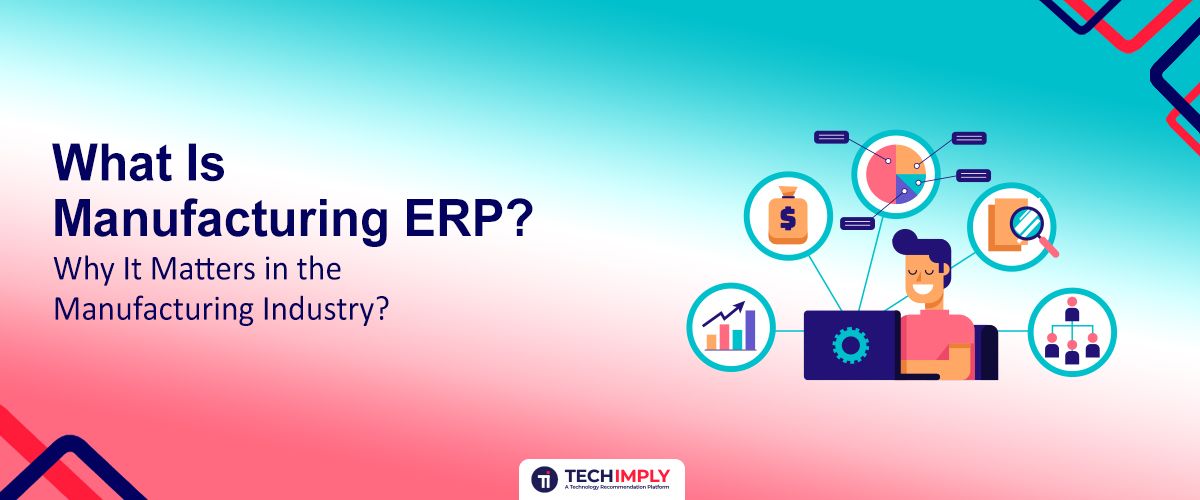
Speed and accuracy is a necessity. Managing large volumes of data, inventory, production schedules, etc. may slow operations and introduce error. The solution to this problem is manufacturing ERP, a platform that unites all business processes into one system and assists business to streamline operations and make smarter decisions. In the case of ERP for manufacturing industry, it translates to improved production planning, management of resources and performance. With the help of Manufacturing ERP, manufacturers can guarantee a more efficient process, minimize errors, and promote their development, which is why it is a very important instrument in the contemporary industry management.

Looking for ERP Software?
Check out Techimply's Best ERP Solutions for your business.
What is Manufacturing ERP?
Manufacturing ERP is a customized enterprise resource planning system designed to support the operations of manufacturing businesses which are complex. It is not a simple accounting or HR activity but concentrating on such aspects as the schedule of production, monitoring of supply chains, control over the shop floor, and quality control. When manufacturers centralize all this information, they will be able to plan the resources better, minimize downtimes and make correct decisions.
An ERP system for manufacturing company brings together departments which tend to operate separately- inventory, procurement, and production together. This will guarantee real-time visibility, reduced delays and ease of collaboration among teams. E.g. in case of a fall in the inventory, the system will automatically correct purchasing and alert production without interruptions.
Practically, the concept of Manufacturing ERP is not merely a computer software, but it is a support of the modern factory. It promotes lean manufacturing, reduces wastes, and assists companies to stay competitive in the dynamic market. Regardless of the size of workshops or the size of plants, this system is one of the ways to achieve the growth in the long run and efficiency.

Did You Know:
The report on 78% Productivity Boost Companies showed productivity increased by 78% in one year of ERP implementation, which is impressive given the frequency of technology promising much and delivering little.
What Are The Benefits Of ERP Systems For Manufacturing?
The existing manufacturers are able to operate in a highly competitive environment where efficiency, accuracy and speed are more crucial than ever before. The ERP system implemented in manufacturing is a central hub, which is used to tie the production, supply chain, and compliance operations of a business and offers businesses avenues to improve on, saving costs. The global ERP software market had been estimated at $81.15 billion in 2024 and will be estimated at 92.6 billion by 2025, emphasizing its increased significance to the manufacturers around the globe. The main benefits are as discussed below.
1. Streamlining Production Processes
A successful manufacturing process relies on efficient production processes. And with ERP for manufacturing industry, organizations have an ability to match resources, minimise delays, and achieve consistent production goals.
-
Real-Time Monitoring And Tracking
It gives managers real-time visibility of the production lines, machine utilization and overall workforce performance and thus can intervene swiftly in case of any problems. This will avoid any downtime and also all the processes will be on time.
-
Work Order Automation
The ERP does not need to be assigned work orders manually, but one can have work orders created and scheduled automatically. This minimizes the number of human errors, accelerates handling of jobs and gets the right jobs to the right departments at the right time.
-
Faster Order Fulfillment
ERP also allows businesses to fulfill orders more quickly by removing bottlenecks and automating routine. The orders are done promptly, and it builds trust and enhances the level of satisfaction in customers.
2. Enhancing Supply Chain Management
Supply chains are complicated and disruption of any part can slow down the whole process. The best ERP for manufacturing industry guarantees the clarity and the means with which the manufacturer can maintain a steady supply of raw materials, as well as finished goods.
-
Supply Chain Visibility
ERP gives you real time data on raw materials, suppliers and delivery schedules. So you can see any problem and fix it before it causes delays.
-
Inventory Optimization
Overstocking ties up capital whereas stockouts cause deadlines to be missed. ERP maintains the appropriate balance by automating the reorder levels and tracking the usage pattern to maintain an inventory at optimal levels.
-
Demand Forecasting
ERP forecasts demand more precisely with the help of historical sales and market trends. This enables businesses to have production planned in advance and avert last minute shortages.
-
Procurement Automation
ERP automates purchase order and approval, and tracking of orders. This does not only reduce the procurement cycles but also makes sure that the materials are at the right time when they are required to keep production going.
-
Supplier Collaboration
A fully connected ERP platform enhances interaction with the supplier, which leads to ease in negotiation, reduced misunderstandings, and continual partnership with the suppliers, which makes the supply chain stronger.
Quick Insights:
Of those companies that have ERP more than three years old, 73% have indicated more customer satisfaction - your internal systems directly affect the level of customer satisfaction!
3. Improving Quality Control And Compliance
Quality control will guarantee customer trust and compliance will safeguard the businesses against legal risks. ERP combines the two in the daily operations with a Manufacturing Resource Planning Example.
-
Real-Time Quality Assurance Modules
ERP does not detect defects in the final stage; it looks at the quality at every production point. This saves on rework, costs, and only quality products go into the market.
-
Traceability And Recall Management
ERP captures all the details of every batch of raw materials till the finished product. When there are defects, the companies can easily trace the problem and handle the recalls effectively, safeguarding the reputation and customers.
-
Regulatory Reporting
Manual compliance reporting is time taking and prone to errors. ERP automates reports, documentation, and ensures that industry and government requirements can be met without any delays.
-
Compliance Management
ERP systems assist companies to be in line with various local and international standards. This will prevent punishment, minimize risks, and gain credibility in the world markets.
4. Boosting Productivity And Cost Efficiency
Profitability is determined by productivity and cost control, and understanding the key benefits of implementing ERP software in your business shows how manufacturing ERP in India helps companies run leaner operations and maximize output.
-
Automation And Streamlining Of Business Processes
ERP will minimise manual data input and repetitive administrative work. Employees are able to spend less time on paperwork and more time on value driven work
-
Optimizing Resource Allocation
ERP analyzes production data to make sure machines, labor and materials are efficiently utilized. This will avoid underutilization and will maximize on investment.
-
Cost Savings
ERP saves can be in the form of material waste, overhead savings, and so on. Instead, automated planning and correct forecasting minimize financial leakages and enhance profit margins.
-
Enhanced Decision-Making
Managers are able to make smarter decisions in a shorter time with real-time analytics and insights. This enables businesses to respond fast to markets and remain competitive.
Conclusion
In the modern manufacturing environment that is highly dynamic, efficiency and speed is all that matters. Manufacturing ERP assists companies to remain on the top and connect production, supply chain, and compliance all in a single location. Firms that use ERP for manufacturing india observe a smoother operation, less number of errors and faster delivery. And it is not limited only to one kind of enterprise—enterprises of all types can be adjusted to specific requirements and simplify workflow and increase its stability, making it useful across different ERP for industries. With the evolving markets and increasing customer demands, ERP is not a luxury, it is a viable tool that is keeping organizations competitive, saving them money and helping them make smarter decisions on an everyday basis.