
Running a corporate human resource desk in India’s fast-moving business hubs requires constant vigilance and strict risk management. With the growth of companies in Noida, Mumbai, and Bengaluru, having a thorough background check on every new employee has become an essential part of the hiring process. Job seekers tend to rush through the portal and make a lot of mistakes in their CVs.

Looking for Background Check Software?
Check out Techimply's List of the Best Background Check Software in India for your business.
A bright red concern in a standard Background Check report demands careful consideration on the part of a talent acquisition team and is no excuse to be unfair. The knee-jerk reaction of rejecting a candidate can come back and bite you in the butt as the company loses a good candidate due to a silly clerical error. To counter the pressures, smart businesses use automated Background Check Software to streamline the process. This Guide explains in clear detail how an internal corporate human resources team can deal with verification discrepancies and not run afoul of regional laws, nor spoil the candidate relationship.
What Does a Flagged Background Check Mean?
1. Flagged vs. Failed Background Check
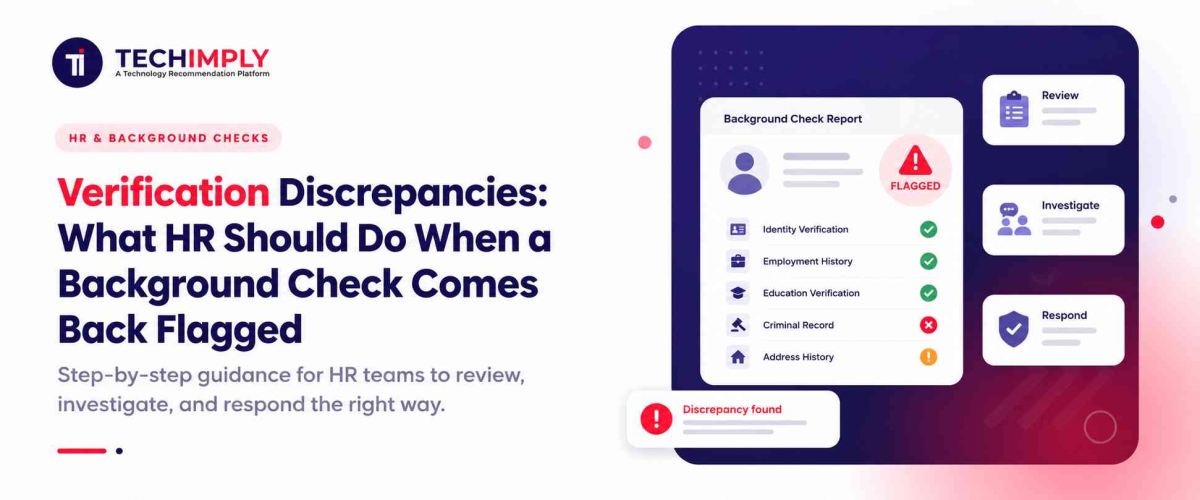
A common mistake among junior human resource executives is treating every single flagged report as an automatic failure. In the professional pre-employment screening industry, a flag simply means that the verification system or the field team found a data mismatch. It means the details provided by the candidate do not match the records held by primary sources. A flag is just a clear request for a deeper look, not an immediate disqualification.
A genuine failed screening happens much later. It occurs only after the human resource manager reviews the specific discrepancy, confirms a deliberate attempt to deceive, and officially cancels the conditional offer. Keeping this distinction clear keeps companies from losing good workers over simple typos.
2. Why Background Checks Get Flagged
Our platform automatically alerts you when discrepancies appear between the two data sets – this can be anything from a minor issue like a spelling mistake on a former employer’s name to big problems such as fabricated university degrees or active court cases.
By using targeted Background Check Software, human resource teams can quickly sort these alerts by severity. This type of software ensures that minor issues, like an exit date that is off by three days, do not get mixed up with major issues, like forged certificates or completely fake job titles.
Common Reasons a Background Check Gets Flagged
1. Criminal Records
Receiving an active match during a criminal record search is a serious issue for any corporate human resource team. If there’s an exact match with the current candidate’s details, then the HR team has to double-check his/her complete name, father’s name, age, and permanent address to rule out the possibility of any kind of misunderstanding.
2. Employment Verification Issues
Discrepancies regarding past work experience make up the highest volume of alerts during the broader Background Screening process. The most common issues found by human resource teams include:
- Inflated Titles: Claiming a Team Lead title when payroll records show the official designation was Senior Executive.
- Stretched Tenures: Altering employment start or end dates by several months to hide a period of unemployment.
- Fake Companies: Listing experience at an unregistered, non-existent entity designed solely to falsify experience.
3. Education Verification Issues
Academic credential fraud remains a widespread problem across major Indian hiring markets. We see this trigger a huge red flag from candidates while going through our Employee Management Verification Phase; either they mention an unrecognised institution, claim a higher grade point average (GPA) that they haven’t earned themselves, or buy a fake degree certificate.
4. Driving Records
For companies hiring for logistics, supply chain networks, or field sales operations, running a thorough driving history verification is a basic safety requirement. A flag in this category typically shows an expired commercial driver’s license, multiple active traffic fines, or serious charges linked to reckless driving.
What HR Should Do When a Background Check Is Flagged
1. Review the Finding
The moment a screening report shows an active alert, the human resource executive must analyze the raw data provided by the screening partner. This initial step requires looking past the red icon to pinpoint the actual root cause of the mismatch. Is the alert pointing to a major integrity issue, or is it just an administrative mismatch, like a previous company changing its corporate name during a business merger?
2. Verify the Information
Before initiating any formal procedure, the personnel division needs to confirm that the mismatch was not caused by a data entry mistake on the part of the supplier.
This verification step means double- verifying the applicant's initial hiring paperwork by comparing it with records held within the Background Check Software so that any identification codes or registration sections might have been keyed incorrectly when information was entered.
3. Assess Its Relevance to the Role
A core rule of modern Background Verification is evaluating the discrepancy against the actual daily duties of the open job. Human resource teams should use a structured risk grid to guide their decisions:
|
Flagged Mismatch |
Target Position |
Corporate Risk Level |
|
Old Traffic Fine |
Backend Software Developer |
Low Relevance / Negligible Risk |
|
Salary Record Discrepancy |
Finance Director |
Critical Relevance / Extreme Risk |
|
Mismatched Employment Month |
Customer Service Associate |
Low Relevance / Minor Clerical Error |
|
Unverified Degree Certificate |
Principal Systems Engineer |
High Relevance / Critical Compliance Threat |
4. Document the Decision
Every single phase of this evaluation must be fully recorded inside the company’s internal human resource compliance management system.
If the firm chooses to ignore a small error in the date or proceeds with cancelling the employment proposal, maintaining a thorough record of the commercial reasoning safeguards the company from later accusations regarding prejudice or inequitable dismissal.
Give the Candidate a Chance to Respond
1. Allow Disputes and Clarifications
A just, professional Employment Verification procedure must consistently offer the applicant tracking an opportunity to clarify data inconsistencies. Human resources specialists ought to dispatch a private email message to the applicant outlining the precise variance identified by the supplier.
Frequently, the applicant may provide a sound rationale, including a company purchase within the firm that modified their position name or a postponed school ceremony that shifted their completion year.
2. Review Supporting Documents
When a candidate disputes a flagged finding, they must back up their claims with official documentation. Human resource managers should carefully review these items, which often include:
- Original bank statements showing regular monthly salary credits from the disputed past employer.
- Signed relieving letters or experience certificates showing clear corporate tax registration numbers.
- Official university marksheets and direct emails from the college administration office.
3. Reassess the Findings
If the applicant shares authentic, verifiable proof that resolves the initial red flag, the human resource team must update the candidate's profile.
They should work directly with their Background Check Software provider to clear the alert. This keeps the hiring process moving forward smoothly without leaving an unfair negative mark on the person's internal record.
Legal and Compliance Considerations
1. Follow Background Check Laws
Running an employee screening process in India requires total alignment with regional data privacy laws and digital safety mandates. Human resource departments must ensure their collection practices comply with the Information Technology Act and active national data protection frameworks.
2. Apply Consistent Hiring Practices
To protect a company from internal claims of bias, the internal rules for handling a flagged Background Check must be applied uniformly across all departments.
If a company overlooks a minor documentation variance for a senior executive, it must show that same level of flexibility to an entry-level associate. Standardizing these response limits keeps the process fair and clean.
3. Avoid Discrimination
To ensure your human resource leaders aren’t inadvertently discriminating against applicants by age, gender, regional background, or community status, you need to be confident that all screening evaluations are being done via objective, criteria-based scorecards through the central tracking application, evaluating each flagged file solely based on role-based risks and verified factual evidence.
How to Prevent Background Check Discrepancies
Companies ought to give candidates distinct, documented directions outlining the precise range of the forthcoming HR Verification procedure. When applicants realize beforehand that their school transcripts, past wages, and employment durations face verification through formal data systems, they often review their CVs carefully for correctness prior to sending them off.
Human resource teams should require applicants to submit their onboarding data through a secure portal linked straight to the company's Background Check Software. Foundation lies within standardization for any robust screening approach. Firms must establish a distinct Background Screening grid defining precise validations needed across each role level.
Keeping clean, organized records across the employee lifecycle is essential for institutional compliance. Every signed consent form, vendor report, candidate clarification letter, and final approval note must be securely archived within the central human resource information system.
Conclusion
Finding a marked file inside a standard Background Check ought not to be seen as instant defeat, but as a vital stage for personnel care. By applying an organized, sequential review method, hiring groups can readily shield their firm against safety dangers and work hazards while handling truthful applicants justly.