Change, however, is not always easy, but a clever HCM implementation can also be a game-changer in the management of your workforce. Just think about automating monotonous HR processes, being able to effortlessly monitor the performance of employees, and making meaningful decisions based on the data. When properly managed, your hcm software implementation will turn chaos into order, enabling your staff to adjust well as they unlock the true potential of their employees. This blog will guide you through best practices and tools and strategies that make your transition successful.

Looking for HCM Software?
Check out Techimply's cloud based hcm software in India for your business.
What is HCM Implementation?
HCM implementations are the process of integrating software that manages human capital management software into an organization to automate their tasks in the HR sector such as payroll, recruitment, performance monitoring and engagement of the employees. As an illustration, HCM tools can help a company to automate leave approvals, employee goal tracking, or produce real-time HR reports. To facilitate a smooth implementation of hcm systems software, businesses tend to seek the services of the software implementation company to avoid any interference.
A successful HCM implementation doesn’t stop at installation—it’s about aligning the system with your workforce strategy. To make this transition effective and stress-free, organizations need to follow proven steps and best practices, which we are coving below.
Editor's Note:
It is not only software when it comes to successful HCM implementation, but a match between your peoples strategy and your business objectives. Planning, training, and engaging the stakeholders make even the best tools fail.
7 Best Practices for a Successful Workforce Transition
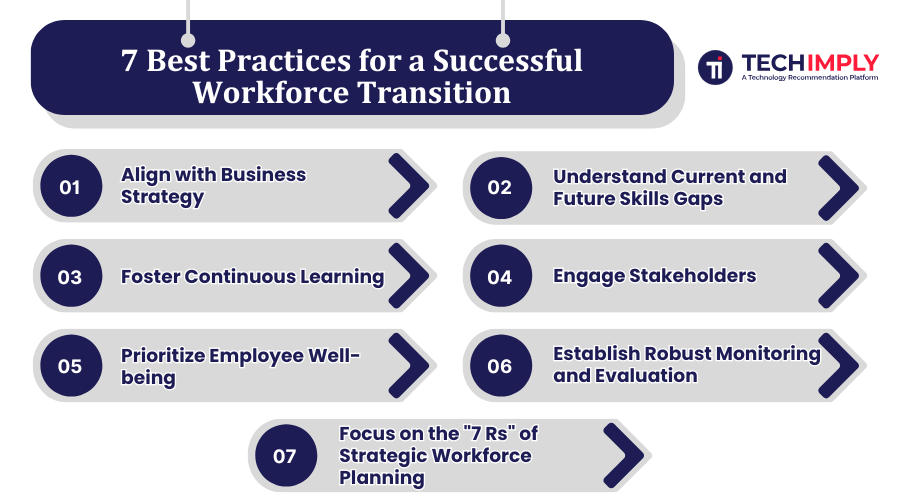
To successfully transition your workforce, it is not only about technology but also about strategy, planning and the correct practices to ensure change is here to stay.
1. Align with Business Strategy
Before starting hcm implementation steps, ensure your HCM system supports your overall business goals. An hcm implementation project plan aligned with strategy ensures every feature of your hcm product drives real value. Aligning technology with business objectives also helps prioritize resources and avoid unnecessary customization.
2. Understand Current and Future Skills Gaps
Conduct an analysis of your workforce to determine skills deficiencies now and going forward. This helps in developing HR processes and HR software solutions that are helpful in training, recruiting and developing talents. In operational risks, it is possible to be proactive in hiring and upskilling through early identification of gaps.
3. Foster Continuous Learning
Encourage employees to upskill regularly. Learning culture will achieve a seamless transition to new systems, as well as enhance hcm software scalability as your organization expands. Providing training, mentorship, and direct practical workshops online will assist employees in remaining self-assured and active throughout transitions.
4. Engage Stakeholders
Involve managers, HR and employees through early in the process. Their contributions can only be essential in influencing workable and popular hcm projects. Frequent communication and workshops make everybody informed and minimize the resistance to change.
5. Prioritize Employee Well-being
Effective transitions take into account the workload, stress and morale of the employees. Include features in your hr software solutions which make processes simpler, transparent and conducive. Incentives and definite direction can help in motivating the change.
6. Establish Robust Monitoring and Evaluation
Track progress using clear metrics. Assess the effects of the hcm implementation project plan on a regular basis in order to see whether the objectives have been achieved and make timely adjustments. Dashboards and frequent reports will serve to address problems at their earliest stage and keep the project on schedule.
7. Focus on the "7 Rs" of Strategic Workforce Planning
Recruit, Retain, Redeploy, Re-skill, Reorganize, Review and Reward. The use of these principles makes sure that your hcm product is in line with the strategic workforce objectives and creates long term success. This approach helps balance current workforce needs with future business growth.
Looking for Workforce Management Software?
Check out Techimply's List of best Workforce Management Platforms in India for your business.
What are the Different Types Of Human Capital Management Tools?
Human Capital Management (HCM) tools are essential for organizations aiming to optimize their workforce. These tools encompass a range of human capital management software solutions designed to manage various HR functions efficiently.
1. Core HR Systems
Core HR systems provide the essential administration functions at the base, including employee records, compliance, and benefits management. The use of these in the development of hcm software guarantees that scheduling of monotonous tasks is automated, the error rate is minimized and efficiency is maximized without losing the data about all employees.
2. Talent Acquisition and Recruitment Tools
The tools help with the sourcing, attraction and recruitment of the appropriate talent. Organizations can implement the services of applicant tracking systems (ATS), job postings integration, and candidate assessment by integrating hcm implementation. This accelerates the engagement of personnel and alignment of the hcm product to business objectives.
3. Learning and Development Platforms
Learning Management Systems (LMS) offer training material, courses and development programs to the employees. Companies can monitor the progress, seal skill gaps, and encourage the ongoing learning using the human capital management software.
This makes your hcm software implementation more effective as employees adapt faster.
4. Performance Management Systems
The tools assist in setting the goals of an organization, performance checks and even feedback. The use of hcm implementation steps makes sure that the goal and strategy of the company are in line with the goals of employees and allows HRs to recognize top performers and design career growth effectively.
5. Compensation and Benefits Management Tools
These systems handle the administration of payroll, bonuses and benefits. Having appropriate hcm implementation services, organizations can automate payroll, achieve compliance and offer competitive compensation packages, which makes the hcm product more valuable to both HR and employees.
6. Workforce Analytics and Planning Tools
These tools run the workforce data to give an insight into trends, productivity and turnover. As these analytics are applied to your human capital management software, they may be used to create a new strategic workforce plan, calculate ROI, and affect subsequent hiring and training decisions.
7. Employee Engagement and Experience Platforms
These are centred on surveys, feedback and recognition programs to improve employee experience. Through the addition of hcm software scalability, you can make sure these tools expand with your organization so that you stay engaged and retain people as you grow.
Why Is Human Capital Management Software Important?
Human Capital Management (HCM) software is a must-have in organizations that desire to manage their workforce effectively and strategically. It consolidates Human resource functions such as payroll, recruitment, performance monitoring and engagement of the employees into one system that saves time and minimizes errors.
Using the HCM software, businesses will be able to make decisions based on real-time analytics using data, recognize skills shortages, plan the increase or decrease of the workforce and increase employee satisfaction. Innovative solutions, too, provide scalability of hcm software, which enable organizations to grow without replenishing their systems.
The global HCM software market was valued at around USD 31 billion in 2024 and is projected to reach USD 65 billion by 2032, growing at a CAGR of 9–10%
Challenges of HCM Software Implementation
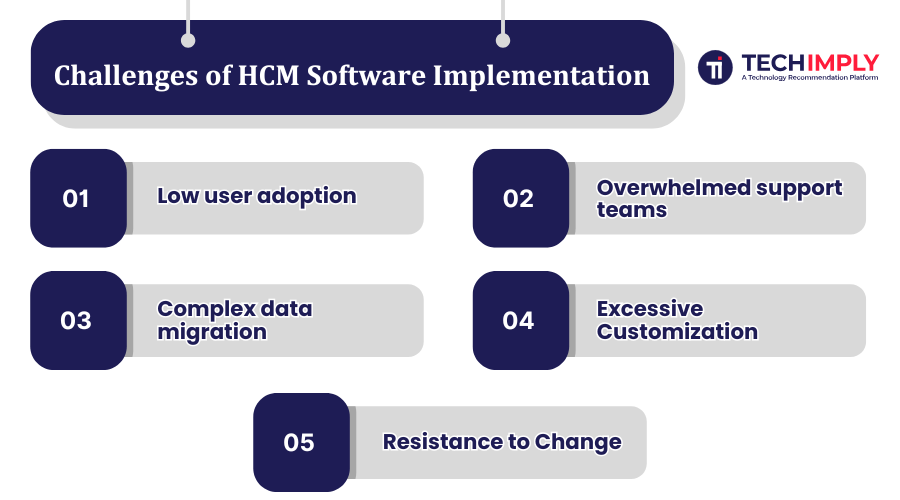
The implementation of the human capital management software can lead to tremendous benefits but there are usually various challenges that are common to the organization. Knowing these obstacles can ease a better transition.
-
Low User Adoption
The finest HCM product will not be effective when employees do not utilize it. Low adoption is a common occurrence where the system is too complicated or the system users have not been trained appropriately. Clear instructions and tutorial assistance, as well as constant encouragement, can increase the action.
-
Overwhelmed Support Teams
During hcm implementation projects, HR and IT teams can get overwhelmed with queries and troubleshooting. Without proper planning, support teams may struggle to respond quickly, delaying adoption and reducing efficiency. Structured support channels and phased rollouts can help manage the load.
-
Complex Data Migration
It may be tricky to transfer employee records, payroll and other HR information to a new HCM system software. The migration can cause errors or the absence of information that can interfere with operations. Great attention, data cleansing, and testing should be taken care of to make sure that the transfer is accurate.
-
Excessive Customization
Excessive customization of the software to suit all distinct needs can delay the implementation process as well as raise the expenses. There is the need to have some customization although excess customization might complicate upgrades in the future. When possible, organizations ought to make priority changes and avoid deviation to core functionalities as much as possible.

As Ken Hower, explains, cloud-based implementations often start with a pre-configured tenant, saving time and reducing the need for reinventing processes. On the other hand, on-premise solutions are fully customizable but can be costly and time-consuming to set up.
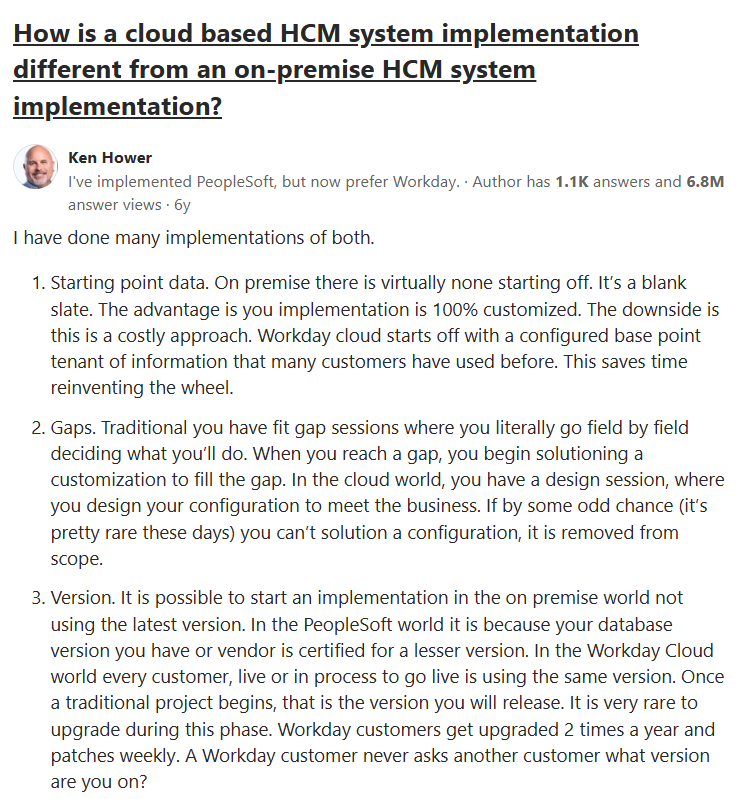
Reference : Quora
-
Resistance To Change
Employees might not be willing to switch to a new system as they are used to the old processes. Resistance may reduce ROI and slack the adoption. To counter hesitation, the benefits should be communicated in a clear way, the main stakeholders involved at an early stage with practical training provided to them.
Key-Insinght:
Companies that follow structured HCM implementation steps and focus on employee adoption see up to 30% faster HR process efficiency and higher employee satisfaction scores.
Conclusion
An effective Human Capital Management Software Implementation is not just about installing new software- it is about taking technology and integrating it in your workforce strategy. With proper practices, selection of appropriate human capital management tools and anticipation of any challenges, your hcm project can become a long-term advantage. When you take the time to plan and implement effectively, you will likely gain maximum productivity, employee experience, and get the maximum out of HCM software.


.jpg "Talent Management Software: Here’s Why Your Business Needs One")