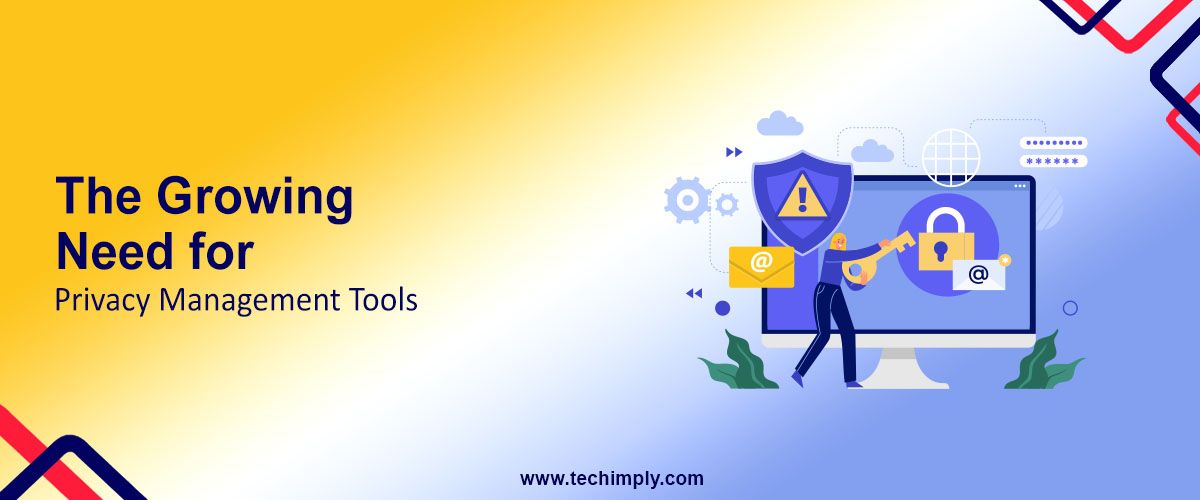
These days, when our lives are basically centered around our gadgets, it becomes a lot harder to protect our personal data. As a result of sharing, communicating, and banking online, each person leaves a digital footprint behind. The need to safely manage and protect this footprint from bad actors is becoming essential in keeping safe.
With the exponential growth of digital transformation, the amount of personal data generated and stored is increasing hugely, making privacy management more important than ever before. The involvement of technology in every aspect of our lives emanates a very extraordinary problem in people having privacy despite the benefits of digital innovation.
Rise of Digital Privacy Concerns
Recently, the headlines have been replete with cases involving personal data breaches, which in turn have led to the growing discussion of this issue. The Cambridge Analytica scandal in 2018 demonstrated how user data can be misused for political purposes through manipulative psychographic profiling. Similarly, the Equifax data breach in 2017 jeopardized the security of the sensitive financial information of millions of consumers.
These events are not the whole story but rather the most well-known cases, and statistics reveal that data breaches occur almost every second. Business companies and individuals worldwide have to suffer from the wave of smaller but numerous data breaches that now happen every day.
The pecuniary loss of data breaches is still soaring, with an average incident now having cost enterprises to the tune of millions for the damages, attorneys, and refunds. Other than that, these events have the potential to bring negative effects to victims in many cases like fear of the security of the internet, and even decreased trust in online services.
This migration is partly brought on by the rise of the Internet of Things (IoT) devices that have increased. Smart homes, wearable technology, along with connected cars produce a large amount of personal data which is then being manipulated, allowing new vulnerability and entry points for cybercriminals.
The amount of connected devices and mobile apps is exponentially increasing with time, thus the need for adopting strict privacy protection initiatives is becoming more critical. Due to smart devices being incorporated in daily lives, we have got a complex network which imposes more security and privacy issues than ever before.
Types of Privacy Management Tools
Privacy management tools exist in several types, tailored to different users' needs and groups. Mostly used means are virtual private networks (VPNs), password managers, encrypted messaging applications, and ad blockers.
Personal information of people who want to be invisible to the public can be removed with the help of data removal services. These techniques became a medium through which users could protect their personal information and hide their identity. A review of Abine’s DeleteMe has found that your information can be taken out of 56 major data brokers and an additional 750 websites.
For business clients, it should be done with the maximum solution because they keep a huge amount of data. Software tools for data classification, privacy consent management and DSAR tools are needed as well for compliance with complex data security issues. Enterprise-level privacy management solutions often incorporate multiple layers of protection, including:
- Data discovery and classification systems
- Automated compliance monitoring
- Privacy impact assessment tools
- Consent management platforms
- Data mapping and flow analysis
- Incident response management systems
- Third-party risk assessment tools
- Privacy training and awareness platforms
Advanced Privacy Protection Solutions
Beyond basic privacy tools, advanced solutions are emerging to address sophisticated privacy challenges:
-
Blockchain-Based Privacy Tools
Blockchain technology provides the trustworthiness of the records of the centralized server which is of great help in the protection of privacy and personal data. The immutable property of blockchain uniquely helps in privacy management as the security and lines of sight of the privacy management procedure are stated to be indelible.
-
Zero-Knowledge Proof Systems
These systems allow users to exhibit proof of ownership of a certain piece of data without disclosing the data. This new methodology to teaching privacy to individuals is a new security validation instrument, which shows up without the distribution of sensitive data.
-
Homomorphic Encryption
Data can still be accessible, analyzable, and processable even if it is in encrypted form, thus, confidentiality can be guaranteed in processing. With this new encryption trick, the company can compute encrypted data without having to decrypt it in the first place.
-
Privacy-Preserving Machine Learning
This technique is about the AI models being able to train on data and still keep the individual privacy intact. This developing technology is that the businesses can learn from machine-learning insights but at the same time can make sure they are up to par with the most stringent privacy regulations.
-
Quantum-Resistant Encryption
The advancement of cryptography that can weather problems caused by quantum computers, thus sustaining the privacy of people for a long time.
Features and Benefits of Privacy Management Tools
Effective privacy management tools offer several key features that make them invaluable for both individuals and businesses:
- Data encryption
- User authentication
- Access controls
- Data minimization capabilities
- Audit trails
- Real-time monitoring
- Automated compliance reporting
- Privacy risk assessment
- Data breach detection and response
- Privacy impact analysis
There are many advantages to using these tools. People no longer have to worry about scams and phishing attacks, hence they can feel safe that the possibility of identity theft is reduced. Corporate clients can win the trust of customers by confirming that their client's data is in compliance with different regulations and laws. Additional benefits include:
- Reduced operational costs through automated privacy management
- Enhanced stakeholder confidence
- Improved customer loyalty and retention
- Competitive advantage in privacy-conscious markets
- Streamlined compliance processes
- Better risk management and mitigation
- Increased operational efficiency
Regulatory Compliance and Privacy Standards
The privacy management landscape is heavily influenced by regulatory requirements:
- GDPR: While General Data Protection Regulation (GDPR) of the European Union rules safe data use and privacy with very heavy penalties for the companies that do not comply.
- CCPA: The California law CCPA - Consumer Privacy Act - gives a California resident the power to decide the extent to which his personal information is shared and provides him with privacy rights.
- HIPAA: Health privacy rules in the United States are enforced by way of rigorous security measures, such as the mandatory protection of medical information and patient data.
- PIPEDA: Privacy laws in Canada, known as the Personal Information Protection and Electronic Documents Act PIPEDA, regulate data privacy and establish standards of conduct for corporate firms.
- LGPD: Brazil's General Data Protection Law has set out to cover all the areas of information protection, which is a very firm requirement.
- PDPA: The Personal Data Protection Act in Singapore regulates the collection, usage, and distribution of personal data in the country.
Companies have to make sure their privacy management tools are in compliance with the rules and other relevant regulations that may be present. Otherwise, they may be exposed to penalties and loss of consumer trust. The complexity of international privacy regulations requires the
The Role of Privacy Management in Business Strategy
Privacy management has evolved from a compliance requirement to a strategic business advantage. Organizations that prioritize privacy protection often see:
- Increased customer loyalty and trust
- Competitive advantage in privacy-conscious markets
- Reduced risk of costly data breaches
- Improved operational efficiency through better data management
- Enhanced brand reputation and stakeholder confidence
- Better customer relationships and engagement
- Increased market share in privacy-sensitive sectors
- Improved employee satisfaction and trust
- Enhanced innovation capabilities through secure data handling
Challenges and Limitations of Privacy Management Tools
Despite their importance, privacy management tools face several challenges. The technological world is rapidly changing and with the rise of AI, digital privacy is a growing concern. Data management software are also cumbersome for users who are constantly requested to provide consent, leading to frustration and a loss of trust.
Current solutions also have limitations. Many tools focus on specific aspects of privacy, leaving gaps in overall protection. The complexity of some enterprise-level solutions can lead to implementation challenges and user adoption issues. As threats evolve, privacy tools must continuously adapt to remain effective. Common challenges include:
- High implementation costs
- Complex user interfaces
- Integration difficulties with existing systems
- Regular updates and maintenance requirements
- Training and adoption challenges
- Balancing security with usability
- Keeping pace with evolving threats
- Managing cross-border data transfers
- Addressing emerging technologies and their privacy implications
Future Trends in Privacy Management
The privacy management landscape continues to evolve:
-
AI-Driven Privacy
Using AI to automatically identify and mitigate privacy risks will become more significant. Machine learning algorithms will become smarter in noticing possible privacy breaches and setting up countermeasures.
-
Decentralized Identity
Blockchain and other technologies will permit users to have more power over personal information, facilitating them to efficiently manage their digital identities.
-
Privacy-by-Design
Products and services will more and more often include privacy protection from the very beginning, thus making privacy an aspect of development, rather than its ending.
-
Quantum-Safe Privacy
The progress of quantum computing will lead to the creation of new encryption techniques that can resist the attacks from quantum computers. Organizations will need to get ready for the quantum computing era by using quantum-resistant encryption methods.
-
Automated Privacy Operations
Privacy management will be a more automated process, which will in fact clear the organization from the overloading work while at the same time increasing the precision and efficacy of the incident.
Educational Aspects of Privacy Management
An often-overlooked aspect of privacy management is education and awareness:
- Training programs for employees and users
- Regular updates on emerging threats and protection methods
- Best practices for personal data protection
- Understanding of privacy rights and responsibilities
- Privacy impact assessment training
- Data handling and security protocols
- Incident response procedures
- Compliance requirements and updates
- Privacy tool usage and implementation
- Risk management and mitigation strategies
Embracing Privacy Management in a Digital World
As more and more methods of data collection are becoming sophisticated, and the need for online data protection is increasing, privacy management tools will not only safeguard our digital lives but also shade us from the real world in different ways.
The future tells us that the development of artificial intelligence-based privacy tools, the integration of privacy settings into applications, and the promotion of privacy education will be the dominant trends. As individuals and organizations, adopting these tools and putting privacy as priority will be the essentials for reframing our digital lives and nurturing a more secure online ecosystem.
The future of effective privacy control consists of finding the most proper trade-off between comfort and security. The advancement of technology allows privacy management tools to bring out the desired feature of usability and still sustain the protective aspect so that the users can have their own choice on how to use it. So, this gradual change will need the uninterrupted teamwork between technology providers, privacy experts, and end-users to be able to come up with solutions that are the outcomes of the transformation of our digital society's needs.