It is expected that by the year 2026, the modern workplace would require uninterrupted connectivity and immediate access to information. Through the use of an Employee Self Service Portal, your complete staff will have access to a central digital hub. It gives employees the ability to autonomously conduct basic HR duties, make requests for paid time off, and securely access essential corporate information from any location or device. The employees take care of their demands immediately, rather than waiting for the delayed approvals that come from the administration.
What is the Employee Self Service Portal?
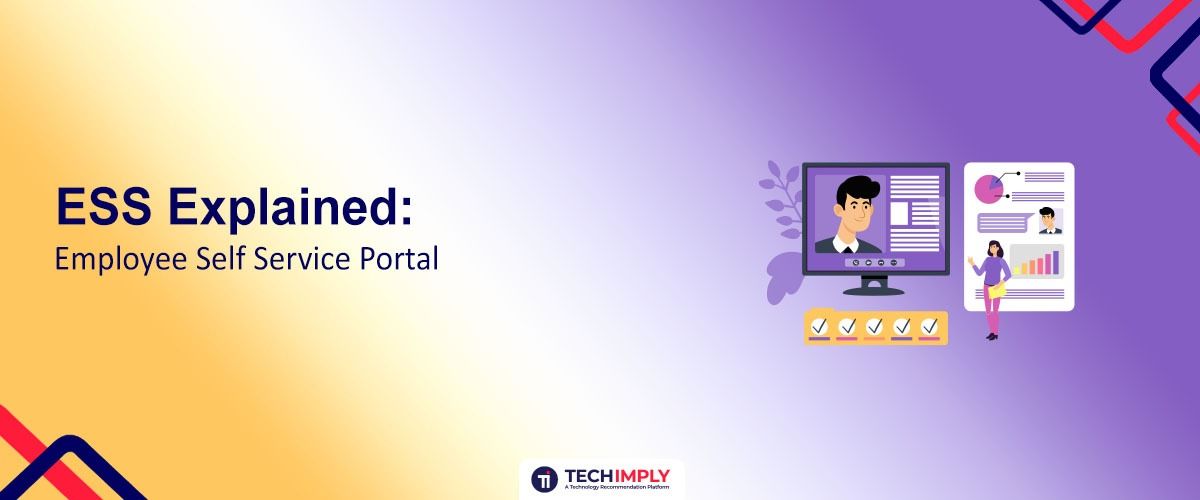
ESS is an abbreviation that literally means "Employee Self-Service." In the context of human resources and administrative chores, an employee self-service system is a digital platform that is both safe and centralised, and it gives members of the workforce the ability to autonomously conduct regular tasks. The elimination of the need for manual paperwork and continuous connection with human resources departments is made possible for enterprises through the consolidation of important corporate information and individual records into a single electronic service system (ESS) portal. Staff members are given the ability to directly manage their own employee self-service requirements through the use of this technology, which streamlines everyday operations and frees up critical time for human resource experts to focus on more comprehensive strategic projects.
The core functionalities of this technology are designed around convenience and workplace autonomy. Within a comprehensive ess hr portal, individuals can effortlessly update their personal data, request time off, and review their health benefits. One of the most frequent uses is managing financial records; staff can securely view or download an ess payslip at any time without submitting a formal request. This constant, 24/7 availability transforms the traditional ess employee portal into a vital, everyday tool for the modern workforce.
It is ultimately the implementation of a dedicated employee self-service portal that results in a major increase in the overall efficiency of the firm. Companies may cut their overhead expenses, eliminate bottlenecks, and limit the number of errors that occur while manually entering data by delegating fundamental administrative chores to their staff. Providing employees with immediate transparency and control over their own employment data is another way that this direct access contributes to an increase in employee happiness. The end effect is that firms operate significantly more efficiently, which in turn creates a working atmosphere that is highly adaptable, well-organized, and productive for all those involved.
Core Functions of a 2026 Employee Self Service Portal
At this very moment, the workplace in India is going through a revolutionary change. The management of day-to-day duties is being rethought by human resources departments as a result of the rapid transition towards digital operations and the presence of a youthful workforce that is proficient in technology. The norm for human resource technology in India will be highly dependent on mobile-first, autonomous solutions by the year 2026. These solutions will provide employees with direct control over their time spent at work.
More than simply a digital file cabinet, an Employee Self-Service (ESS) portal has evolved into something much more. It acts as a central point where employees may manage their own administrative needs without having to wait for clearance from human resources professionals. This change facilitates the elimination of administrative bottlenecks and provides human resource professionals with additional time to concentrate on strategic goals such as the retention of talent and the development of the business.
It is essential for company executives working in India to have a solid understanding of the characteristics of a contemporary portal. The correct technology may make or break your employee experience in a variety of ways, including the management of difficult local tax compliance and the administration of regional holiday schedules. In the context of India, let us have a look at the fundamental features that characterize a top-tier employee self-service platform for the year 2026 forward.
-
Payroll & Compensation:
A complicated web of tax rates, Provident Fund (PF) contributions, and Employee State Insurance (ESI) must be navigated in order to have a successful payroll management system in India. A portal that is built in 2026 will manage these components in a seamless manner, providing employees with complete transparency over their pay.
-
Personal Data Management:
Gross compensation, deductions, and net pay are all broken down in a way that is simple to comprehend in an efficient employee self-service payroll system. In India, workers are able to examine their past earnings patterns and forecast their future earnings based on anticipated bonuses or increments.
-
Leave & Attendance:
Companies in India are required to administer a wide range of public and limited holidays due to the country's unique cultural backdrop. These schedules are managed via a powerful site, which also makes precise records of daily attendance.
-
Benefits Administration:
In India, a significant number of manufacturing and information technology companies rely on integrated hardware for attendance. A contemporary ESS site is able to synchronize without any problems with geo-fencing software and biometric devices, which guarantees accurate tracking of hours spent entering and leaving the building.
-
Workflow Automation:
Critical identity information, such as an employee's Aadhaar and PAN card numbers, can be updated alone by the employee themselves. Because of this, the organization is guaranteed to have accurate information at all times for the purposes of income tax filing and background checks in India.
-
Emergency Contacts and Financial Information
If a member of staff in India has to make changes to their bank account or their nominee for their Provident Fund, they are able to do so in a safe and secure manner. Accessing the ESS login website is all that is required for them to make changes to their personal information without having to fill out paper forms.
Key Benefits of Employee Self Service Portal Adoption
There is a significant amount of time that is removed from the workweek in order to manage the normal demands that are placed on human resources. An employee self-service portal is a centralized digital environment that gives workers the ability to freely manage their own human resources-related responsibilities.
These responsibilities include updating their personal information, requesting time off, and reviewing benefits. By delegating these administrative chores to the workforce, businesses have the ability to refocus their attention on activities that are more strategic in nature.
If you are able to get a knowledge of the advantages that are associated with the use of this technology, you will be better equipped to make an informed decision for your company. Taking a look at the major benefits that you will obtain by integrating an Ess Gateway into your day-to-day operations is something that you should carefully consider.
-
Increased Productivity:
The entire business can move more quickly when employees are able to handle their own administrative demands.
-
Improved Accuracy:
Regularly, human resource specialists spend hours answering fundamental queries like leave balances or perks. The workers are able to get these answers promptly by utilizing the employee self-service system. It is because of this that the human resources staff is able to focus its efforts on strategic planning, training, and recruitment.
-
Enhanced Employee Experience:
It is no longer necessary for workers to wait until business hours to check their schedules or determine how many vacation days they still have left. The ability to check in from any location, receive the information they want, and immediately return to their actual employment is available to them.
-
Enhanced Security:
Errors in data entry are an unfortunate reality, particularly when information is handled by more than one person. Errors like this are considerably reduced when using an Ess gateway.
-
Cost Savings:
Whenever an employee relocates to a new residence or changes their phone number, they are responsible for updating the system on their own. Eliminating the intermediary increases the likelihood that the data entered is accurate by a significant margin.
-
Updates in Real Time
In contrast to the traditional method of waiting for an administrator to handle a stack of forms at the end of the month, system modifications are implemented instantly. When it comes to the current personnel information and organizational data, management always has an accurate image of the situation.
Employee Self Service Trends in 2026
As we look at the current landscape, three major trends are defining the ESS experience:
1. AI-Powered Chatbots:
Chatbots powered by artificial intelligence that are embedded directly into the employee self-service portal provide the kind of instant responses that modern workers anticipate receiving. In the event that employees want assistance with locating a certain tax form or checking the amount of their paid time off, these intelligent assistants offer quick support around the clock without the need for human interaction. The typical employee self-service e-service portal is transformed into a proactive help desk as a result of this seamless connection, which results in a significant reduction in the number of regular HR ticket volumes.
2. Hyper-Personalization:
A one-size-fits-all strategy is just no longer effective for the different workforces that exist in the present era. Whenever a member of the team signs onto their Ess employee portal, they are welcomed by a personalized dashboard that highlights their individual advantages, pertinent corporate news, and pressing tasks. This is made possible via hyper-personalization. Organizations have the ability to greatly increase user engagement and system adoption rates by customizing the digital workspace to the specific responsibilities and preferences of each individual user.
3. Mobile-First Design:
The development of a mobile experience that is free of any obstacles is of the utmost importance in light of the fact that remote, hybrid, and deskless work are becoming the norm. Through the use of a specialized ess portal app, your staff is able to manage their professional lives while they are on the go, including the submission of costs and the request for shift changes. Even when employees log in using a browser, responsive ess web design guarantees that every feature performs beautifully on any device. This ensures that your whole team remains connected regardless of where they are located.
How to Choose the Best ESS Software (Decision Checklist)
Companies that are expanding their operations in India should make effective management of their human resources a top focus. In the process of expanding their workforce, human resources departments frequently find themselves inundated with typical inquiries concerning leave balances, tax declarations, and requests for payslips.
A significant amount of time is diverted away from strategic objectives such as employee engagement and talent retention due to the administrative burden. Implementing the appropriate software is the answer to the problem. Self-Service for Employees, more frequently referred to by its full name ESS, provides your personnel with direct authority over the fundamental HR functions they are responsible for. It is possible for employees to log in to a centralized system in order to manage their time off, verify corporate regulations, and update their personal information.
This eliminates the need for employees to send HR emails for every little request.
It is necessary to do a thorough analysis in order to choose the appropriate platform for your company. The following is a useful checklist that will assist you in selecting the most suitable ESS software for your upcoming firm.
The Ultimate ESS Software Decision Checklist
1. Analyze the Fundamental Human Resources and Payroll Functions
The reduction of manual human resources work is the key objective of this program. It is important to look for tools that enable employees to see their attendance, submit requests for leave, and disclose income tax investments (such as Section 80C or 80D). In addition, a comprehensive system should be able to offer automatic approval procedures, which will allow managers to dismiss requests with only a single click.
2. Establish the Capabilities for Integration
Your newly developed software must be able to interface with the technologies that your team is already utilizing. You should select a platform that has an API-first design and make sure that it is able to integrate with the accounting or ERP software that you already have. Furthermore, it is advisable to search for built-in interfaces with well-known communication applications such as Slack and Microsoft Teams. Employees are able to receive quick updates regarding leave approvals or payment processing straight in their daily chat applications as a result of this.
3. Give Mobile Accessibility the Highest Priority
It is estimated that a sizable proportion of the workforce in India travels considerable distances to work or works from several places. An efficient system must incorporate a mobile application that is responsive. Employees should be able to obtain their monthly papers straight from their cellphones or indicate their daily attendance using geo-tagging. Both of these options should be enabled.
Conclusion
The Employee Self Service (ESS) portal has emerged as a transformative tool for businesses in India. It gives employees the option to exercise autonomy and simplifies HR procedures, while also giving them the ability to exercise autonomy. Employing an ESS gateway is no longer an option for businesses that wish to increase their operational efficiency and the degree of satisfaction experienced by their personnel; rather, it is a need for such firms. Techimply, a recognized service provider, offers Electronic Service Support (ESS) solutions that are tailored to match the particular demands of the Indian market. The seamless integration, user-friendly interfaces, and high-quality support that these solutions provide are 100% guaranteed. Organizations have the capacity to preserve a competitive advantage in the landscape of 2026 by utilizing the knowledge presented by Techimply. This, in turn, allows for the cultivation of a workforce that is more engaged and productive.