I've sat in on enough hiring conversations to know that salary doesn't close the deal by itself anymore. It used to be. Now candidates ask about health coverage before they ask about the signing bonus, and HR teams that aren't ready for that question are losing people they shouldn't be losing.

Looking for an Employee Assistance Program?
Check out Techimply's List of the Best Employee Assistance Programs in India for your business.
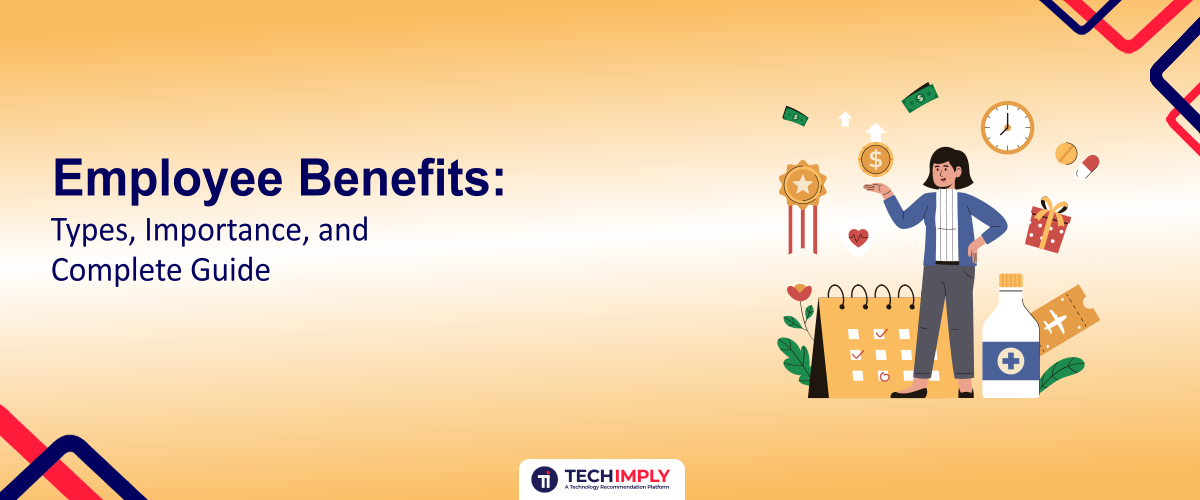
So what are employee benefits, really? They're everything an employer adds on top of the paycheck: health coverage, retirement contributions, paid time off. Some flexibility in how and where the work gets done. Room to actually grow instead of just clocking in for years on end. None of it shows up as a bigger number on payday, but all of it shapes whether someone stays past their first rough quarter. Companies that figure this out early tend to have an easier time hiring. The ones that don't usually find out the hard way, through exit interviews that all sound the same.
What Are Employee Benefits?
Here's the simplest way to put it: employee benefits are the non-salary rewards, programs, and services a company provides on top of regular wages. A short list of the usual suspects
- Health insurance
- Retirement plans
- Paid leave
- Flexible work options
- Wellness programs
- Learning opportunities
- Employee assistance programs
None of these are required by definition (some are required by law, more on that below), but together they form what most people now think of when someone mentions total compensation. There's a tie-in here to employee welfare, too, the bigger idea that a company's responsibility to its people doesn't stop at the paycheck.
Employee Benefits vs Salary
These two get lumped together constantly, and they shouldn't be.
|
Feature |
Salary |
Employee Benefits |
|
Primary Definition |
Direct financial payment |
Additional compensation |
|
Payment Structure |
Fixed compensation (e.g., Monthly income) |
Support programs and perks |
|
Type of Reward |
Strictly financial |
Can include financial and non-financial rewards |
Salary is fixed. It's the number on the offer letter, and it doesn't flex much once you're hired. Benefits are messier, so some of them cost the company real money, some of them don't cost much at all, and the mix is usually what separates a forgettable offer from one that actually gets accepted.
Why Are Employee Benefits Important?
1. Helps Attract Top Talent
Candidates compare full packages now, not just paychecks. A company offering the same salary as a competitor but with weaker health coverage is going to lose the better candidates, almost every time. This isn't a guess; it shows up consistently in hiring data across industries.
2. Improves Employee Retention
People don't quit jobs where they feel supported. They quit jobs where they feel like a number. Strong benefits push that feeling in the right direction, and the cost of getting retention wrong is brutal: replacing a single employee can run half to two times their annual salary once you count recruiting, training, and the productivity hole left behind.
3. Increases Employee Satisfaction
Benefits are a message, whether a company intends them that way or not. They tell you that you are not just your output. This is one concept that will make people at work happy, engaged, and feel valued more than anything else the HR department can do on a tight budget.
4. Supports Employee Health and Well-Being
Healthcare access and Employee Mental health support is important. Some actual breathing room between work and home life. Take any of these away, and burnout shows up within a couple of quarters, guaranteed.
5. Improves Productivity
This one's almost too obvious to need explaining, but here it is anyway people who feel taken care of work better. They stay longer at the desk mentally, not just physically. A tired, financially stressed, unsupported employee is not going to outperform someone who isn't carrying all that weight.
Different Types of Employee Benefits
1. Health and Medical Benefits
These help employees manage healthcare costs that would otherwise come straight out of pocket.
- Medical insurance
- Dental coverage
- Vision insurance
- Health checkups
- Mental health support
Better employee health. Fewer unplanned sick days. Less financial stress quietly weighing on people while they're trying to do their jobs.
2. Financial Benefits
Built around long-term financial security, mostly.
- Retirement plans
- Pension schemes
- Bonuses
- Profit-sharing
- Stock options
- Financial planning assistance
A 401(k) match is one of the most requested benefits in the country right now and one of the first things a lot of companies cut corners on without realizing how much weight it carries with candidates.
3. Paid Time-Off Benefits
Paid leave is what lets people have an actual life outside their job.
- Vacation leave
- Sick leave
- Personal leave
- Parental leave
- Holidays
Cut corners here and burnout follows.
4. Flexible Work Benefits
Flexibility stopped being a perk a while back. It's closer to a baseline expectation now.
- Remote work
- Hybrid work
- Flexible working hours
- Compressed work schedules
Better satisfaction, better output, less burnout, especially for parents and caregivers trying to juggle a job with everything else going on at home.
5. Employee Wellness Benefits
These cover physical and mental health together, usually.
- Gym memberships
- Wellness challenges
- Meditation programs
- Counseling services
- Health coaching
6. Learning and Development Benefits
Career growth support, basically.
- Training programs
- Skill development courses
- Certifications
- Education assistance
- Leadership programs
People stay longer because they feel that the company is investing in their future, not just what they are currently doing.
7. Family and Lifestyle Benefits
The practical, everyday stuff.
- Childcare support
- Family healthcare
- Transportation assistance
- Employee discounts
- Meal benefits
Mandatory vs Voluntary Employee Benefits
Legally Required Benefits
Some of this isn't optional; it depends entirely on country and employment law. In the U.S.:
- Social security contributions
- Workers' compensation
- Statutory leave benefits
Voluntary Benefits
Everything beyond the legal floor falls under voluntary benefits, and this is where a company's actual HR policies start to show. This is the stuff that separates a company that's just compliant from one that's genuinely trying.
- Wellness programs
- Flexible schedules
- Additional insurance
- Learning programs
- Employee perks
Best Employee Benefits Companies Should Offer in 2026
1. Flexible Work Options
Autonomy over the day and work-life balance, not just the phrase printed on a recruiting page.
2. Mental Health Support
Counseling access, stress management resources, an employee assistance program people can actually use without it being a whole ordeal.
3. Professional Development Opportunities
People want proof a company is investing in where they'll be in three years, not just what they're doing this week.
4. Financial Wellness Programs
Financial education and Savings support. Retirement planning that doesn't require a finance degree to understand.
5. Personalized Benefits Packages
Not every employee wants the same thing, and pretending otherwise is how good benefits budgets get wasted on perks nobody uses.
- Choice-based benefits
- Flexible benefit budgets
- Employee preference surveys Benefits decision support tools can help employees compare plan options against their needs and expected costs.
How Employee Benefits Improve Workplace Culture
- Create Employee Trust: A thoughtful benefits package tells employees the company sees them as people first. That kind of trust takes time to build, but it can be sped up considerably.
- Increase Employee Engagement: Employees who feel supported tend to show up more, not just physically, but in how much they actually care about company goals.
- Build Employer Brand: Glassdoor reviews and small talk at industry conferences mean more to the company's recruitment pipeline than any recruiting budget ever will.
How to Develop an Effective Employee Benefit Plan
Step 1: Identify the Needs of Your Employees: Surveys, focus groups, and straightforward discussions with HR. Otherwise, you're just guessing.
Step 2: Analyze Budget and Business Goals: Company size, workforce makeup, what this actually costs over five years, not just this year.
Step 3: Choose Relevant Benefits: Match benefits to what your industry and your specific employees actually expect. A benefit that will be effective for a software firm in San Francisco could very well fail to be so in a warehouse in rural Indiana.
Step 4: Explain the Benefits: Where there is no understanding of something, there can be no usage of it. List down the options available, eligibility criteria, and the enrolment procedure in simple terms.
Step 5: Constant Review and Improvement: Use feedback and statistics on utilization and satisfaction rates. A benefits package built five years ago and never touched since is probably already out of date.
Conclusion
At the end of the day, employee benefits aren't a side note on a job listing. They're a real piece of how companies compete for people, and the companies treating them that way are pulling ahead. Take a real look at what you're currently offering. Ask your own employees what they'd actually want if budget weren't an obstacle. You may be shocked at the distance between what you are offering and what would truly make an impact, and closing this distance usually pays for itself.