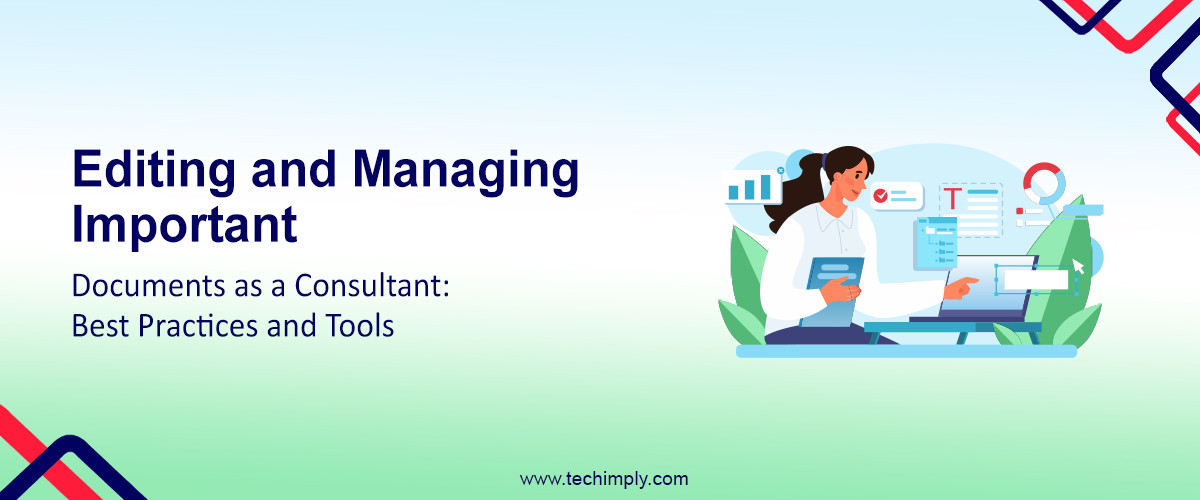
As a consultant, managing and editing critical documents efficiently is essential to delivering successful projects. Effective document collaboration can make or break your assignments. Tools like real-time editing platforms ensure that all team members' contributions are synchronized, regardless of their location.
When you manage consulting projects, leveraging analytical and learning tools can significantly enhance your productivity. These tools help in structuring your documents clearly, ensuring that all necessary information is included and easily accessible.
Additionally, essential documents, such as sales orders, insurance policies, and key business documents are fundamental. Sales orders confirm purchase details and outline services, pricing, and terms of payment. Using them ensures both you and your client are on the same page, avoiding misunderstandings and delays.
Fundamentals of Document Editing
The editing process involves several key steps. First, read the entire document without making any changes to get a sense of its overall flow and structure. This initial read-through helps identify major issues with clarity, coherence, and consistency. Next, focus on evaluative reading where you assess the quality of the content and its alignment with the purpose of the document.
After that, move to detection and correction. This involves identifying errors in punctuation, grammar, and spelling. Quality control is the next step, where you re-read the document to ensure all corrections enhance clarity and coherence.
-
Key Editing Tools and Technologies
Leveraging modern editing tools and technologies can significantly improve efficiency. Word offers robust features like Track Changes for managing revisions interactively. For PDF files, using an online tool to crop PDF documents can help you focus on specific sections for detailed review.
There are also specialized software options like Grammarly and Hemingway that provide advanced grammar and readability checks. For financial documentation, tools that ensure numerical accuracy and consistency are essential. Investing time in learning these technologies can streamline the editing process and enhance the quality of your output. To safeguard your documents or reinforce branding, you can also integrate watermarking into your workflows , for example, using the Watermarkly app, which enables you to quickly apply text or image watermarks to PDF files with customizable placement, transparency, and batch-processing options.
-
Common Editing Challenges and Solutions
One common challenge is maintaining the author's voice while correcting errors. To address this, always suggest revisions that preserve the original tone and style. Another issue is ensuring consistency throughout the document. Use style guides to maintain a uniform format for headings, bullet points, and citations.
Handling large documents can also be overwhelming. Break down the editing task into smaller sections and prioritize areas that require immediate attention. Error tracking and repeated reviews are vital in catching subtle mistakes that might be overlooked initially. A systematic approach will help tackle these challenges effectively.
Managing Documents and Workflow
Efficient document management is critical for consultants to ensure smooth project execution. By leveraging structured workflows and standardized templates, you can enhance productivity, maintain consistency, and meet compliance requirements.
-
Project Management for Documents
To manage documents efficiently, utilize project management tools that offer document workflow features. Tools like Trello or Asana help you keep track of document creation, approval, and distribution. Assign tasks for document-related activities such as drafting, reviewing, and finalizing, ensuring that each step is completed on time.
Implementing clear procedures and defining roles in the organizational structure streamlines document handling. This structured approach ensures that important documents such as contracts, proposals, and deliverables are always up-to-date and easily accessible.
-
Leveraging Templates and Standards
Using standardized templates ensures consistency and saves time when creating documents. Templates can include formats for proposals, reports, and invoices, which can be tailored to specific projects. Establishing document standards, such as a consistent naming convention, helps maintain organization and readability.
Templates also aid in compliance by ensuring all necessary information is included. Setting up a repository of templates in a centralized location allows team members to quickly access and use them, improving efficiency and productivity in document management.
-
Document Storage and Retrieval
Efficient storage and retrieval of documents are essential for maintaining an organized workflow. Implementing a digital document management system like Google Drive or Microsoft SharePoint allows for easy storage and quick access to important documents. These systems offer search functionalities to locate documents swiftly.
Organize documents into clearly labeled folders based on projects, document types, or other relevant categories. This approach not only saves time but also ensures compliance with regulatory requirements by maintaining accurate and accessible records.
-
Key Documents to Maintain
Certain documents are critical for the smooth operation of consulting projects. These include contracts, project proposals, scopes of work, deliverables, and financial documents like invoices and receipts. Maintaining these documents in an organized manner is vital for project management and client relations.
Project documentation plays a crucial role in the success of consulting engagements. Among these essential documents, project proposals stand out as particularly significant. A well-crafted proposal not only outlines the project's objectives, methodology, and expected outcomes but also serves as a foundation for client agreement and project initiation. It sets clear expectations, defines deliverables, and establishes timelines, thus aligning the consultant's vision with the client's needs.
Organizing these documents systematically is essential for effective project management and maintaining positive client relationships. A well-structured documentation system allows for easy retrieval of information, aids in progress tracking, and supports decision-making processes. It also facilitates clear communication among team members and with clients, reducing misunderstandings and potential disputes. Ultimately, meticulous document management contributes significantly to project success and client satisfaction in the consulting industry.
Additionally, keeping track of compliance documents ensures that your business adheres to industry regulations. Acquiring general insurance for consultants is an important document to maintain, protecting potential legal or financial liabilities.
Consultancy Dynamics: Engagement and Deliverables
Understanding how to engage clients effectively and deliver valuable results is key to consultancy success. Clear communication, structured proposals, and high-value deliverables are essential.
Creating High-Value Proposals
A well-crafted proposal sets the foundation for a successful engagement. Proposals should be specific, detailing the scope of work, timelines, costs, and expected value. Start by identifying client needs and how your expertise can address them.
If you’re looking for a fast starting point, Adobe Express proposal templates can help you build a clean, structured draft you can customise.
Use structured formats with clear headings and bullet points to convey information efficiently. Effective proposals should include:
- An executive summary.
- Defined objectives and deliverables.
- Detailed methodologies.
- Qualifications of the consultants.
- Clear timelines and costs.
Strong proposals underscore the value you bring, emphasizing past successes with similar projects. Clearly articulate why your approach is different and more effective. This builds trust and demonstrates your commitment to delivering results.
Conclusion
Efficiently editing and managing important documents as a consultant requires a methodical approach. Start each task by clearly defining the document's purpose, audience, and scope. This enhances your focus and ensures the final product meets client expectations. Implement a routine to regularly update and archive your documents. This prevents data loss and keeps your information current.
Remember the importance of confidentiality. Use secure methods for storing and sharing sensitive information to maintain client trust. Successfully managing your documents allows you to present clear, professional, and reliable reports, ultimately supporting your consulting objectives.