In today's digital-first world, Indian businesses move to cloud HR tools to power up fast operations and run efficiently. HR's role has evolved to become a strategic trading partner beyond traditional administrative functions. With cloud-based HR technology, HR professionals now have access to powerful platforms that not only handle Core HR functions but also provide insightful HR analytics, increase HR automation, and support digital HR changes in industries.

Looking for HR Software?
Check out Techimply's HR Management Software for your business.
What Exactly Are Cloud HR Tools?
Cloud HR tools, also called Human Resource Cloud software, are web-based platforms designed to automate and customize HR processes. These platforms cover everything from recruitment, onboarding, salaries, holiday administration, results tracking, and more. Because they work in the cloud, the HR team can access them at any time, at any time, especially valuable in today's fast, hybrid, and remote working environment.
In addition to accessibility, Cloud HR tools provide unmatched agility for HR operations. They allow real-time updates and ensure that HR data is always relevant and accurate is important for making a decision-making. With the built in HR analytic options, these tools provide deep insight into the level of workforce, employee performance, and engagement levels, enabling a strategic HR scheme. In addition, as business grows or restructure, these cloud-based human resource technology platforms can easily scale to meet the changed requirements without requirements for significant IT overhead. This flexibility makes them an important component of any modern digital HR strategy.

Fun Fact:
The first cloud-based HR software was launched two decades ago in India. Adoption has increased by more than 60% over the last five years!
8 Essential Ways Cloud HR Tools Make an Impact
The ways cloud HR tools makes an impact are:
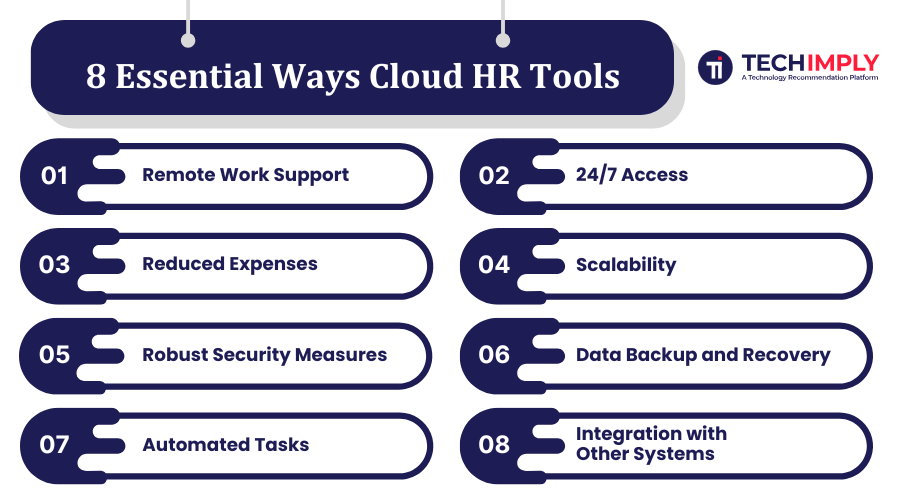
1. Remote Work Support
The COVID-19 pandemic permanently reshaped workplace dynamics. Today, remote and hybrid models are common across Indian companies. Cloud HR Tools offer seamless access to employee records, onboarding modules, and collaboration tools, ensuring HR can manage talent regardless of location. This capability strengthens digital HR initiatives and supports the evolving needs of the modern workforce.
2. 24/7 Access
With cloud-based HR technology, HR professionals and employees get access around the clock for equal information-from paychecks to balance and display metrics. It promotes real-time access to openness, improves communication, and matches a global need for always working. This strengthens employees with maximum self-service possibilities, reduces the dependence on HR regularly, and lets the team focus more on strategic HR initiatives.
3. Reduced Expenses
Implementing Cloud HR Tools helps companies significantly cut costs associated with physical infrastructure, paper-based processes, and manual errors. Automated payroll, benefits management, and attendance tracking contribute to HR automation, reducing dependency on larger HR teams and third-party vendors. Over time, these cost efficiencies scale with business growth.
4. Scalability
Whether you are scaling quickly with thousands of employees or a start-up, the Human Resource Cloud software offers scale up(or down) to flexibility as needed. You can easily add new features or users without major hardware upgrades or operational disruption, as these tools are ideal for India's dynamic business ecosystem. This adaptability makes Cloud HR tools particularly valuable for companies that experience rapid growth, fusion, or workforce structure. Cloud HR Tool will run the global HR software market up to $ 50-85 billion by 2032-2033, with AI 70% of common HR functions by 2030, which will promote efficiency and return.
5. Robust Security Measures
Security is a top concern for HR professionals who handle sensitive employee data. Leading cloud-based HR technology platforms include encryption at the enterprise level, authentication of several factors, and regular revision to secure data privacy. In addition, these units often follow Indian and international rules, helping HR to maintain high security, compliance, and privacy standards.
6. Data Backup and Recovery
Traditional HR systems are prone to data loss due to hardware failures or accidental deletions. Cloud solutions come with automatic data backup and recovery systems that prevent such scenarios. This reliability is critical for maintaining continuous access to employee records, payroll history, and compliance documents. In addition, these systems often offer version control and recovery of time, which also ensures trading continuity ahead of unexpected disturbance.
7. Automated Tasks
Repeatitive screening, interview planning, approval of publications, and performance reviews, such as repetition and time-consuming tasks, can be automated using Cloud HR tools. This not only improves efficiency but also releases HR to focus on strategic HR initiatives such as talent development and employee involvement.
8. Integration with Other Systems
Modern human resources cloud software seamlessly integrates with payroll tools, ERP systems, CRM platforms, and even collaboration tools like Slack or Teams. Such integration creates a unified digital ecosystem, enabling richer HR analytics and better decision-making across departments. This interconnectedness also reduces manual data entry, reduces errors, and increases workflow automation - these are the key benefits of investing in strong cloud HR tools.
Are you in search of HRM software? Check out TechImply’s list of top-rated HRM Software.
Choosing the Right Cloud HR Tools: Key Considerations for HR Professionals
The key points to keep in consideration while picking cloud HR tools are:
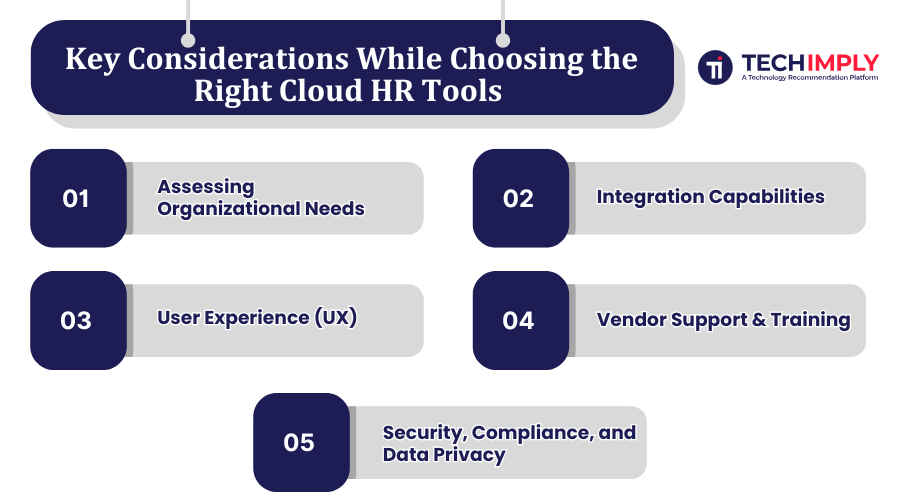
1) Assessing Organizational Needs
Before using the Cloud-HR tool, the HR Team should evaluate their current processes, pain points, and long-term goals. Whether it increases HR automation, improves employee involvement, or streamlines compliance, clearly defined requirements should lead to better software options. An intensive evaluation also helps determine which characteristics, such as pay integration, performance tracking or HR analysis day, and broad strategic HR initiatives, are the most important to support both.
2) Integration Capabilities
A good cloud-based HR technology should easily be integrated with your existing software ecosystem, including the payroll system, ERP, CRM, and communication tools. This implementation reduces friction and ensures frequent data flow in platforms, eliminates data silos and manual data introduction. Seamless integration enhances the overall efficiency of human resources cloud software by enabling centralized access to information and supporting advanced HR analytics for better decision-making across departments.
3) User Experience (UX)
A well-designed Digital HR platform ensures that employees and HR professionals can easily navigate functions, reduce training time, and increase decision-making. From mobile availability to a clean dashboard, user-friendly design increases productivity and satisfaction. A smooth experience also supports higher employee engagement, as people are more likely to use tools that feel effortless and accessible. Moreover, a positive user experience contributes to the overall success of HR automation initiatives by encouraging consistent system usage across the organization.
4) Vendor Support & Training
Strong vendor support is essential when implementing and maintaining cloud HR tools. Look for suppliers that offer extensive onboarding, regular updates, and responsible technical support. Equally important, training has access to resources that help HR teams and employees benefit most from the system. Reliable support ensures minimal shutdown and smooth adoption, especially when rolling out new features or addressing complex HR workflows.
5) Security, Compliance, and Data Privacy
With increasing cyber threats and strict rules, keeping the information of the employees safe has become a top priority for personnel resources professionals. Large Human Resource Cloud Software platforms include strong security measures such as encryption, role-based access control, and multifactor authentication to protect sensitive data in the platforms. The compliance with local and international laws, including India's data protection rules, is inherent in these solutions, which helps organizations maintain self-confidence and reduce risk. In addition, properties such as audit paths and consent handling increase transparency and responsibility in strategic HR functions.
Expert Advice:
Companies that invest in integrated cloud-based HR technology experience 22% more employee productivity.
Conclusion
Adoption of Cloud HR tools is leading in the HR landscape in India. From cost savings and HR automation to increased scalability and strong digital HR experiences, these tools strengthen HR subjects for transition to strategic HR leaders from transactions. When businesses continue to embrace distance work and data-driven decisions, cloud-based HR technology will remain the foundation stone of HR branches, ready for the future.
Suggested Read:
1) What is SaaS HR Software? Detailed Guide for 2025
2) How HR Teams Can Improving Employee Engagement Using Modern HR System?
3) Finding the Right Enterprise HR Software for your Business
5) Best HR software to Manage Your Remote Workforce
6) Data-Driven Recruitment: Using HR Software to Make Informed Hiring Decisions
7) 5 Steps To Choosing The Right HR Software For Your Startup
8) Things Should Be Considered While Evaluating HR Software


.png "How To Optimize Your Productivity By Using Machine Learning")