


 0.0
0.0




Copla is a customer advocacy and review management software designed to help businesses collect, manage, and leverage customer feedback at scale. It focuses on automating the process of requesting reviews,...
View ProfileBest BCMS
Searching best Business Continuity Management System to make your business ready to face unexpected disruptions? The best BCMS in India is not just another data backup, but it can assist in protecting the key operations, reducing downtime, and being compliant with the international requirements. Business Continuity Management Software features such as risk assessment, recovery planning, and real-time monitoring make it resilient and continue the business. Compare and select the appropriate solution to secure your processes, people and profits.

Researched and Written by
Vaishali Parmar
Top 3 Featured Softwares
List of 20 Top Business Continuity Management Software For Your Business - Get Free Demo, Pricing & Reviews
Filter

StorX is a decentralized cloud storage platform designed to give users complete control over their data. Unlike traditional cloud services, StorX utilizes blockchain technology to distribute data across multiple nodes,...
View Profile
Starting From:
$ 10.00
FREE TRIAL

Page Last Updated On October 03, 2026
What is BCMS?
BCMS is an abbreviation for Business Continuity Management System. It’s an organized approach that helps an organization stay ready for unplanned disruptions so that operations can run smoothly even during such events. When integrated with reliable business management software, it aids in risk assessment, recovery strategy planning, and implementation of processes that minimize downtime in case of an emergency.
Being more robust and reliable, the BCMS doesn’t just secure an organization; it helps in lifting confidence among employees, clients, users, etc, and stakeholders in one way or the other. This is the ultimate guide that shall prove beneficial in selecting the right BCMS for your business, while also highlighting how business process management software can complement your operations, ensuring resilience, safety, and efficiency.
1. What Are the Real Benefits of BCMS?
Today, with all the uncertainty whether it is cyberattacks, outages or supply chain glitches, disruptions have become just part of the game. This is the reason that Business Continuity Management Systems (BCMS) are increasingly being used by more companies. As opposed to basic backup software, a full-featured Business Continuity Management Software secures your team, operations, and technology, making it easier to have your business get back on its feet faster and even stronger than before.
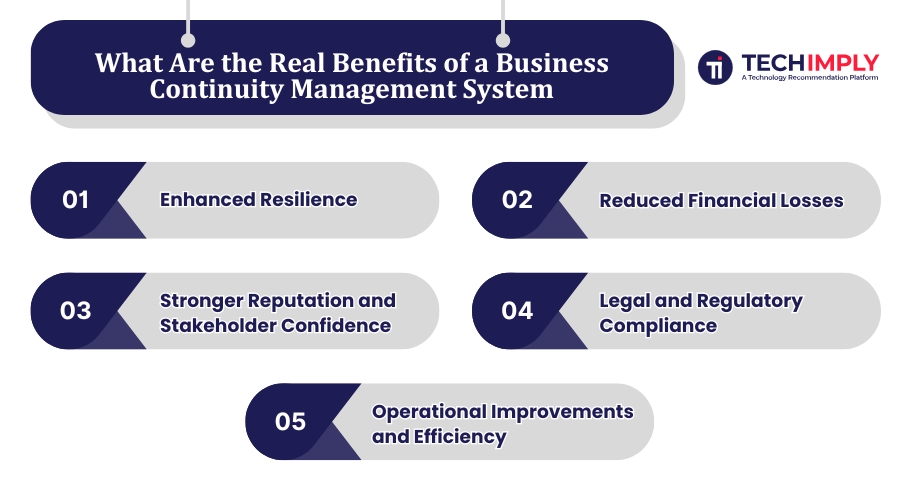
1. Enhanced Resilience
- Improved Preparedness and Response:
BCMS makes sure your company has organized plans and strategies to deal with sudden interruptions. It gives your staff the strength to respond quickly and take control of any crisis.
- Faster Recovery:
With integrated compliance management solutions and recovery tools, downtime is minimized, helping operations resume quickly.
- Adaptability:
BCMS allows your company to keep running smoothly in different situations and new types of dangers, no matter what kind of disruption happens.
2. Reduced Financial Losses
- Minimized Downtime Costs:
By reducing the downtime during incidents, businesses save costs associated with halting operations and lost productivity.
- Protection of Assets and Profits:
A BCMS safeguards your physical and digital assets through strategies that maintain essential functions, thus protecting your revenue streams.
- Optimized Resource Allocation:
Resources are used more efficiently with improved planning and management, which lowers waste and needless spending.
3. Stronger Reputation and Stakeholder Confidence
- Increased Customer Confidence:
Clients are reassured knowing your services remain available even during disruptions.
- Enhanced Reputation:
Organizations with a BCMS are seen as reliable and proactive, strengthening their market position.
- Stakeholder Assurance:
Investors, partners, and regulators trust businesses that use structured Business Continuity Management Software.
4. Legal and Regulatory Compliance
- Meeting Requirements:
Most industries require business continuity and data protection planning. When you have a strong Business Continuity Management Software (BCMS) plan, you not only meet expectations but also avoid getting into legal problems. Firms embracing holistic compliance methodologies experience 28% fewer fines and penalties than those lacking structured approaches.
- ISO 22301 Compliance:
Organizations that have achieved ISO 22301 certification are considered resilient, able to recover quickly, and have better legal defensibility, by auditors. The ISO 22301 standard shall help you align your BCMS to the international regulations and at the same time increase credibility.
5. Operational Improvements and Efficiency
- Improved Processes
A BCMS forces companies to regularly look at their steps, remove waste, and keep things working well.
- Better Decision-Making
With danger checks and plans for continuity, choices can be made quickly and correctly when there is a break.
- Competitive Advantage:
Firms with tested continuity plans do better than rivals in a crisis, which leads to long-term growth and trust.
2. What Are the Must-Have Features in a BCMS?
A Business Continuity Management System (BCMS) is not all about preventing downtime- it is all about making your business resilient. The most effective top Business Continuity Management Software is one that integrates software that helps prevent data loss, risk management, and data management, to ensure that your processes remain safe regardless of the circumstances. Considering a purchase? The best features to look out on are:
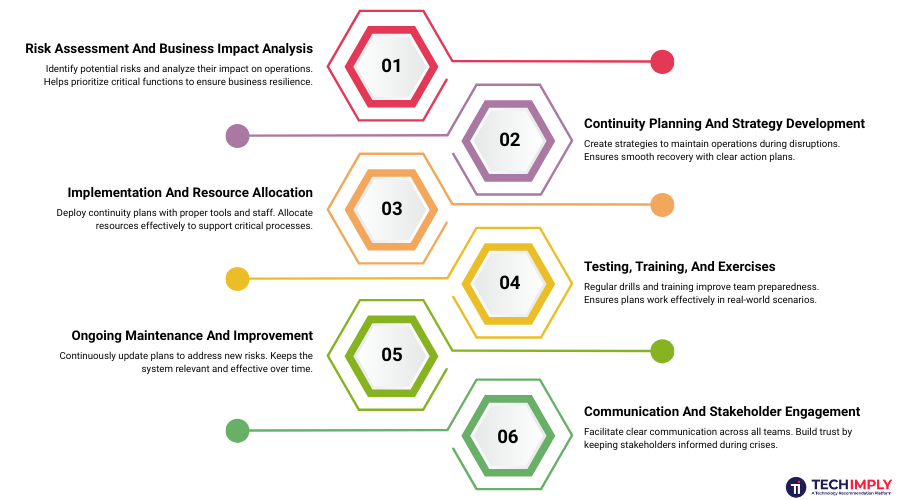
1. Risk Assessment And Business Impact Analysis (Bia)
A strong Business Continuity Management Tools starts with clarity on what can go wrong and how it will affect you.
- Identify potential threats:
Detect vulnerabilities like cyberattacks, power failures, or supply chain disruptions.
- Assess the impact of disruptions:
Understand the financial, operational, and reputational damage of downtime.
- Determine criticality and recovery priorities:
Highlight which processes and systems need immediate restoration.
2. Continuity Planning And Strategy Development
- Develop comprehensive plans:
Draft step-by-step recovery strategies tailored for different disruption scenarios.
- Formulate recovery strategies:
Align your best data loss prevention software and processes with specific threats to minimize damage.
- Establish a crisis management team:
Define clear roles and responsibilities so decision-making is quick and structured.
3. Implementation And Resource Allocation
- Implement continuity strategies:
Leverage the best data management tools to automate processes like backups, failovers, or system restarts.
- Allocate necessary resources:
Ensure IT infrastructure, alternate work sites, emergency communication tools, and skilled personnel are available when needed.
4. Testing, Training, And Exercises
- Train employees:
Training ensures all, from the executive to the frontline employees, know their duties and can respond in a timely manner when faced with an interruption.
- Regularly test plans:
Run drills and simulations to identify weak points before a real crisis occurs.
5. Ongoing Maintenance And Improvement
- Continuous monitoring and review:
Regularly track recovery performance, risks, and system health using your risk management software in India.
- Incorporate lessons learned:
After each drill or real disruption, update strategies to ensure your BCMS keeps evolving.
6. Communication And Stakeholder Engagement
- Establish communication protocols:
Ensure clear messaging during crises across email, SMS, and collaboration tools.
- Engage stakeholders:
Keep customers, partners, and regulators informed to maintain confidence and trust.
3. Top 5 BCMS in 2025
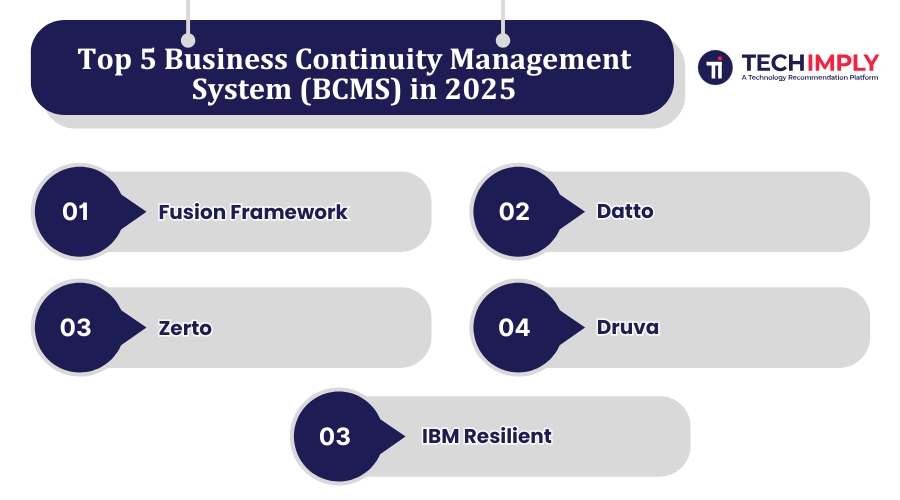
1. Fusion Framework
Fusion’s Business Continuity Management System is a robust, cloud-native platform that helps organizations build dynamic resilience plans with data-driven decision-making. It integrates business impact analysis (BIA), crisis management, plan testing, and incident response in one suite.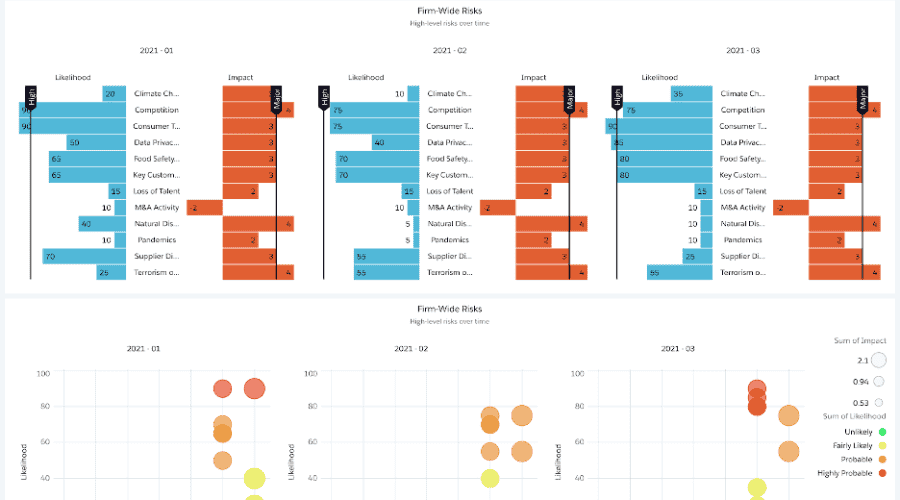
Features:
-
Business Impact & Risk Assessments
-
Plan Development & Activation
-
Incident/Crisis Management & Simulations
-
Dependency Mapping & IT Disaster Recovery
-
Integrated Risk Management & Mobile Access
Pros:
-
Recognized by Gartner and Forrester as a BCM leader.
-
Offers unified resilience platform—no module fragmentation
Cons:
-
Premium pricing (enterprise-grade)
-
Implementation complexity for smaller teams
Pricing: Available via request—it’s aimed at mid-to-large enterprises.
2. Datto
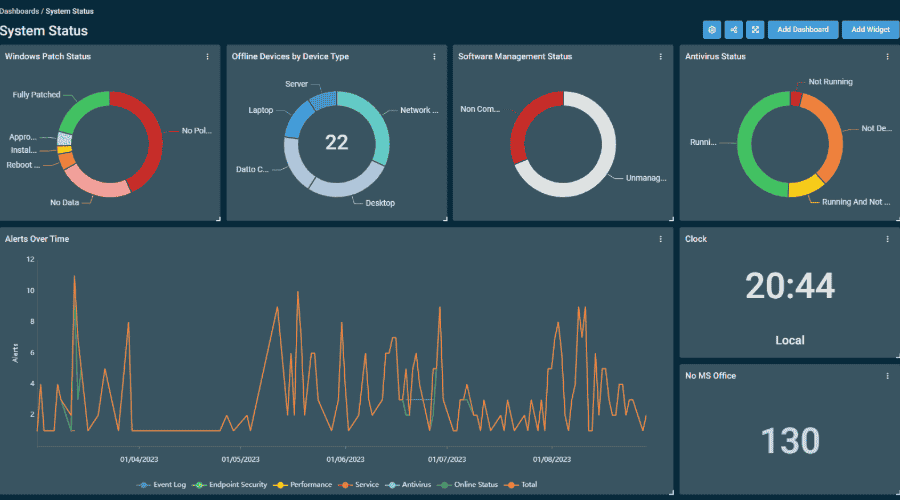
Datto delivers a hybrid backup software for businesses in India and BCDR solution tailored for MSPs and SMBs. It combines local appliance-based backup with cloud recovery, ransomware protection, and automated restore testing—making it a full-fledged Best Business Continuity Management Software.
Features:
-
Instant Virtualization & Local Failover
-
Automated & Immutable Cloud Backups
-
Inverse Chain Backup Technology
-
Ransomware Detection & Protection
-
Built-in DR Testing & Monitoring
Pros:
-
Fast recovery speeds—minutes, not hours
-
Combines backup and BCMS in a single platform
Cons:
-
Pricing not publicly listed
-
Geared more toward MSP use than direct-to-business
Pricing: Request for pricing.
3. Zerto
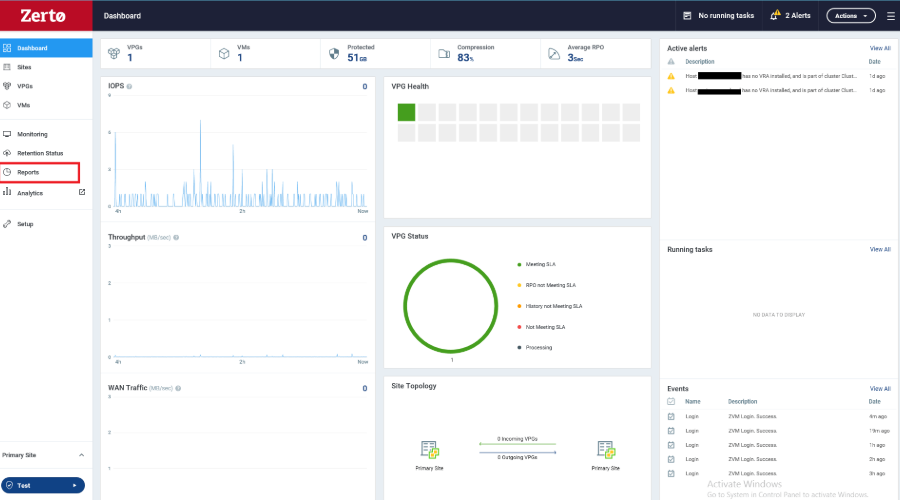
Zerto (an HPE company) is best business continuity software with Continuous Data Protection offering backup, disaster recovery, and cloud mobility on a single software-defined platform.
Features:
-
Continuous Data Protection (CDP)
-
Rapid Recovery Point Objectives (RPO)
-
Hybrid / Multi-cloud Mobility
-
Disaster Recovery Orchestration
-
24/7 Support & Training Resources
Pros:
-
Excellent for mission-critical virtual environments
-
Scalable across clouds (Azure, AWS, IBM Cloud, etc.)
Cons:
-
High cost for small deployments
-
Complexity and setup overhead via channel partners
Pricing: Starts around $745 per VM/year; example: approx $17,300/year for 15 VMs including AWS instance costs.
4. Druva
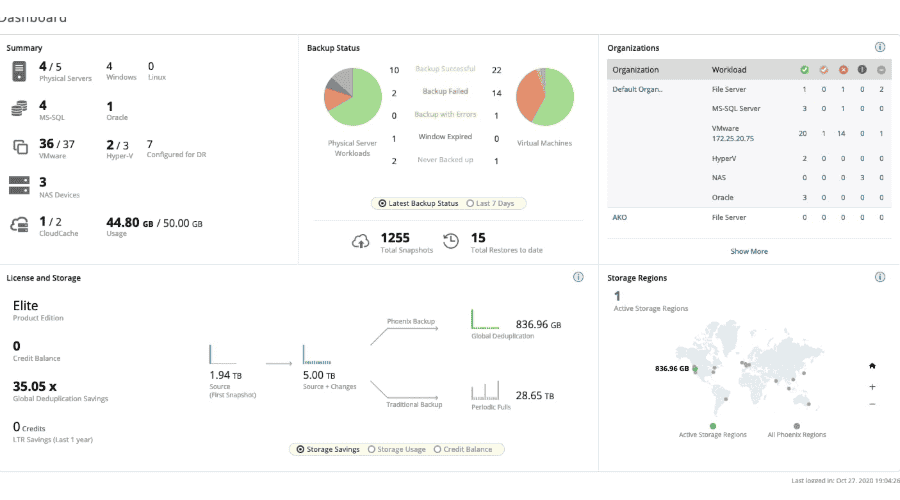
Druva offers a cloud-native Business Continuity Management Software designed for enterprise data resilience across endpoints, SaaS, and on-prem systems. It delivers automated backup, data governance, and scalable protection with unified recovery.
Features:
-
Cloud Data Resiliency & Backup
-
Air-Gapped Archiving for Ransomware Safety
-
SaaS & Endpoint Backup Support
-
Compliance & Governance Reporting
-
AI-Powered Threat Detection & Recovery
Pros:
-
Highly scalable, cloud-native backup software
-
Strong ransomware protection via air-gapped storage
Cons:
-
Pricing requires contact/vendor quote
-
May be pricey for small businesses
Pricing: Enterprise data plans are priced per TB after deduplication.
5. IBM Resilient
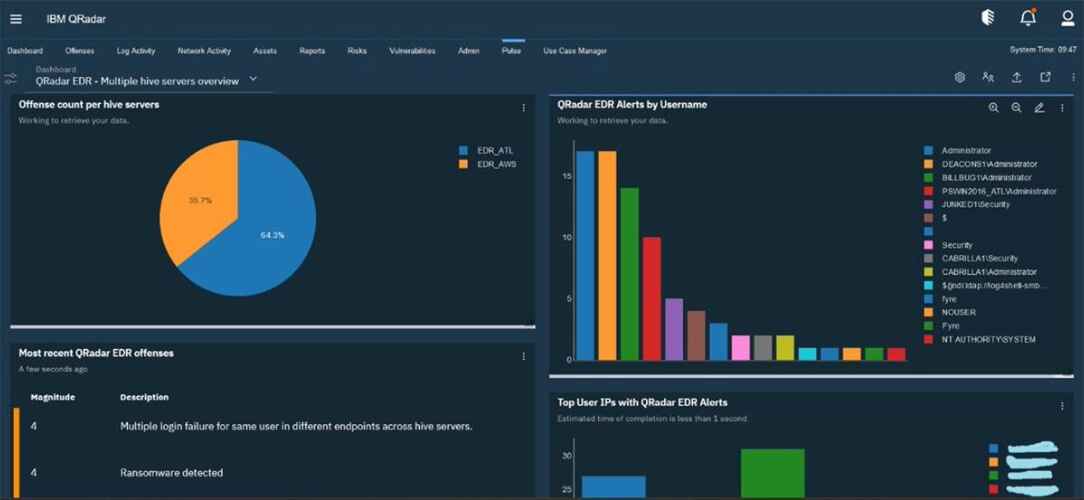
IBM Resilient enables teams to manage incident workflows, generate real-time notifications, and collaborate effectively to ensure the smooth operation of things. Besides, the OpenPages Business Continuity Module enhances the resilience of your company and helps to remain compliant.
Features:
-
Comprehensive Incident Response Orchestration
-
Real-Time Data & Analytics during crises
-
Team Collaboration Tools
-
Backup-as-a-Service (BUaaS) & DRaaS Integration
-
IT Resilience & Cyber Resilience Capabilities
Pros:
-
Ideal for enterprises needing robust risk and incident response
-
Integrated with IBM’s larger resilience and compliance ecosystem
Cons:
-
Often enterprise-scale and costly (~USD 120,000/year license)
-
Requires specialized implementation and training
Pricing: Contact for pricing.
4. Conclusion
Choosing the correct Business Continuity Management Software (BCMS) is not only about making backups it is also about ensuring that your business is ready to take on anything that comes towards it. The most efficient BCMS software will make you recover quickly after a disruption, secure your data, stay compliant, and retain your customers trust. Selecting a BCMS, make sure that it scales with your requirements, provides quick recovery mechanisms, is compatible with your other tools, and will ultimately prove its worth. This way, you will be well and truly protected in the present, and flexible in the future.
Not sure which solution matches your needs best? Check Techimply’s list of top Business Continuity Manaagement Software. Compare features, see prices, and read reviews to make a confident choice.
Frequently Asked Questions (FAQs)
What Does A BCMS Stand For?
Business Continuity Management System, or BCMS for short, is a framework that helps companies remain ready and continue operating normally in the face of disruptions.
What Are The Five Key Stages Of The BCMS?
The five stages are: Assess risks, Plan strategies, Implement controls, Test & train, and Review & improve.
What Is ISO 22301 BCMS?
Begin by identifying risks, create a plan, train your team on it, test it regularly, and update it so long as the business is running to ensure continuous protection.
How To Implement BCMS?
The international standard for BCMS is ISO 22301. It provides specific guidelines on how to come up with a strong continuity plan and show the resilience of your organization.
Why is BCM Important?
BCM is important because it ensures essential operations continue during disruptions, minimizing downtime, protecting reputation, ensuring compliance, and strengthening business resilience.
What are the 4 pillars of BCMS?
The four BCP pillars are: assess, prepare, respond, recover.
What is the main purpose of BCMS?
A BCMS is a systematic framework that enables organizations to stay prepared, respond effectively, and recover from disruptions, ensuring critical operations run smoothly even in times of crisis.
What are our BCMS objectives?
The goal of BCM is to proactively safeguard business operations by identifying, updating, and managing documented plans and procedures that reduce the impact of disruptions.
What are the key points of BCM?
The three core areas of business continuity management are risk assessment, business impact analysis, and continuity plan development—working together to define strategies that minimize potential disruptions.
What are BCMS developed for?
A Business Continuity Management System (BCMS) is a structured framework of methods, processes, and policies designed to keep critical operations running during crises while ensuring continuous improvement.
Best Business Continuity Management Software for Every Business
Best BCMS in the Following Countries
Best BCMS in the Following States
Best BCMS in the Following Cities
Best BCMS in the Following Industries


