Elasticsearch

By Elasticsearch

0.0
Rating out of 5 Based on 0 reviews

What is Elasticsearch?

Elasticsearch is a fantastically scalable, open-source, and allotted search and analytics engine based totally on Apache Lucene. It's designed to ingest and shop huge volumes of statistics (dependent and unstructured) in close to actual-time, making it easy to carry out fast, complicated full-textual content searches, and effective analytics. As the middle thing of the Elastic Stack (formerly ELK Stack: Elasticsearch, Logstash, and Kibana), it offers the foundation for solving contemporary records challenges in observability, protection, and agency search.

Pricing of Elasticsearch

Elasticsearch Custom Plan

USD 0.00
USD 0.00

Buy Now
  • App Integration
  • Auto Completion
  • Indexing
  • Machine Learning
  • Multi-Platform
  • Multilingual Search
  • Search Relevance
  • Text Analytics
  • App Integration
  • Auto Completion
  • Indexing
  • Machine Learning
  • Multi-Platform
  • Multilingual Search
  • Search Relevance
  • Text Analytics

Key Features of Elasticsearch

Key Features:
  • Filter Search Results
  • Auto Completion
  • App Integration
  • Search Relevance
  • Machine Learning
  • Text Analytics
  • Multilingual Search
  • Customizability
  • Multi-Platform
  • Indexing

Key Specification

Other Categories: Site Search Software Database Management Software
Deployment: Cloud Hosted
Customer Support: Phone,Online (Ticket),Business Hours
Customization: No
Languages Support: English

Who uses Elasticsearch

SMEs
SMEs
Enterprises
Enterprises

Company Details

Company Name: Elasticsearch
Headquarter: Mountain View,
Social Media:

Elasticsearch Description

Who Uses Elasticsearch?

Elasticsearch is used by builders, DevOps engineers, security analysts, and commercial enterprise teams who want fast access to huge datasets.

  • E-commerce Companies: For ultra-fast product catalog search, autocomplete, and relevancy rating.
  • DevOps & IT Teams: For centralized logging, utility overall performance tracking (APM), and reading metrics from hundreds of servers and boxes (Observability).
  • Security Teams: For Security Information and Event Management (SIEM), risk detection, and real-time security analytics.
  • SaaS Providers: To power the inner seek, filtering, and reporting skills of their applications.
  • Media and Content Sites: For fast, relevant complete-textual content seek of articles, documents, and user content material.

Why Choose Elasticsearch?

Choose Elasticsearch for its combination of velocity, scalability, and flexibility. It excels at providing close to actual-time insights by means of the usage of an inverted index—a fundamental distinction from conventional relational databases. Its dispensed structure ensures excessive availability and horizontal scaling, which means you may absolutely upload more nodes to address developing facts volumes and question masses. The strong surroundings and wealthy Query DSL make it the most effective engine for present day seek and analytical applications.

What are the Benefits of Elasticsearch?

Unlock velocity and scale on your information evaluation:

  1. Lightning-Fast Search: The inverted index architecture lets in for sub-second responses on terabytes of information, essential for real-time applications.
  2. Horizontal Scalability: Easily scale your cluster by adding greater nodes and shards with out downtime to deal with growing information.
  3. Schema-Flexible: Stores data as JSON documents, imparting incredible flexibility when coping with diverse or evolving statistics systems.
  4. High Availability & Resilience: Built-in clustering, sharding, and automatic failover/node healing make certain your statistics is always available.
  5. Multi-Purpose Platform: Powers no longer just seek, however also log aggregation, metrics evaluation, and superior safety analytics from one platform.

What are the Features of Elasticsearch?

Elasticsearch gives a rich set of abilities designed for strength and performance:

  1. Distributed Architecture: Data is routinely break up into shards and replicated throughout a cluster of nodes for parallel processing and fault tolerance.
  2. Full-Text Search: Utilizes the underlying Lucene library to provide superior search functionalities like fuzzy matching, stemming, and relevancy scoring.
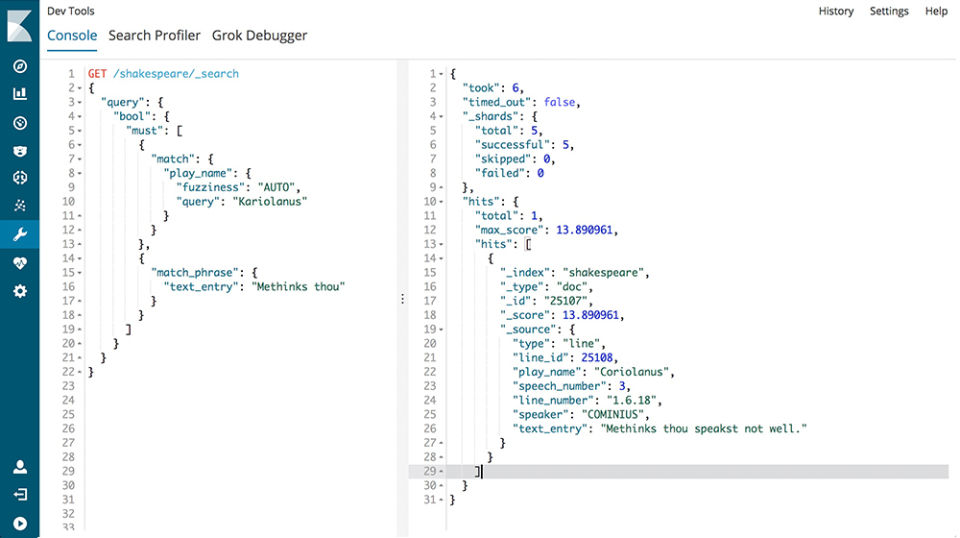
  3. RESTful API: All interactions (indexing, searching, management) are dealt with through a simple, scalable REST API the use of JSON.
  4. Aggregations: Powerful feature for performing complicated analytical calculations (like grouping, counting, and calculating facts) on big datasets.
  5. Index Lifecycle Management (ILM): Automates the system of managing indices over time, from hot (excessive-overall performance) to frozen (archived) garage to optimize charges.
  6. Geo-Spatial Queries: Native support for indexing and querying geographical statistics (PostGIS equivalent capability).
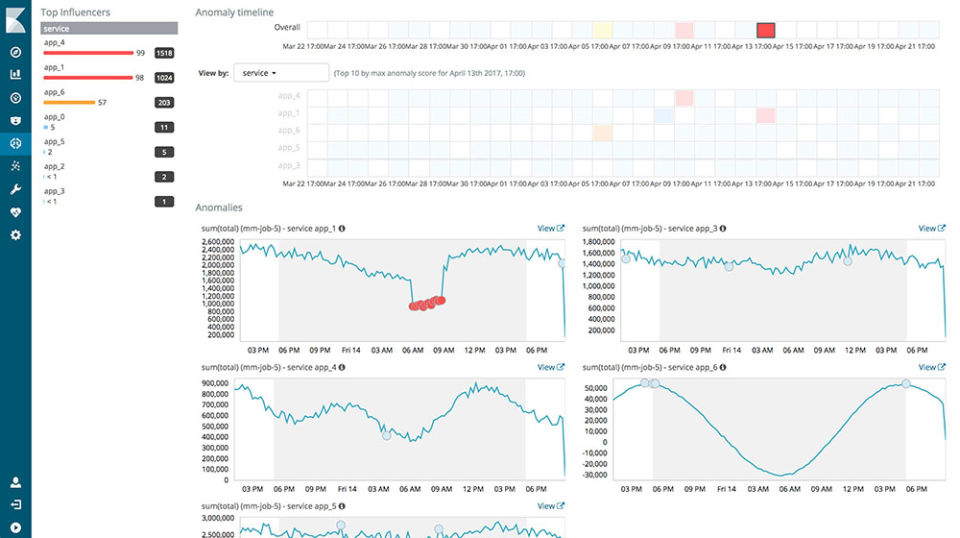
  7. Machine Learning (ML): Built-in equipment for anomaly detection and forecasting based to your time-series statistics.

How to Use Elasticsearch?

The wellknown manner involves the usage of the whole Elastic Stack:

  1. Setup and Installation: Elasticsearch down load the binary or use a controlled provider like Elastic Cloud.
  2. Data Ingestion (Logstash/Beats): Use Logstash or lightweight shippers (Beats) to accumulate and send records (logs, metrics, lines) to the Elasticsearch cluster.
  3. Indexing: Elasticsearch stores the facts as JSON files within indices and prepares the inverted index for immediate querying.
  4. Searching & Analysis (Query DSL): Interact with the cluster the usage of the REST API and the powerful Query DSL (Domain Specific Language) to retrieve and aggregate information.
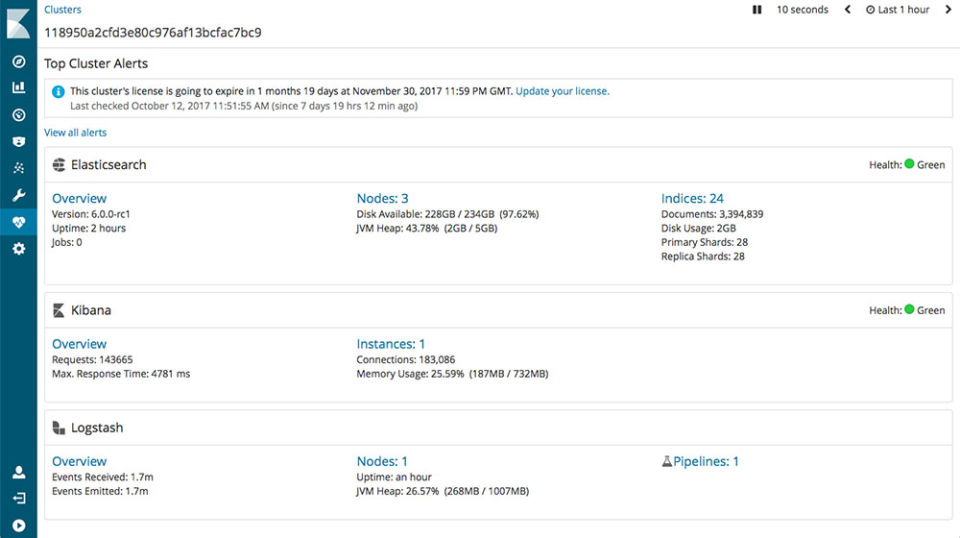
  5. Visualization (Kibana): Use Kibana to visualise the records in charts, graphs, and dashboards for tracking and reporting.

How to Get Demo of Elasticsearch?

You can start the usage of and exploring Elasticsearch without delay:

  1. Free Tier/Trial on Elastic Cloud: Sign up for a unfastened trial of Elastic Cloud (the managed carrier) to install a cluster in mins and take a look at the full characteristic set with out installation complexity.
  2. Self-Guided Tours: Visit the Elastic internet site to get admission to interactive, self-guided tours protecting solutions like Observability, Security, and Enterprise Search.
  3. Read the Documentation: Access the complete Elasticsearch documentation for unique setup courses, tutorials, and deep dives into functions.

Alternative

Algolia

By Algolia

0.0
Rating out of 5 Based on 0 reviews

Coveo Relevance Cloud

By Coveo

0.0
Rating out of 5 Based on 0 reviews

Luigi's Box

By Luigi's Box

0.0
Rating out of 5 Based on 0 reviews

Elasticsearch Video/Screenshots

User Reviews

no-reviews
Share your experience! Be the very first reviewer. Write a Review

Frequently Asked Questions (FAQs)

The user group of Elasticsearch are as follows :

  • SMEs
  • Enterprises

Elasticsearch has 1 plans,

  • Elasticsearch Custom Plan USD 0.00

Elasticsearch is not allowing Free Trial.

The key featuers of Elasticsearch are as follows :

  • Filter Search Results
  • Auto Completion
  • App Integration
  • Search Relevance
  • Machine Learning
  • Text Analytics
  • Multilingual Search
  • Customizability
  • Multi-Platform
  • Indexing

Elasticsearch pricing model : Onetime(Perpetual License)

Elasticsearch is Online Software.

No

Elasticsearch offers Phone,Online (Ticket),Business Hours support.

Elasticsearch provides Help Guides,Video Guides,Blogs for the software training.