Take a quick look at your browser’s open tabs right now. Chances are, you aren’t simply searching static web pages. You’re in all likelihood looking at a task control board, a collaborative spreadsheet, a communique hub, or a CRM. Not long ago, every unmarried one of these tools might have required a bodily disk, a clunky setup process, and a committed IT professional simply to maintain the server from crashing.
In 2026, that "local" way of doing things feels almost prehistoric. We have moved entirely into the era of SaaS management. Whether you’re a business owner looking to lean out your tech stack or a professional trying to keep up with the digital curve, this is the definitive SaaS-explained guide. We’re moving past the buzzwords to look at the architecture, the economics, and the future of the software world.
What is SaaS? SaaS Full Form and Meaning
If we’re going to be precise, the saas full form is Software as a Service. However, actually knowing the SaaS full form doesn't inform you plenty approximately why it modified the sector. To recognize the SaaS meaning, you need to think about the distinction between proudly owning a vehicle and using a high-end ride-sharing service.
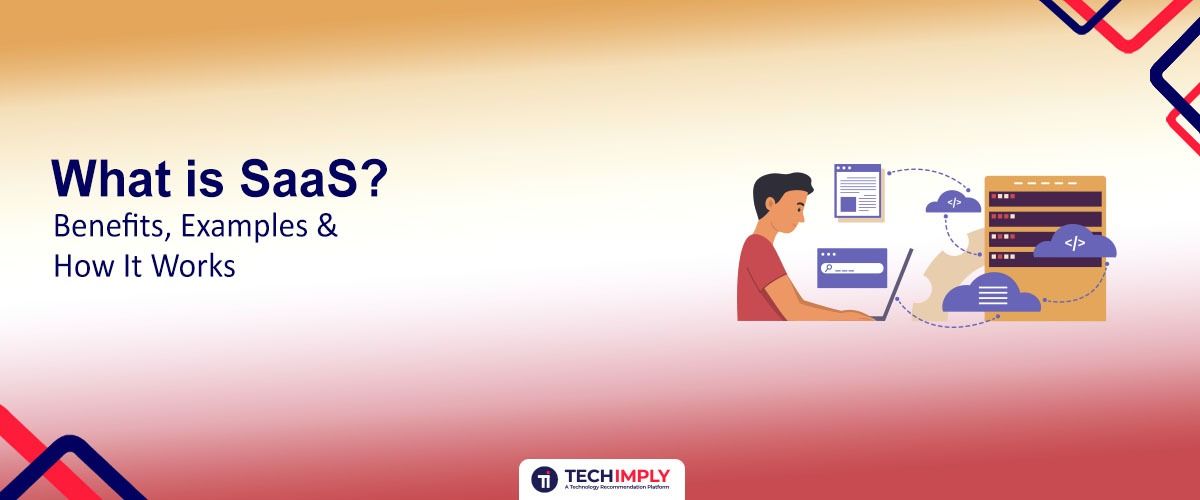
The modern SaaS meaning is fundamentally different. It is a distribution model where a third-party provider hosts the software and makes it available to you over the internet. You don’t own the code; you subscribe to the utility of it. This shift from ownership to access is what defines the SAAS industry. Under this version, the software as a service company is responsible for the whole lot from hosting the website records to pushing safety patches and adding new features. You without a doubt log in and get to work.
How Does SaaS Work?
The beauty of a SAAS experience is its simplicity for the user, but that simplicity is built on a complex, high-performance infrastructure.It is not only a website; it’s a residing, breathing virtual ecosystem.
-
The Role of Cloud Computing in SaaS
You cannot have one without the other. The growth of software as a service in cloud computing is the reason you no longer need a powerful computer to do powerful work. In the past, your local CPU did all the heavy lifting. Now, when you interact with a SAAS tool, the actual processing happens in a massive data center.
This integration of software as a service in cloud computing allows for a level of data processing that would melt a standard laptop.When you ask an AI-pushed tool to analyze a huge dataset, your laptop is essentially just a remote control. The cloud does the work, and the outcomes are streamed for your display screen in milliseconds.
-
SaaS Architecture: Multi-Tenancy Explained Simply
If you need to recognize how a SAAS enterprise stays worthwhile even as serving thousands and thousands of people, you want to apprehend "multi-tenancy." Think of it like a cutting-edge apartment building. Every tenant has their very own personal space, their very own furnishings, and their personal lock at the door. However, all of them percentage the identical foundation, the equal plumbing, and the identical electrical grid.
In a SAAS structure, each patron (or "tenant") runs at the same version of the software. When the company desires to add a feature, they replace the "building," and each tenant receives the upgrade right away. Your data remains strictly isolated and encrypted, invisible to other tenants, but the underlying engine is shared. This efficiency is why a saas application can be updated daily without any downtime for the user.
-
How Users Access a SaaS Application
The primary delivery vehicle for a SaaS application is the web browser. Because the logic and data live in the cloud, the user's device acts as a "thin client." In 2026, we’ve moved beyond basic web pages toward "composable UIs" where your SaaS platform feels like a native part of your operating system, even though it’s pulling 100% of its power from a remote server.
Top SaaS Examples Across Industries
We are surrounded by SaaS examples in every facet of our lives. From the way we communicate to the way we manage our finances, the "as-a-service" model has become the default.
SaaS Examples in Business & Productivity
Productivity became the primary sector to be absolutely disrupted via the software as a service version.
- Google Workspace: The gold standard for real-time collaboration. It proved that we did not want to save files regionally anymore.
- Microsoft 365: A conventional example of a legacy massive successfully pivoting to a saas platform version to stay relevant in a cloud-first world.
- Slack: This device converted internal communication by using moving it out of the inbox and right into a chronic, searchable SaaS surrounding.
SaaS Examples in Marketing & Sales
The "MarTech" stack is almost entirely built on SAAS infrastructure.
- Salesforce: Often referred to as the "unique" SaaS enterprise, they proved that groups would consider the cloud with their most sensitive client relationships.
- HubSpot: A comprehensive saas product that manages everything from the first time a lead visits your website online to the moment they become a devoted client.
- Canva: An innovative saas application that democratized excessive-quit design by shifting the entire processing load to the cloud.
SaaS Examples in HR, Finance & Operations
Back-office efficiency has skyrocketed thanks to specialized SaaS tools.
- Zoom: While we all know it for video conferencing, it is a massive saas platform that handles global telecommunications infrastructure.
- QuickBooks Online: It took the "scary" out of accounting by creating a saas product that automates the most tedious parts of bookkeeping.
- Workday: A heavy-responsibility SaaS application utilized by the sector’s biggest businesses to manage heaps of employees across specific continents.
Key Benefits of SaaS for Businesses
Why is the world moving in this direction? It isn't just about convenience. The Saas Benefits provide a tangible competitive advantage that traditional software simply cannot match.
-
No Installation or Maintenance Required
This is perhaps the biggest win for IT departments. In the old days, a software update could take months to roll out across a large company. With a SAAS tool, there is nothing to install. One of the primary Saas Benefits is that the provider handles the "dirty work." If there’s a bug, they fix it on their end, and the fix is live for you the next time you refresh your page.
-
Cost Savings with Subscription-Based Pricing
Traditional software was a "capital expenditure" (CapEx) you needed a huge budget upfront. SAAS is an "operating expenditure" (OpEx). This is a core part of the SaaS meaning for modern startups: it turns a massive "sunk cost" into a predictable monthly fee. You pay for what you need, and you can stop paying the moment the device no longer serves you.
-
Automatic Updates and Security Patches
Cybersecurity is a 24/7 battle in 2026. A major part of the SaaS benefits package is that the provider is responsible for your security. They employ world-class security teams to monitor the SAAS platform around the clock. When a new threat emerges, they patch it globally, often before you’ve even heard the news.
-
Easy Scalability as Your Business Grows
If your team grows from 5 people to 500, a SAAS tool scales with you at the click of a button. You don't need to buy new servers; you just add more "seats" to your saas application account. This elasticity allows businesses to remain lean while staying ready for explosive growth.
-
Access From Anywhere on Any Device
The shift to hybrid work was only possible because of SAAS. Because the data follows your login, not your device, you can start a task on a desktop in Chicago and finish it on a tablet in London. This level of mobility is the ultimate SAAS advantage in a globalized workforce.
Common SaaS Pricing Models You Should Know
How you pay for a SaaS product is just as crucial as what it does. In 2026, pricing has become tremendously sophisticated to match user prices.
-
Per-User Pricing
This is the most common model you will encounter. You pay a set fee for every "seat" or user. It’s easy to budget for and scales perfectly with your headcount. Most saas application providers use this as their baseline.
-
Flat-Rate vs Usage-Based Pricing
Some providers charge a flat monthly fee for unlimited use. However, we are seeing a major shift toward usage-based pricing. In this model, you pay for the "volume" of work like the number of emails sent or the amount of data stored. This ensures that the cost of the SaaS platform stays aligned with the actual value you're getting.
-
Freemium Model in SaaS Products
The freemium model is a brilliant way for companies to show you the SaaS benefits before you commit a single dollar. You get a basic version of the SaaS product for free, and you only pay once you need the "power features."
Limitations of SaaS
To be an informed consumer, you have to look at the downsides. SaaS is powerful, but it isn't a silver bullet for every single business problem.
-
Data Security and Compliance Concerns
When you use a SaaS tool, you are trusting someone else with your keys. For industries like healthcare or high-level finance, this is a major hurdle. Even with bank-level encryption, the centralization of data in a SaaS platform makes it a "high-value target" for hackers.
-
Internet Dependency
The biggest weakness of a SaaS application is the umbilical cord to the internet. If your Wi-Fi dies, your enterprise stops. While 5G and satellite TV for PC net have made this much less of a trouble in 2026, the danger of downtime remains a critical aspect for businesses in regions with volatile infrastructure.
-
Limited Customization vs On-Premise Software
Because SaaS relies on multi-tenancy, you can't always "open the hood" and rewrite the code to fit your weird business Intelligence processes. You are limited to the customization alternatives the company offers you.If your workflow is 100% unique, a well-known SaaS platform might also feel like a straitjacket.
The Future of SaaS: Trends to Watch in 2026 and Beyond
The industry is currently moving into a phase of deep, specialized intelligence.
-
AI-Powered SaaS Products
In 2026, AI is now not a "feature" it is miles ahead of the engine. We are transferring from tools that simply shop records to tools that interpret them. An AI-native SaaS product doesn't just show you a spreadsheet; it tells you which of your customers are likely to cancel next month and suggests exactly how to keep them.
-
Vertical SaaS Industry-Specific Software Rising
While "horizontal SaaS" (like Slack) serves everyone, "vertical SaaS" is designed for a specific niche. We are seeing a surge in SaaS platform options built specifically for commercial solar installers, boutique law firms, or specialized medical labs. These tools understand the specific legal and operational needs of their industry better than any general tool ever could.
-
The Shift Toward Composable SaaS Stacks
Instead of buying one giant, bloated suite, companies are now building "composable stacks." They use APIs to attach five or six great-in-magnificence SaaS tools collectively. This lets in for a greater bendy tech stack that can be swapped out piece by piece as new innovations emerge.
Conclusion
The evolution of saas explained in this guide indicates that we've basically modified how we have interaction with generation. The saas full form may be simple, but the impact is massive. We have moved from a world of "ownership and maintenance" to a world of "access and innovation." By leveraging the many Saas Benefits like cost efficiency, total mobility, and automatic security businesses can focus on their actual mission rather than managing servers. While the risks of internet dependency and data control are real, the overall value proposition software as a service in cloud computing is the single greatest lever for growth in the modern age.