
As cyber threats are quickly advancing, patch management systems have become an important aspect of safety and security. From operating systems to software applications, each component requires regular updates to address weaknesses and improve the general performance. But what exactly is patch management, why does it matter, and what obstacles does it involve? This blog explores these questions and more.

Looking for patch management?
Check out Techimply's Best Patch Management Solution for your business.
What is Patch Management?
It refers to the process of obtaining, testing, and implementing software and system updates. These updates, often known as software patches, are necessary to fix the error, fix security issues, and improve functionality. Whether it is Windows Patch Management, server patching, or OS patching, the goal remains the same - optimal performance and strong security.
In connection with security management in the operating system environment, patching helps prevent cyber threats by addressing the weaknesses known before they are the attackers. From the desk to the server, each endpoint is a possible entrance point, which patches a majority of the patch in cybersecurity.

Fun Fact:
The word "patch" comes from the old days of data processing when the physical patches were used to fix the code on the punch card!
The Core Stages of the Patch Management Process
Understanding the patch management process requires breaking it down into distinct, repeatable stages
1) Identification: Knowing What Needs Patching
This stage involves identifying which assets require updates. Tools used for asset discovery and inventory help create a detailed overview of all devices, software, and versions. Accurate visibility is critical to effective patch computing strategies.
2) Evaluation and Testing: Assessing the Impact of Patches
Before deployment, it’s crucial to assess each patch update in a controlled environment. This helps avoid disruptions and ensures compatibility. Testing in security patch management is especially important, where defective patches can cause more damage than good.
3) Deployment: Applying the Patches Effectively
In this stage, validated patches are deployed to the necessary endpoints. Server patching and Windows patch management (keywords used) often require scheduling and automation to minimize downtime and user disruption. Clear communication with end users and coordination with IT teams are also essential to ensure smooth implementation across all systems.
4) Verification and Monitoring: Ensuring Successful Patch Implementation
After deployment, systems must be monitored to confirm that the patch update means what it intended—improved functionality and closed vulnerabilities. This is where monitoring and verification tools come in, offering insights into patch success rates and failures.
Why is Patch Management Important?
In today’s digital environment, patch management in cyber security is essential for protecting systems against known vulnerabilities. Cyber attackers often scan for unpatched software as a single point in the network. These weaknesses can be utilized to steal data, install malicious code, or control the entire system. Regular patching helps close these intervals before they are used against you.
In addition, the right security patch management plays an important role in aligning with industry standards and data security laws. Elderly or unpatched systems can lead to serious violations of regulations, financial punishment, and damage to an organization's reputation. By updating software, business systems also improve performance and reduce the risk of unexpected shutdown.
Expert Advice: Prefer the update based on the property's significance and vulnerability risk - do not list all updates equally.
Why is Patch Management Absolutely Crucial?
Cyber criminals are always looking for safety intervals they can utilize to gain unauthorized entry. Even looking at an important software update can result in serious consequences such as data violations, ransomware attacks, or total system failures. Such events interfere with business activities and can harm the reputation of an organization and damage an organization's reputation.
Due to these risks, effective safety management requires special operating systems in the environment with are a well-structured patch management process. Keeping the system up-to-date with the latest patch is needed to maintain the general flexibility of turning off safety gaps and developing a guard against cyber threats.
Searching for Vulnerability Management Software? Check out TechImply’s list of Vulnerability Management Software.
The Patch Management Lifecycle
A successful patch management strategy follows a structured lifecycle to ensure nothing is overlooked.
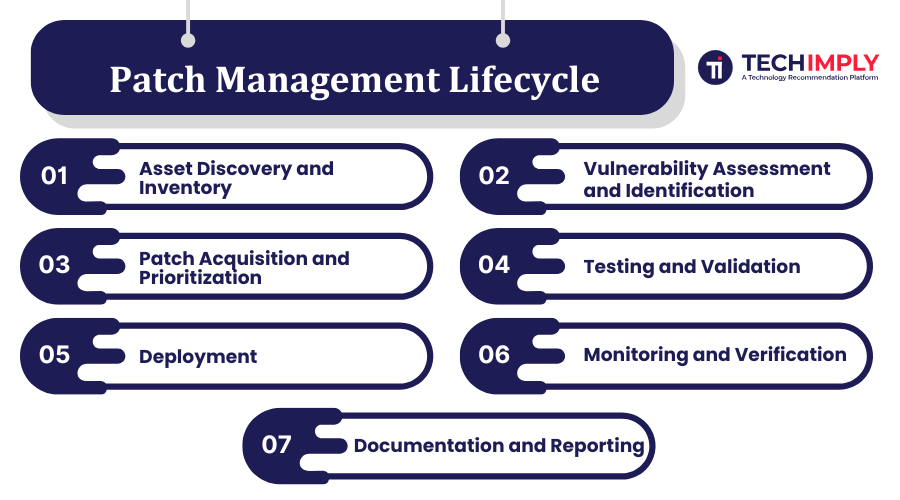
1) Asset Discovery and Inventory
The first important step in the patch management process is to identify and list all hardware and software values in the organization. This extensive river list ensures complete visibility of the IT environment, from the core patch computer system to the final punctual devices. Without a clear and up-to-date inventory, managing security patch management effectively becomes extremely challenging. ITAM software can support this step by keeping the inventory accurate and up to date, making it easier to track assets, reduce manual workload, and ensure that every device requiring patches is properly accounted for.
2) Vulnerability Assessment and Identification
This stage involves using automated tools to scan the software stack for known security flaws and configuration weaknesses. By pointing to vulnerable areas, organizations may prefer updates and coordinate them with wider patches in cybersecurity strategy. Accurate vulnerability identification is necessary to reduce the risk before they exploit the dangers.
3) Patch Acquisition and Prioritization
When the weaknesses are identified, the next step is to get appropriate patches from reliable sellers or software vendors. These patches are then preferred on the basis of severity, potential impact, and the asset's significance. In effective security patch management, it is necessary to address high-risk weaknesses first to reduce the possibility of exploitation and ensure timely protection.
4) Testing and Validation
Before sending each patch update means a complete test to ensure that it works and does not interfere with the existing system. This step is important for identifying compatibility problems and preventing unpredictable accidents or a decrease in performance. Proper validation helps maintain system stability and builds confidence in the overall patch management workflow.
5) Deployment
After successful testing, validated patches are deployed across all relevant endpoints to address identified vulnerabilities. Solutions such as Windows Patch Management and OS patching often benefit from automation to ensure timely delivery, reduce disruptions, and reduce the risk of manual errors. Coordinated distribution is important for maintaining both safety and operational continuity.
6) Monitoring and Verification
After deployment, it's essential to verify that patches have been successfully applied and that the targeted vulnerabilities are fully addressed. Continuous, real-time monitoring helps detect failed updates or lingering security gaps. This step is a cornerstone of effective patch management in cyber security, ensuring that systems remain secure and compliant.
7) Documentation and Reporting
It is important to keep detailed records on all updating activities for audit paths, compliance with regulations, and internal accountability. Proper documentation not only supports transparency but also provides insight that helps to refine and adapt future patch management strategies. It ensures organizations can track progress, identify gaps, and continuously improve their security management in operating systems environments.
Common Mistake:
Skipping patch verification is - just distribution is not enough; Always confirm that it is relevant and works.
What are the Challenges of Patch Management and How to Overcome Them
Despite its importance, patch management presents several challenges:
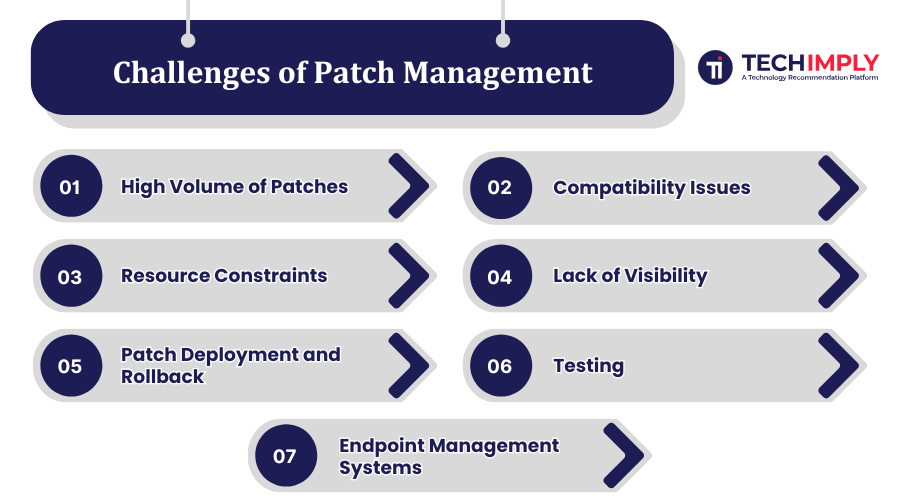
1) High Volume of Patches
A continuous stream of updates from different software vendors can make it difficult for IT teams to maintain speed. Managing this high volume increases the risk of manually disappearing or using them late. The solution is first to take advantage of patch tracking and priority tools to focus on the most essential and high-risk weaknesses.
2) Compatibility Issues
Not all patches integrate smoothly—some may clash with existing applications, custom configurations, or legacy systems. These compatibility issues can lead to performance degradation or system instability if not addressed. The key solution is to implement a thorough testing process within your patch management workflow, allowing teams to detect and resolve conflicts before deployment reaches production environments.
3) Resource Constraints
Many IT teams struggle with limited time, staffing, or expertise to manage the increasing requirements for patch management. This is the result of often delayed updates or weaknesses of the unseen. To remove these boundaries, organization-managed updating services or cloud-based patch management solutions can be adopted that offer scalability, automation, and expert supervision of maintaining security without overburdening the operational teams.
4) Lack of Visibility
When organizations lack a wide view of hardware and software values, a significant update can easily slide through the cracks. This difference increases the risk of leaving significant weaknesses. To address this, integrate robust asset discovery tools into your patch management process, ensuring complete visibility and control over every endpoint and system that requires attention.
5) Patch Deployment and Rollback
Sometimes a patch can fail or introduce unexpected problems, causing shutdown or performance problems. To reduce resolution, it is necessary to have a well-defined return process. Using a comprehensive rollback management system can streamline both deployment and rollbacks, so that the patch is used evenly and any problematic update can be reversed quickly to maintain system stability.
6) Testing
The testing of each patch in many environments can be a resource-intensive and time-consuming task. In order to speed up this important step without risking production systems, organizations can benefit from sandboxes or virtualization technologies. These methods allow safe and efficient validation of updates, reducing the chances of post-deployment issues and ensuring smoother patch management overall.
7) Endpoint Management Systems
Handling a wide selection of closing points - from mobile devices and desktops to servers - creates complexity in the patch management process. To simplify this, organizations should distribute centralized endpoint management systems that provide integrated control and support for extensive security update management in all devices. This approach enhances efficiency and ensures consistent protection throughout the network.
The Future of Patch Management: Emerging Trends
As threats evolve, so must patch management strategies.
1) Automation and Artificial Intelligence (AI) in Patch Management
AI-powered platforms are revolutionizing patch management by predicting the potential impact of patches and automating their scheduling and deployment. This not only reduces human error but also speeds up the entire update cycle. Such innovations significantly enhance security management in operating systems infrastructures by enabling more proactive and efficient vulnerability mitigation. Many organizations are now using virtual patching, augmented by AI, to shield known vulnerabilities and shrink exposure windows from months to just a few hours while permanent fixes are rolled out.
2) Integration of Patch Management with Vulnerability Management
Patch management and vulnerability management create a comprehensive safety strategy that closes the loop between exposure detection and treatment. This integration helps organizations prioritize the patch based on the risk of real danger, ensuring that significant weaknesses are addressed immediately and effectively for strong general protection.
The global patch management is estimated to grow from $ 861.2 million in 2023 to over $ 2 billion by 2033, and unpatched vulnerabilities are an important factor in expensive data breaches (average $ 4.45 million per breach). Strong patch management is no longer an alternative.
3) Cloud-Based Patch Management Solutions
Cloud-native patch management tools streamline the patch in cybersecurity process by providing scalable, automated, and remotely manageable solutions. These platforms allow organizations to efficiently deploy updates across distributed environments, reduce manual workload, and maintain consistent security postures regardless of location or device type.
4) Proactive and Predictive Patching Strategies
Instead of responding only to well-known threats, many organizations now utilize AI-operated models before they can utilize weaknesses before they can estimate. This active patch management approach enables fast, smart decisions and helps prevent security incidents by addressing weaknesses in the life cycle of the software.
Conclusion
It is no longer optional—it's a cybersecurity necessity. From mitigating weaknesses with software patches to the use of automation, staying updated is important. Understanding the patch management process, navigating your challenges, and using new technologies will strengthen organizations to protect them from the effectiveness of their digital infrastructure.