In a digital-first economy, to remain competitive, businesses should provide non-disruptive payment experiences. In a physical store, on an eCommerce site, or on a SaaS platform, it is critical to be able to accept card and online payments. Here is what are merchant accounts is and what is merchant payment is.

Looking for Payment Gateway Software?
Check out Techimply's Best Payment Gateway Software for your business.
Merchant payment meaning, its working, and its necessity are issues that often happen to be confusing to many business owners. In simple terms, a merchant account is a special bank account that enables a business to receive payments made by customers online and offline. Without it, you are unable to handle debit card, credit card, or digital wallet transactions.
What is a Merchant Account?
A merchant account is a form of bank account that allows companies to accept credit card, debit card payments and other electronic payment systems. When a customer purchase is made, the money is first deposited in the merchant account and later settled in the bank account of the business.
Put simply, a merchant account meaning a mediator between your bank and the bank of your customer. A payment gateway is not equal to it. Although a payment gateway makes the transaction, it securely transmits the payment information, but the money is stored in a merchant online account till it comes to your business account.

Do You Know?
By 2027, the total digital payment market worldwide is projected to exceed $14 trillion, and merchant accounts will be the key to facilitating such a process.
Why Do You Need a Merchant Account?
In a fast-digitizing economy, cash business can be a hindrance to your business. The modern world anticipates that customers will have the convenience of paying with cards, mobile wallets, or other online payment options, and failing to satisfy this desire might restrict your growth. This gap is filled through the use of a merchant account, which allows you to:
-
Take various methods of payment by merchants - credit card, debit card, and electronic wallet.
-
Develop customer confidence through the provision of safe and professional payment handling solutions.
-
Enhance cash receipt by improving the speed of settlement of funds, as opposed to manual cash receipt.
-
Go international with the option of accepting online transactions by international customers.
In the absence of a merchant account, your business will not be able to attract potential clients who will upgrade to digital payments instead of cash and lower your competitiveness in the current market. For businesses operating in India, partnering with the best payment processor in India ensures support for local payment methods like UPI, net banking, and digital wallets, giving you a genuine edge in the market.

Reference : Quora
A merchant account is a special bank account, which enables businesses to safely receive and process credit cards, debit cards, and digital wallets of customers.
Key Benefits of a Merchant Account
A merchant transaction is not just a payment solution; it is an enabler of growth to businesses. An increase in sales as well as enhancement of financial management and safe business transactions are only some of the quantifiable benefits that enhance customer confidence and business performance.
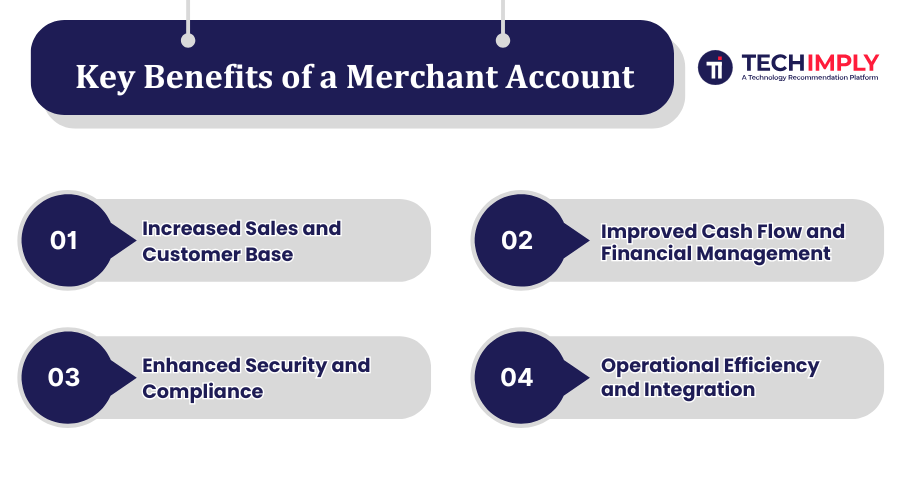
1. Increased Sales and Customer Base
- Attract More Customers: Modern buyers want to have choices of how to pay. By providing card and digital payment options, you contribute to making your business more attractive and convenient to more people.
- Convenience: Numerous customers will be willing to come back and have repeated experiences with their purchases due to the convenience.
- Expansion: Your business can easily penetrate e-commerce and global markets with a merchant current account and expand your revenue stream.
2. Improved Cash Flow and Financial Management
- Faster Access to Funds: The quick settlements provided by merchant accounts, compared to traditional banking, enable you to keep operating at a steady cash flow.
- Reduced Risk: You have decreased the risks of theft, errors, and manual mismanagement because of cash handling reduction.
- Enhanced Financial Control: More detailed reporting functions allow you to monitor sales and trends and plan better financially.
3. Enhanced Security and Compliance
- Secure Transactions: Merchant accounts are secure, and with adherence to the standards of the PCI DSS, sensitive customer information is safe.
- Fraud Detection and Prevention: Sophisticated surveillance devices identify suspicious transactions, which minimizes fraudulent transactions.
- Chargeback Management: Powerful software will help address conflict situations effectively and avert business losses and negative publicity.
4. Operational Efficiency and Integration
- Streamlined Processes: Payment collection and settlement are automated, and this saves the precious resources and time.
- Software Integration: Merchant accounts are easily integrated with ERP, CRM and accounting software to make things easier.
- Customer Relationship Management: Customer preferences are better understood, as the business will now be able to analyze the history of the transactions and make a stronger relationship.
Pro-tip
It is always important to make sure your merchant account provider is providing a PCI-compliant solution. This is not only a way of keeping your business safe but also increases the trust of customers.
Top 5 Merchant Account Providers in 2025
When considering a provider, one should pay attention to the following factors as transaction fees, integration opportunities, customer support, and international acceptability. The global payment gateways market size is projected to be USD 26.7 billion in 2024 and USD 48.4 billion in 2029, with a 12.6% CAGR in the period between 2024 and 2029. These are the top merchant account providers in 2025.
1. Square
Square is a popular small business option, and it entails easy installation, clear pricing, and free point-of-care software. It also accepts face-to-face, internet and mobile payments, so it is suitable for retailers, cafes and service providers. Square offers a hardware and analytics solution built-in, which makes it an all-in-one solution.
Features:
- Inventory management free POS software.
- Flat-rate transparent pricing model.
- Software and Hardware Card reader and terminal support.
- Live-time reporting and analytics.
- Online, in-person and mobile payment support.
Pros:
- Quick installation with no extras.
- Free POS tools included.
- Great for small businesses.
Cons:
- Greater charges on bigger businesses.
- Limited global reach.
- There could be quicker customer service.
Pricing: Starts at $29/month.
2. Stripe
Stripe is a programmer-friendly payment platform that is most applicable in online businesses, SaaS enterprises and multinational corporations. It provides effective APIs, subscription management, and 135+ currency support. Stripe is popularly known to be scalable and allows businesses to design personalized payment experiences.
Features:
- Comprehensive API to integrate custom.
- Supports over 135 currencies.
- Machine-learning-based fraud detection.
- Support of subscription and recurrent billing.
- On-the-fly financial reporting.
Pros:
- Ideal in the case of SaaS and tech companies.
- Global payment support.
- Strong fraud protection.
Cons:
- Echelon knowledge is necessary to set up.
- No in-person POS hardware.
- Accounts can be held on risky businesses.
Pricing: Visit the website for detailed pricing.
3. PayPal
PayPal is among the most reputable and well-known digital payment technologies. It enables organizations to receive money using PayPal wallets, credit/debit cards and various currencies. It is the best option for international merchants with smooth integrations to eCommerce platforms.
Features:
- Accepts PayPal, credit/debit cards, and PayPal credit.
- Checkout is made one-touch to make transactions faster.
- Support with eCommerce systems such as Shopify and WooCommerce.
- In-depth transaction data.
- Multi-currency support.
Pros:
- Strong brand trust.
- Online store integration is easy.
- International acceptance.
Cons:
- Higher transaction fees.
- Account freezes reported.
- Not always reliable customer support.
Pricing: Visit the website for detailed pricing.
4. Helcim
Helcim is characterized by a transparent interchange-plus pricing and its merchant services which are full-fleet. It provides cloud-based POS service, invoicing and customer management services, and therefore, it is particularly appropriate to small and mid-sized businesses that are interested in cost-efficient payment services.
Features:
- Open interchange-plus pricing.
- Cloud-based POS system.
- Bill and invoice automation.
- Customer management tools.
- Support online payments and mobiles.
Pros:
- Affordable pricing.
- Excellent transparency.
- Comprehensive feature set.
Cons:
- Poor global supply.
- Unsuitable in high-risk companies.
- Setup can be lengthy.
Pricing: Visit the website for detailed pricing.
5. Dharma Merchant Services
Dharma is known to have ethical business activities and believes in transparency. It offers low interchange-plus rates, excellent customer services and customized services to nonprofits and SMEs. Dharma can be a trustworthy option for mission-based organizations.
Features:
- Interchange-plus pricing.
- E-commerce and POS solutions.
- Phone order virtual terminal.
- Nonprofits' customer service.
- Social responsibility.
Pros:
- Open and moral procedures.
- Good for nonprofits and SMBs.
- Excellent customer service.
Cons:
- Unsuitable for large-volume businesses.
- No free hardware.
- Little global coverage.
Pricing: Visit the website for detailed pricing.
Looking for E-Commerce software?
Check out Techimply's Best E-Commerce Software for your business.
Conclusion
A merchant account is not merely a financial instrument, but it is an essential part of the business that desires to succeed in the present competitive business environment. Be it a startup, a retail store or an enterprise-level company, the selection of an appropriate provider will be based on your business model. Small businesses should use Square and PayPal, whereas Stripe is ideal for SaaS and international business. Helcim and Dharma, in their turn, provide cheap and open solutions. By making the right payment merchant account investment, you will keep a step ahead of such new businesses by providing customers with safe, quick, and convenient payment methods.