Choosing between a Choosing between a merchant account vs business account may be bewilderment to most entrepreneurs entering the arena of trade. The two do have a major role in handling money but their intentions differ greatly. A business account will assist you with the daily financial activity of paying bills or receiving money whereas a merchant account is account that is specifically set to receive or make payments of cards in a secure manner. When you know the major differences between a merchant account vs business account, you become smarter in making financial decisions as well as making transactions clean, keep better records, and project your growing business in a more professional way.

Looking for Payment Management Software?
Check out Techimply's Payment Management System Software for your business.
What Is A Merchant Account?
Merchant account is a special bank account, which enables the acceptance and processing of electronic payments, primarily through credit or debit cards, by business organizations. In simple terms, the merchant account meaning is simply based on the fact that, when you are making a purchase with your bank you are also linked to the bank of your customer making the purchase. It withholds the payment temporarily after which it transfers the payment to your primary business account. The main distinction between a merchant account vs business account is that the former is only involved with payment processing. Most of the merchant service provider vs payment gateway systems partner with the online payment gateway service providers and are usually combined with the top software in retail business in India to facilitate hassle-free and secure transactions.
Merchant Account Vs Business Bank Account: What’s The Difference?
The distinction between a merchant account vs business account is important to anyone dealing with payments and finances within a company. A merchant account is used to process and handle customer payments and transactions, whereas a business account is used to keep and maintain money. In simpler terms, you can define what is a merchant account is by saying that it connects the payment made by your customer and your business bank. These records tend to deal with merchant account providers that facilitate secure online transactions. The latest business also links their systems with the top-notch software to do business in India to streamline accounting, reporting, and easy integration of payment.
Do You Need Both A Merchant And Business Bank Account?
The question that many business owners are asking themselves is whether they actually need a merchant account vs business account. Yes, the shortest possible answer, as one has its purpose and the other has its purpose. A merchant account handles the day-to-day funds, payroll, and expenses whereas a business bank account is dedicated to secure customer payment processing. A PSP merchant account can also make it easier to make an online transaction and eliminate delays. Furthermore, a combination of these accounts and the most suitable software to operate the retail business in India will allow monitoring sales, records, and making your business run efficiently.
How To Choose The Best Business Bank Account?
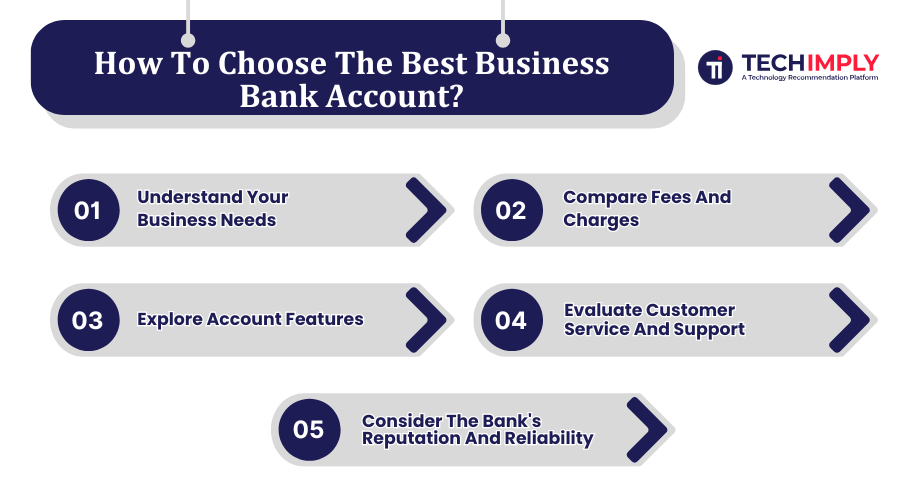
The selection of the appropriate business bank account is a very crucial move when comparing between merchant account and business account. An effective account is one that ensures smooth financial operations, manageability of cash flow, and business growth is encouraged in an efficient manner.

Pro-tip
Accepting credit cards increases business revenue by approximately 20% on average
1.Understand Your Business Needs
You should analyze the needs of your business before opening an account so as to circumvent future hurdles.
-
Transaction Volume
Select a type of account that is capable of supporting the volume of transactions your business makes on a regular basis. High-volume accounts can help avoid waiting and additional fees, particularly in the most active sales seasons.
-
Cash Flow
When you have a reliable account that gives easy deposits and withdrawals, then you can easily maintain steady cash flow. This also ensures that vendors and employees receive payment in time, eliminating the stress of running operations.
-
Payment Methods
Find accounts that accept cards, checks and online transfers. Payment flexibility will increase convenience to your business and customers.
-
International Transactions
In the case of dealing with foreign customers, your account must accept multi-currency payments and quick foreign transfers to avoid waiting.
-
Additional Services
Select a bank that has additional tools such as invoicing/payroll services or merchant account services to support day-to-day operations.
2.Compare Fees And Charges
The high fees may decrease profits and hence it is necessary to compare and understand the charges.
-
Monthly Maintenance Fees
In some banks, the fees are charged at a fixed rate whereas in others the fees are waived depending on the balance. The appropriate choice of structure ensures the predictability of costs.
-
Cash Deposit/Withdrawal Fees
Cash handling is not cheap when done frequently. Select a bank with fair deposit/ withdrawal rates.
-
Minimum Balance Requirements
Make sure that your business can maintain minimum balance required without causing any undue cash flow.
-
Other Fees
There may be other hidden charges such as wire transfer charges, statement charges or overdraft charges. Looking at these will prevent any surprisery costs.
-
Transaction Support
Determine whether the bank supports what is merchant payment to authorize and promptly process transactions of clients.
3.Explore Account Features
The right functions have the capability of simplifying, quickening and making finances management more precise.
-
Online And Mobile Banking
Accounts must be easy to look at balances, payments and transfer at any time. Monitoring the transactions becomes smooth because of real-time updates.
-
Integration With Accounting Software
The best software for retail business in India integrates with the accounting software to automate the bookkeeping process, minimize errors, and ease the tax reporting process.
-
Overdraft Facility
It provides a buffer in the event of a temporary deficit of cash, thus ensuring normal running without interruptions.
-
Corporate Cards
Employees can easily control their expenses, the businesses can have better control and tracking.
-
Account Limits
There are no fixed limits on the transactions, which allows operations to continue without interruption and scale to a larger business.
4.Evaluate Customer Service And Support
Effective support means that issues can be resolved within a short time, thus reducing business disruption.
-
Availability
When a bank is available when you need it, your business can still get things done in time.
-
Support Channels
The support channels such as phone, email, live chat or in-branch help allow flexibility in responding to queries.
-
Relationship Manager
A relationship manager is a special manager who offers customized advice to businesses to make wiser financial choices.
-
Problem Solving
Intense customer service will more often involve the help of merchant service providers to effectively resolve payment or account related problems.
5.Consider The Bank's Reputation And Reliability
When you are selecting a bank to do your business with, trust and reliability are essential.
-
Track Record
Find banks that have a good track record of dealing with business clients and positive customer reviews. Good history minimizes risk.
-
Security
The bank should be well secured against fraud and unauthorized access.
Merchant Account Vs PSP (Payment Service Provider)
In establishing your business to receive digital payments, you will have two main choices, namely, a merchant account and a Payment Service Provider (PSP). The difference between the two can be used to determine the right set up to use.The global merchant services market is projected to be USD 66.71 billion in the year 2025 with an estimation to grow to USD 201.41 billion in the year 2032 indicating a Compound Annual Growth rate of 17.1%.
Pro-tip:
Payment Service Providers boost sales because they give shoppers several ways to pay – folks can use what feels comfortable, even paying in money they recognize.
Merchant Account:
The merchant account is a specialized bank account that enables your business to receive credit and debit card payments. Upon purchase of a customer, the money is momentarily stored in this account before it is transferred to your main business bank account. This solution is best suited to the companies with a fixed level of sales and also where they require direct control over their payment processing.
Types of Merchant Accounts
-
Retail Merchant Accounts: The retail merchant accounts are designed to be used by the business having a physical store where the customers can swipe or dip their cards at the point of sale.
-
E-commerce Merchant Accounts: Custom designed to the online business, it allows safe online transactions by using payment gateways.
-
Mobile Merchant Accounts: This is appropriate when a business operates on the run where the business can accept payment through mobile devices.
-
Telephone and Mail Order Merchant Accounts: Suited to those companies that receive orders either via the phone or mail.
Payment Service Provider (PSP):
Payment Service Provider (PSP) provides easier way of payment processing. With PSPs, several merchants can be grouped on one merchant account which makes the process of setting up a PSP easy. Such providers include PayPal, Stripe, and Square. They provide complexities of payment processing such as payment gateways, security and transaction handling which enable businesses to begin accepting payment within a short time and with minimum technical configuration.
PSPs are also available especially to small businesses or any startup that does not wish the hassle of creating and running a dedicated merchant account. They offer online and offline payment solutions built-in frequently used with invoicing, subscriptions, and point-of-sale.
Let's read what Ryan Bartley, Co-Founder at Fabric (Previously Staples and eBay), says about the difference between a merchant account and a Payment Service Provider (PSP).

Conclusion
Whether to use merchant account or business account is a major decision that any business makes. A business bank account can be used to handle the daily finances, pay bills and even monitor the cash inflow whereas a merchant account is designed with the sole objective of receiving and processing the payment via cards in a safe manner. Most of the businesses utilize the two accounts simultaneously, and they frequently connect them with the most appropriate software to use in retail business in India to simplify the accounting and transactions. A PSP (Payment Service Provider) can also be used by small businesses to set up in minutes and pay without complications. Awareness of the differences will result in improved financial decision making, accurate records and professional representation of the business.