Traditional hiring is plagued by bottlenecks. Endless scheduling delays, rigid geographic limits, and soaring administrative costs trap talent acquisition teams in a cycle of inefficiency. To keep pace with modern recruitment demands, companies are rapidly abandoning generic, multi-purpose web-conferencing tools (like Zoom or Skype) in favor of dedicated video interview software.
Whether you are looking to scale high-volume screening or fine-tune executive search, this comprehensive guide covers everything you need to know about video interview platforms, including core features, underlying workflows, and a strategic framework to help you choose the right system.
What is Video Interview Software?
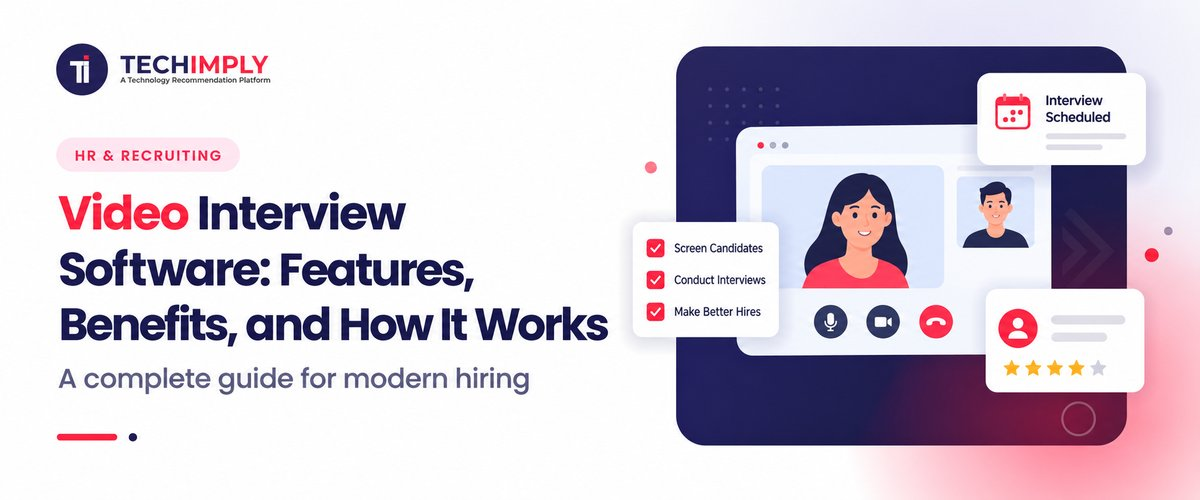
At its core, video interview software is a specialized recruitment technology designed to streamline, automate, and structure the candidate screening and interview process. Unlike general video-conferencing applications, dedicated video interviewing software combines video communication with recruitment-specific tools, such as collaborative scoring rubrics, automated calendar scheduling, compliance tracking, and deep Applicant Tracking System (ATS) integration.
Traditional Phone Screens vs. Standard Video Calls vs. Dedicated Video Interview Software
To understand why talent acquisition teams are making the switch, it helps to compare traditional methods directly against purpose-built platforms:
|
Feature / Capability |
Traditional Phone Screens |
Standard Video Calls (Zoom/Skype) |
Dedicated Video Interview Software |
|
Scheduling Effort |
High (manual phone tag) |
High (manual coordination) |
Fully automated (calendar sync) |
|
Format Flexibility |
Live only |
Live only |
Asynchronous (One-Way) & Live (Two-Way) |
|
Evaluation & Scoring |
Subjective, handwritten notes |
Fragmented, external documents |
Standardized rubrics & AI insights |
|
Collaboration |
Isolated to one interviewer |
Limited recording access |
Centralized playback, tagging, & team reviews |
|
ATS Integration |
Manual data entry |
None |
Seamless, automated syncing |
How Does Video Interviewing Software Work?
Understanding how video interviewing software works is essential for optimizing your recruitment workflow. Modern platforms manage the end-to-end recruitment journey through a systematic, multi-step pipeline:
1. Job Setup & Question Configuration
Recruiters create tailored interview templates by defining specific job parameters, setting time limits for responses, and drafting text or video-based questions.
2. Automated Invitations & Scheduling
Once candidates are shortlisted in the ATS, the software automatically dispatches secure, branded email invitations with unique access links and calendar sync options.
3. The Interview Experience
Candidates complete the interview through one of two primary formats:
- One-Way (Asynchronous) Interviews: Candidates record their answers to pre-set prompts on their own schedule before a strict deadline.
- Live (Synchronous) Interviews: Real-time, two-way video calls featuring integrated panel evaluations, screen sharing, and optional AI note-taking agents.
4. Evaluation & Reporting
Completed interviews are instantly transcribed, indexed, and evaluated using standardized rubrics, allowing hiring managers to collaborate, leave timestamped feedback, and make data-driven decisions.
Core Features to Look for in the Best Video Interview Software
The market features a wide spectrum of tools, but the best video interview software solutions distinguish themselves through robust, enterprise-grade capabilities:
Asynchronous & Live Interview Support
Flexibility is critical for high-volume screening. Leading platforms seamlessly support both asynchronous pre-recorded screening sessions and live, panel-based interviews within a single interface, giving hiring teams maximum versatility across different hiring stages.
AI Video Interview Software Capabilities
Modern AI video interview software leverages natural language processing (NLP) and machine learning to analyze candidate responses. These systems generate automated transcriptions, summarize key talking points, evaluate sentiment, and match candidate skills against job descriptions to surface top talent rapidly.
Anti-Cheat & Integrity Tools
For technical roles or remote assessments, maintaining evaluation integrity is paramount. Top-tier tools incorporate advanced anti-cheat features, including tab-switch alerts, automated webcam monitoring, secure browser locking, unique ID verification, and plagiarism detection.
Seamless ATS Integration
Manual data entry slows down recruitment. The right platform integrates directly with your existing Applicant Tracking System (ATS), automatically updating candidate stages, syncing interview recordings, and pushing scorecards back to the candidate profile.
Employer Branding & Customization
Your recruitment tech is an extension of your brand. Look for platforms that offer white-labeling options, custom landing pages, branded video introductions, and customized email templates to ensure a cohesive candidate journey.
Key Benefits of Implementing Online Interview Platforms
Adopting sophisticated online interview platforms yields a measurable return on investment (ROI) that directly impacts your bottom line and talent quality:
- Drastic Reduction in Time-to-Hire: By eliminating weeks of back-and-forth scheduling and phone tag, asynchronous reviews allow teams to screen dozens of candidates in the time it takes to conduct a single live phone call.
- Global Talent Reach: Removing geographical constraints allows organizations to source, interview, and secure top-tier global talent without travel overhead.
- Standardization and Fairness: Evaluating every candidate against identical structural questions and standardized rubrics eliminates human unconscious bias and ensures legally defensible hiring practices.
- Elevated Candidate Experience: Candidates gain the freedom to interview when, where, and how they feel most comfortable, drastically reducing interview anxiety and dropout rates.
The Role of Employer Branding in Video Interview Promotion
Modern recruitment tools do more than just screen candidates—they function as powerful marketing assets.
Your interview portal acts as a vital employer branding software video interview promotion feature. When candidates encounter a sleek, professionally branded landing page, high-definition video introductions from executive leadership, and an intuitive, lightning-fast mobile interface, they form an immediate, positive impression of your company culture. This elevated candidate experience builds brand advocacy, even among applicants who are ultimately not selected.
Pro Tip: Treat your video interview landing page with the same design care as your consumer-facing product pages. First impressions heavily influence offer acceptance rates.
How to Select the Right Video Interviewing Software for Your Team
Navigating procurement requires a structured, buyer-centric framework. When figuring out how to select a video interviewing software, evaluate your organization against these core criteria:
- Assess Your Hiring Volume: Determine whether your organization needs an enterprise-grade solution with advanced AI analytics or an agile, cost-effective platform tailored for SMB high-volume recruiting.
- Check Technical & Security Requirements: Ensure the vendor adheres to strict data privacy regulations, including GDPR, SOC 2 compliance, and robust data encryption standards.
- Evaluate Pricing Models: Analyze whether the vendor charges via a per-user subscription model, a flat enterprise license, or a flexible per-interview usage tier.
- Test User-Friendliness: Run a trial test to evaluate the interface usability for both internal recruiters and external applicants. A clunky interface will tank completion rates.
Conclusion
The shift toward dedicated video interview software is no longer a temporary trend—it is a foundational pillar of modern talent acquisition. By replacing cumbersome scheduling loops and subjective screenings with automated workflows, AI insights, and structured scorecards, talent teams can hire faster, smarter, and more fairly. Evaluate your current hiring bottlenecks today, choose a platform that aligns with your volume and compliance requirements, and future-proof your recruitment engine for sustained success.