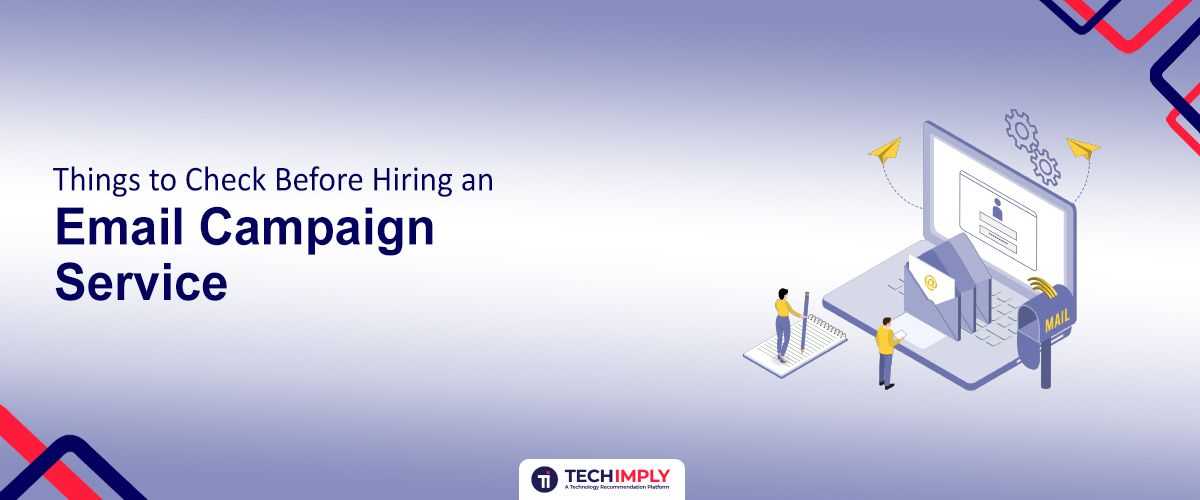
Email marketing remains the best method by which companies can communicate with customers, form connections, and achieve results. Selecting the right email marketing provider for your company is a decision you need to make rationally. The ideal partner ensures your efforts pay off. However, there are simply so many providers with such diverse tools, pricing structures, and features that it would not be so easy to make a decision as you might have thought.
The best email campaign service should help you send messages and also support your business objectives, such as automation, flexible design, security, and data-driven insights. Aside from basic elements like cost, customer support, other platform integrations, trial periods, and the like, choosing the right email software for business that complies with privacy regulations can also be a determining factor when comparing tools for your business.
So, how does one make the right decision? Here are 16 things to think about before hiring an email marketing service to take your campaigns to new heights and make the most of it.
It all ultimately boils down to understanding what you need the email campaign to accomplish, most importantly, so you can select the right email marketing campaign service for your business. Are you seeking additional sales, interactions, or brand awareness? When you understand what you want to find, choosing a service that offers what you are seeking is easy. Since all companies will be seeking different things, now is as good a time as ever to start learning about yours. This will help you determine which provider you will want to use.
2. Features and Tools
Email campaigning tools have a lot to offer. A few even offer sophisticated automated personalization, where companies can send an automated email triggered by user activity and personalize it based on behavior. Some providers offer design freedom and analytics-based tracking. To understand which tools you need for your campaigns, analyze whether you need a number of segmentation and reporting capabilities or integrations with your other platforms. This is where you can assemble a list of non-negotiables.

3. Template Flexibility & Design Consistency
A professionally designed, flexible email template can save time. Rather than designing emails from scratch, you can go for a template-based version. It can improve your campaign’s efficiency. Therefore, it is worth paying attention to this while selecting a provider. Ideally, a good provider must provide flexible email templates using one design language, which can be customized according to your requirements. These templates are convenient, maintain brand consistency, and offer high open rates and deliverability. You can also inquire of the provider whether the templates are mobile-friendly and do not have a lag when loading.
4. Trial Periods & Demos
It's worthwhile to conduct a test drive on the tool or platform first. Demo periods and free trials provide a window to become acquainted with the interface and test the service so it can meet your business requirements, mitigating the risk and making you more confident about your decision. These trial experiences are of real value, solve usability problems in advance, and build trust in the provider's competence.
5. Pricing and Value
Different services will offer various types of pricing and packages. For instance, you may have a tiered plan based on the features or the number of subscribers. You must compare and contrast these plans so that you can determine the features that each plan provides. In certain cases, pricier plans are more expensive due to the extra features or the superior support they offer. However, the money that you are spending on the services that you are getting should be worth it and within your price range.
6. Customer Support & Training
No matter how rich a platform is in features, it may not be of use if it does not come with assistance when your team needs it. Good customer support—and ideally onboarding or training material—means that you aren’t left high and dry in moments when you need support. Thus, investing in quality customer support teams and readily available troubleshooting solutions goes a long way.
7. API & Automation Features
Automation is now a fundamental requirement, and API-enabled platforms with stellar Application Programming Interface support assist in workflow and data backup between your systems. You can automate elements such as list management, triggered campaigns, or performance tracking email API service. This assists you in monitoring effortlessly, saving you time and eradicating the level of human error (the greater the scale, the more significant this is).
8. Multi-Channel Integration
A successful email campaign is not an isolated activity; it makes your entire marketing efforts successful. Features that provide integration with SMS, social, or any other channel support continuous, multi‑channel approaches that expand messaging, increase reach, and deepen engagement.
In addition to sending emails, multi-channel integration allows your customers to see continuous messaging wherever they interact with your brand. For instance, an email campaign may be supported with reminders through social media, while SMS messages create urgency for offer duration-based offers. All of this multi-channel thinking keeps your brand top-of-mind and pushes maximum customer touchpoints. Additionally, having a single platform that compiles data from multiple channels provides for a more integrated view of customer behavior. This allows for simple measurement of total effect, the identification of which channels perform best, and optimization of subsequent strategies to achieve even greater effects.
9. Data Privacy
While your own information is managed more effectively than ever before, it's fantastic to have an email service provider that runs on equitable privacy policies. In order to best protect your company and your customers and subscribers, seek a provider that gives consent-based marketing and has accessible and clear privacy policies.
Adherence to SOC legislations such as GDPR, CCPA, or other local data privacy laws is not an issue of debate. Non-adherence would come with gargantuan fines and, more importantly, loss of customer trust. Look for vendors offering features such as auto-unsubscribe links, check boxes to receive consent, and data practices that respect user rights.
Also crucial is how your provider handles and sends data. Make sure they have secure servers, use encrypted communication, and offer data residency features when your company needs them. Selecting a provider that is concerned about privacy not only fulfills legal requirements, but also ensures your audience that their data is secure when in your hands.
10. Data Security Measures
Data protection is also one of the most critical aspects to look into, particularly if your business is in a heavily regulated sector. Choose a provider that obeys applicable data protection regulations. They should have statements or certifications of compliance that show a willingness to protect users' data. This does more than establish trust; it protects businesses from future legal hassles. Encryption secures business and consumer data, builds trust, and reduces legal risks.
11. Case Studies and Testimonials
Considering case studies and testimonials gives you actual proof of a particular service's success. The cases demonstrate actual success (and failure) from similar businesses like yours. They can assist in demonstrating how the provider assisted with the accomplishments, providing you with some idea of what your campaign will lead to as a result. Providing an example of regular, real-world usage for the service helps make an educated choice.
12. Scalability
Your email marketing needs may evolve as your business grows. That's why you should go for a service that is scalable and can grow your campaigns at a later stage, without changing providers. Assess whether the service can be expanded to support subscriber growth or more sophisticated campaigns. These solutions are more sustainable because they can provide flexibility when new needs arise.
13. Delivery Rates
The primary factor for the success of an email campaign is high delivery rates. It is of no use if the email lands in the spam folder. Make sure that the provider has a good delivery rate/reputation so that your messages are delivered to the right audience. Some services also help improve sender reputation through practices like email authentication, spam testing, and automated email warmup, which gradually builds trust with inbox providers and boosts deliverability over time.
14. Performance and Reliability
A reliable service will also ensure that emails go out without any delay or technical problems. Whether it is performance testing, load testing, or uptime monitoring, the provider should ensure that the larger goal of your campaign is not hampered. Look at provider performance stats and whether they offer any guaranteed results. A good service provider will focus on creating an error-free campaigning process.
15. Customization Options
Customization options offer businesses a chance to tailor the services according to their requirements. Personalization features could come from a design template or exist within the content itself. Evaluate the extent of customization available in terms of design as well as content personalization. Highly customisable features allow businesses to design email campaigns that appeal to their audience much more and even blend their branding into the message.
16. Reporting & Analytics
A quality email campaign service will not only send the emails but also give you some idea of how they're performing. Reporting and analytics tools enable you to monitor open rates, click-through rates, conversions, and subscriber activity. By using these measurements, you can improve your strategy, calculate ROI, and understand what works and what doesn't, so that your campaigns keep increasing in effectiveness.
Wrapping Up
Overall, quite a few considerations must be made when determining the ideal email campaign service. Whether it is defining your objectives or assessing the capabilities, pricing, and scalability of the service, all of these can help your campaigns succeed. You will also want to check for trial periods and demos to evaluate usability, inspect delivery rates and performance reliability, and assess customization functionality that ensures your brand stays intact.
By paying heed to the factors mentioned above, companies can land on a service that will deliver on their current requirements, scale with the changes over the years, and continue to keep their audience engaged in the long run.

.jpeg "Attendance Management Software: Your Comprehensive Solution.")