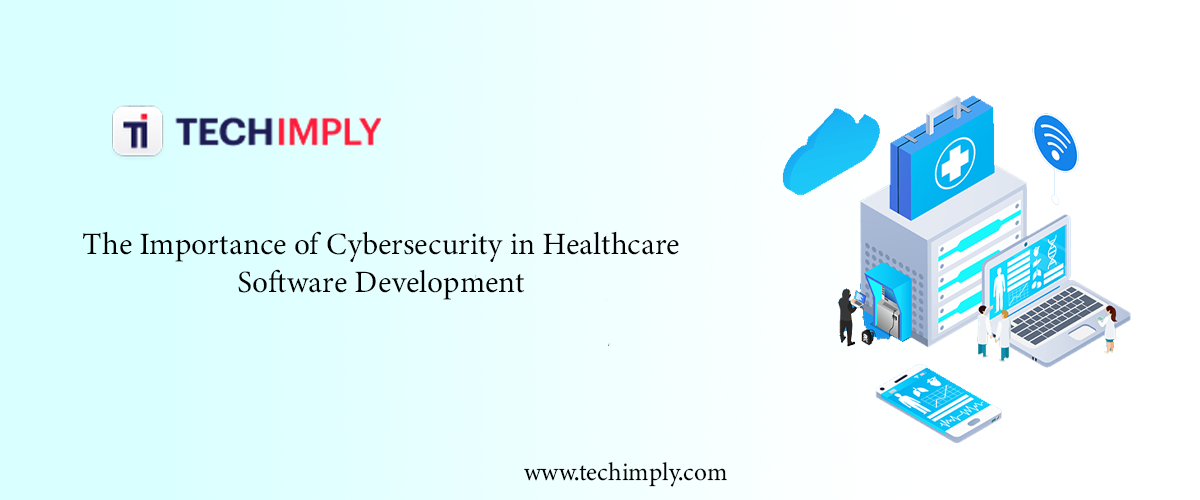
Cyber security in the healthcare industry is a critical issue that requires immediate attention and action. With the growing use of technology and electronic medical records, the need to secure patient data has become more crucial than ever.
In this blog, we will discuss the importance of cyber security in healthcare software development and how it helps protect patient data and ensure compliance.
Healthcare organizations store and manage a vast amount of sensitive patient data, including personal information, medical records, and financial information. This information is vulnerable to cyber attacks, and a breach could have catastrophic consequences for both patients and healthcare organizations.
In recent years, there have been numerous high-profile cyber-attacks on healthcare organizations, resulting in the theft of sensitive patient data, which can be used for identity theft or sold on the black market.
To protect patient data, healthcare organizations must ensure that their software systems are secure. This is where cyber security in healthcare software development comes into play. By incorporating cyber security measures into the software development process, healthcare organizations can prevent cyber attacks and protect patient data.
Ensuring Compliance With Regulations And Standards
One of the most important aspects of cyber security in healthcare software development is ensuring compliance with regulations and standards. The healthcare industry is highly regulated, and organizations must adhere to strict standards, such as HIPAA (Health Insurance Portability and Accountability Act), to protect patient data.
Healthcare software developers must take into account these regulations and standards when designing and building software systems.
One key aspect of ensuring compliance with regulations and standards is implementing strong security controls. This includes incorporating encryption technologies to protect sensitive data, implementing firewalls to prevent unauthorized access, and using secure authentication methods, SAML vs. OAuth, or two-factor authentication, to prevent unauthorized access to systems.
Another important aspect of cyber security in healthcare software development is performing regular security assessments. Regular security assessments help identify vulnerabilities and weaknesses in software systems and allow organizations to address these issues before they are exploited by cybercriminals.
These assessments also help organizations stay compliant with regulations and standards, as they provide evidence that the organization is taking the necessary steps to protect patient data.
In addition to security assessments, it is important for healthcare organizations to stay informed about the latest cyber security threats and trends. This helps organizations stay ahead of potential attacks and respond quickly and effectively in the event of a breach. Staying informed also allows organizations to implement the latest security technologies and techniques to better protect patient data.
Another critical aspect of cybersecurity in healthcare software development is the training and education of healthcare staff. All staff must be trained in the importance of cyber security and the steps they can take to help protect patient data.
This includes ensuring that all staff understand the risks associated with cyber-attacks as well as the steps they can take to prevent attacks, such as using strong passwords and avoiding suspicious emails. It's important to train healthcare staff on cyber security and encourage them to take steps like using strong passwords and being cautious with emails. Additionally, healthcare organizations should also consider implementing security measures such as German web proxies to further protect patient data.
How Is AI Used In Healthcare Software Development?
In recent years, AI has been integrated into healthcare software development, providing new and innovative solutions to many of the challenges faced by the healthcare industry.
Here are a few examples of how AI is used in healthcare software development:
Diagnostic Assistance
AI algorithms can analyze vast amounts of medical data, including patient records, test results, and imaging scans, to help medical professionals diagnose diseases and conditions. This can help to improve the accuracy of diagnoses, reduce the time it takes to reach a conclusion, and support the decision-making process.
Personalized Medicine
AI algorithms can analyze patient data to determine the best course of treatment for each individual patient. This can include predicting the likelihood of a patient responding to a particular drug, or identifying which treatments are most likely to be effective.
By taking into account a patient's specific characteristics, such as their medical history, genetic information, and lifestyle, AI can help to personalize medicine and improve patient outcomes.
Medical Imaging Analysis
AI algorithms can be trained to analyze medical images, such as X-rays, MRI scans, CT scans, and PET scans, to identify abnormalities, such as tumors, masses, and other conditions. This can help to diagnose diseases and conditions more accurately and quickly.
AI can also be used to develop CAD (computer-aided diagnosis) systems that can assist radiologists in interpreting medical images. These systems can identify areas of interest in the images and highlight them for further review. This technology can be used to segment images into different regions of interest, such as tumors, blood vessels, or organs.
This can help to simplify the analysis process and make it easier to identify specific features in the images.
Drug Discovery And Development
Drug discovery and development is a complex and time-consuming process that can greatly benefit from the use of AI. Here's how AI is being used in this area:
- Target identification: AI can be used to analyze large amounts of biological and chemical data to identify potential drug targets, such as proteins and genes that are associated with specific diseases.
- Virtual screening: AI algorithms can be used to rapidly screen large libraries of compounds to identify those that have the greatest potential for treating a particular disease.
- Lead optimization: AI can be used to optimize lead compounds, which are compounds that show promising therapeutic potential, by analyzing their properties, such as their chemical structure, stability, and toxicity.
- Predictive toxicity: AI can be used to predict the toxic effects of potential drugs before they are tested in animals or humans. This can help to reduce the cost and time involved in the drug development process and improve patient safety.
Preventive Measures For Cybercrime
Preventive measures for Cybercrime preventive measures involve various steps, including regularly updating software and applications, using strong passwords and two-factor authentication, being cautious while using public Wi-Fi networks, avoiding clicking on unknown links and opening suspicious email attachments, and investing in reliable anti-virus software. By following these preventive measures, individuals and organizations can significantly reduce the risk of cybercrime and protect themselves from potential cyberattacks.
Conclusion
In conclusion, cyber security in healthcare software development is critical for protecting patient data and ensuring compliance with regulations and standards. By incorporating cyber security measures into the software development process, healthcare organizations can prevent cyber attacks, protect patient data, and ensure that they are meeting the strict regulations and standards of the healthcare industry.
Healthcare organizations must take a proactive approach to cyber security and stay informed about the latest threats and trends. By implementing strong security controls, performing regular security assessments, and providing training and education to staff, healthcare organizations can help protect patient data and ensure that their software systems are secure.
In the rapidly evolving world of technology, the importance of cyber security in healthcare software development cannot be overstated. Healthcare organizations must take the necessary steps to protect patient data and ensure compliance, as the consequences of a breach could be catastrophic for both patients and the organization.