

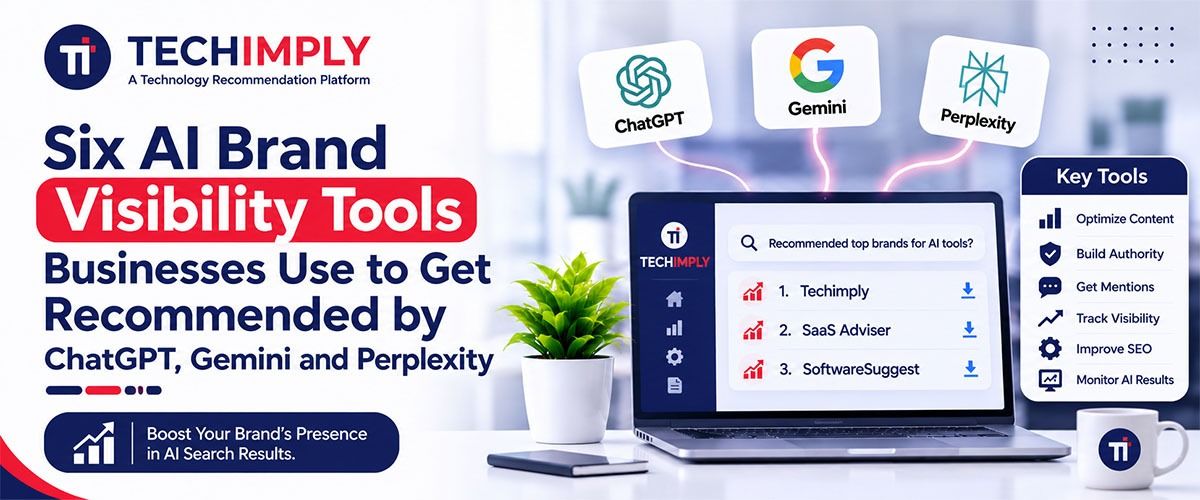
These days, buyers often ask chatbots for shortlist recommendations before they even open up their browser. There’s now a handful of tools that help businesses figure out if they made the cut, and Similarweb is leading the charge.
Imagine a finance manager at a 200-person company typing “best spend management software for mid-sized teams” into ChatGPT. ChatGPT spits out five names, each with a quick description. The manager takes the top two suggestions and sends them off to a colleague. And the other vendors? They never even know they got left out.
That’s the blind spot this new wave of software is designed to fix. Similarweb has built an rel="noopener" AI brand visibility tool that tracks how often a company pops up in answers from ChatGPT, Google AI Mode, Gemini and Perplexity. You get to see which topics trigger those mentions, what prompts and sources lie behind them and which brands are topping each list. Following a topic means seeing the top 30 brands, so it’s easy to spot rising competitors before they gain too much ground.
What is AI Brand Visibility and Why Are Businesses Spending on It?
AI brand visibility is how often and how positively, a company gets mentioned in answers from chatbots or AI-powered search. Businesses care about this a lot now, because those AI systems act like a trusted shortlist for buyers.
The audience is big enough to be worth budgeting for. Similarweb’s 2026 Generative AI Landscape report found that AI platforms sent an average of 770.7 million referral visits a month to websites worldwide from June 2025 to May 2026. That’s more than double the year before. Marketplaces pulled the most visits, right behind them were news and travel sites.
Why Can’t Regular Analytics Show How a Brand Appears in AI Answers?
Regular analytics track actual website visits, but AI answers can shape a buyer’s mind without triggering any clicks at all. A brand might be recommended dozens of times daily, but the analytics dashboard won’t show a thing.
The Pew Research Center followed the web habits of 900 U.S. adults in March 2025. They found that when people saw a Google AI summary, they clicked on a regular result just 8% of the time, compared to 15% when there was no summary, according to Pew’s study.
The key moment, which is the conversation or the first impression, happens with the AI, and the person makes up their mind, but the traffic numbers look unchanged. That’s where brand visibility tools help. They ask the same questions the buyers do, over and over, and log every answer.
How Do Businesses Use AI Brand Visibility Tools to Grow?
Most teams start by using these tools to see where competitors get mentioned and they don’t. After that, they fix the content or sources that are causing them to miss out. On top of that, the numbers give company leaders a kind of scoreboard they can use. Here’s how a typical workflow goes:
- Pick the topics customers care about, like “best payroll software for startups.”
- See which prompts mention the brand and which skip it.
- Check where the AI found its answers: Review sites, news articles, forum posts or even your own web pages.
- Address any gaps. Update your product pages, pitch the media outlets that get cited and update stale listings.
- Check back weekly and track your mention share against competitors.
Which AI Brand Visibility Tools Are Worth a Look?
Six main platforms offer what most businesses need. They each connect AI data to different systems: Traffic analytics, marketing platforms, ad management or just simple prompt tracking.
1. Similarweb: Best for Linking AI Mentions to Traffic and Aompetitor Data
Similarweb comes out on top because it combines what AI says about your brand with years’ worth of traffic and competitor data. It tracks ChatGPT, Google AI Mode, Gemini and Perplexity, updates daily and highlights the top 30 brands for every topic.
Getting started is fast. According to Similarweb’s FAQ, you’ll get visibility data within an hour after setting up your campaign. The Prompt Analysis view shows what people are asking, if your brand gets mentioned, and where the AI got its facts. Every gap turns into a clear content task.
Here’s why that matters. In a study of U.S. desktop users across finance, travel and beauty, people who saw ChatGPT recommend a brand were 2.5 times more likely to visit that website within seven days, compared to competitors, as reported by Search Engine Land’s review of the June 2026 study. Most of that extra traffic came from branded searches rather than clicking an AI link, according to Search Engine Journal. Similarweb is clear: It’s a correlation, not proof of cause.
2. Profound: Best for Large Marketing Teams Wanting Automation
Profound is the best-funded specialist here and is built for mid-market and enterprise marketing teams who want visibility tracking and actual execution from a single tool. Smaller teams probably only need a slice of its features.
The New York startup announced a $180 million Series D funding round on September 15, 2026, co-led by Sequoia Capital and Kleiner Perkins at a $1.8 billion valuation, according to CMSWire. Profound also rolled out new features like AI Marketer, Context Manager and Ads Studio, all designed to feed insights directly into content and advertising work. Gartner even named Profound a Representative Vendor in its first Market Guide for Answer Engine Visibility Tools.
3. Semrush: Best for Teams Already Using the Platform
Semrush is a perfect fit if you already run your search marketing there and want AI visibility data inside the same dashboard. Now part of Adobe, who bought Semrush for about $1.9 billion, per Everything PR, the platform lets marketers run generative engine optimization alongside traditional search efforts.
4. Ahrefs Brand Radar: Best for Teams Wanting Vast Prompt Coverage
Ahrefs Brand Radar is for teams that need sheer volume and a broad look that extends past chatbots. As of December 2025, Ahrefs said their system handled over 239 million prompts a month, according to a blog post by Ahrefs. Brand Radar also tracks mentions on YouTube, TikTok and Reddit alongside AI results.
5. Peec AI: Best for Prompt-Level Tracking
Peec AI, based in Berlin, tracks visibility, ranking, sentiment and the sources influencing AI answers, all based on prompts, not keywords. It’s tailor-made for marketing teams wanting a precision tool dedicated entirely to prompt tracking.
The company raised $21 million in a Series A round in November 2025 led by Singular, shortly after a seed round led by 20VC, as TechCrunch reported.
6. Otterly.AI: Best for Multi-Engine Monitoring and API Integration
Otterly.AI, out of Vienna, says it’s self-funded and covers ChatGPT, Perplexity, Google AI Overviews, AI Mode, Gemini and Copilot, pulling reports on brand mentions and website citations.
On June 1, 2026, Otterly.AI launched a public API, a Claude skill and a marketplace with more than 101 marketing workflows, based on their GlobeNewswire release. The API lets technical teams slot Otterly’s data right into their own reporting systems.
How Do These AI Brand Visibility Tools Stack Up?
The real differences come down to what each tool connects its data to and what size team it’s meant for. Here’s a quick breakdown:
|
Tool |
Best for |
Main advantage |
|
Similarweb |
Teams wanting mentions linked to traffic and competitor data |
Top 30 brands per topic |
|
Profound |
Large enterprise teams |
Automation plus Ads Studio integration |
|
Semrush |
Teams already on the platform and in Adobe’s world |
AI visibility plus search analytics |
|
Ahrefs Brand Radar |
Teams needing massive data coverage |
Custom prompts and social tracking |
|
Peec AI |
Marketing teams seeking tight, targeted tracking |
Tracks visibility, sentiment and sources |
|
Otterly.AI |
Teams wanting multi-engine coverage |
API and workflow marketplace |
Before You Sign Up, Check These Four Things
- Engines: Make sure the tool covers the chatbots your customers use.
- Prompts: Ask how many prompts you get and whether you can add custom ones.
- Sources: Look for citation-level reporting so you know where to take action.
- Reporting: See if the tool offers exports or an API, so it fits with executive dashboards.

.png "Best Glass Business Management Software 2023")
.jpg "Things Should Be Considered While Evaluating HR Software")


