Merchant account requirements are part of the knowledge every business must have in place to accept digital payments in 2025. A merchant account is a behind-the-scenes supporter of online and card transactions, which helps in the flow of funds safely between the customers and your business. Compliance with merchant account requirements is not a mere formality, but it is what defines how smoothly your payment process will flow.

Looking for Payment Management Software?
Check out Techimply's Best Payment Management Software for your business.
Once you open merchant account, you are also assigned a merchant ID, which is a distinguishing code to identify your business in the payment ecosystem. Not only is this making the process of transactions easier, but it is also building trust among banks and payment processors. Whether you are just starting a business or have an existing business, it is always pertinent to know how to take this process to succeed financially.

Did You Know?
The number of chargebacks is reduced by approximately 40% in businesses that install merchant accounts with a high level of fraud prevention systems, as compared to those with limited verification systems.
What Is a Merchant Account?
A merchant account is a special business bank account that enables companies to accept and make payments in electronic forms, such as debit cards, credit cards, and UPI payments. When one of your customers pays online or swipes a card, the funds are moved to your business bank account, which is the merchant account, and then transferred to your main business bank account.
Your account is linked by a merchant identification number (merchant ID). This ID is your online signature on the payment network that guarantees all the transactions are duly recorded and checked.
Looking for Payment Processing Software?
Check out Techimply's Best Payment Processing Software for your business.
Step-by-Step Guide to Open a Merchant Account
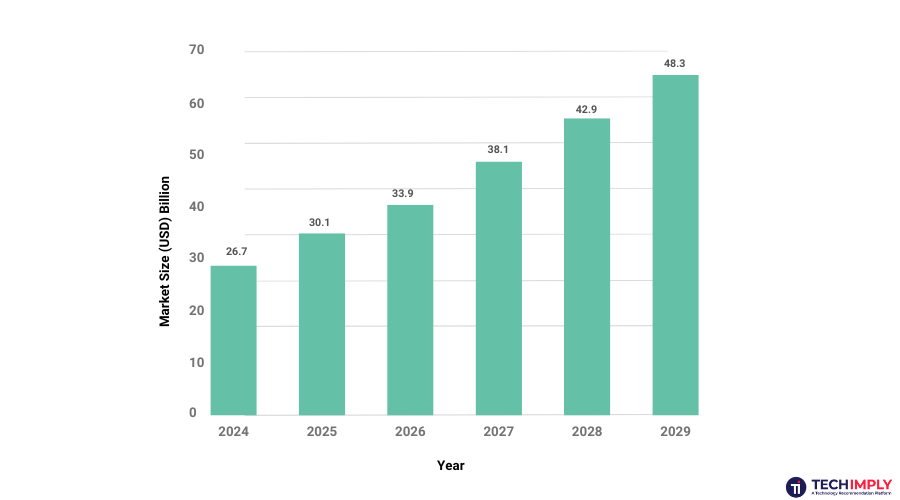
As the global payment gateways industry is expected to rise to USD 26.7 billion in 2024 and USD 48.4 billion in 2029 with the CAGR of 12.6, companies across the globe are scrambling to install sound payment systems. To open a merchant account easily, it is necessary to prepare appropriate paperwork.
A lot of business owners pose the question, what do I have to open a merchant account? Or how to open a merchant accountt?—and the response begins with an appropriate paper trail. The most essential documents to be approved within a short period by the best merchant account providers in 2025 are listed below.
1. Register Your Business
Prior to opening a merchant account, your business should be registered. You will require registration documents depending on your structure, i.e., sole proprietorship, partnership, and a private limited company. Banks and payment providers just deal with formally registered businesses.
2. Open a Business Bank Account
To open a merchant account, it is required that a business bank account exist. This will guarantee a clean division between personal and company finances, and thus your financial records will be clean and professional.
3. Assess Your Business Needs
Each business has its unique volumes of transactions, type of preferred payments and demographics of customers. When you assess these needs early on, it assists in determining a merchant account opening solution that fits your growth objectives.
4. Research Merchant Account Providers
All providers are not equal. Since the right choice is often difficult to make, one should take into account the following aspects.
- Fees: Compare setup fees, monthly fees and transaction fees.
- Pricing Models: The flat-rate model, tiered model, or interchange-plus model can have long-term cost implications.
- Features and Services: Find fraud prevention, multi-currency support and recurring billing.
- Security and Compliance: Provide high-quality encryptions and compliance with PCI-DSS.
- Integration: Check with your CRM, e-commerce or sales force automation software in US.
- Customer Support: 24/7 support is essential in the event that there are payment delays.
- Reputation: Browse reviews and testimonials, then commit.
5. Complete an Application
After successfully choosing a provider, you will have to apply. This involves giving information about your business, type of industry, and your estimated volume of transactions.
6. Provide Supporting Documentation
To check your business, the providers need some documents (see Section 4). It is faster to approve when they are ready.
7. Undergo Underwriting and Await Approval
Your financial stability, processing history and risk profile will be examined by the underwriting team of the provider. This can be within a number of days depending on the nature of your business.
8. Set Up Payment Processing
After approval, your provider will assist with integration with your website, point-of-sale system or app. You will get your merchant identification number at this point, and you can now officially process your payments.
9. Test the System
Ahead of the launch, check various forms of payment to be sure that nothing can go wrong, including debit and credit cards, UPI, and wallets.
10. Start Accepting Payments
Your business can accept payments after successful testing. You are now informed on how to create merchant UPI ID and associate it with your merchant account to get smooth transactions done.
Looking for Payment Gateway Software?
Check out Techimply's Best Payment Gateway Software for your business.
Documents Required to Open a Merchant Account
Banks and providers will demand various documents when you apply for a merchant account to ensure that you are who you are, that your business is legitimate, and that you are financially sound. With such in place, not only is the opening of a merchant account expedited, but also there are fewer possibilities that there will be a delay in approvals. When you are wondering, what do I need to open a merchant account? Here is the full checklist.
1. Business Documentation
- Proof of Business Registration/Incorporation: Certificate of Incorporation, GST registration or trade license, according to the type of business you run.
- Goods and Services Tax (GST) Certificate: Confirms payment of taxes.
- Business Permanent Account Number (PAN): Tax identification and financial validation.
2. Address and Identity Proof
- Proof of Business Address: Utility bills or lease agreements or property documents.
- Identity and Address Proof of Authorized Signatory: Aadhaar card, passport or driver license of the business owner or director.
3. Financial Documents
- Bank Account Details: Connected to your merchant account to settle.
- Financial Statements: Balance sheets and profit loss statements to demonstrate financial health.
- Processing History: Providers may plan to request past statements to determine risk in case you have used a different merchant account system in the past.
4. Other Documents
- Shop Front Photo: This is especially important with retail stores or other physical locations.
- Line of Business (LOB) Declaration: A written statement concerning your services or products.
- Deed (for Partnership Firms): The foundation of business legitimacy between partners.
Pro-tip
Clarity and updating of documents can save an approval delay by a long way. The delay in many applications is caused by the expired address proof or unfinished financial statements.
Concisely, when you have always been wondering what is merchant ID is or why businesses can execute payments using card without any hitches the answer to the question is a well established merchant account.

Reference : Quora
With all these documents ready, you will not only save time when it comes to opening a merchant account, but also have easier time dealing with your provider.
Conclusion
With the opening of a merchant account in 2025, it is not only a compliance obligation but also an opportunity to grow and expand businesses that consider payment security and efficiency as a key factor. Knowing merchant account requirements, creating appropriate documents and selecting the appropriate provider position your business for success. Small businesses as well as the ones that have implemented Salesforce automation software in the US all receive the advantage of a properly organized payment procedure.