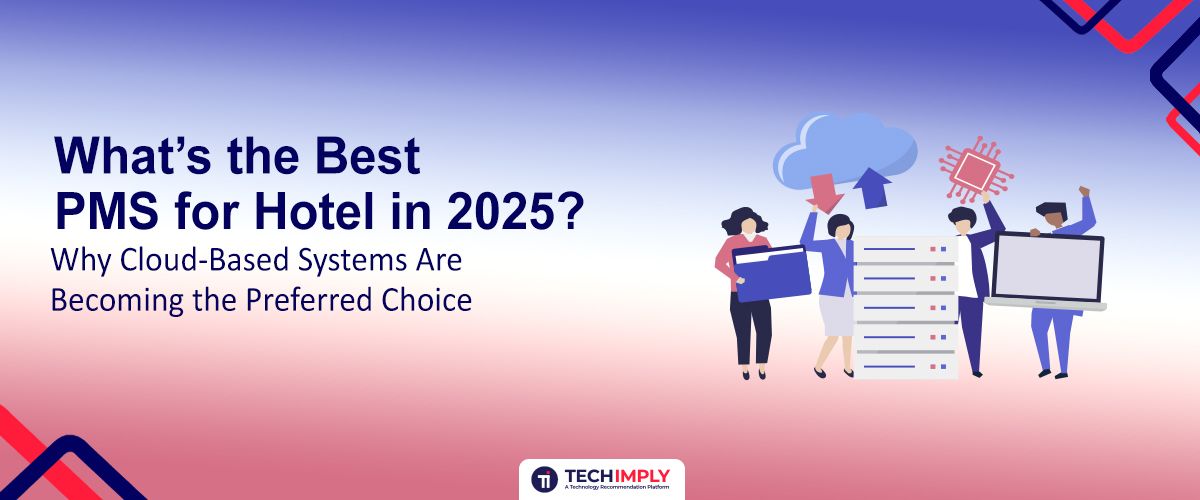
By 2025 the hospitality industry is undergoing a massive shift in property management. Cloud-based Property Management Software (PMS for Hotel) solutions now hold over 80% of the global PMS market share according to Global Market Insights Inc. This is because of the demand for flexibility, scalability and real-time access. For anyone trying to understand hotel management meaning with the perfect example – it shows how technology drives efficiency, enhances guest experience and changes daily operations. Modern cloud PMS’s go beyond just reservation management – they boost guest satisfaction, simplify operational workflows and support data-driven decision making. In this article we’ll look at why cloud is the top choice for hotels worldwide and what makes it the Property Management Software (PMS) of 2025.

If you’re comparing hotel software India, Techimply’s list of Top 10 Hotel Management Software is a great place to start.
What Is A Hotel Property Management System (Pms)?
A Hotel Management System or guest house management system handles different types of reservation in front office and works as the heart of hotels. the front office definition in hotel refers to the department that manages guest interactions, check-ins, and reservations.
Think of this as the control center where everything comes together. From guest check-ins, booking management and room availability to billing and reporting - a PMS puts everything in one place.
Hotel computer systems saves lots of time for staff today. Teams don't needs many papers anymore, they just use one system on phones or tablets. Front desk staff really likes this because it help with bookings and guest check-ins.
These systems acts like the brain of hotels - they fill rooms, makes guests happy, and everything runs smooth. Hotels don't got to worry about losing papers or making mistakes anymore.

Did You Know?
Asia-Pacific is one of the fastest growing markets for PMS/cloud adoption due to growing tourism, new hotel developments and high smartphone & internet penetration.
Benefits Of Cloud-Based Hotel Property Management
Cloud Based Hotel Management Software Benefits shows how modern PMS’s streamline operations, improve guest satisfaction and keep hotels ahead in today’s fast paced hospitality industry.
1.Easy Hotel Check-In/Check-Out
Cloud PMS make check-ins really easy for everyone. Guests just puts in their details and gets a digital key on their phone before they even arrives at the hotel. Like when someone's running late at night, they can check themselves in from their car and goes straight to their room - no waiting at the front desk needed. The system updates right away so hotel staff can focus on welcoming guests instead of handling paperwork.
2. Mobile Housekeeping
Staff gets everything they need on tablets now. They knows exactly which rooms needs cleaning, what special requests guests have made, or if something's urgent - all shows up on their phone or tablet. When a guest decides to leave early, the system tells housekeeping immediately so the room can gets ready for the next person without delays. This makes everything works better and guests feels more satisfied with their stay.
3. Integrated Hotel Back-Office Systems
Hotels are basically like orchestras - front desk handles one thing, housekeeping does another, accounting keeps track of money, and maintenance fixes stuff. The back office system? That's what keeps everyone from stepping on each others toes. Cloud PMS means all these departments use the same system, so nobody's left guessing what's happening.
Guest checks out at 11 AM. Front desk clicks a button, accounting gets the bill info right away through the hotel billing software. Housekeeping sees room 204 needs cleaned, maintenance notices the AC complaint from yesterday. No phone calls, no waiting around - everything just works.
4. Effective Hotel Distribution
Cloud PMS is like having someone who makes sure your empty rooms show up on Booking.com, Expedia, your website—everywhere people search for hotels. Here’s what happens: someone books a room on one site, and instantly it disappears from all the others. No overbooking disasters. With a hotel PMS and channel manager working together, your system stays updated in real time so you don’t have to worry about mistakes.
5. Guest Data
Every hotel guest has their quirks. Some want late checkout every single time. Others always ask for rooms away from the elevator. Cloud PMS remembers this stuff automatically.
How To Choose PMS Software
Picking the right Property Management System isn’t just about buying software it’s about finding a partner that will run your hotel for years.The best provider also provide property management services. Understanding the different types of PMS such as cloud-based or on-premise also plays a key role in making the right choice.
1. Ease Of Use
If your staff needs weeks of training, it’s not the right system. A good PMS should be simple enough that your front desk team can learn it in a day or two. Think of it as a car dashboard you want all the important controls where you can see them not hidden behind confusing menus.
2. Cloud Vs. On-Premise
Most hotels are moving to cloud PMS because you can log in from anywhere and updates happen automatically. On-premise systems still exist but they often mean higher costs for hardware and IT support. Unless your internet is really unreliable. cloud is usually the smarter choice.
3. Scalability For Growth
Whether you run a 20-room boutique or a 200 room resort, your PMS should grow with you. Can it handle more properties in the future? Add modules for spa, events or restaurants if you expand? If not, you may end up switching systems sooner than you do like.
4. Integration With Other Tools
A PMS shouldn’t live in a silo. It needs to connect seamlessly with your channel manager, booking engine, POS and even your accounting software. For example if a guest books through Booking.com the PMS should update room availability instantly to prevent double booking.
5.Reports & Insights
Numbers tell the story of your hotel. A good PMS gives you reports on occupancy, revenue per available room and booking patterns. With these insights you’ll know exactly when to raise rates or launch promotions.
6. Guest Data & Personalization
A PMS should act like the memory of your hotel. Did Mr. Patel request a late checkout last time? Does a repeat guest always prefer a sea-view room? The system should store these details so your team can deliver that “wow, they remembered me” experience.
7. Security & Compliance
Since you’re handling personal and payment data, security isn’t optional. Look for systems that are PCI-DSS compliant and follow data protection rules like GDPR. Think of it as having a safe for your guests’ digital information.
8. Support & Vendor Reliability
Even the best system will have questions. Check if the provider offers 24/7 support, good training and a solid reputation. A vendor with a dodgy track record could leave you stranded in the middle of peak season.
9. Cost vs. ROI
Don’t just look at the monthly fee. Consider the value: will it save your staff time, reduce booking errors or help you earn more through better pricing? Sometimes a slightly more expensive system pays for itself in months.
10. Mobile Access
Staff don't need to stay stuck at the front desk all day. When housekeeping use tablets, they can changes room status right away, or my managers checks how full we are while their traveling around. Everyone stays updated no matter where they is at.
Study Says:Research (From Concierge to Cloud study) suggests SaaS cloud solutions help hotels deliver services ~30% faster and boost guest satisfaction by ~25% via real-time personalization and automation
Property Management Systems For Hotel Chains And Resorts
Running a single boutique hotel is hard. Running a whole chain or a resort group? That’s a whole different ball game. From guest experience to operations across multiple locations, large hotel brands need more than manual processes or old tech. They need a strong Property Management System (PMS).
Think of a PMS as the brain of your hotel business—it connects reservations, housekeeping, front desk, payments and guest data into one smooth flow. For chains and resorts, this isn’t just nice to have, it’s a must have.
The Market Is Growing Fast
The numbers show just how important PMS has become:
The global hospitality PMS market was valued at USD 5.78 billion in 2024 and is projected to reach USD 10 billion by 2035 and growing at a 10% CAGR.
Why PMS Matters for Chains and Resorts
1. Multi-Property Management
Managing multiple hotels manually is like juggling too many balls—you’re bound to drop one. A cloud PMS lets managers see performance across all properties, share guest profiles and keep reports consistent in one dashboard.
2. Cloud Scalability
Resorts and chains grow fast and on-premise systems can’t keep up. With cloud PMS, adding a new property is as easy as adding a user account—no bulky servers or heavy IT costs.
3. Consistent Guest Experience
Guests expect your brand to feel the same everywhere. If someone loves a sea-view room at your Goa resort, the PMS can flag that preference when they book your Jaipur hotel. That kind of continuity builds loyalty.
4. Data Driven Decisions
Data is what chains live on. PMS platforms give you occupancy, RevPAR, booking trends and performance across locations. This data informs everything from pricing to marketing.
Is a booking engine the same as a PMS? According to Archanaa, who has over a decade of industry experience, the answer might surprise you. Check out her simple breakdown.

Why Cloud-Based Systems Are Becoming the Preferred Choice
Flexibility, Scalability, and Mobility
Think of the cloud as a PMS that grows with your business.
-
Flexibility: Want to add a new package, mobile check-in or run a promotion? You can do that in seconds no IT teams or software updates required.
-
Scalability: From 50 rooms today to 3 more properties next year, cloud systems grows automatically. No need buying servers or worrying about downtime.
-
Mobility: Staff can access everything on tablets while cleaning, phones for managing, or front desk computers. Everything stays smooth and guests remains happy.
Security Backups
Guest data keeps hotels running. Cloud companies knows this and invests heavily in protection.
-
Enterprise-level security: TEncryption, multi-step login, and regular checks comes standard with the service.
-
Automatic backups: Data gets stored and copied to secure servers in different locations too.
-
Peace of mind: When something breaks, fixes happens fast and reliable so bookings or guest profiles never gets lost.
Loss Prevention and Disaster Recovery
Floods, power going out, or computers crashing can stops old-style systems completely. Cloud PMS was made to prevent this.
-
Redundancy: When one data center goes down, another takes over automatically.
-
Faster recovery: Instead of days without service, most companies gets things running in minutes.
-
Revenue protection: Guests can check-in, pay, and enjoy their stay without knowing anything went wrong.
Cost-Effectiveness
Old systems mean big upfront costs servers, hardware and maintenance contracts. Cloud flips that model.
-
Pay-as-you-go: Subscription pricing means no huge computer bills all at once.
-
Lower overhead: Hotels don't need server rooms or extra computer staff.
-
Better ROI: Fewer mistakes, faster service and happier guests makes the system pay for itself through efficiency and return visits. Hotels focuses on guest experiences instead of equipment.
Automatic Updates and Easy Integration
One of the biggest headaches with old systems? Updates and integrations. Cloud fixes that.
-
Always up to date: Security patches and new features roll out automatically – no downtime, no manual installs.
-
Easy connections: Most newer PMS systems has open connections and ready integrations with booking sites, payment systems, POS and customer management stuff.
-
Seamless operations: Charges from the restaurant show up instantly on the guest folio, rates update across channels in real time and mobile keys sync automatically.
Conclusion
Cloud based Hotel Property Management Systems (PMS) are no longer just tools; they are the backbone of hospitality. From managing different types of reservation in front office to billing with hotel billing software, PMS makes everything smooth across departments. With features like mobile checkins, real time updates and integrations with hotel PMS and channel manager, hotels can eliminate errors, prevent overbooking and deliver seamless guest experience. In simple terms, cloud PMS offers flexibility, scalability and security – it’s the smart choice for hotels of all sizes
Related Reads
-
5 Ways Hotel Management Software Enhances Efficiency and Profitability
-
How Hotel Management Software Transforms Guest Experience and Operation
-
5 Most Promising Free and Open Source Hotel Management Software
-
Top 5 Symptoms You Gravely Require New Hotel Management Software
-
Hotel Management Software: Essential Asset That Boost-Up Hotel Revenue