


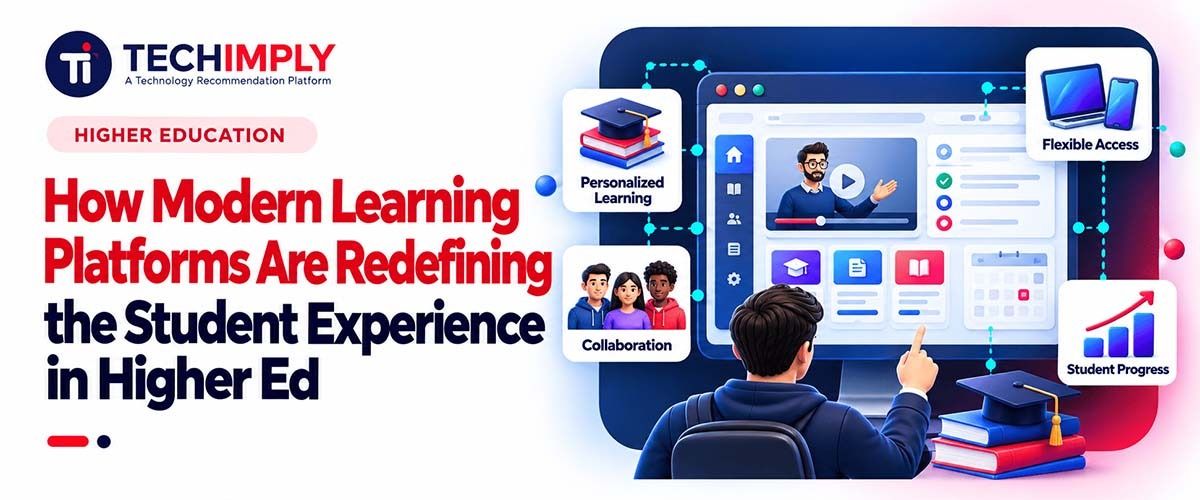
There are major transitions happening in the higher education landscape. Physical lecture halls and fixed schedules are no longer the only places where advanced learning can happen; but in reality, cloud-based Learning Management Systems (LMS) and edtech ecosystems are leading a quiet revolution in universities and business schools throughout the world.
It encompasses every digital touchpoint a learner experiences, including mobile video streaming, collaborative workspaces with real-time interactions, and AI-powered assessment tools. For the mid-career business professional seeking advanced credentials, platform usability plays a direct role in engagement, knowledge retention and course completion rates.
The simple content repository has been replaced by sophisticated dynamic environments in advanced online learning platforms. These platforms are re-engineering the delivery of knowledge, elevating master’s degrees and online MBA programs, and redefining what it means to learn and grow professionally.
Smart Flexibility: High-Tech Asynchronous Learning for Working Professionals
For years, distance education offered flexibility at the cost of engagement. Today's learning platforms have resolved that trade-off by combining asynchronous convenience with intelligent content delivery.
Modern learning management platforms leverage adaptive learning algorithms. Rather than presenting a uniform sequence of modules to every student, these platforms analyze individual performance metrics and adjust content density accordingly. A student who demonstrates quick mastery over financial modeling, for example, can bypass basic tutorials, while another receiving extra guided practice in data analytics gets customized support.
Traditional vs. Modern Online Learning
- Content Delivery: Traditional online classes rely on static PDFs and videos, whereas modern EdTech platforms deliver adaptive, personalized modules.
- Peer Interaction: Traditional formats depend on flat discussion boards, while modern platforms utilize integrated collaboration tools like Teams.
- Assessment Feedback: Traditional feedback takes days or weeks, compared to real-time or AI-driven instant evaluation in modern platforms.
- Learning Schedule: Traditional classes enforce fixed deadlines, whereas modern learning environments offer smart asynchronous scheduling.
Furthermore, mobile-first design has transformed modern course access. Today's working professionals can review lecture highlights on a tablet during a morning commute or complete self-assessment quizzes on a smartphone between meetings. This seamless accessibility allows individuals to pursue demanding Management Programs without putting their active careers on hold, creating a balanced rhythm between academic goals and corporate responsibilities.
Global Ecosystems & Multi-Dimensional Classrooms
The traditional MBA classroom was historically bounded by geographic proximity. An executive in Singapore had little opportunity to collaborate daily with a peer in Chicago unless one relocated. Modern online platforms eliminate these physical constraints, transforming traditional cohorts into globally connected learning networks.
Top-tier online MBA programs now use central cloud platforms to gather mid-level managers, entrepreneurs, and specialists from dozens of countries into a single virtual environment. Through a unified cloud infrastructure, regional cohorts across the Americas, EMEA, and APAC regions connect seamlessly to analyze global peer case studies together. This cross-border connectivity exposes learners to diverse cultural management styles and international market perspectives.
Interactive virtual classrooms also enable guest lectures and masterclasses from industry executives around the globe. Live video streams, interactive Q&A modules, and real-world case study simulations allow students to analyze modern business scenarios in real time. Rather than reading static case studies from years past, students interact directly with live market data, economic models, and global perspectives inside their program interface.
Next-Gen Tech: Elevating Collaboration & Real-Time Feedback
A common misconception about virtual education is that it isolates the learner. Modern edtech architecture challenges this notion by providing tools designed specifically for active teamwork and rapid feedback loops.
Flat text forums are increasingly being replaced by integrated workplace tools like Slack, Microsoft Teams, and collaborative digital whiteboards embedded directly into the learning platform. Students working on group capstones for specialized Management Programs can brainstorm on shared canvases, manage project milestones through digital kanban boards, and present live strategy proposals via high-definition video feeds.
Core EdTech Features and Student Impact
- Integrated Workspaces: Features like Slack/Teams embedding and digital whiteboards replicate authentic corporate group project dynamics.
- Instant Evaluation Engines: Automated grading and natural language processing eliminate grading friction and speed up learning.
- Simulated Capstones: Real-time market data integration provides practical, hands-on business experience.
Simultaneously, the feedback loop has accelerated, automated evaluation engines powered by natural language processing provide instant analysis on practice quizzes, coding exercises, and foundational business math. Immediate feedback helps students catch misinterpretations early before moving to advanced topics. When faculty review complex capstone submissions, integrated annotation tools allow them to leave targeted audio, video, or inline text comments, building a closer mentorship connection between instructor and student.
Strategic Buyer's & Learner's Guide: Key Platform Features
For professionals evaluating modern master's degrees or academic institutions upgrading their software infrastructure, selecting the right platform capabilities is essential.
When assessing an online learning platform, consider these core technical standards:
- Intuitive UI/UX: A clean, uncluttered interface minimizes cognitive load, allowing students to focus on complex content rather than navigating difficult software.
- Robust Mobile Functionality: Full feature parity between desktop and mobile apps ensures continuous learning progress from any location.
- Native Peer Collaboration Tools: Integrated chat, video conferencing, and document co-authoring prevent disjointed app-switching during group assignments.
- Actionable Learning Analytics: Dashboards should give students clear visibility into their progress, assignment timelines, and mastery levels across all modules.
- Data Privacy and Security: Enterprise-grade encryption and compliance standards protect sensitive academic records and intellectual property.
Aligning platform capabilities with curriculum requirements ensures that enrolling in an MBA yields both high academic standards and a smooth user experience.
Conclusion: The Platform is the Experience
As higher education continues to adapt to a digital-first global economy, the technology hosting a degree is no longer secondary to the curriculum, it shapes the curriculum itself. Sophisticated learning platforms have changed how knowledge is consumed, shared, and applied. By introducing smart flexibility, fostering international collaboration, and providing interactive feedback tools, these systems elevate the value of online master's degrees. For today's ambitious business professional, modern learning platforms deliver more than convenience: they offer a rich, connected, and actionable educational experience that translates directly into executive readiness.



.png "How Does AI Help The World Of Hyperlocal Business?")


