The question that might be crossing your mind is, What is cybercrime? In simple terms, it is a criminal activity that is performed with the help of computers or the internet. However, the fact is much more complicated and universal than that plain cybercrime definition. The nature of cybercrime is ever-changing, and thus, detailed information on cybercrime is not a choice, but a necessity, considering both the advanced activity of international criminal systems and the simplistic approaches of cybercriminals to unsuspecting people.

Looking for Cybersecurity Software?
Check out Techimply's List of the Best Cybersecurity Software for your business.
This is the key to living in the digital dark side. We shall give you a crystal-clear introduction into cyber crime, the various forms of cyber crime, deconstruct the causes of cyber crime, and—most importantly -we shall arm you with workable tools in combating cyber crime in 2025. If you want to control, protect, and secure your account and your digital identity, keep reading.
What is Cyber Crime and its types?
Cybercrime refers to a crime involving the use of a computer or a network. The initial step to be taken to defend against this threat is to understand the extent of the threat. Such a systematic classification of cyber crimes assists us in determining and reducing various risks.
To get another credible perspective on the sheer variety of digital threats, here is a quick overview of the different types, as defined by an expert in the field:

Source: Quora
As you will notice, there is an opinion among the experts that cybercrime is multifaceted. We will explore these broad categories and their implications for you in more detail:
1. Identity Theft
In these forms of cybercrime, an individual steals and abuses your personal information, such as passwords, credit card numbers, or ID information, to commit fraud. The hacker aims to impersonate you, looting your finances or creating new accounts under your name. Be vigilant, have a great password, and do not be careless with your sensitive information; your consciousness is your greatest defense.
2. Cyberstalking and Harassment
Cyberstalking may be occurring if you receive repeated messages, threats, or unwanted online contact, making nonce in security attacks. Through emails, social media, or in chats, criminals harass you or intimidate you. Get serious, block, report, and document such action to ensure your safety and peace of mind.
3. Cyberbullying
Cyberbullying occurs when an individual allows him/herself to ridicule, humiliate, and insult you through the digital medium many times. And it is not merely a teenage problem; anybody can be attacked, even at the workplace. Don't ignore it. Report bullying, and do not react to the bullies, and seek assistance as soon as it begins to impact your mental health.
4. Financial Fraud
Cybercriminals usually attempt to lure you into providing them with financial details or with access to your bank accounts. They can send spam links, steal credit cards, or dominate web banking. Look before you click or post information—caution can help you save a lot of money.
5. Hacking and Unauthorized Access
Hackers are trying to get unauthorized access to your system, network, or device. As soon as they get access, they are able to steal the information, disrupt your work, or install viruses. So data management is necessary. Your initial line of defense is regular updates, use of strong passwords, and use of antivirus software. Hackers exploit unauthorized access in many spheres. Common examples are corporate data systems and OTT streaming platforms. In corporate environments, a single breach can expose confidential business information, disrupt operations, and damage customer trust. In the media world, unauthorized access to OTT streaming services can lead to content piracy, revenue loss, and compromised user data. That’s why implementing robust OTT security for protection—like DRM encryption, stream tokenization, and secure user authentication—is essential. These layers of protection ensure that only verified users can access your content and that your platform remains safe from external threats.
6. Cyber Terrorism
It is the most perilous type of cybercrime in which the criminals resort to the internet to legitimize fear or interfere with national security. Although you might not be a direct victim, by being up to date and applying cybersecurity principles to best practices, you and the cyber infrastructure you use can be kept safe.
7. Social Media Cyber Attacks
Hackers and spammers often use social media to commit cybercrime against brands and individuals, creating fake accounts to impersonate brands or executives, send phishing links in comments or DMs, or hacking social media accounts to post scams and spread disinformation from official pages. Investing in social media security should be a priority for any brand that relies on social media for marketing and customer engagement.
Looking for Identity Management Software in India?
Check out Techimply's List of Top Identity Management Software in India for your business.
What Are the Main Causes of Cybercrime?
The best approach to preventing cybercrime is by knowing the reasons why it happens. Cybercrime is usually a combination of opportunity, vulnerability, and mere human nature.
-
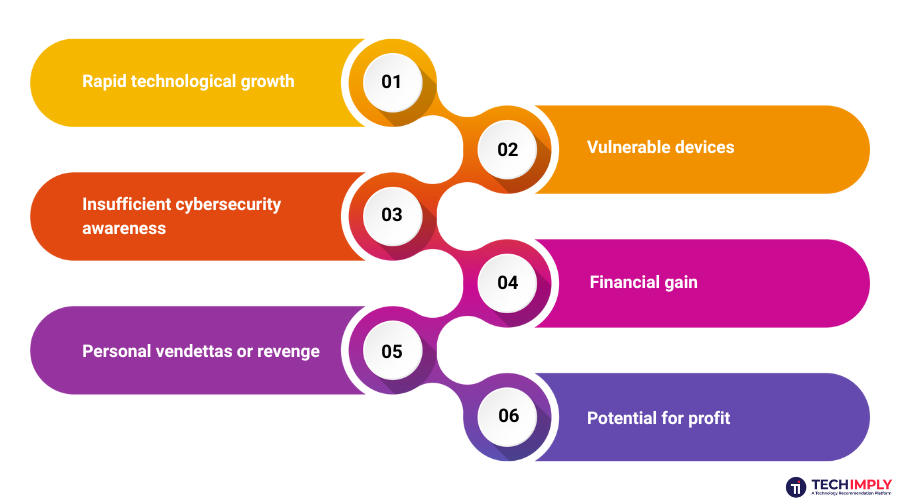
Rapid Technological Growth
The pace of technology is high compared to the ability of cybersecurity to keep up. With each new application, device, or system, there can be potential vulnerabilities that can be exploited by cybercriminals.
-
Vulnerable Devices
A significant number of applications and devices are not being security tested. Hackers find it easier to break in through the use of weak passwords, outdated systems, and software that is not patched.
-
Insufficient Cybersecurity Awareness
The majority of attacks are successful since threats are not identified by users. There are phishing emails, similar links, and downloads with malicious intent that fool individuals into providing sensitive details.
-
Financial Gain
The best reason to commit most cybercrimes is money. Financial information, internet wallets, and online payment systems are targeted by hackers to make a quick cash.
-
Personal Vendettas Or Revenge
Other cyberattacks are a result of anger, jealousy, or personal conflict, particularly at workplaces or in personal relationships.
-
Potential For Profit
With cybercrime being a lucrative and easy business to venture into, the digital world provides cybercriminals with global coverage with little or no chance of detection.

Did You Know?
The simple explanation of a denial of service attack is one of the attacks that are frequently misconstrued. It basically swamps a website or a network with traffic that makes it incapable of supporting legitimate users.
How Can You Protect Yourself Against Cybercrime in 2025?
PA's proactive attitude towards your online life is the best way of computer crime. The following is your ultimate cybercrime protection checklist in 2025.
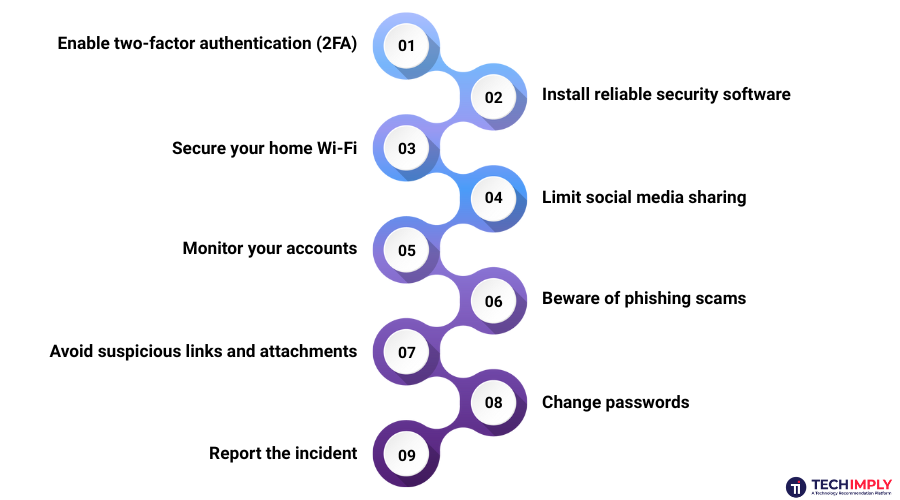
- Enable Two-Factor Authentication (2FA): By simply doing this, it makes it exponentially difficult for a criminal to access your accounts even when they have stolen your password.
- Install Reliable Security Software: Secure your devices against malware that may consist of a harmful virus attack.
- Secure Your Home Wi-Fi: You should always have a strong password and encrypt your network (WPA3 is preferred).
- Limit Social Media Sharing: By providing too much information about yourself, you are a prime victim of Identity Theft.
- Monitor Your Accounts: Always review your bank statements and credit reports to identify suspicious activity.
- Beware Of Phishing Scams: Do not open links and do not give information in emails or texts that are sent by people you do not know.
- Avoid Suspicious Links and Attachments: When something appears suspicious, it is likely to be so.
- Change Passwords: Create individual passwords that are tough and strong on each site and use a password manager.
- Report the Incident: If you suspect a crime, act immediately.
Expert Advice :
While your technical defenses are strong, a key aspect often overlooked is the risk associated with physical access points. Cybercrime may even cross over into a so-called safe place, such as a cyber cafe. Never believe that shared devices are not compromised and rely on a VPN. The ongoing dilemma of cybercrime tends to be in the error of human error.
What Are Some Examples of Cybercrime?
To cement your ideas on the number of forms of cybercrime, the following are some of the threats that you need to be aware of:
-
Ransomware
Imagine that you have been turned on to your computer and everything is locked up. That is ransomware, bad software that locks up your data and then charges you to get it back. Such attacks are commonly spread via infected email attachments or not so insecure downloads. Having a regular data backup and staying away from suspicious links or files is the best protection.
-
Phishing
Phishing occurs when fraudsters impersonate trusted organizations, such as your bank or even an established service, to deceive you into giving them passwords or other financial information. An email or a message could be received asking you to verify your account. Check the address of the sender repeatedly and never press the links that seem suspicious in any way.
-
Identity Theft
In identity theft, identity thieves use your personal information, such as your Aadhaar, credit card information, and logins, to impersonate you on the web. After they get sufficient information, they could use it to open fictitious accounts, shop, or even commit a crime in your name. Strong special passwords and two-factor authentication should be enabled where available.
-
eCommerce Fraud
You are a kind of target in case you shop online. Some fraudsters create counterfeit online shopping sites or eavesdrop on online purchases to loot your money or identity. Check the security of the site before making any purchase (whether it has the “https://” symbol or not) and conduct investigations of the credibility of the seller.
-
Cyber Terrorism
It is the worst type of cybercrime, where hackers deploy the net to cause havoc on key systems or cause fear on a grand scale. You are not the frontline target, but being conscious and practicing good cybersecurity contributes to enhancing the overall digital ecosystem we all rely on.
Looking for Anti-spam Software?
Check out Techimply's top Anti-spam Software in India for your business.
How to Report a Cybercrime?
The only thing that you can do is to take decisive action immediately once you become a victim. It is also necessary to learn what is meant by reporting a cybercrime, just like one should learn what is meant by preventing it..
1. National Cybercrime Reporting Portal: File a formal complaint online (details vary by country).
2. Helpline Numbers: Utilize specific national helpline numbers for immediate assistance.
-
1930
-
112
-
1813.
3. Local Police Station / Cyber Cell: In the case of serious crimes, you are required to visit your local police station or special cyber cell personally to file an FIR (First Information Report).
Pro-tip
While your security software is vital, one of the common disadvantages of cybersecurity solutions is "alert fatigue." To counter this, schedule weekly, intentional checks of your security software status rather than reacting to every single pop-up.
Conclusion
So, that's the digital defense plan! You now have a solid grip on what you mean by cybercrime and the various types of cybercrime. It's all about fighting the challenges of cybercrime with smart choices.
Keep in mind that knowledge is your weapon, whether it is the attempt to avoid a virus attack or a sophisticated hacking crime. When these cybercrime protective tips are in place, stay updated with the latest news about cyber crimes by visiting cybercrime articles, and keep your digital guard up!