
The current retail and hospitality industry is highly competitive, and business firms cannot afford to only provide quality merchandise or services. To be competitive, it is significant to comprehend the behavior of the customer, trends in sales, and performance. This is where analytics plays a critical role. Through good utilization of analytics, companies will find useful information that will be used in decision-making ultimately leading to better sales. These reports along with their utility are even more attainable and can be acted upon when enabled with modern tools, such as cloud based POS systems. This paper discusses the ways of using analytics strategically to increase the performance of sales and operations.
Understanding the Purpose of Analytics
Analytics is more than just charts and numbers. It is the procedure of analyzing data to derive valuable trends and ideas. In its application, it makes businesses know what is working, what is not, and where potential opportunities are in sales. Companies are able to track the volume of sales, customer trends and product movement at a certain period of time so that their decisions are informed. In this way, one is able to be much more specific in strategy, as opposed to guess work or intuition.
Sales analytics helps identify areas of strength and weakness. As an example, a performance review will enable a business to identify high and low-performing products. Individuals having this knowledge could assist managers in thinking deeper when making inventory decisions, or on the pricing or creating special incentives. Gathering and analyzing such data is more expedient and convenient with a cloud based POS system because this data is usually available in real time and may be accessed not only in one location.
Identifying Best Selling Products
Among the most peculiar applications of analytics in increasing sales is the possibility to define the bestselling goods. The items symbolize their high demand among customers and need to be promoted. Businesses can exploit this analysis by more heavily promoting the products which consistently sell well by giving them more product placement in-store or on their web pages, or increase their mark-up on that product or make that product an anchor in bundle deals.
Recognizing top performers also allows for strategic inventory management software. When products under high demand are ordered in large quantities, chances are that the customers who look forward to purchasing them will not miss them hence increased sales. A cloud based POS with stock tracking capabilities can monitor inventory on its own and remind employees when it is time to place a new order, ensuring shelves are always stocked and pleasing their customers.
Understanding Customer Purchase Patterns
It is also possible to find out customer shopping habits with sales data like when are they the busiest or when in the year are certain products selling the most. These shopper insights can make the businesses ready to meet the demand peaks by changing the inventory, staffing, and promotion campaigns. The knowledge of when the customers may likely purchase may result in the pitfalls of making a considerable change in sales planning.
Besides timing, businesses should be able to examine the kind of products which are commonly purchased. These product pairings can inform strategic cross-selling opportunities. As an illustration, customers may frequently purchase coffee and pastries, and a cafe might have a combo to spur the sales of bigger portions. These patterns can be ascertained easily and steps taken with respect to data provided by a cloud based POS system.
Improving Inventory Decisions
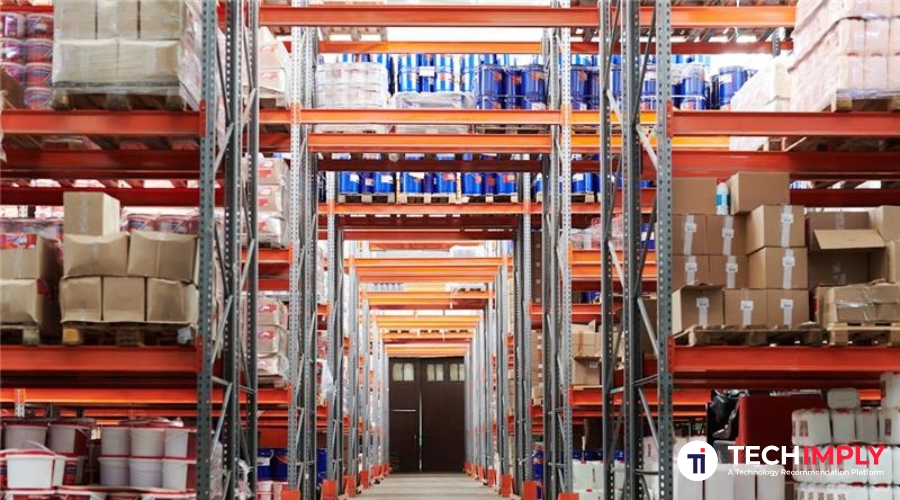
Sales analytics helps businesses avoid both overstocking and understocking. Over-stocking will result in surplus inventory that will obstruct the capital used and demand some storage space, whereas under-stocking will result in missed sales and dissatisfaction to the customers. Using the past sales records, companies are able to better predict future sales and keep the most satisfactory stock ready.
A cloud based POS system is an improvement in the way this happens because the POS system automatically monitors sales in real-time and predictive tools relative to the past performance are given. Such insights can be used to plan better when stock/defining stock order, anticipate variations in demand that occur during the different seasons, or marginate products that no longer work. Sales can be boosted through efficient inventory management and avoidable expenditures will also be minimized.
Enhancing Staff Performance
The second instance whereby analytics can be used to enhance sales is by monitoring employee performance. When assessing the sales that each individual on the staff makes, businesses undergo an evaluation exercise on the constant key performers and follow best practices as a training mechanism with the rest of the staff. This will assist in enhancing the output of the entire sales team as well as making interaction with the customers more efficient.
In addition, analytics will bring to light instances where it becomes necessary to have additional employees or those where a few employees will suffice which will assist in scheduling of shifts. Hiring enough people when there is demand will help customers get prompt service, which will enhance their level of satisfaction and result in increased conversions. A POS system of the cloud-based version can trace employee transactions and correlate them with the performance parameters, as it will provide a clear understanding of the individual input on the overall sales.
Optimizing Pricing Strategies
Price setting driven based on data can become an effective means of raising the number of sales. An evaluation of the product's performance at various prices and determining how the product responds to each can be used to make informed business adjustments that ensure stay competitive but have a maximum profit. Higher margin goods, compared to lower margin goods, may be necessary so that products can move quicker.
Analytics also helps track the effectiveness of promotional campaigns. The company may compare the sales prior to, during and after a promotional activity to analyse whether the discount has resulted in the rise in the volume or has given a jump in the number of new customers. Such tips are very vital in improving subsequent campaigns and preventing futile price cuts that fail to achieve intended results.
Targeting Marketing Campaigns
Analytics can greatly enhance the precision of marketing efforts. Customers can be segmented according to their purchasing pattern and this can enable a business to develop focused campaigns appealing to a given group of customers. An example is the delivery of a promotion among customers who regularly buy accessories compared with sending a campaign to the mass population which would be less well received in terms of response rates.
The POS systems based on cloud technologies are frequently accompanied with the capabilities of storing the data concerning the customers and keeping the history of purchases of individuals. This allows businesses to make more personalized offers or follow-up at the right time or reward loyal customers. Individual marketing lowers cost, yields a greater form of relationship with the customers hence translates to recurring purchases and ultimately an increase in the overall sales.
Measuring Sales Performance Across Locations
In case of business involving multiple stores, analytics enables them to compare the performance of sales of each store. This helps the managers to know what areas the various branches are doing great in and in which areas it is not doing well. Variations in goods popularities, pedestrian flows, or employee performances may be discovered with the help of competitive analysis.
Analyzing these fluctuations will enable the business to make variations in the qualities of marketing, employment and stock depending on the locations. Should one store be performing well on a particular line of goods, this information can be imparted in the other stores to repeat the performance. Both the consolidated data across all sites is readily available with the help of cloud based POS systems in providing an oversight view of the process that can help to normalize best practices.
Responding to Market Changes Quickly
The market scenarios may vary in real time and those businesses which are able to adapt within less time have more chances of success. Analytics gives a decision maker power by giving them the insights to real-time strategy alterations. Answers to the question of changing consumer preference or instantaneous decline in demand can mean the difference between properly changing and taking a chance on sales.
Take, for instance, when something goes wrong and you experience a sudden decrease in sales due to the emergence of a new competitor on the market then reviewing analytics might come in handy to pinpoint the compromised lines of products or customer groups. Based on that, companies can alter the prices, change their promotional campaigns, or improve customer engagement practices to take off. Real time dashboards on cloud based POS systems prove to be very resourceful in tracking these changes as they occur.
Building Long-Term Sales Strategies
Although analytics can be applied in short-term decision-making, it is also applicable to long-term planning. Trend analysis can help a business identify the trends over the years or months and hence identify areas to grow and threats that may occur. This assists in coming up with more sustainable and progressive sales strategies.
Long-term analytics also supports budgeting and goal setting. Having information as the support of decisions, businessmen and administrators will be able to establish more realistic financial estimates and establish a realistic sales goal. It results in more intelligent spending on inventory, personnel, and advertising all three of which have a direct effect on the future sales.
Encouraging a Data-Driven Culture
In order to reap the maximum benefit of using analytics, a culture of the data-informed decision must be put in place. Instead, employees are supposed to take the insights presented to them and apply them in their daily activities such as prescribing the appropriate products to their customers or planning in busy hours.
Spending money on educating employees on the usage and interpretation of analytics may be the multiplier effect of using a cloud based POS system. As soon as all the team is concentrated on the performance objectives and is aware of the role of their activity in the outcomes, the business becomes more responsive, focused on customers and eventually more profitable.
Analytics-based sales are not a luxury anymore, instead, it has become a requirement of the contemporary competitive marketplace. The companies that can make use of the insights provided by this contemporary system such as the one based on the cloud pos are at a serious advantage. Ranging between finding best-sellers to staffing optimization and individualized promotion, the uses of analytics are extensive and impressive. With a systematic and regular analytics process of sales data, companies have the possibility of smarter decisions, quicker response to changes, and better opportunities to realize other untapped possibilities.