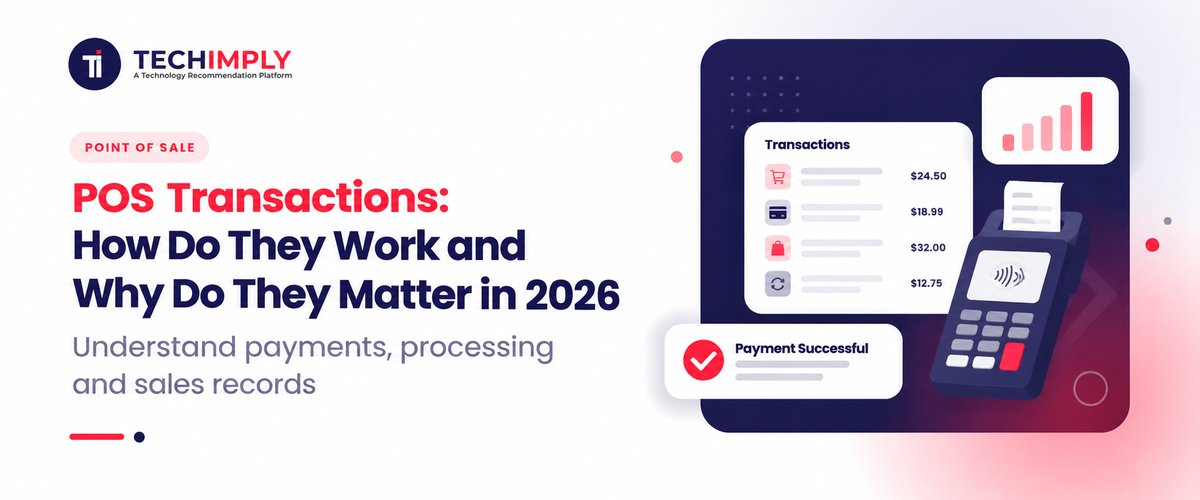
A POS transaction is a payment made when a customer purchases goods or services through a business's point-of-sale (POS) system. As digital, contactless, and card payments become the undisputed baseline of global commerce, understanding these exchanges is more critical than ever. Both enterprises and independent merchants rely on high-precision transaction records to maintain financial health, while everyday consumers frequently search for unfamiliar POS entries appearing on their digital bank statements. Modern point-of-sale hardware and software have evolved far beyond simple cash registers. Today, a POS system acts as an operational hub that connects payment processing, inventory tracking, financial reporting, digital receipts, and customer relationship management into a single cohesive ecosystem.
Quick Answer A POS transaction is a financial exchange processed through a point-of-sale system when a buyer acquires a product or service. This interaction can encompass debit cards, credit cards, contactless tap payments, mobile wallets, or cash sales recorded digitally. The transaction undergoes immediate authorization, accurate system logging, and eventual multi-party settlement across financial institutions.
What Is a POS Transaction?
POS Transaction Meaning The term POS transaction meaning refers to the exact operational event that occurs whenever money changes hands between a customer and a merchant at the designated point of purchase. It captures the comprehensive lifecycle of a commercial exchange, moving from the moment an item is scanned to the instant funds are successfully transferred into the merchant’s business account.
POS Transaction Definition
A POS transaction is formally defined as a financial exchange processed through a point-of-sale system when a customer pays a business for a product or service.
What Are POS Transactions?
Answering what are POS transactions requires looking at the diverse array of payment events that flow through modern checkout architecture. These span across multiple formats:
- Debit-card payments backed by PIN or signature
- Credit-card payments utilizing credit facilities
- Contactless payments via near-field communication (NFC)
- Mobile-wallet payments through applications like Apple Pay or Google Pay
- Cash transactions manually or electronically recorded through a POS register
- Refund transactions returning funds to a buyer
- Void transactions cancelling an accidental charge before settlement
- Discounts, surcharges, and localized tax adjustments
How Does a POS Transaction Work?
Step 1: Customer Selects a Product or Service The transaction journey begins the moment a buyer decides to make a purchase, whether browsing a brick-and-mortar storefront or ordering at a counter.
Step 2: Merchant Enters the Sale The cashier, automated kiosk, or handheld device scans item barcodes or selects service items, prompting the POS software to calculate subtotal, taxes, and final payment amounts.
Step 3: Customer Chooses a Payment Method The buyer presents a preferred payment instrument, including debit cards, credit cards, UPI interfaces, mobile wallets, contactless wearables, or physical cash.
Step 4: Payment Information Is Processed Data is securely read by the POS terminal and transmitted to a payment gateway or payment processor, which routes the request through a card network (such as Visa, Mastercard, or RuPay) to the customer's issuing bank and the merchant's acquiring bank.
Step 5: Payment Is Authorized The customer's issuing bank checks the account balance, verifies security parameters, and instantly approves or declines the transaction.
Step 6: Transaction Is Completed The POS system records the successful authorization, prompts the terminal to print or email a digital receipt, and clears the sale for the business.
Step 7: Settlement Occurs Authorization and settlement are distinct events; batch settlements occur at the end of the business day when funds are officially transferred from issuing banks to the merchant's bank account.
What Is a POS Transaction in a Debit Card?
A POS transaction on a debit card occurs when a consumer uses a bank-issued debit card to pay for goods or services directly through a merchant's point-of-sale terminal. This process involves card insertion (chip), swiping (magnetic stripe), or contactless tapping (NFC). Depending on regional regulations and bank policies, the user may be prompted to enter a 4-digit PIN for authentication or complete a signature-based run. The issuing bank immediately verifies the user's available checking account balance, authorizes the charge, and deducts the funds in real time or places a temporary hold before posting.
|
POS Transaction |
ATM Transaction |
|
Usually used to purchase goods or services |
Usually used to withdraw physical cash |
|
Processed at a merchant checkout counter |
Processed at an automated teller machine (ATM) |
|
Payment goes directly to the merchant |
Cash is dispensed directly to the cardholder |
|
Appears on statements as a retail purchase or payment |
Usually appears as a cash withdrawal |
What Are the Different Types of POS Transactions?
Depending on the context, POS transaction types describe either the commercial nature of the sale or the underlying payment technology utilized at checkout.
Purchase Transactions Standard retail sales where a customer exchanges funds for physical merchandise, digital goods, or rendered services.
Debit and Credit Card Transactions Transactions executed using plastic cards linked to either checking accounts (debit) or revolving credit lines (credit).
Contactless Transactions Fast, proximity-based payments completed using NFC chips embedded in cards, smartphones, or smartwatches without requiring physical contact or PIN entry for small amounts.
Mobile Wallet Transactions Digital payments initialized via smartphone apps that securely tokenize card credentials for seamless checkouts.
Refund Transactions Adjustments where a merchant returns a specified monetary amount back to a customer's original payment card or account.
Void Transactions Cancellations of a pending sale initiated before the daily batch settlement cycle finalizes, preventing funds from moving.
Cash Transactions Traditional physical currency exchanges logged directly into the digital POS platform for unified daily bookkeeping.
|
POS Transaction Type |
What It Means |
|
Purchase |
Customer pays for acquired goods or services |
|
Refund |
Merchant returns money to the customer |
|
Void |
Transaction is cancelled before daily settlement |
|
Debit card |
Payment comes directly from a bank account |
|
Credit card |
Payment uses a revolving credit facility |
|
Contactless |
Payment made through tap-to-pay NFC technology |
|
Mobile wallet |
Payment made through a digital smartphone app |
What Does a POS Transaction on a Bank Statement Mean?
When reviewing personal financial records, seeing an entry labeled as a POS transaction simply indicates that your account was charged through a merchant point-of-sale payment channel rather than an online gateway or ATM. Bank statements typically display a combination of the merchant or business trading name, transaction date, exact financial amount, a POS payment descriptor code, and a reference or transaction ID. Wording varies significantly across financial institutions; some banks spell out "Point of Sale," while others use localized abbreviations or payment aggregator names. Consumers frequently wonder why a bank statement explicitly says "POS transaction," and the answer lies in payment network identification standards, which classify terminal-based present purchases distinctly from wire transfers, ACH deposits, or digital peer-to-peer payments.
How to Track a POS Transaction
How Customers Can Track POS Transactions
- Open your mobile banking app or online account portal.
- Locate the specific transaction date and exact monetary amount.
- Inspect the merchant descriptor text to identify the business.
- Cross-reference the entry against your physical or digital receipt.
- Note the unique transaction or reference number for inquiries.
- Contact the merchant directly if the charge is unrecognized.
- Notify your card issuer immediately if unauthorized activity is suspected.
How Businesses Can Track POS Transactions
- Log into the central POS cloud dashboard or merchant portal.
- Filter data using unique Transaction IDs and order numbers.
- Generate automated daily sales and shift reports.
- Cross-reference payment gateway logs with merchant acquiring accounts.
- Conduct regular end-of-day payment settlements and bank reconciliations.
POS Transactions vs Online Transactions
|
POS Transaction |
Online Transaction |
|
Often initiated at a physical merchant location |
Usually initiated through an e-commerce website or mobile app |
|
Uses a physical POS terminal or integrated card reader |
Uses a virtual online checkout page or payment gateway |
|
Involves cards, contactless cards, or mobile wallets |
Involves saved cards, digital wallets, UPI, or net banking |
|
Receipts are usually printed on paper or texted instantly |
Receipts are delivered exclusively via email or web confirmation |
Modern enterprises increasingly adopt omnichannel payment frameworks, blending physical stores and digital checkout lanes so that inventory and customer data sync seamlessly across both environments.
Why Do POS Transactions Matter for Businesses in 2026?
Faster Payments Advanced terminals equipped with high-speed processing and contactless tap technology reduce customer checkout wait times significantly, driving higher throughput during peak retail hours.
Accurate Records Every single sale is logged automatically with precise timestamps, minimizing human entry errors inherent in old-school cash registers.
Easier Reconciliation Automated matching tools allow business owners to compare daily POS sales data directly against payment settlements and bank deposits with minimal manual effort.
Better Inventory Management Modern POS software dynamically updates stock levels with every completed transaction, alerting managers when popular items run low.
Improved Customer Experience Offering an expansive variety of flexible payment options accommodates diverse consumer preferences, boosting overall satisfaction and customer retention.
Better Business Insights Advanced analytics engines transform transaction data into actionable reports detailing sales trends, average order values, peak purchasing hours, and preferred payment methods.
Are POS Transactions Safe?
Payment security relies on multi-layered defenses engineered to protect sensitive consumer financial data. Modern systems employ robust encryption and tokenization, replacing raw credit card numbers with secure cryptographic tokens during transmission. Chip cards (EMV) and PIN authentication prevent counterfeit fraud, while contactless protocols limit data exposure over short radio frequencies. Payment card industry data security standards (PCI-DSS) mandate strict compliance frameworks for all merchants handling card data. Real-time fraud monitoring systems analyze spending anomalies instantly, and continuous software updates patch vulnerabilities. Customers can safeguard their funds by regularly reviewing bank statements and reporting unrecognized charges promptly.
Common POS Transaction Problems and How to Handle Them
- Why was my POS transaction declined?
Usually caused by insufficient funds, incorrect PIN entry, suspected fraud flags triggered by the bank, or expired cards. Verify account balance or contact your issuer.
- Why is a POS payment still pending?
Pending charges indicate that the transaction has been authorized by the bank, but the final daily batch settlement has not yet posted.
- Why did I get charged twice?
A communication timeout can cause a duplicate authorization hold. These temporary double-charges typically drop off automatically within 3 to 5 business days.
- Why hasn't my POS refund arrived?
Refunds must travel back through the payment processor and issuing bank network, which naturally requires several business days to reflect in checking accounts.
- Why is an unrecognized merchant name showing on my statement?
Many businesses process payments under a parent corporate legal name rather than their consumer-facing storefront title. Check the location and transaction amount before panicking.
Conclusion - Why POS Transactions Matter in 2026
POS transactions form the invisible backbone of modern commerce, translating daily consumer purchases into secure, verifiable financial data. Defined as payments processed through specialized point-of-sale systems, these transactions integrate authorization, card networks, and banking infrastructure to ensure smooth capital flow. As payment technologies evolve toward deeper automation, omnichannel synchronization, and robust security encryption, understanding how these transactions work—and how to track, manage, and audit them—remains indispensable for both modern businesses striving for operational excellence and everyday consumers navigating digital finance.