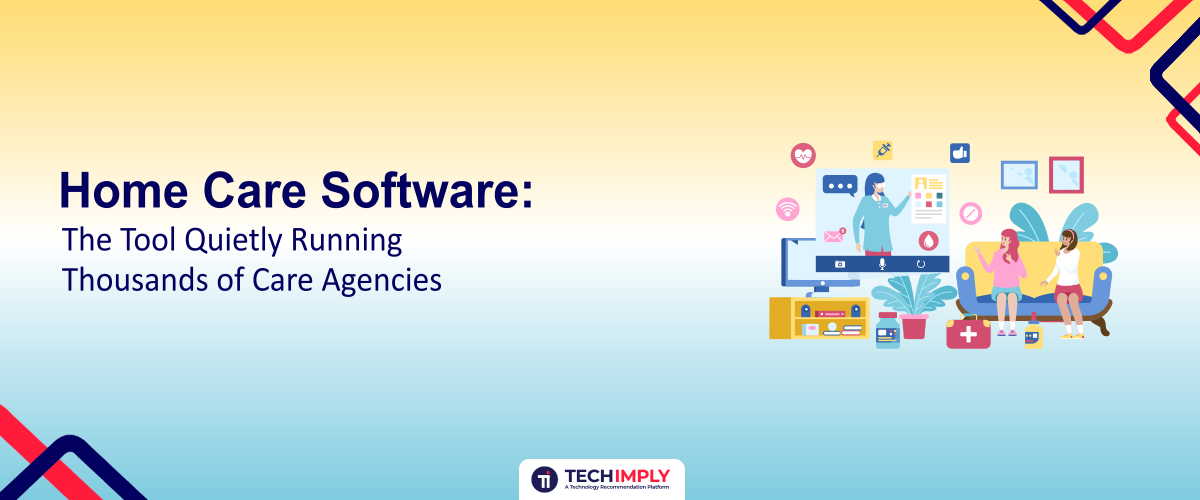
Running a home care firm involves constant balance. On any random Tuesday, an intake supervisor or business leader might manage sudden staff absences, check Medicaid billing rules, examine state legal files, and answer worried relatives. Errors occur often when tasks rely on separate sheets, physical records, and endless message chains.

Looking for Home Care Software?
Check out Techimply's List of the Best Home Care Software in India for your business.
That is where dedicated digital platforms enter action. You can look through best home care software packages to see how leading companies run their everyday activities and compare present industry standards. Modern systems provide the operational backbone for healthcare institutions by combining daily scheduling, financial processes, and compliance monitoring under one roof.
What Is Home Care Software?
A frequent error assumes home care software is merely an interactive calendar, a simple digital schedule showing staff locations and times. Actually, a current agency system functions as a full-cycle management engine. It connects every moving part of a non-medical or skilled care business:
While general healthcare software handles general medical workflows, dedicated home care platforms address the unique logistical realities of home-based support. They track state-mandated visits in real time, transform finished shifts into neat client invoices and payroll exports free from duplicate data entry, and handle shift matching depending on location and caregiver skills.
Do You Know?
Under federal regulations, Medicaid home care firms contracting for personal aid must apply Electronic Visit Verification (EVV) to prove visits occurred; integrated systems seize time and position data instantly upon caregiver login via mobile apps, thus fully removing manual paper timesheets entirely.
A Day Inside an Agency Using Home Care Software (Before vs. After)
To fully grasp the real-world effects of an integrated system, think about how a typical workday progresses in a conventional workplace versus a company leveraging specialized technology.
The Old Way: Manual Spreadsheets
- 7:30 AM: A caregiver texts to say they are sick. The coordinator spends 45 minutes making individual phone calls to find a qualified, available replacement nearby.
- 11:00 AM: Paper timesheets from the weekend arrive. Office staff manually type shift hours into spreadsheets to figure out billing and payroll calculations.
- 2:00 PM: A client's family calls asking if a morning visit happened. The coordinator has to call the caregiver directly to confirm because there is no real-time visit tracking.
- 4:30 PM: Billing staff prepares Medicaid claims by manually cross-referencing care notes with paper schedules, hoping no authorization hours were exceeded.
The Modern Way: Centralized Automation
- 7:30 AM: If a caregiver cancels, then the system employs smart matching algorithms to search for close, qualified workers and transmits an automatic shift proposal to available caregivers.
- 11:00 AM: When caregivers finish visits, GPS-checked clock-ins make verified billing and payroll records immediately. Paper timesheets are not needed at all.
- 2:00 PM: Relatives sign on to a safe family portal to view live updates and finished care duties for their dear ones.
- 4:30 PM: By one simple click, billing workers send clean, mistake-free claims straight to insurers, maintaining money flow stability.
The Must-Have Features in Home Care Software for 2026
When assessing digital instruments for your organization, knowing which attributes render a platform genuinely functional is helpful.
|
Feature |
What It Does |
Why Your Agency Needs It |
|
Intelligent Scheduling |
Matches caregivers to clients based on skills, location, and availability. |
Reduces drive time, avoids overtime, and fills shifts faster. |
|
Electronic Visit Verification (EVV) |
Captures GPS time and location data at clock-in and clock-out. |
Ensures full compliance with state and federal Medicaid requirements. |
|
Integrated Billing & Payroll |
Converts approved visit logs directly into client invoices and pay files. |
Eliminates manual entry and prevents payroll errors. |
|
Mobile Caregiver App |
Provides offline access to care plans, task lists, and shift updates. |
Improves field staff communication and documentation accuracy. |
|
Family & Client Portals |
Gives family members visibility into schedule calendars and care notes. |
Builds trust with families and reduces routine phone inquiries. |
|
Compliance Tracking |
Tracks caregiver certifications, background checks, and care plan authorizations. |
Prevents uncredentialed shifts and keeps audits stress-free. |
1. Smart Caregiver Matching
Current systems move past simple calendar times. They measure travel miles, customer choices, language needs, and care licenses to pair the correct staff member with the correct patient each time.
2. Built-In EVV and Mobile Point-of-Care
A strong mobile app lets field staff view their care plans, record completed tasks, capture client signatures, and clock in via GPS. Using specialized patient management software principles ensures that clinical notes match active care plans.
3. Automated Revenue Management
In order to sustain fiscal stability, organizations require billing processes that handle various funding streams, such as Medicaid, out-of-pocket payments, long-term care coverage, and VA entitlements.
How to Choose the Right Home Care Software for Your Agency's Size
Not every agency needs the same tech stack. A startup non-medical agency operates differently than a multi-state organization offering skilled nursing.
Step 1: Identify Payer Mix ──> Step 2: Assess Mobile Needs ──> Step 3: Check Integration Options ──> Step 4: Test Usability
-
For Small or Startup Private-Pay Agencies
At the beginning, concentrate on simple usage and easy access. Search for systems that emphasize quick drag-and-drop planning, obvious family messaging, and direct billing methods. Integrating basic patient scheduling software capabilities helps small teams keep operations lean while providing clear communication to clients.
-
For Mid-Sized Medicaid and Personal Care Agencies
Since your agency bills state Medicaid programs, EVV compliance becomes your main priority. Make sure the software connects directly with your state's particular EVV aggregator so visit data moves to payers without manual uploads.
-
For Large, Multi-Location Enterprise Agencies
Large operators need robust reporting, role-based security permissions, and deep integrations. Enterprise agencies often connect their core operating platform with electronic health records software for skilled care clinical notes, dedicated payroll software for complex compensation rules, and specialized billing and invoicing software to manage high-volume claim processing.
For agencies that offer remote monitoring, adding telemedicine software lets clinical groups check vital signs from afar along with non-medical personal care tasks.

Pro-tip
When assessing fresh systems, request vendors demonstrate their offline mobile functions. Caregivers working outside frequently face weak cell coverage, meaning an application storing sign-ins and visit details locally then syncing after connection returns is vital for stopping lost shift records from occurring.
The Hidden Cost of NOT Using Home Care Software
Many business proprietors believe they save funds using paper records and simple sheets, yet manual methods often cost much more eventually.
-
Unseen Financial Leaks
Omitting specialized programs frequently causes expensive wage miscalculations, unrecorded appointments, and sudden overtime surges. Entering time sheets by hand allows for personal blunders and lost chargeable periods. Eventually, these minor clerical faults silently remove thousands from your organization's earnings before anyone notices.
-
Rising Caregiver Burnout
When office managers depend on spreadsheets and group chats, scheduling turns into a daily disaster. Caregivers get unclear shift info, bad directions, and sudden changes. This ongoing friction annoys field workers, raises job stress, and causes high turnover rates in a sector where keeping good people is hard already.
-
Threat of Non-Compliance
Not tracking visits digitally places your agency at great regulatory danger. Lacking EVV records, old caregiver certs, or bad care logs can cause state audits, rejected Medicaid claims, or big money fines. Operating an agency without auto compliance tools leaves your business open to needless legal risks.
Important Takeaways
- Modern home care software goes beyond just scheduling to serve as a full operational center by combining client intake, smart caregiver matching, mobile EVV, and automatic billing all on one platform.
- Simplified daily processes: Automated systems take the place of paper timesheets and manual phone calls, which saves many hours of administrative work and significantly lowers invoicing mistakes.
- Essential 2026 Features: Smart shift matching, GPS-based Electronic Visit Verification (EVV), automatic revenue management, and caregiver mobile applications functioning offline are among the top platforms.
- Small private-pay businesses want simple scheduling and billing; Medicaid-funded and enterprise agencies need state-compliant EVV, multi-payer billing, and EHR/payroll integration.
- Sticking to manual spreadsheets costs money, causes caregiver turnover, and exposes firms to major non-compliance penalties during audits.
Conclusion
Operating a thriving home care firm needs balancing patient security, worker happiness, and financial stability. Depending on paper records and separate office programs makes extra work that steals time needed for care planning. By using joined home care apps, boss teams can fix schedules, follow rules, guard income, and offer field people digital aids they require to win. Spending on proper systems changes everyday tasks from nonstop fighting fires into a clean, growing business plan.