Introduction
In the digital age, Software as a Service (SaaS) is among the most popular business models that are growing rapidly. From small-scale startups to big corporations, a lot of enterprises are using SaaS solutions to resolve their challenges and streamline their operations. These include collaborative tools, customer support platforms, and SaaS spend management software that help businesses stay flexible and efficient.
Behind every effective SaaS spend management software that helps businesses' production is a strong technological stack foundation. The tech stack serves as the foundation for the SaaS application. It comprises all the programming tools, frameworks, languages and technologies you employ to create and manage your software. Selecting the best tech stack is an important choice. It has a direct impact on how well your app runs, as well as how simple it is to scale up, the amount it will cost to maintain it, and how quickly you can get it up and running.
In this blog, we'll take you through all you need to know about the tech stacks to support custom SaaS app development. If you're a founder preparing an initial SaaS service or a technical lead overseeing the development process, this guide will help you make educated decisions.
What Makes Up a SaaS Tech Stack and Why It’s Crucial
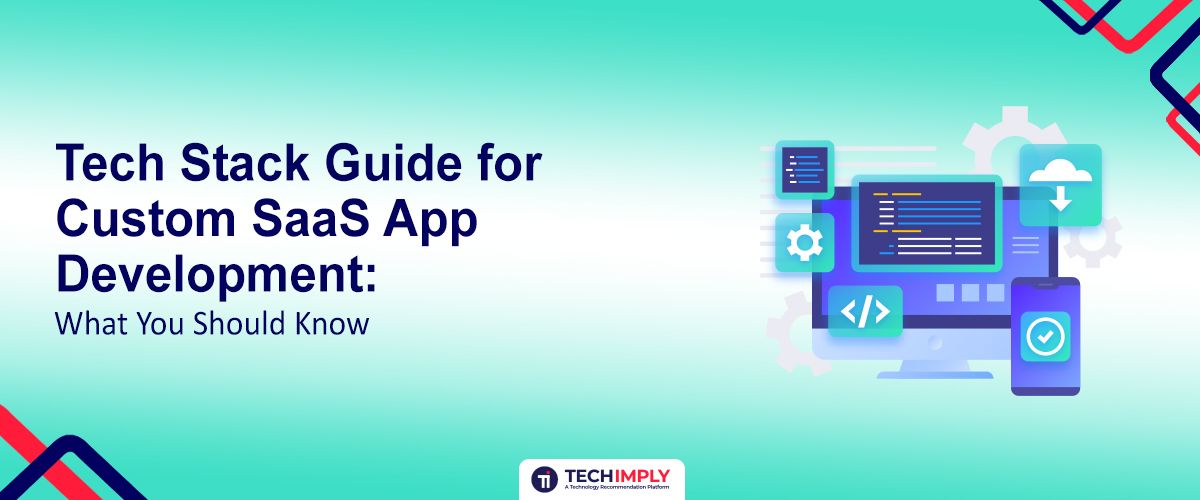
A SaaS technology stack is a collection of programming languages, tools and technologies that are used to create and run a SaaS application. It covers both what users can see (frontend) and all the work behind the scenes (backend) and includes databases, hosting and security systems. Selecting the correct stack is crucial when you are making use of the custom SaaS development services to ensure that the application is designed for speed, scale and longevity.
Here are the major components of the SaaS technology stack:
1. Frontend
Frontends provide the interface to customers of the SaaS application. It is the interface that users use to interact with. It is made up of parts like forms, buttons, dashboards, and even images. Technologies like HTML, CSS, JavaScript and frameworks like React and Vue.js are used extensively to create a fluid interface. The frontend's design and layout are vital to any application developed using the process of custom SaaS app development.
2. Backend
The backend powers everything behind the scenes – user requests, business logic, and database interactions. Developed using programming languages like Python, Node.js, Ruby, etc., it often uses a framework like Django or Express to aid the process of speeding up the building process. A Well-developed backend ensures your app runs consistently and efficiently, which is the prime area of focus for any SaaS building business, giving top-shelf solutions.
3. Database
Databases hold all the important information that your SaaS application relies on, including subscriptions, user accounts and even product information. Relational databases such as MySQL and PostgreSQL are excellent for structured data, whereas NoSQL alternatives such as MongoDB provide the ability to adapt to changing needs. When configuring MySQL, developers need to ensure proper firewall rules are set for the mysql port to enable secure database connections across your infrastructure. The choice of the best database is an essential component of constructing the most reliable and efficient SaaS platform.
4. Hosting & Cloud
Your SaaS application requires a location to run and live 24/7. That's what the cloud and hosting services offer. Platforms such as AWS, Google Cloud, and Microsoft Azure offer scalable, secure environments for running your app. They also offer auto-scaling, backups, and global availability.
5. APIs & Integrations
Application Programming Interfaces (APIs) allow your app to utilize other programs, like payment providers (e.g., Stripe), email (SendGrid), and CRMs. Implementing them as integrations allows you to include features you cannot build yourself without having to recreate them all anew. A custom SaaS app development will always ensure the correct APIs for better functionality and user experience when constructing your app.
Some Essential Tips To Keep in Mind While Selecting a SaaS Tech Stack in 2025
When creating a custom SaaS application, selecting the right technology stack isn't about just selecting the best tools. It's about picking technologies that go with your company's goals. If you're working with a SaaS application development company or directing your team, the following key elements will guide your decision-making.
1. Scalability
Your technology stack should be able to support the expansion that's coming shortly. If your user base grows and your technology stack expands, it will need to handle the increasing amount of data and users with no slowdown. A custom SaaS development service focuses on selecting tools that will increase its capacity quickly and efficiently.
2. Performance
A slow or unresponsive app can turn off users. A robust technology stack will guarantee quick loading times and smooth operation. If you plan to develop a custom SaaS application, using the best apm software will provide an enjoyable user experience from the outset by proactively monitoring performance, detecting bottlenecks, and ensuring rapid issue resolution. Integrating the best apm software into your stack enables real-time insights and optimization, making sure every user interaction is smooth and seamless.
3. Security
The security of data for users is vital. Your system must have solid security features, such as encryption of data, secure authentication, and regularly scheduled updates. Custom SaaS development services will always have solid security practices that comply with the requirements of the industry.
4. Maintainability
When your product grows, it should be simple to update, correct bugs, and even add new features. Picking a stack of technology that has clear architecture and well-written documentation will make long-term maintenance easier. A reputable SaaS app development company will ensure your application is easy to manage throughout the course.
5. Time to Market
If you are looking to launch your business fast, you must choose the appropriate tools, frameworks and software that can speed development. With the proper technology stack and custom SaaS development services, you can reduce the time required to deliver your product to customers quickly.
6. Cost
Some are expensive to develop and maintain, and others are not. The right tech stack is balanced so you keep costs down but still provide a good product. An Experience in custom SaaS app development will help you choose cost-competitive tools that are good for your purpose without breaking the bank.
How to Choose the Right Custom SaaS Development Company
Here’s a step-by-step process to help you select the ideal SaaS development company or team for your custom software project:
Step 1: Define Your Requirements Clearly
Before initiating your search, outline your project aims, nature, target market, preferred tech stack, and timeframe. Giving yourself a clear roadmap will help you determine whether a firm is capable of meeting your needs.
Step 2: Evaluate Technical Expertise and Experience
Look for an organization that possesses experience in custom SaaS app development. Check their portfolio, case studies, and specialization. Make sure they are experienced in the tech your project requires (e.g., cloud, DevOps, AI, API integrations).
Step 3: Check Reviews, Ratings, and References
Verify customer reviews and ratings on websites like Clutch, GoodFirms, or Upwork, and seek referrals. Honest reviews about current clients reveal the reliability, communication, and quality products provided by the company.
Step 4: Assess Communication and Collaboration Process
Choose an organization that emphasizes open communication and agile development. Make sure they offer regular updates, involve you in critical decisions, and use collaboration software (like Jira, Slack, Trello).
Step 5: Compare Pricing Models and Support Options
Review their pricing structures – hourly, fixed, or a dedicated team. Make sure that you can afford it. Also, enquire about post-launch support, scaling, and maintenance to ensure the long-term viability of your project.
Conclusion
The selection of the most suitable tech stack and the right partner for development is crucial to developing a highly personal SaaS application. Regarding capacity and performance, as well as security and long-term maintenance, each decision you make will impact the performance of your product. Utilizing the correct application development software can make it easier to go about creating your application, improve the functionality, and reduce the time needed to bring your product to the market. To ensure that your product goes through an easy and seamless transition from concept to launch, it is crucial to work with a dependable SaaS development company that can comprehend the objectives of your company and your technical requirements.