Ever notice why you keep going back to your favorite coffee shop or online store? It’s not just about the product—it’s about how they make you feel valued. And that’s where the magic of a Loyalty Program lies. Well, set rewards program to return more of those one-time buyers and advocates for your brand.

Looking for Customer Loyalty Software?
Check out Techimply's Loyalty Program Software for your business.
You’re about to read what a customer loyalty program entails and its operations, why your business sorely needs one, and how to start building a customer will love. Whether you are an individual entrepreneur looking for ways to ensure repeat business or a marketer trying to augment retention, these brand loyalty programs will be launched with confidence after going through this beginner’s guide.
What is a Customer Loyalty Program?
Loyalty programs are how businesses reward you for your repeated business. Every time you make a purchase, you earn some loyalty points, which can later be cashed in towards a discount on your next purchase, free products, or special deals. This way, you not only save money when purchasing but also enjoy ‘freebies’ whenever making a purchase.
Loyalty marketing is not about offering discounts; it is about creating a customer who values and appreciates the brand. Many companies offer a loyalty card or an application to facilitate the accumulation of points by a consumer through easy tracking of the points and keeping them updated on new offers and rewards.
In other words, loyalty programs are part of loyalty marketing for businesses. These help in converting one-time buyers into loyal and satisfied customers who trust one’s brand. Perhaps you have come across brand loyalty programs at your favorite coffee shop or grocery store, or maybe your favorite online shop, whereby you amass rewards by being a loyal customer.
How a Loyalty Program Works?
A loyalty scheme means that, by accruing reward points as you shop, a brand encourages you to shop with them more frequently. When you shop, you earn yourself some loyalty points/loyalty bonus that can be redeemed later as a discount, freebies, or special offers. That is why more often than not, upon joining the loyalty club of your favorite store, you will receive offers and rewards.
For example, signing up for the store may net you a card (or an app for tracking points and viewing rewards). These brand loyalty programs keep consumers alerted to exclusive deals and, in turn, make them feel appreciated.
Businesses employ the loyalty management systems to track all your purchases and rewards behind the scenes accurately and make sure that those benefits come to you based on what you’ve accrued. A lot of companies actually do use CRM and customer loyalty technologies to understand your preferences better, so that they are able to offer such personally relevant rewards that actually bring you back.

Did You Know?
Customers enrolled in a loyalty program spend up to 67% more than new customers! This shows how loyalty programs don’t just reward customers—they also significantly boost your business growth
Why Do You Need a Loyalty Program?
You need a loyalty program so you keep customers coming back. In such a wide world of choices, a carefully thought rewards program is what will tip the scales in favor of your brand. When a customer earns loyalty points or receives a loyalty bonus for making a purchase from you, they feel valued and return.
Loyalty programs do help in the enhancement of customer loyalty. Hence, continuous business transactions rather than a one-time sale are achieved. This, in turn, translates to customers having trust in your brand and even recommending it to other people.
Loyalty marketing and robust loyalty management systems represent understanding of your clientele through the business and thus, make it possible to provide tailor-made offers and rewards that matter to them. A good number of the loyalty program companies do so in a bid to increase the frequency of repeat purchases while at the same time ensuring that the customers feel valued.
What Are the Benefits of a Customer Loyalty Program?
A loyal customer program does more than providing discounts; it helps in building trust for repeated purchasing, as well as showing customers are being valued.
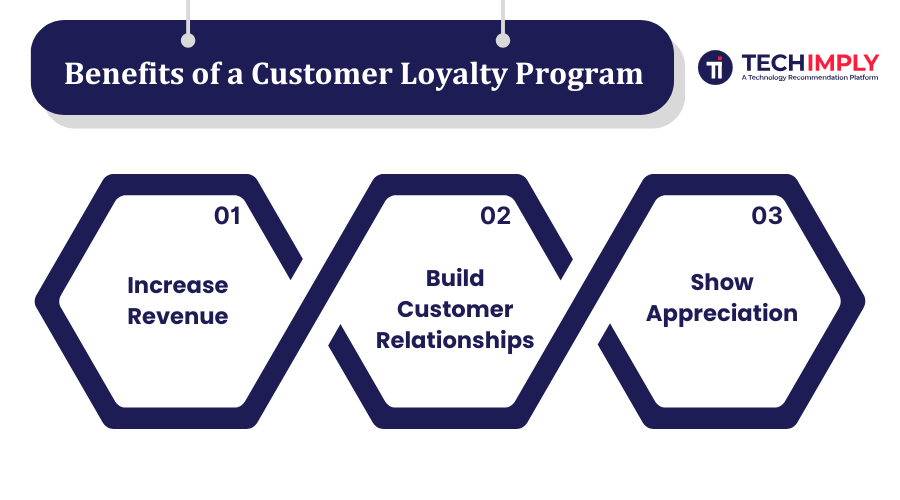
1. Increase Revenue
A loyalty program makes it so that people earn more from repeat customer business by keeping people coming back to shop. If customers know they will get discounts and earn rewards every time they purchase, they will choose your brand over others. According to Semrush, brands with a loyalty program witness about 12–18 % more revenue compared to those who do not. This continuous growth in sales can really help your bottom line and keep business going.
2. Build Customer Relationships
Loyalty programs build a way to interact with the customer more than just a transaction by using emotion and letting customers feel valued as a part of some loyalty group. Through programs, you get to know customer preferences which enables you to send personalized offers that reflect your concern, turning fly-by buyers into die-hard fans who will support your brand even in bad times.
3. Show Appreciation
Customers have many choices and when they choose your service or product repeatedly, you had better thank them. The most common form of this is the loyalty card, where merchants will use it to offer exclusive discounts, early sales access, and personalized discounts. This makes the customer feel recognized and valuable in your business, hence returning and recommending to others.
Pro Tip:
When designing your loyalty program, start simple. Use clear rewards, like a point system, before expanding into complex tiers or hybrid models. This helps customers understand your program easily and encourages quick sign-ups without confusion.
What Are the Different Types of Loyalty Programs?
Shopping is made more rewarding through such programs which include saving offers, special perks, and exclusive rewards which will attract one back to his favorite stores.
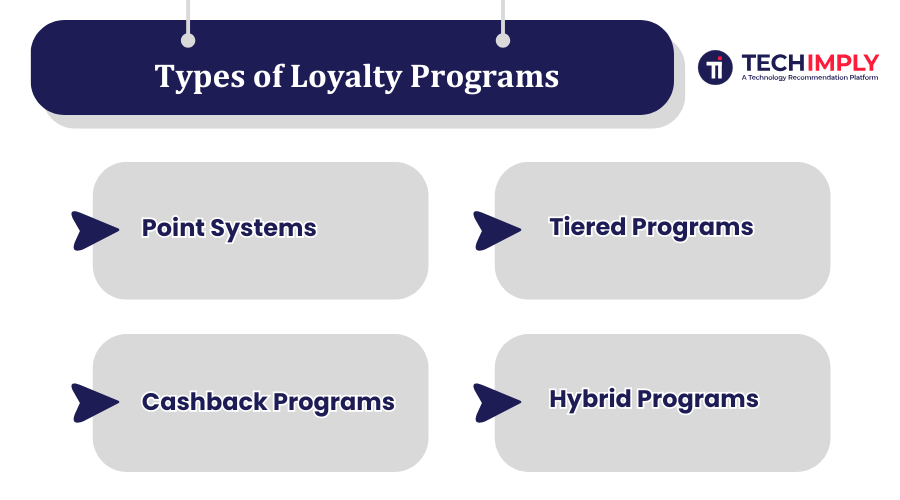
1. Point Systems
Point systems are the most prevalent form of loyalty program in normal shopping; you receive a certain number of loyalty points after each purchase depending on your spending. These points can be exchanged to get discounts on subsequent purchases, free products, or even unique gifts. Consider a café or grocery store with a point-based system: each purchase obviously increases the possibilities for a free coffee or discount on further purchasing that a consumer looks forward to.
2. Tiered Programs
Such tier programs give rewards to the customer based on his spending level. Wading further through the levels, one can unlock progressively better offers and rewards. For example, starting at a basic level, further spending can accrue to levels having associated benefits such as early sale access, birthday gifts, or larger discounts. It hence drags customers back to the store on a regular basis ‘to take advantage of premium perks’, creating an ideal scenario for building customer loyalty.
3. Cashback Programs
When you spend a certain percentage is given back to you, which can be reapplied to the purchase of something else. Such reward programs are quite common in various retail stores and credit cards as they bring savings on a practical purchase of day-to-day requirements. For instance, receiving a 5% cashback on the purchase of groceries does accumulate over time to appreciate what value is being dowelled by the brand.
4. Hybrid Programs
Hybrid programs mix two or more types of rewards programs— for example points and cash back— to give customers more options. For instance, you might gain points on every purchase that could be redeemed for free products plus get cash back on some specific items. Hybrid systems are meant to enhance loyalty benefits, keeping the interest of clients on a particular firm while giving them the choice of how they want to enjoy their rewards.
Suggested Read:
What Is a CRM Loyalty Program?
A CRM loyalty program uses customer data to make your loyalty program smarter. It helps businesses see what customers like to buy so they can send rewards and offers that match their interests.
For example, if you are a frequent purchaser of coffee, then you might receive a price cut on your preferred drink. This will discount you while assisting the shop to keep you as a faithful client. In easy words, a CRM loyalty scheme assists brands in understanding clients better by offering rewards which seem to be personal and valuable.
Conclusion
Implementing a customer loyalty program is, without a doubt, one of the best ways to retain customers and keep them returning and to grow your business in a sustainable manner. You will have learned what loyalty benefits are and checked out some examples of the same having a well-defined starting point towards designing a program that will keep bringing your customers back.
Hence, it’s not just giving away loyalty points or discounts; it’s creating real value through meaningful offers and rewards to strengthen the relationship with the customer. Properly planned and executed, loyalty management strategies can be a game-changing ‘extra’ in customer experience and long-term business sustenance.
Ready to start your journey toward building a loyalty program that your customers will appreciate and remember? Let’s put your plans into action today.