Most sales reps learn the theory in a training session, then practice it on live deals with real prospects. That is an expensive way to learn, since every fumbled cold call or mishandled objection can cost real pipeline.
AI sales coaching flips that around. It gives reps a safe place to rehearse the conversations that decide deals, get instant feedback and build real skill before it counts. Here is what it is, how it works and what to look for if you are considering it for your team.
What Is AI Sales Coaching?
AI sales coaching is a way for reps to practice buyer conversations with an AI and receive personalized feedback on how they did. Instead of role-playing with a busy manager or a colleague reading from a script, the rep has a realistic back-and-forth with an AI that plays the buyer, then gets coached on what worked and what to improve.
The point is not to replace sales managers. It is to scale the kind of consistent, high-quality coaching that most teams simply cannot deliver to every rep, on every skill, as often as they need it. It also lifts the repetitive practice off managers' plates, so their time can go to the higher-value coaching only a person can give, like deal strategy and career growth.
Why Traditional Sales Training Falls Short
Traditional training has a few well-known gaps. Reps absorb ideas in a workshop, but without practice the lessons rarely change behavior once they are back on the phones.
Live deals become the practice ground, which means mistakes happen in front of real buyers. Coaching quality also varies from manager to manager, so two reps on the same team can get very different support. Worst of all, skill gaps often surface too late, after a quarter of missed quota rather than before. The result is training that feels good in the room but does not reliably move win rates.
How AI Sales Coaching Works
Modern tools follow a simple loop of create, practice, coach and measure. This is where AI sales coaching from Synthesia fits in, delivered through its Roleplay Sessions.
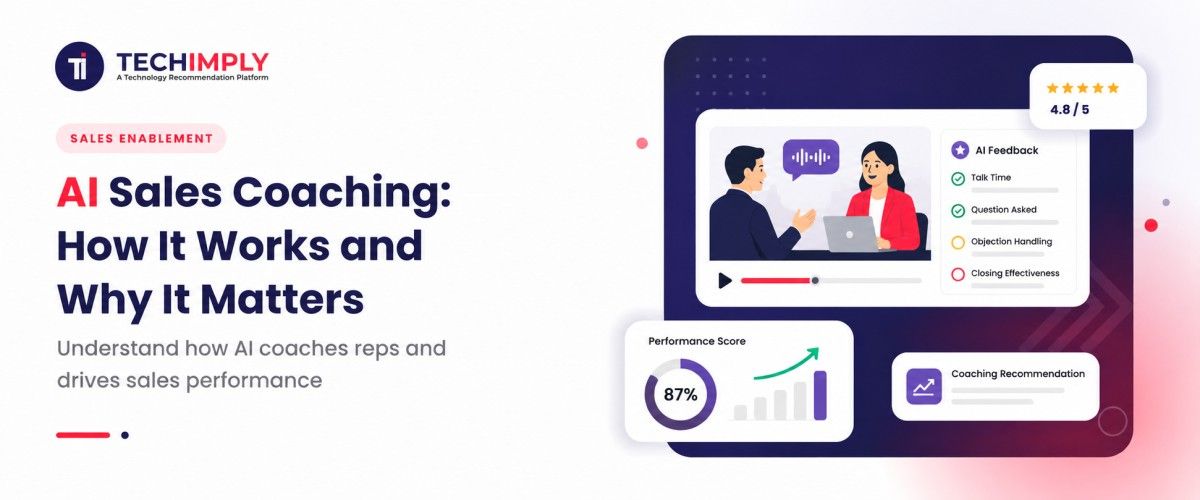
First, a team builds a roleplay scenario in minutes, often right inside the training video reps already watch. Then the rep practices by having a real, spoken conversation with a lifelike Interactive Avatar that plays the buyer, raises objections and pushes back the way a real prospect would. There is no deal on the line, so reps can retry as many times as they want.
The coaching is where it gets interesting. An AI coach scores every call against a skills rubric you control, then gives personalized feedback on what went well and what to fix next. It even asks the rep how they think the call went before revealing the score, and reps can ask follow-up questions, just like they would with a human coach.
Finally, managers measure progress in an analytics portal that shows who is improving, where the skill gaps are and which selling skills actually move the number, right down to the individual attempt and transcript. Because reps sign in with their own credentials, every score maps to the right person, and results can be exported into the learning tools your team already uses.
The Conversations Worth Practicing
The real value shows up in the high-stakes conversations that most reps only get to practice on live pipeline. A good AI coaching setup lets them rehearse each one first.
Cold calls are an obvious fit, where reps learn to handle the instant brush-off and earn the next meeting. Discovery calls let them practice asking sharp questions and uncovering real pain without turning it into an interrogation. Objection handling covers pricing pushback and stalls, negotiation covers holding price and protecting margin, and renewals and expansion help account teams protect and grow revenue. There is even value for field sales, where there is no call to record and practice has always been hardest.
What to Look For in an AI Sales Coaching Tool
Not every tool offers the same depth, so weigh a few things before you commit.
Start with how realistic the practice feels, since talking to a lifelike avatar on screen is closer to a real buyer than an audio-only bot. Check that scenarios are customizable to your business by industry, buyer persona, personality and language, so the practice reflects your actual deals. Make sure coaching is scored against a rubric you define, rather than a generic template, and that analytics let managers track skill uplift across the team.
For larger organizations, confirm the enterprise essentials are in place, such as SOC 2 Type II, ISO 27001 and 42001, GDPR compliance and single sign-on, along with the ability to export results to your learning management system through SCORM.
Getting Started
You do not need to overhaul your whole enablement program to begin. Start with one or two conversations that matter most, such as the cold call or the discovery call, and build a scenario around a real deal type.
Define the skills rubric that reflects how your team actually sells, then let reps practice and repeat as often as they like. Monitor the analytics to identify gaps, and expand into more scenarios once the habit takes hold. Because the roleplay sits alongside the training videos reps already watch, it fits into the workflow your team knows rather than adding another disconnected tool.
The Bottom Line
AI sales coaching closes the gap between learning something in training and actually doing it on a call. It gives every rep consistent, on-demand practice and feedback, surfaces skill gaps early and turns sales training into a skill reps can use when it counts.
For teams that want to move win rates rather than just tick a training box, tools like Synthesia's Roleplay Sessions make that practice realistic, measurable and easy to scale. Start with the conversations that matter most, coach against the skills that drive revenue and let your reps get deal-ready before the deal is on the line.