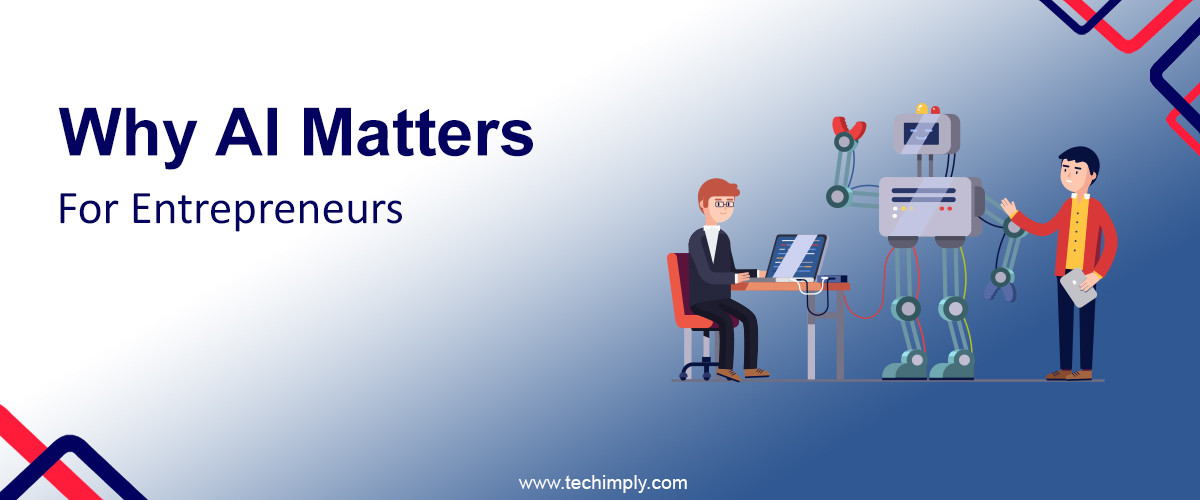
Artificial intelligence (AI) programs such as ChatGPT are becoming more prevalent in today's society. With that emergence, it is easy to see how this technology is a potential game-changer for entrepreneurs and business owners.
AI uses data and a few prompts to create imagery, copy, video, and audio. There are many good things to say about AI and some unfortunate casualties from its use as well. With it, the road ahead is undoubtedly more transparent for businesses.
The transformative power of Artificial intelligence is evident. If you are an entrepreneur looking to set up a business or run one more efficiently, there are AI tools that can help.
But if you look today, AI has changed the dynamics of the industries to a major extent. And we are not just talking about industries here, but also the tools that we use daily. Let’s take an example of audio visualizers. Did it ever come across your mind a decade back that you can analyze your music and even see how it’s structured? Well, today AI has done it for you. Impressive, isn’t it?
Well, the transformative power of Artificial intelligence is evident. If you are an entrepreneur looking to set up a business or run one more efficiently, there are AI tools that can help.
Here are some of the stats to make you believe us-
There was a study done at a tech company that found that using tools like ChatGPT - which is powered by artificial intelligence - improved worker productivity by 14%, especially for more than 5,000 customer support agents. This is believed to be the first time that this type of technology has been used to measure productivity in a real-life work setting.
According to Forbes Advisor, a whopping 97% of business owners think that using ChatGPT will be helpful for their businesses. In fact, one in three businesses plan to use ChatGPT to create content for their websites, while 44% are looking to generate content in multiple languages.Now you must be clear how AI is helping businesses and entrepreneurs alike to boost their productivity and increase their growth. But, what’s behind the immense power of AI? Let’s have a look
What Is the Power Behind AI?
AI simulates human behaviors using computer systems. At the core of this technology are machine learning algorithms. With every use, the system educates itself. AI has the ability to learn, reason, self-correct, and create. It fine-tunes algorithms based on each interaction.
AI involves vast amounts of training data. The system analyzes the data, looking for patterns that it can use to predict what it should do next. For example, if someone types a prompt in ChatGPT, it uses other text examples to generate a "human-like" response. As the technology improves, so will the output generated by AI tools.
The advancement of this technology impacts many aspects of life, including education, art, entertainment, and, of course, business. Savvy entrepreneurs can use AI tools to advance their businesses once they know what is available to them.
Ways AI Can Power Businesses
AI automates creativity and takes over some repetitive tasks in critical areas of business.
Marketing
AI probably has the biggest impact on marketing. Creating content marketing like blog posts using AI tools doesn't give you the best results. AI hasn't mastered the nuances of engaging writing yet. It can be used to strategize your content marketing efforts, though.
For example, you could use an AI tool such as ChatGPT to:
● Develop blog topics
● Create a list of potential keywords for those topics.
● Generate an outline based on those keywords.
You would still need to write the post or hire someone to do it, but ideation is a significant part of the challenge.
Prospecting
Marketing isn't the only place ideation comes into play for entrepreneurs. Their business ventures are built around new ideas. This process is an essential part of the entrepreneur journey, as it shapes how they discover opportunities and bring innovative solutions to life. Their business ventures are built around new ideas.
Entrepreneurs must do market research, identify consumer pain points, and create solutions that solve problems. That all starts with an idea for a product or service. AI has a tool for that.
IdeasAI has one job – to generate ideas. This open-source AI tool uses a database seeded with startup ideas. The tool posts those ideas to a website where humans like or dislike them. AI can use that information to determine what ideas are the best potential startups.
At the bottom of the page is a list of categories. You can click each one and see how people respond to a list of AI-generated ideas for that category. The best thing about this simple AI tool is you can use it for free.
Product Design
One of the most troubling parts of developing a new product is getting other people to understand its purpose. Sometimes, it's a great idea; it's just that not everybody gets it. AI tools can identify areas that make a product confusing.
They can also help you personalize a product pitch—no more boilerplate product descriptions. Instead, you provide a tailored description for each potential investor or lead.
Sales
You have the idea and ways to market it; the next step is finding someone to buy it. AI sales tools can go through marketing data and generate qualified leads from it. For go-to-market teams, an AI GTM approach provides a context and intelligence layer that unifies buyer, account, and activity data to prioritize high-intent accounts and recommend next best actions across marketing and sales.
An example of this in action is Exceed. Genesys markets its Exceed tool as a virtual sales assistant. It allows sales teams to increase their lead generation, schedule appointments, and automate follow-ups. The goal is to nurture leads through the funnel to create conversions. After the meetings happen, there's still work to do. A tool like Sybill can automatically record calls, create summaries, and update CRM, which saves hours of time-consuming work.
Improved Efficiency
According to Forbes, 80 percent of small businesses have just one person doing all the work. The fact is entrepreneurs usually employ only themselves, at least at first. AI helps businesses to Improve their work efficiency.
For instance, Calendly is an AI tool that can handle scheduling. Whether you are meeting with potential investors or working with new leads, having an accurate and practical schedule matters. If you think about what goes into setting up a meeting, then using AI makes sense. Calendly takes care of emails, follow-ups, and scheduling.
Setting Up Your Business With AI
AI has the ability to walk you through the startup of your business step-by-step. Once you have a business plan in place, you can create a customized list of AI tools to get you through regional pitfalls, such as licensing, accepting online payments, and everything in between.
You can use AI to:
● Create business proposals
● Explore new markets
● Offer products
● Manage transactions
● Build a budget
● Engage with customers
● Find Investors
● Enhance customer service
● Set up affiliate marketing
● Connect with wholesalers or drop shippers
● Create custom images and multimedia
● Do effective content strategy
● Conduct A/B testing
● Develop online ads
● Research blog topics
Humanizing AI-generated content is key to bridging the gap between machine efficiency and authentic engagement. While AI tools like ChatGPT can generate text, adding a human touch ensures the content resonates on a personal level, creating a more meaningful connection with the audience.
With each step, AI learns a little more about what you need. Entrepreneurs can use AI tools as their starting points and build on the ideas developed with them. Then, they can use AI to further their business interests.
The tricky part of using AI in business is understanding that it is just a tool, not a stand-alone problem solver. Use it for strategy and automation, but always remember who runs the show.
What you get from AI may not be perfect. You must edit and monitor output and shape it to conform to your business needs. Once entrepreneurs dip their toes into the emerging pool of AI tools, they will find there is plenty they can use to set up their business and make it a success.
AI in Financial Management
Managing finances is one of the most critical aspects of running a business, and AI has proven to be a game-changer in this area. AI tools such as QuickBooks and Xero use machine learning to automate financial processes like bookkeeping, invoicing, and tax calculations. They can analyze financial trends, helping businesses identify cost-saving opportunities and predict future cash flow.
Fraud detection is another area where AI is invaluable. By analyzing vast amounts of transactional data, AI systems can identify suspicious activities and flag them for review. This proactive approach minimizes the risk of financial losses. Moreover, AI-powered financial advisors, like those offered by platforms such as Betterment or Wealthfront, provide entrepreneurs with personalized investment advice, ensuring smarter financial planning and portfolio management.
By leveraging AI in financial management, businesses can ensure accuracy, save time, and make more informed financial decisions.
AI in Product Development
The integration of AI into product development has revolutionized the innovation process. AI tools like Autodesk's generative design software enable businesses to create prototypes faster and more efficiently by analyzing data and generating multiple design options. These tools consider factors like materials, cost, and functionality, ensuring optimal results.
Additionally, AI-powered testing tools speed up the product testing phase by identifying flaws and providing actionable feedback. This ensures higher quality and reduces time-to-market. AI also enables real-time customer feedback analysis, helping businesses refine their products to better meet market demands.
By harnessing Artificial Intelligence Development in product, businesses can reduce costs, accelerate innovation, and stay ahead of competitors.
Challenges and Considerations in AI Adoption
While AI offers numerous advantages, its adoption is not without challenges. One of the primary concerns is data privacy. Businesses must ensure that customer data used by AI tools is protected and complies with regulations like GDPR or CCPA. Another challenge is the high cost of implementation. Small businesses may find it difficult to invest in advanced AI tools and infrastructure.
Additionally, the effectiveness of AI relies heavily on the quality of data it is trained on. Inaccurate or biased data can lead to flawed outputs, which can negatively impact business operations. Moreover, over-reliance on AI could lead to the loss of the human touch in customer interactions, which remains vital for building trust and empathy.
To mitigate these challenges, businesses should approach AI adoption strategically. Investing in employee training, choosing the right tools, and maintaining a balance between automation and human intervention are key to maximizing AI's benefits.