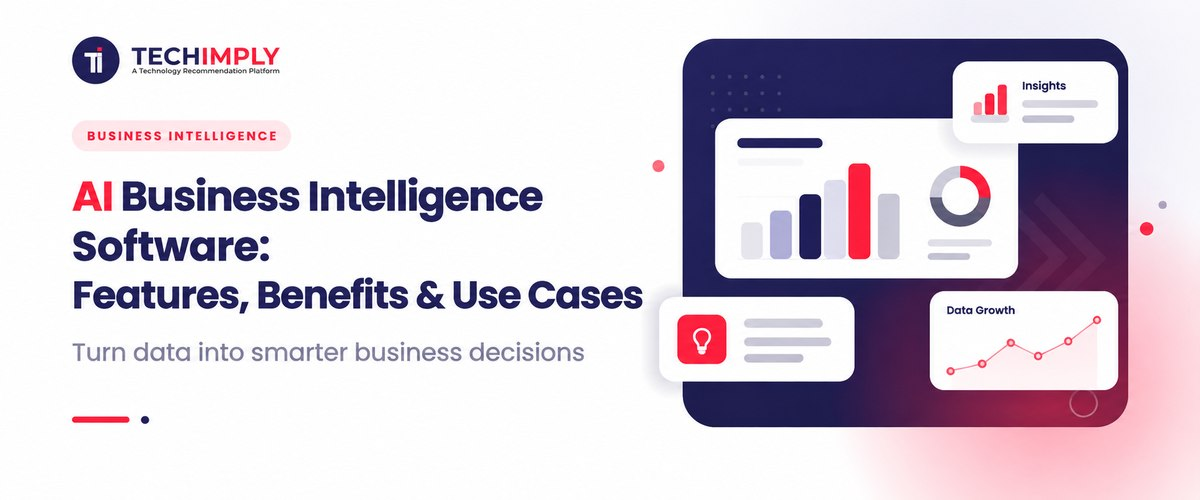
India is experiencing rapid uptake in its digital economy due to resilient digital public infrastructure like UPI and ONDC, the scale of e-commerce, and enormous MSME digitization, which has created a highly competitive environment where static reporting becomes inadequate. AI-based Business Intelligence (BI) software acts as a smart decision engine for Indian companies, D2C businesses, and fintech firms. It brings in live updates and shapes them into outputs teams can use right away. That helps more teams work from the same info, even if they are not in the data lane each day. Once this is set up, firms can cut down on everyday holdups, lower the cost of managing data, and make choices faster. In general, AI-enabled BI software is involved in the transfer of India-based businesses from historical reporting-based decisions to proactive automated growth strategies.
What is AI Business Intelligence Software and how does it work for Indian companies?
AI BI systems take conventional, unchanging reporting dashboards and turn them into dynamic decision-making systems. Contrary to traditional BI systems, where specially trained teams are needed to work with numbers and prepare reports, AI BI uses innovations like NLP, machine learning, and automatic data pipelines to process gigantic amounts of unstable information. In other words, anyone from managers to front-line staff can ask questions in easy language, receive charts instantly, find hidden abnormalities, and create predictions without any programming skills.
AI business intelligence software solutions are addressing a major gap for organizations in India navigating the challenge of rapid growth while having broken operational data. This is because Indian organizations are often relying on diverse sources of information from different sources ranging from traditional Tally software, local supply chain processes, and regional e-commerce systems to payment methods like UPI. By harnessing these streams in real time, AI BI provides a solution to clean, amalgamate, and prepare data for decision-making.
A D2C brand in Bengaluru can forecast and prepare its supply strategy for festivals around the region, while a logistics organization in Mumbai can control fleet performance and eliminate unreasonable costs in routing. By managing this local challenge of data complexity around regional language queries and Indian ERP constraints, AI BI will help Indian business leaders to rapidly make data-based decisions.
What are the key Features of modern Business Intelligence Software for Growing Businesses?
1. No-Code Drag-and-Drop Analytics for Self-Service
Self-service analytics lets teams in HR software, marketing, or operations build reports. They can also run quick, one-off questions and update their dashboards. No need to wait for IT tickets. No need to write hard SQL code.
2. AI-enabled Natural Language Querying (NLQ)
Just ask a plain language question using generative AI (Text-to-SQL) like What product line lost revenue last month? and receive quick graphs, forecasts, and insights in no time at all.
3. Unified Data Connect and Automated Data Preparation
Today’s BI apps come with pre-built API connectors that combine data silos like CRM, ERP, e-commerce systems, payment gateways, and cloud databases into a single visual source.
4. Data Streaming in Real-Time and Anomaly Detection
Instead of depending on weekly or monthly reports, businesses now have the ability to monitor their performance indicators in real-time. In case of any unusual operations, the company receives automatic alerts regarding the anomaly.
5. Predictive and Prescriptive Analytics
By utilizing machine learning models, new instruments provide companies with forecasting capabilities, i.e. predicting demand intensity, customer churn, stock levels, and pricing requirements.
6. Embedded Analytics and Mobile Adaptability
Dashboards can be integrated into the company`s internal systems, customer portals, or mobile applications. Mobile dashboards guarantee that the information will be available for the sales team regardless of their location.
How does Business Intelligence Software benefit small and medium enterprises in India?
1. Consolidates Disparate Local Tech Systems
Indian SMEs usually use different software systems including old accounting programs, domestic CRMs, and payment processors (UPI, Razorpay). Business intelligence tools serve as a core hub to combine all available information and present the outcome in one dashboard in real-time.
2. Removes the Necessity of Costly Data Staff
Data analytics systems of today allow companies with no technical background to receive useful information, thereby avoiding high expenditures.
3. Improves Inventory Management and Avoids Locking Up Working Capital
In any industry the cash flows of all businesses depend greatly on the level of inventory possessed. Business intelligence provides businesses with up-to-date forecasts of demand enabling companies to have an optimal number of SKUs at any moment of time in accordance with the festive seasons or local events of sale without a necessity of buying more than it is needed.
4. Cash flow and receivables are improved
Payment delays caused by clients affect the small business a lot. BI dashboards help track unpaid invoices, identify aged customer debts, and trigger notifications to allow managers to contact them easily.
5. Enhances marketing towards local customers
Due to diversity of the Indian market and differences in regional requirements, methods used for geographical sales analysis and buy behavior examination make it easy for SMEs to launch sales campaigns that result in high returns.
6. Facilitates the process of making strategic decisions by stakeholders
Abandoning the practice of creating financial spreadsheets and reports every week/month makes it possible for business owners to analyze their business processes and make necessary changes sooner.
What are the top use cases of Business Intelligence Software across Indian industries?
1. Pipedrive
Pipedrive is a CRM system, which emphasizes sales and pipeline based intelligence to assist sales teams in tracking transactions, organizing contacts and automating follow-ups. By using Pipedrive, sales teams get to highly visual deal pipelines, scheduling activities, automating workflow and receiving deal forecasting analytics. With dashboards and integration with other applications, sales reps do not need technical knowledge to collect data about their deal conversion metrics. Used extensively here by B2B firms in the SaaS market, real estate firms and IT companies to track their multi-step processes for lead conversion, monitor field agent's actions and provide quarterly revenue forecasts.
2. Monday.com
Monday.com is a cloud-based OS and BI system for streamlining project management processes, tracking resources and ensuring operational workflow by providing customized dashboards, no-code automation, and reporting interfaces. Companies can build multiple operating boards and facilitate interaction of various departments and various departments. Used by Indian IT firms, marketing agencies and manufacturing companies to monitor project timelines across departments, analyze the workload of team members and help them obtain the vendor results.
3. Airwallex:
Airwallex is a global FinTech platform that provides multi-currency accounts, cross-border payments, digital corporate cards, and many more. It makes use of AI powered OCR technology for receipt management, application of spending policies, and instant reporting. Through its offerings the platform helps businesses across the globe making cross-border payments without worrying about exorbitant fees from foreign exchange processes. The platform is used by export-oriented IT companies, cross-border e-commerce players, and international D2C brands in India to manage multi-currency payments to vendors, track ad spending globally, and automate foreign exchange reconciliations.
4. Payhawk:
Payhawk is a single integrated platform for managing expenses of employees, managing invoices, keeping track of expenses, and managing subscriptions. It has an embedded AI engine that ensures automated matching of receipts, capturing VAT, and enforcing spending policies by the company. The platform connects with large firms like ERPs and accounting software live. Payhawk is utilized by Indian large enterprises and mid-sized firms to manage employee travel and expenses, cut down on manual receipt chasing efforts, and to keep an eye on expenses made by the firm.
How does AI-powered Business Intelligence Software compare to traditional reporting tools?
- Data Analytics Strategy: Traditional BI employs descriptive analytics to provide information about historical events and information. AI BI adopts predictive and prescriptive analytics to make predictions about the future.
- Query Experience: Traditional BI requires data teams to create custom SQL queries that must be executed. AI BI incorporates Natural Language Processing (NLP) functionality, which enables users to ask questions in comprehensible language.
- Data Preparation & ETL: Traditional BI requires a lot of manual work to conduct data mapping, schema design, and data cleanups. AI BI provides tools to conduct all processes in fully automated mode without human intervention.
- Insight Provisioning: In traditional Business Intelligence, users are required to dive into numerous dashboards to find the anomalies. On the contrary, AI-Based BI delivers automated insights, information regarding trends, and alerts straight to key users.
- User Connectivity: Traditional BI tools focus exclusively on developers so that non-technical operational units have to rely on IT team’s support. AI-Driven BI removes the barriers and becomes accessible for the management level executives, sales departments, and the staff with no strong technical expertise.
- Working with Unstructured Data: Traditional BI is no match to AI BI when it comes to dealing with non-standard sources like client comments, review texts, and social media posts. AI BI works perfectly with unstructured text and images due to machine learning technologies.
- Speed of Data Processing: Traditional BI works with data in bulk batches based on the schedule. AI BI uses streaming data collection and processing techniques which allow processing data instantly.
What challenges do Indian companies face when adopting Business Intelligence Software?
1. Fragmentation of Antiquated Technological Frameworks & Information Silos
Numerous activities undertaken by Indian organizations are based on independent outdated systems like local accounting software (for instance Tally), unique functional spreadsheets, isolated customer relationship management (CRM) and independent supply chain monitoring. In order to have them incorporated in one coherent data stream, costly ETL (Extract Transform Load) engineering is required.
2. Poor Initial Data Quality & Data Standardization
Raw data used in the Indian regions is often poorly qualified and has missing values, duplicate records, mistakes made while entering it manually and varying formats (for instance, using different tax level values or different names of places).
3. High Total Cost of Ownership (TCO)
In addition to the software subscription fee, the total cost of data engineering costs, cloud data warehouse storage costs, API integration costs, and periodic user licensing fees can be rather high for small to medium Indian enterprises.
4. Regulatory Constraint due to Data Protection
Indian companies have to satisfy strict data governance obligations such as India’s Digital Personal Data Protection Act and RBI guidelines about data localization pertaining to finance. Therefore, business intelligence architecture must be designed with care, paying attention to features like data masking, role-based access control, and hosted locally.
5. Deficiency of Skills and Low Data Literacy
Even though the top management must be promoting the use of business intelligence tools, the real execution of the system is hindered because middle managers and appropriate detail lack sufficient data literacy to interpret dashboards and come up with analytical queries.
How do I choose the right Business Intelligence Software for my business in India?
1. Check Native Connectors for the Indian tech stack.
- Legacy ERP and accounting: See if the tool works well with systems many Indian firms already use.
- Local payments and online retail: Confirm there are ready APIs for Indian payment providers and common marketplaces.
2. Pair the software with how skilled the team is.
- For non technical and ops groups: Pick tools that use natural language questions and simple drag and drop builds. This helps store heads, marketing teams, and senior leaders avoid SQL and heavy data engineering work.
- For analytics specialists: If you have data scientists, choose a platform that can run custom Python or R code. Also look for support for DAX style models and more complex data storage setups.
3. Check the platform meets Indian privacy rules
- DPDP Act fit: Make sure the product follows India’s Digital Personal Data Protection (DPDP) Act.
- Where data can live: Verify if your sector must keep data inside India. This can be tied to RBI rules.
- Fine control: Review whether it has tools like data masking, row level access control, and consent logs.
4. Review total cost of ownership (TCO) and how you will be billed in INR
- Billing currency: Confirm the vendor invoices in Indian Rupees (INR). This helps avoid budget swings from FX changes.
- Extra charges: Add up more than the license price. Include connector extras, any cloud data warehouse extraction fees, training costs, and the vendor setup or implementation fees.
- Licensing options: Look for pay as you grow, or a mixed plan. For example, use lower cost Viewer seats for field staff and Creator seats for main analysts.
Conclusion
AI business intelligence software used to mostly report what already happened. Now it helps teams make choices faster by turning messy data into clear next steps. Because competition is intense, picking the right BI tool matters. The goal is to cut slowdowns in day to day work. It is also about supporting growth that can scale. With Techimply, a software recommendation site, teams can find BI options and check them side by side. They can then choose and purchase the one that fits their setup. It can also match rules they must follow and stay within their budget. This makes the buying process easier, so digital change can move ahead sooner.