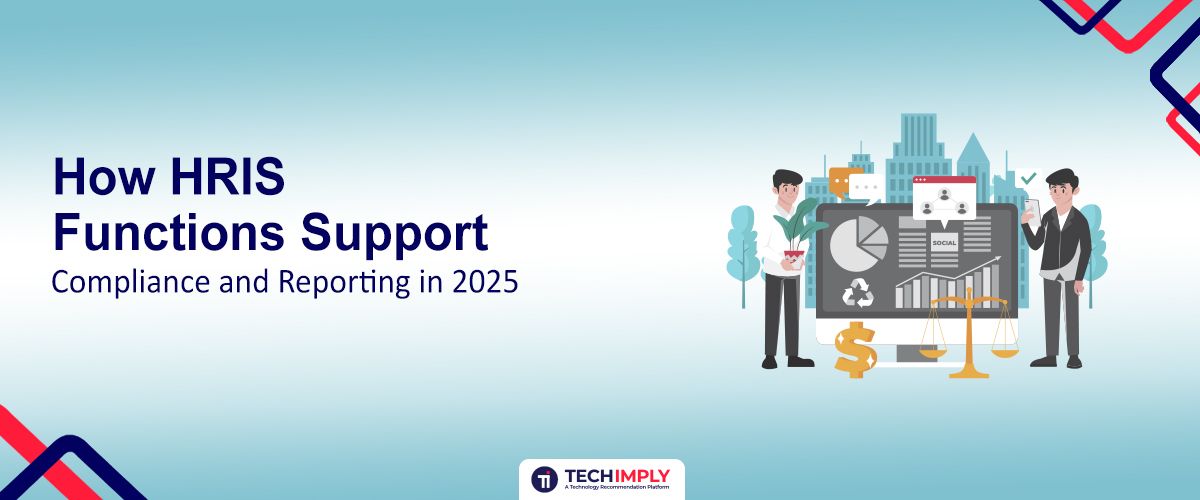
In 2025, HR compliance is no minor task. As new laws, digital records and changing employee expectations emerge, it can seem like a full time job to remain compliant. That is where intelligent HRIS system comes in. Imagine it is the right hand of your HR team automated reports, policy tracking and maintaining everything under the same roof. In addition to streamlining the core HR operations, the right HRIS functions will keep you cooler than normal when auditing occurs, wiser people choices and using compliance as a competitive edge.

Looking for HRIS Software?
Check out Techimply's best HRIS software in India for your business.
Understanding HR Compliance Requirements
HR compliance refers to the adherence to labor laws, company policies as well as the government regulations that ensure the safety of both the employees and the employers. It includes such aspects as accuracy of payrolls, protection of data about employees, equitable employment practices, and safety in the workplace. The absence of one of them may result in fines or the loss of reputation by your company. This is the reason why technology is today used by businesses to do it all efficiently. Modern Human Resource Information System (HRIS) assists in ensuring compliance by automating, providing accuracy, and facilitating easy reporting.

Writer’s Note:
Most HR executives believe that compliance means nothing beyond preventing penalties: however, it means confidence in your employees. Employees feel more motivated and loyal when they have confidence that their organization takes data, compensation, and policies, which are well managed.
To utilize an HRIS, one must be aware of the definition of the HRIS system - it is an online platform that can be used to handle the data of employees, to automate HR functions, and to make sure that the legal requirements are met. In other words, were you to actually define HRIS, it is a centralized system that unites all the HR functions, such as payroll, attendance, and training, without letting any of it go out of control or be inaccurate.
To be more specific, it is evaluated that the global Human Resources Information System software Market revenue will be 12.45 billion USD in 2024 and is projected to evolve into 25.36 billion USD in 2033 with a CAGR of 8.5 between the years 2026 and 2033. These figures show that implementing a proper system isn’t just good practice it’s part of a broader shift where companies worldwide invest heavily in technology to manage HR compliance, data and people processes efficiently.
How HRIS Helps Maintain Compliance
Compliance is easy in an HRIS system since all HR data are contained in the same location. We will discuss how it enables compliance in the day-to-day HR activities.
-
Centralization Of Employee Data
Rather than managing several spreadsheets, an HRIS places all employee data including personal information, contracts, attendance, and payroll within one database. This data centralization helps to minimize errors and expedites compliance reporting and makes it more reliable.
-
Automation Of Compliance Tasks
Policies, taxes and labor laws are easily tracked manually, which is prone to errors. HRIS automates such functions, by sending an alert on policy updates, tax filings or document renewals, so you never have to miss a crucial deadline.
-
Tracking Employee Benefits
Benefit management usually has rules of strict compliance. HRIS keeps a proper record of employee benefits, deductions and eligibility- helping you to meet the statutory requirements and transparency.
-
Maintaining Training Records
Where employee training is an obligatory circumstance of an industry, then HRIS assists in recording, updating and monitoring progress. It makes certain that all the certifications and skill upgrades are duly registered to be audited or inspected.
-
Addressing Data Protection Regulations
Data privacy has become one of the compliance areas. HRISs are designed to ensure high levels of protection of confidential employee data against unauthorized access and promote adherence to such laws as GDPR or local data protection regulations.
Best Practices For Using HRIS in Compliance Management
There are some best practices that can help you optimize your HRIS to maintain smooth and compliant operations.
-
Regularly Update The System
Ensure that your HRIS is maintained with new software and compliance regulations. This will assist you in preventing old process or imprecise data management.
-
Train Your HR Team
The best tools cannot perform well without proper usage. Provide training to your personnel in the HR department on a regular basis to ensure that they can effectively utilize the HRIS as well as be aware of the legislation that is changing.
-
Maintain Data Security
Make sure that only authorized individuals can access sensitive employee data. Protect your system with good passwords, encryption, and regular audits.
Quick Tip:
Arrange internal audit of the HRIS monthly. It is also good to review data access logs and report accuracy on a regular basis to help you identify the small errors before they become compliance issues.
-
Leverage Analytics
The analytics that are available on modern HRIS systems allow identifying areas of compliance risks prior to them becoming issues. Apply these insights to enhance a better HR decision and processes.
Key HRIS Functions
An HRIS encompasses several fundamental HR activities which make compliance easier and efficient. These HRIS functions collaborate to compose the most important elements of HRIS, which bring about an interconnected, compliant, and efficient HR system.
1. Core HR
This includes the data management of employees, attendance and performance. Digitized management of core HR minimizes the number of mistakes that occurred during manual operations and provides a single place of truth in all records.
2. Employee Scheduling
HRIS enables managers to schedule shifts, monitor the hours and avoid any violation of labor laws like overtime abuses or failure to adhere to the work hours laws.
3. Payroll
Compliance requires accuracy in the processing of payrolls. HRIS also automates computing of salary, deductions and tax returns--this is to make sure that all payments made are legally acceptable.
4. Benefits Administration
In terms of insurance, retirement schemes and other benefits, HRIS keeps a tab and administers all benefits of the employees effectively, in compliance with the company policies, as well as the government regulations.
5. Training And Development
HRIS records all training programs, progress, and certifications. This supports professional growth while meeting mandatory compliance for skill development.
Using HRIS for Strategic Advantage
Adherence is only one of the aspects that can be done by HRIS. When applied tactically, it may as well spur business development and enhance the performance of the work force.
-
Enhance Workforce Planning
HRIS allows you to plan ahead on future recruitment, a task that involves workloads, as well as forecast future workforce demands- minimizing turnover and enhancing productivity.
-
Boost Talent Management
An HRIS helps to engage employees, track their performance, and nurture their careers. It assists in establishing what is lacking in skills and motivating the best talent, enhancing retention.
-
Build Positive Corporate Culture
Employees who feel transparency in the payroll, benefits, and performance tracking will develop the trust. This will help strengthen the company culture into a better one.
Conclusion
In general compliance is not merely about doing what is right but about safeguarding your business and your people. A good Human Resource Information System does precisely that. It integrates all the other HR functions, maintains data accuracy, and nothing falls off the cracks. The necessity of a Human Resource Information System is even greater as your company is expanding. The Human Resource Information System objectives extend past compliance and are aimed at enhancing workforce planning, transparency, and enabling HR leaders to make better and data-driven decisions. The HRIS you have installed is not keeping you up to date, but now gives you a more effective and a more resistant work environment, which is ready to face work in the future.
Also Read-