

 0.0
0.0




Check How Thought Industries can help to automate Indian Business. Techimply provide their list of features, pricing, Free demo and Comparison with the best alternative
View ProfileLooking for the proper Learning Experience Platform Software for your business in India? Techimply has compiled a list of the great answers to fulfil your wishes. Our cautiously curated selection guarantees your work becomes seamless and green. Compare software capabilities, pricing, and trial options to discover the most appropriate platform for your agency. With entry to unfastened demos and expert insights, you can make a knowledgeable choice to beautify mastering and improvement inside your team. Let Techimply guide you to the proper software program that fits your goals and enables your commercial enterprise to thrive in today’s aggressive landscape.

Check How Thought Industries can help to automate Indian Business. Techimply provide their list of features, pricing, Free demo and Comparison with the best alternative
View ProfileCheck How Lemon can help to automate Indian Business. Techimply provide their list of features, pricing, Free demo and Comparison with the best alternative
View Profile

Check How CloudShare can help to automate Indian Business. Techimply provide their list of features, pricing, Free demo and Comparison with the best alternative
View Profile
At Raven360, we know that you want to train customers so you can scale your business. We believe a lack of product competency should never be why a customer churns....
View Profile
Check How Workademy can help to automate Indian Business. Techimply provide their list of features, pricing, Free demo and Comparison with the best alternative
View Profile

Check How Smart Sparrow can help to automate Indian Business. Techimply provide their list of features, pricing, Free demo and Comparison with the best alternative
View Profile
Check How Meridian LMS can help to automate Indian Business. Techimply provide their list of features, pricing, Free demo and Comparison with the best alternative
View Profile

Check How Evotix Learn can help to automate Indian Business. Techimply provide their list of features, pricing, Free demo and Comparison with the best alternative
View Profile

Check How NextThought can help to automate Indian Business. Techimply provide their list of features, pricing, Free demo and Comparison with the best alternative
View Profile

Check How Teach on Mars can help to automate Indian Business. Techimply provide their list of features, pricing, Free demo and Comparison with the best alternative
View Profile

Whiteboard Fox is an internet whiteboard and an outstanding partnership tool because it provides an interactive learning setting and urges pupils and coworkers to work together on jobs. It allows...
View Profile

What is AcademyOcean? AcademyOcean is a smart Learning Management System (LMS) designed to deliver personalized learning experiences for businesses, educators, and customer training teams. With an intuitive interface and AI-powered tools,...
View Profile

What is e-khool LMS?e-khool LMS is a comprehensive Learning Management System designed to streamline online education and training. It helps educational institutions, coaching centers, and enterprises manage, deliver, and track...
View Profile
Experience our fully-fledged yet simple online LMS with powerful features optimized to save you time and money! It’s easy to create and manage impactful courses, exams, and certificates. Ideal for your...
View Profile

What is Study Island? Study Island is an educational computer program created to assist students, of K-12 levels, to learn and acquire academic standards by use of interactive lessons and tests....
View Profile
Adobe is the worldwide leader in virtual media and digital advertising solutions. Our innovative, advertising and document answers empower each person – from emerging artists to worldwide manufacturers – to...
View Profile
LMS Portals gives a cloud-based, multi-tenant Learning Management System (LMS) platform that allows our customers and companions to construct and manipulate more than one specific eLearning environments on-demand. The gadget...
View Profile
What is Podcast Summaries? Podcast Summaries is an intelligent ai podcast summarizer that uses natural language processing to investigate and summarize podcast episodes. It facilitates users shop time through turning in...
View Profile
Learnie Community Microlearning platform. We're Changing Workforce Learning for deskless, frontline workers on demand and at the point of need. Traditional learning systems don't solve today's workforce training problems. It's time...
View ProfileGoSkills is an online training platform that teaches business skills to professionals. Companies can develop custom content and assign, track, and manage content from third parties. It supports up to...
View Profile

A Learning Experience Platform (LXP) is a current learning solution meant to ensure the learner is in charge. Unlike the old learning management system software, which focused on admin-led courses, an LXP emphasizes personalized self-paced learning. It uses smart recommendations, social learning, and AI-driven content to help employees discover what they need, when they need it.
Think of it as a Netflix-style learning hub. Whether you want to upskill your team or make workplace learning more engaging, Learning Experience Platform software gives your people the freedom to learn what matters most, in a way that feels natural and intuitive.
And yes, before you decide to buy, all your key questions about Learning Experience software are covered in this guide, keep reading!
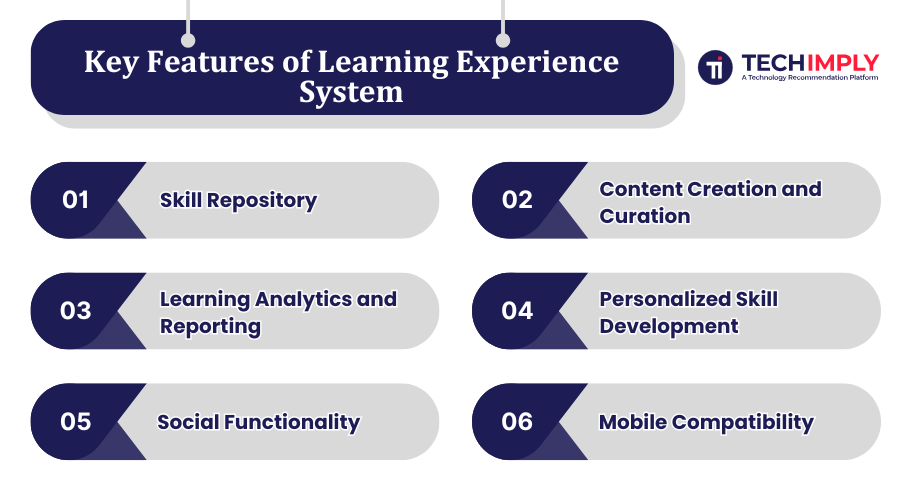
If you're planning to invest in a learning experience system or upgrade your current training management system, these are the must-have features to look out for:
A best-level learning experience system gives a center place for skills where learners can see, keep a record, and grow important competencies. It lays out skills from job roles and career paths, making it easier to match employee development with business goals.
A robust training management system allows both content creation from scratch and smart curation from trusted sources. Whether it's uploading videos, PDFs, or integrating third-party courses, the platform should support flexible and engaging learning content that keeps users interested and informed.
Learning Analytics and Reporting
One of the most valuable features of a learning experience system is its built-in analytics and reporting. It tracks learner behavior, engagement levels, completion rates, and skill progress. These insights help managers fine-tune content and training strategies for better outcomes.
Personalization is key in modern learning experience platforms. Using advanced AI and machine-learning capabilities, recommend job-based courses, and role-based skill journeys that are personalized based on interest and experience. It’s like having an academic coach embedded right within your platform—driving better outcomes through intelligent recommendations.
A powerful training management system includes social learning features such as discussion boards, peer feedback, shared learning paths, and user-generated content. This builds a learning community and increases knowledge sharing, making the experience more dynamic and less isolated.
The desktop should not be the only place where learning is done. A mobile-ready learning experience platform software lets workers enter the learning material at any time, from any place— on their phone or tablet. This freedom helps support just-in-time learning and makes interest higher for faraway or on-the-move teams.
Investing in a Learning Experience Platform in India is not just about checking off the box of digital transformation. It is about making the workforce smarter and more agile. Whether you are a startup on the rise or an enterprise that has long been established, here are five powerful benefits to using a Learning Experience Platform for your team:
Traditional training can often feel like a checkbox task. But an LXP flips the script.It provides educational multimedia content such as videos, podcasts, articles, and microlearning modules that a learner can consume at his/ her own convenient time. Gamification with badges, and leaderboards makes learning a fun filled activity as well. This level of engagement isn’t typically found in a standard corporate learning management system.
Every learner is different. This is why an LXP personalizes content recommendation based on an employee’s role, interests, and past learning behavior using AI and machine learning. Instead of pushing the same content to everyone, it creates a tailored path that keeps learners motivated and invested. This ensures that every team member is learning what they need-when they need it.
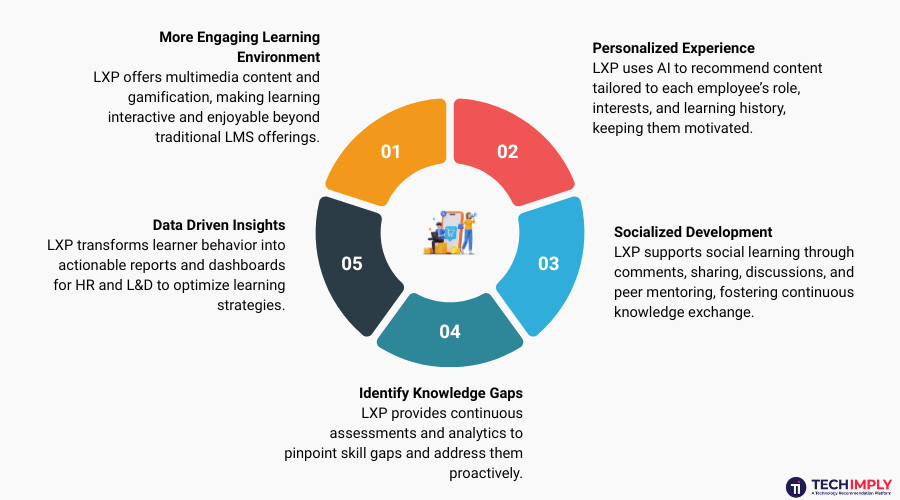
Learning is not anymore a journey of one. LXPs support social learning as users can comment, like, and share the content. Teams can collaborate on learning journeys, have discussions, and even mentor each other. Such peer-to-peer interaction results in a culture of continuous learning – something that any rigid corporate learning management system may miss.
An effective Learning Experience Platform in India helps you pinpoint where your workforce is falling short. Through continuous assessments, feedback loops, and course analytics, you can identify skill gaps at individual, team, or departmental levels. This lets you address issues before they impact performance.
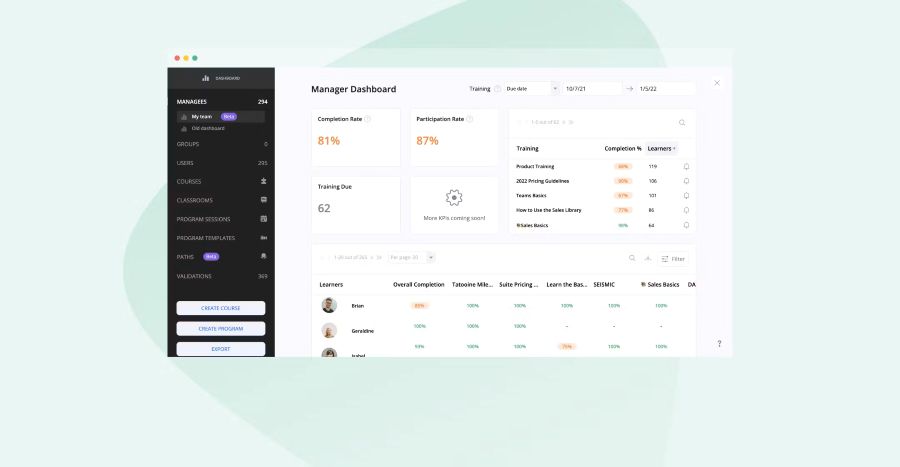
One of the most strategic benefits of an LXP is its ability to turn learner behavior into actionable data. You get dashboards and reports that show who's learning what, how fast, and how well. This intelligence helps HR and L&D teams refine learning paths, prove ROI, and align training goals with business objectives.
We have covered s small list of top Learning Experience Platform Software options, each offering unique features to enhance your organization's learning and development initiatives.
360Learning is a dynamic and collaborative Learning Experience Platform Software designed to shift the focus from top-down training to learner-driven engagement. It allows teams to quickly create courses together and share knowledge in real time, making learning feel more like a conversation than a mandate. With built-in tools for content creation, feedback, anɗ tracking, 360Learning helps companies grow learning without sacrificing quality. Most helpful for teams that work well together and are always changing, it brings the ability to learn as a group and make decisions quickly to corporate learning.
Top Features:
AI-powered content recommendations
Integrated LMS and LXP functionalities
Collaborative course authoring tools
Mobile-friendly interface
Advanced analytics and reporting
Pros:
User-friendly interface facilitating easy navigation
Encourages collaborative learning among teams
Cons:
May not suit organizations preferring traditional top-down training approaches
Limited customization for branding
Pricing: Starts at $8 per user/month upto 100 user.
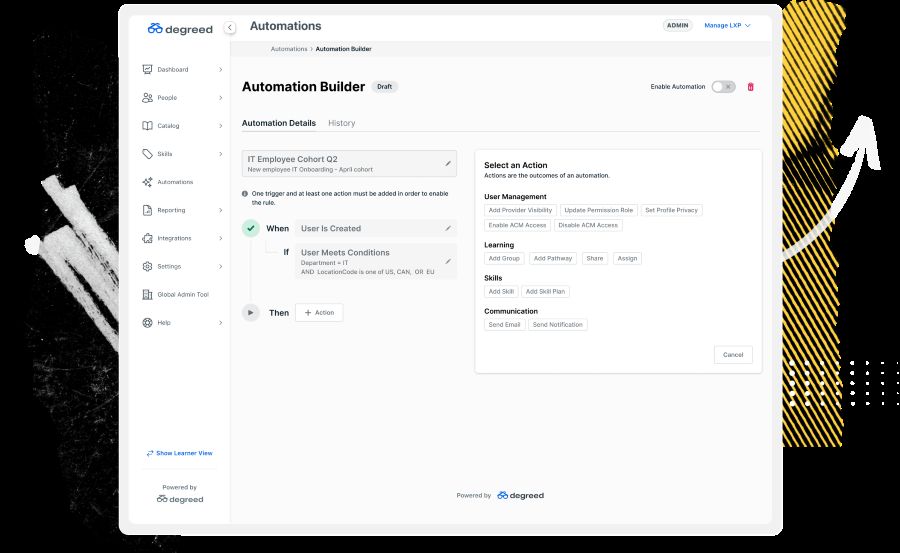
Degreed is a powerful learning experience system that unites corporate learning with career growth. It pulls content from thousands of sources, helping people use work-relevant goals, roles, and skill sets to build and personalize their learning pathways. It could be classes, articles, videos, or just about anything; Degreed will cleverly pick the resources and also help the L&D team tie them to the business mission. This is exactly what large enterprises will implement to build a culture of continuous learning based on insight.
Top Features:
Skill tracking and analytics
Integration with 800+ learning providers
Personalized learning paths
Mobile learning support
Robust reporting tools
Pros:
Extensive integration capabilities
Focuses on skill development aligned with career growth
Cons:
Complex interface may require training
Premium pricing may not suit all budgets
Pricing: Contact Degreed for customized pricing.
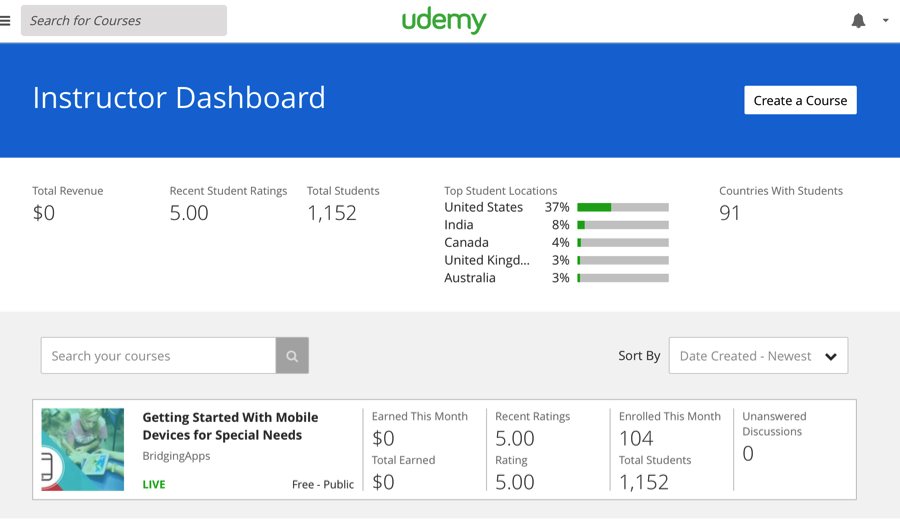
Udemy Business offers a vast library of courses catering to a broad spectrum of professional and technical skills, making it one of the most versatile learning experience software options for organizations of all sizes. From coding and design to leadership and wellness, its catalog is constantly updated by expert instructors across the globe. Enable companies to build custom learning paths and upload internal training materials for a customized learning experience for specific teams. Offer global accessibility and be mobile-first thus enabling the provision of scalable, inclusive learning.
Top Features:
Access to 30,000+ courses
Customizable learning paths
Integration with LMS platforms
Mobile app for on-the-go learning
Advanced analytics dashboard
Pros:
Extensive course library across multiple domains
Regularly updated content to reflect industry trends
Cons:
Limited control over course content quality
May lack depth in specialized topics
Pricing: Team Plan starts at INR 850per user/month (billed annually).
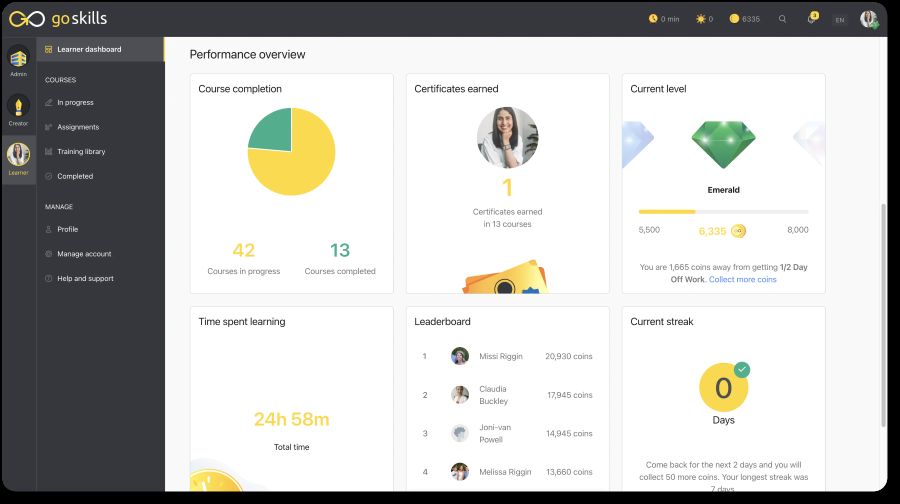
GoSkills combines the simplicity of microlearning with the elegance of a modern learning experience platform software, making it the best choice for SMBs and startups. Its catalogue focuses on practical business skills such as Excel, project management, and design, which are taught through bite-sized lessons that attract busy professionals. What makes GoSkills different is its commitment to learner autonomy—employees can take the courses they want at their own pace, while employers still get the same insights from the same old reporting tools. It is a lean yet powerful solution for companies that want a no-frills, high-impact training platform.
Top Features:
Microlearning modules
Certification upon course completion
Customizable learning paths
Integration with various tools
Progress tracking and analytics
Pros:
Affordable pricing for small to medium businesses
User-friendly interface with engaging content
Cons:
Limited course offerings compared to larger platforms
Less suitable for large enterprises with complex needs
Pricing: Individual plan at INR 1400 per month; team pricing available upon request.
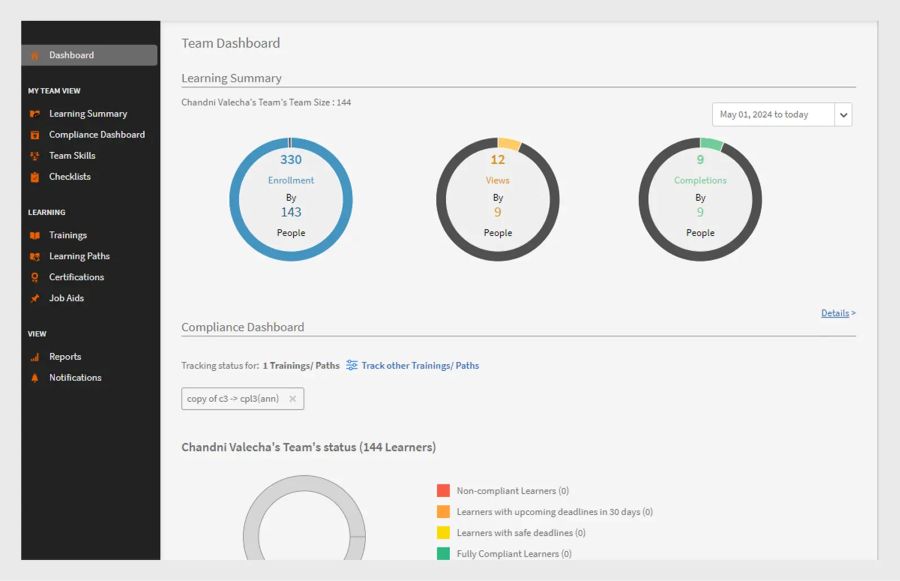
Adobe Learning Manager is a very strong and full-featured learning experience platform in India meant for businesses that want a flexible solution. Using Adobe’s design skills, the platform provides very nice-looking learning experiences and can use many types of content formats like videos, audios, SCORM, and xAPI. It works well with other Adobe products and is a good fit for organizations that work with creativity and media. The platform puts most of its focus on automation, AI-driven recommendations, and analytics, and can work with strategic L&D initiatives in the long term as a partner.
Top Features:
AI-driven personalized learning paths
Seamless integration with Adobe tools
Comprehensive analytics and reporting
Mobile-responsive design
Support for various content formats
Pros:
Highly customizable to fit organizational branding
Strong support for multimedia content
Cons:
Steeper learning curve for administrators
Higher pricing tier may not suit all budgets
Pricing: Contact Adobe for customized pricing.
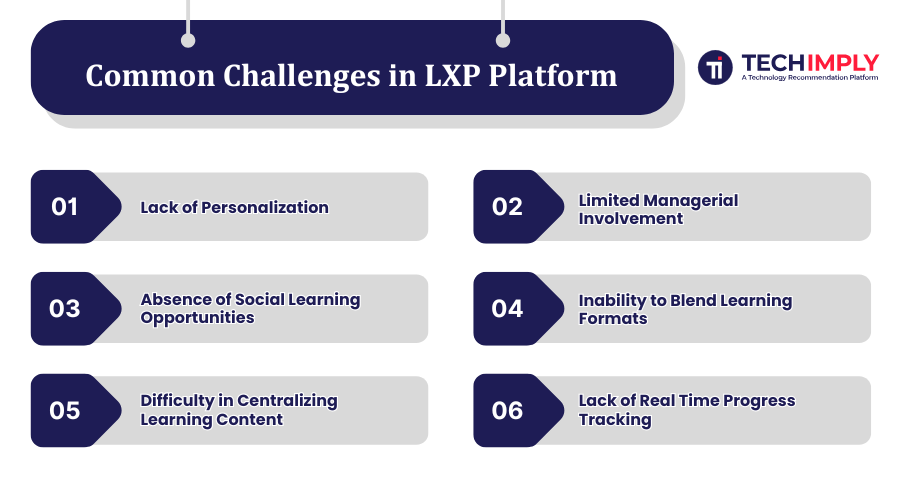
Investing in a learning experience platform can boost your company’s learning culture. But it is not always smooth sailing. Knowing the common challenges up front will help you make a smarter, more confident choice when picking the right Learning Experience Platform software for your team.
One of the biggest promises of any Learning Experience Platform is personalised learning, but not all platforms deliver. Some fail to adapt content recommendations based on individual roles, skill levels, or learning behavior. The result? Generic content that feels just as disengaging as traditional training. Buyers should prioritise LXPs that offer AI-driven personalisation engines to avoid this pitfall.
Learning isn't just an HR function—it requires buy-in from team leads and managers. However, many LXP tools don't provide features that involve managers in learning goal-setting, progress tracking, or performance reviews. A successful Learning Experience Platform Software should allow managers to assign content, monitor development, and provide mentorship throughout the learning journey.
People learn best from each other—but much LXP technology has a gap when it comes to the incorporation of social features. Users can feel isolated if such features as discussion forums, peer-to-peer feedback, or collaborative learning activities are not integrated. Choose an LXP that fosters community-based learning to boost engagement and knowledge sharing.
Today’s learner expects on-demand video, interactive quizzes, live sessions, and hands-on projects. Sadly, some LXPs only allow for few content formats to be supported. This makes the learning experience seem discontinuous at times. The best LXP software seamlessly integrates multiple formats into a cohesive whole.
A good LXP should act as a central hub, allowing internal training, third-party content, and user-generated resources to be brought together in one searchable space. Otherwise, if your content is strewn across tools, repositories, or legacy platforms, integrations quickly become a nightmare. Without this centralization, learners waste time navigating through scattered resources.
You can’t improve what you can’t measure. Yet, many platforms offer delayed or incomplete analytics. Without real-time tracking of learner progress, it becomes difficult for L&D teams to intervene early or optimize the learning path. Look for LXPs that provide dashboards and real-time data insights that help you make agile decisions.
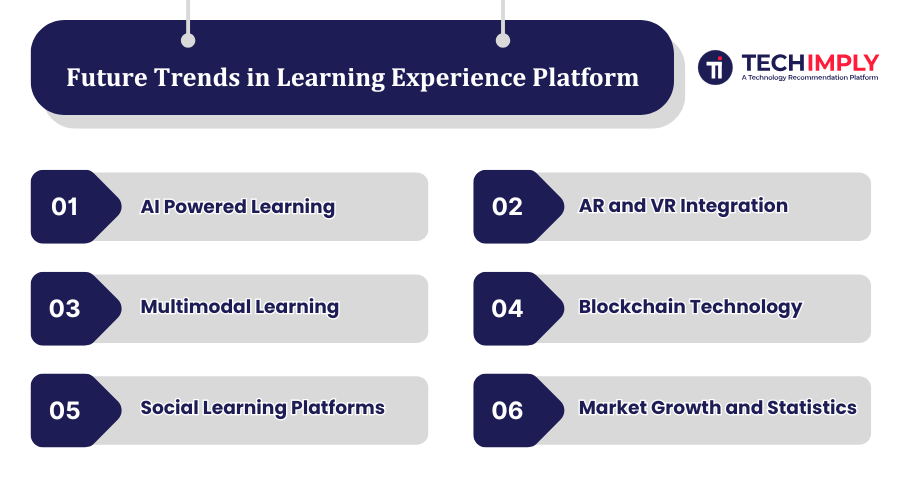
The corporate learning landscape is changing quickly. As more ways to train their workforce efficiently and engagingly is a mandate pursued by organizations, the learning experience platform software would be proa. Among them, Let us look into the trends that define how the future will look for Learning Experience Software.
User behavior and preference, with the ability to serve up personalized learning paths and recommended courses by analyzing same, made relevant by real-time feedback, makes learning experience platform software an AI-driven one, ensuring that workers get the training they need on a more individual basis to better engage and retain.
Augmented Reality and Virtual Reality increasingly will have percolated to corporate training- Immersive experiences enabled by AR and VR. Safe and controlled environment within which the learners may practice their skills by simulating real-world scenarios. This hands-on integrated learning experience software can do much toward maximization of understanding as well as confidence building.
Recognizing that individuals have diverse learning preferences, learning experience platform software is embracing multimodal learning, combining video, podcast, interactive quiz, and written content to cater to different styles in learning. Content available in multiple formats assures organizations of effective training resources accessible to all employees.
Blockchain is emerging as a secure method for verification and recording learning achievements. By combining blockchain with learning experience software, any organization can keep tamper-proof records of certifications and course completions plus completion in a course etc, which in turn not only enhances credibility but also simplifies the verification process for both the potential employer and the employee.
Learning is very social in nature and modern learning experience platform software is making good money by combining social characteristics with it. Chatting, peer evaluations, and group projects help establish a community of learners. Working in such an environment helps share knowledge and supports the idea of continuous learning within the organization.
The demand for advanced Learning Experience Platform Software is reflected in the market's impressive growth. According to a recent report by Business Research Insights, the global Learning Experience Platform market was valued at approximately USD 2.8 billion in 2024 and is projected to reach USD 38.66 billion by 2033, growing at a compound annual growth rate (CAGR) of about 33.79% from 2025 to 2033.
Selecting the right learning experience platform is not just about choosing the technology – it’s about making the right strategic investment to create a workforce of the future. The right platform will make the experience of how your team learns, and at the same time grows and performs, completely different.
So, if you are ready to move to the next stage but not too sure where to start, Techimply is right here. Helping you compare the highly-rated learning experience platforms in India, judging their features and finding the right fit according to your business needs and budget, that’s what we do. Explore, compare, and choose smarter—with Techimply.
An LMS (Learning Management System) delivers structured training, like courses assigned by admins. An LXP (Learning Experience Platform) focuses on personalized, self-driven learning using AI, content recommendations, and social learning.
Employees, HR teams, and learning & development managers benefit most.
LXP improves engagement through AI-powered content suggestions, gamification, mobile access, and peer-driven learning—making the process feel interactive and tailored instead of one-size-fits-all.
Top eLearning Platforms Include iSpring Learn, TalentLMS, Docebo, Adobe Learning Manager, And Litmos, Each Suited For Various Business Needs.
Google Classroom Is Not A Traditional LMS But Offers Some LMS-Like Features And Integrates Well With Google Workspace.
The Three Main Types Are Synchronous (Real-Time), Asynchronous (Self-Paced), And Blended Learning (Combination Of Both).
Yes, LXPs often integrate with CRM, ERP, intranets, and external learning platforms for a seamless learning ecosystem.
LXP uses machine learning to recommend content based on user roles, skills, interests, and past activities.
Yes, LXPs help businesses upskill employees by delivering just-in-time, relevant, and social learning experiences.
By offering interactive content, gamification, user-generated content, and social collaboration features.
Look for usability, personalization, integration capabilities, content variety, analytics, and social learning features.




